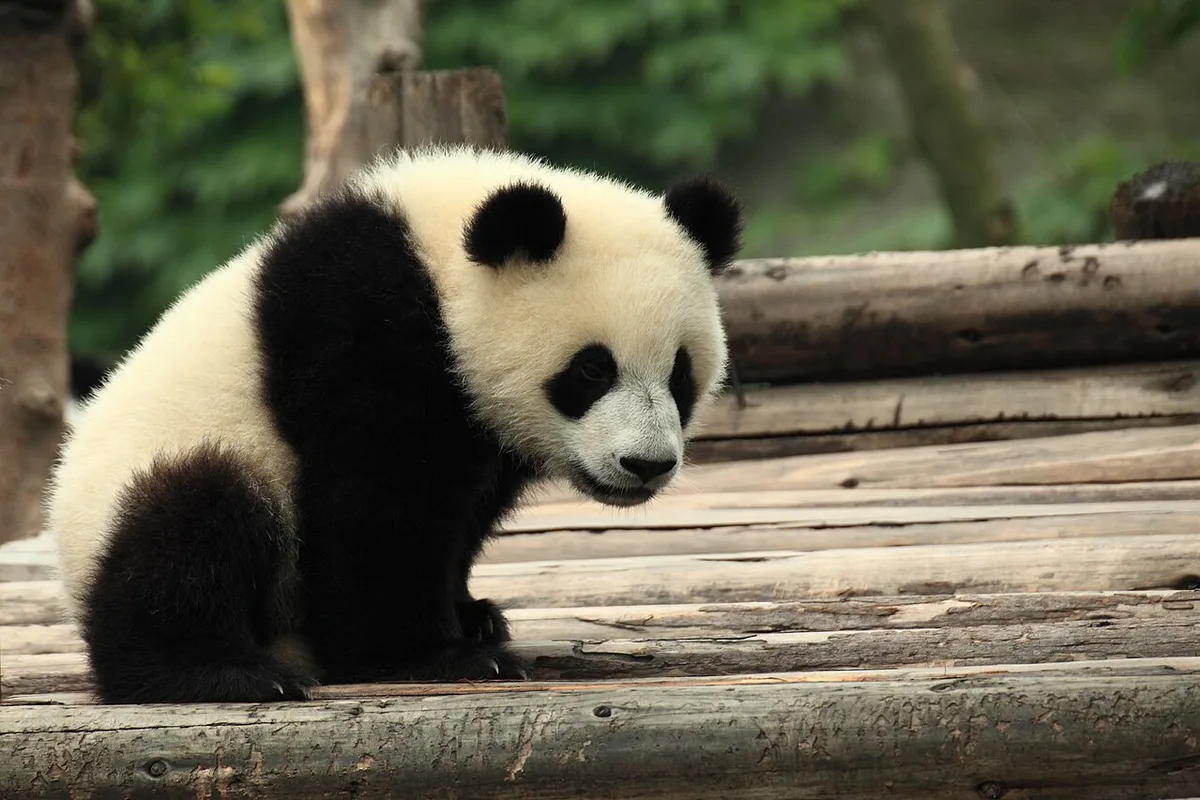
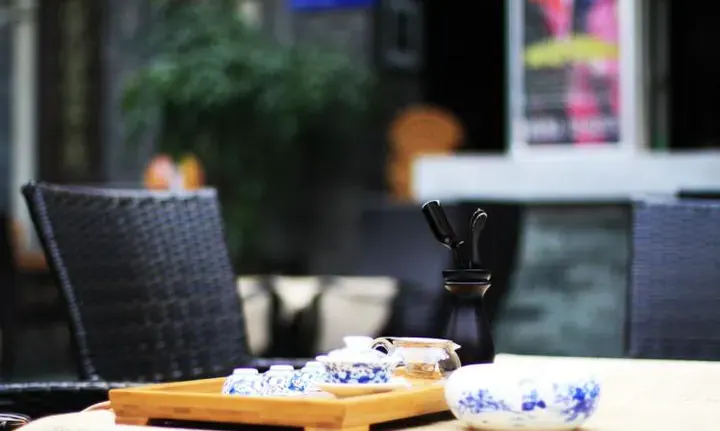
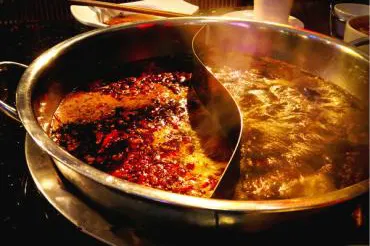
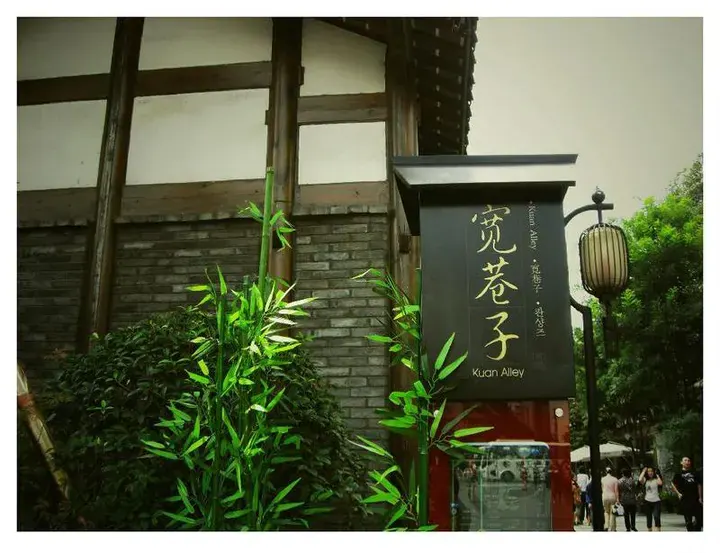
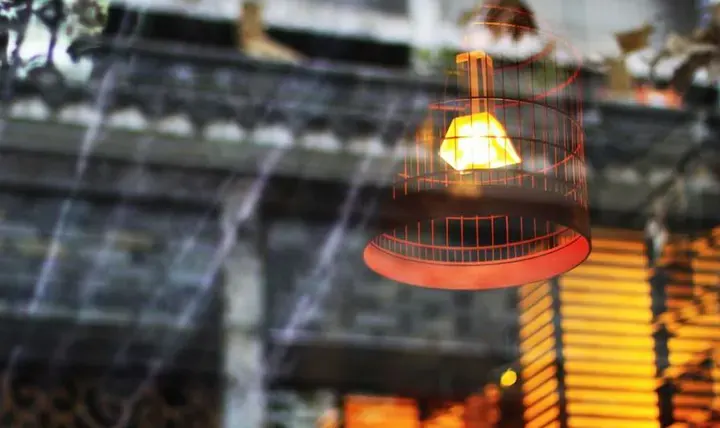
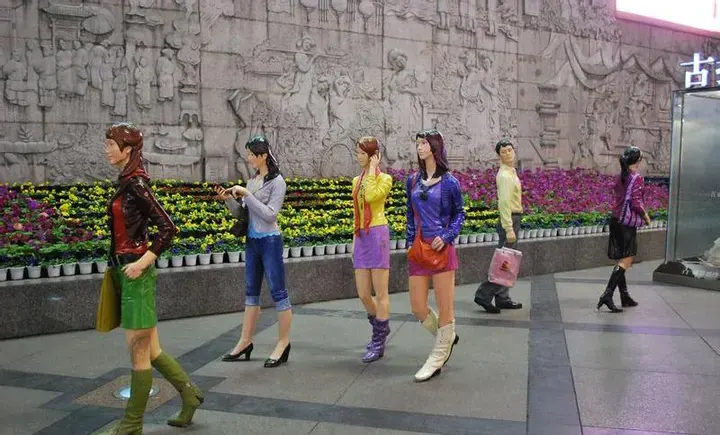
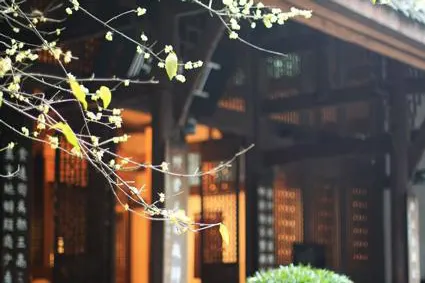
Giant pandasMala hotpotTea and mahjongGateway to the west
In short
Chengdu, capital of Sichuan and gateway to western China, has kept the same name and site for over 3,000 years — and is now famous for three things: unhurried teahouses, fiery hotpot, and giant pandas. Three days covers the panda base, Wuhou Shrine with Jinli, Du Fu Thatched Cottage, Kuanzhai Alley and People's Park, with a day left to ride the intercity rail to the Dujiangyan Irrigation System and Mount Qingcheng. Spring (March–June) and autumn (September–November) are the most comfortable seasons; a mid-range trip costs roughly ¥1,200–2,000 for 3 days excluding long-distance transport.
Key facts
Known for
Giant pandas · Hotpot · Teahouses · Slow living
Budget
¥1,200–2,000 for 3 days, mid-range
Days needed
3 days (4 with Dujiangyan and Mount Qingcheng)
Comfort
Comfortable
Best time to go
Spring (Mar–Jun) and autumn (Sep–Nov); expect clouds and little sun year-round
01What kind of city Chengdu is
Chengdu is the capital of Sichuan and the hub of southwest China, and one of the very few Chinese cities never to have moved or changed its name: the walls went up more than 2,000 years ago under Zhang Yi, and its nicknames — Brocade City, Hibiscus City — stuck. Over twenty million people call it home.
The city sits on the western edge of the Sichuan Basin, where clouds linger and the air stays damp. That climate explains two of its signatures: teahouses on every corner, and a cuisine built on chili and Sichuan pepper. Locals call a good thing bashi — 'just right' — and slowness here is a public standard: tea and ear-cleaning in the morning, mahjong all afternoon, hotpot at night.
Chengdu — a city you never want to leave once you've arrived.
Chengdu city promotional film
Chengdu is the worst city for box-ticking: what astonishes is not the sights but the life around them. Give the panda base a morning, hand an afternoon to a teahouse, spend an evening under Jinli's lanterns, and keep one more day for Dujiangyan and Mount Qingcheng.
02Six things that are pure Chengdu
The panda baseHome of the national treasure
The Chengdu Research Base of Giant Panda Breeding is one of the world's largest panda conservation centers, its bamboo slopes dotted with panda villas. Pandas hate heat: 7:30–10:00 is the only window when they are truly awake, so there is no alternative to an early start.
Gaiwan tea at People's ParkChengdu life, lesson one
Heming Teahouse in People's Park has been pouring for nearly a century: bamboo chairs, copper kettles, long-spouted pouring shows, and ear-cleaners drifting between tables. A pot of jasmine tea costs ¥20–40 and buys a legitimate entire afternoon.
One proper hotpotChengdu's evening religion
Beef-tallow red broth loaded with Sichuan pepper is the base note of Chengdu hotpot; the timid can split a yuanyang pot. Dip in garlic and sesame oil, and follow the 'seven up, eight down' rhythm for tripe. Expect ¥80–120 a head.
Kuanzhai AlleyWhat the old city left behind
Kuanzhai Alley (Wide and Narrow Alleys) — three Qing-dynasty lanes and the last surviving sample of the old street grid. The Wide Alley keeps its courtyard gatehouses, the Narrow Alley fills with indie cafés, the Well Alley shows off brick street scenes. Food inside runs tourist-priced; eat one street over on Kuixinglou Road.
Jinli after darkLantern mode: fully on
This sub-400-meter Qing-style street leans against Wuhou Shrine — crafts by day, and after dusk, when the red lanterns come on, it reaches its final form. Free and open all day.
Chunxi Road and Taikoo LiTrends and street life, same block
A century old and still the city's commercial heart: the naked-eye 3D screen loops on the hour, a giant panda scales the IFS facade, and next door Taikoo Li stitches Sichuan courtyard houses, the ancient Daci temple and flagship stores into one walkable block.
03The questions everyone asks first
When is the best time to visit Chengdu?
Spring and autumn: March–June is mild, and September–November brings crisp air and mountain color nearby. Expect clouds year-round — summers are muggy (rarely above 35°C) and winters damp-cold, though indoors are heated.
I can't handle spicy food — will I suffer in Chengdu?
You'll be fine. Start from 'wei la' (mild) — Chengdu mild runs about a medium elsewhere. Hotpot comes as a half-red half-mild yuanyang pot, skewer and maocai shops offer non-spicy broths, and bingfen jelly and soy milk are the rescue kit. Pack stomach remedies anyway.
Do I need to book the panda base in advance, and when are the pandas most active?
Yes. The base sells tickets only through its official WeChat account or mini program (real-name, 14 days ahead, 85,000 visitors a day) — ¥55 for adults, ¥27 for students, free for over-60s. Pandas are most active 7:30–10:00 and sleep indoors after noon. Queue early at the South Gate for the star panda Hua Hua; the West Gate is calmer if you're not devoted to one particular bear.
Which area should I stay in?
First-timers should base themselves around Chunxi Road–Taikoo Li or Kuanzhai Alley–People's Park; 'within 500 m of a metro station' matters more than 'next to a sight'. Budget chains run ¥150–300 a night, comfort ¥300–700, high-end ¥500–1,000+; prices roughly double over holidays, so book early.
Is Chengdu expensive?
Moderate, and kind to budget travelers: People's Park, Kuanzhai Alley, Jinli and Wenshu Monastery are all free. Snacks run ¥10–50, a no-name Sichuan kitchen ¥60–80, hotpot ¥80–120, and a day of transport rarely tops ¥15–20.
Can Dujiangyan and Mount Qingcheng be done in one day?
Yes, if you start early. The intercity rail from Xipu (on Metro L2) takes about 30 minutes for ¥10. Realistically, go deep on one: Dujiangyan in the morning (¥80), Mount Qingcheng's front peaks in the afternoon (¥80; cableway ¥35 one way / ¥60 return). Reserve 1–7 days ahead on the official mini program; the cableway stops around 17:30 in high season.
Should I fly into Tianfu or Shuangliu airport?
Check your ticket code first. TFU (Tianfu) lies about 50 km out and handles most international flights — the L18 express reaches South Railway Station in about 37 minutes for around ¥10, taxis ¥180–220. CTU (Shuangliu) is much closer: Metro L10 goes direct, taxis ¥40–60.
04Three days, the Chengdu way
Chengdu rewards leisure and punishes rushing. Two or three stops a day is plenty — the city's essence is a pace, not a checklist.
D1
Old-town slow day: tea and ear-cleaning at Heming Teahouse in People's Park, then one metro stop to Kuanzhai Alley for an hour, with lunch on Kuixinglou Road (about ¥40). In the afternoon take Metro L3 to Gaoshengqiao for Wuhou Shrine (¥50) and walk straight into Jinli, staying until the lanterns come on. Dinner at a backstreet Sichuan kitchen, around ¥60 a head.
D2
Pandas and culture: Metro L3 to Panda Avenue early and enter at the 7:30 opening — work the nursery villas and Sun and Moon delivery rooms in the morning (the ¥30 shuttle saves your legs), out by 10:30. Lunch at Wenshu Monastery on sweet-water noodles and liangfen (about ¥25) and tour it for free. For the afternoon pick Du Fu Thatched Cottage (¥50) or the Jinsha Site Museum (¥70, closed Mondays). Evening: hotpot on Chunxi Road, then a Taikoo Li stroll and the IFS climbing panda.
D3
Dujiangyan and Mount Qingcheng: the intercity rail from Xipu takes about 30 minutes. Spend the morning at the Dujiangyan Irrigation System (¥80), entering at Lidui Park and walking downhill past the Bottle-Neck Channel, Flying Sand Weir and Fish Mouth levee. Lunch in Guanxian Old Town by the South Bridge. In the afternoon climb Mount Qingcheng's front peaks (¥80) — Jianfu Palace, Tianshi Cave, Shangqing Palace — using shuttle, lake boat and cableway (about ¥50). Ride back at dusk.
05From Kuanzhai Alley to Jinsha
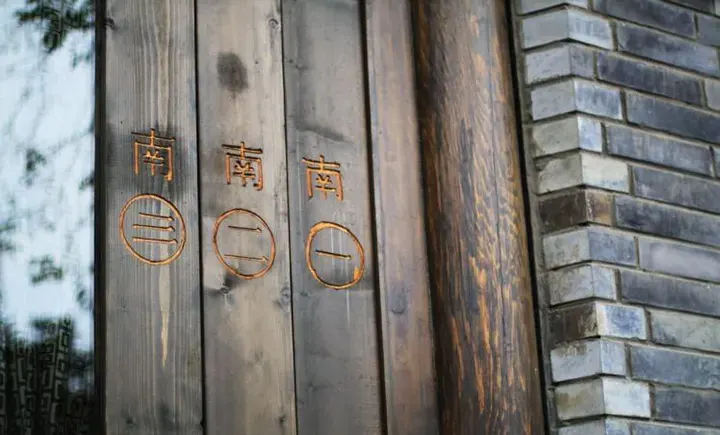
Wooden street signs and brick walls in the alley
Kuanzhai Alley
Three parallel Qing-dynasty lanes — Wide, Narrow and Well — and the last surviving sample of the old street grid, free all day. Metro L4 Kuanzhai Alley, right outside the exit.
Wuhou Shrine and Jinli
A quiet courtyard inside the shrine
Founded in 223 CE, Wuhou Shrine is China's only temple where ruler and minister share one precinct, and the red wall and bamboo shade by the Huiling tomb path is the most photographed spot in town. Admission ¥50, open roughly 8:00–20:00 in high season. Jinli, free and open all day, starts at its east gate and is best once the lanterns light.
Du Fu Thatched Cottage
The home of the Tang poet Du Fu, who lived here nearly four years and wrote more than two hundred poems — including 'My Thatched Hut Wrecked by Autumn Wind'. The gardens are hushed and lovely, best in the rain. Admission ¥50, half price for students; walk from Metro L4 Caotang North Road and pair it with the Sichuan Museum next door.
Wenshu Monastery
One of the four great monasteries of western Sichuan, holding over 500 paintings and calligraphies and some 120,000 volumes of scripture. Free entry, open roughly 8:00–17:00 (last entry 16:30), direct on Metro L1 Wenshu Monastery. Outside the walls, don't miss the famous liangfen shop and pastry bakery.
Jinsha Site Museum
A sacrificial site of the ancient Shu kingdom, unearthed in 2001 and pushing Chengdu's urban history back to around 611 BCE. The treasure is the 'Sun Bird' gold foil, now the emblem of Chinese cultural heritage. Admission ¥70 (half for students), 9:00–18:00 with last entry 17:00, closed Mondays (except public holidays and Jan, Feb, Jul, Aug).
People's Park
Lesson one in the Chengdu way of life, free to enter. At Heming Teahouse tea runs ¥20–40 and ear-cleaning ¥30–50; the bamboo chairs, copper kettles and matchmaking corner are all part of the show. Go after lunch. Metro L2 People's Park, direct.
06Hand yourself over to the pace
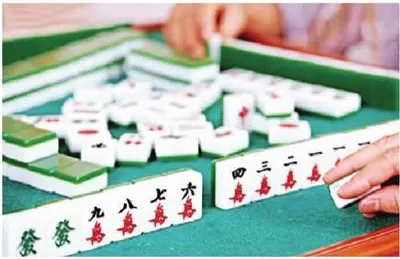
A mahjong table in the teahouse
While away an afternoon in a teahouse
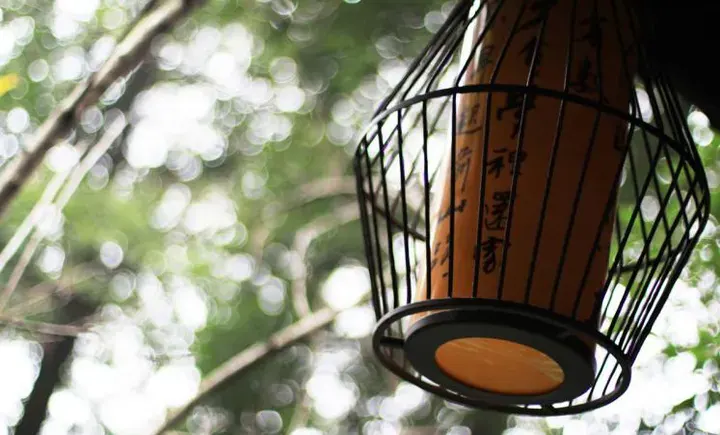
'Little blue sky overhead, teahouses all around' — teahouse-sitting is written into Chengdu DNA. Heming Teahouse is the famous one; Kuanzhai Alley and the Wenshu quarter each have their own, tea ¥20–40. Order jasmine tea, sink into a bamboo chair, refill endlessly.
Get your ears cleaned
Sichuan ear-cleaning is a recognized folk craft: one strike of the tuning fork, one turn of the feather wisps, and a shiver runs from ear to skull. Do it only inside a proper teahouse at a posted price (¥30–50); street touts inflate the bill.
Watch Sichuan opera and face-changing
Sichuan opera was hailed as 'the finest under heaven' as early as the Tang dynasty, with face-changing, fire-spitting and the rolling lamp as signature stunts. Shufeng Yayun on Qintai Road charges from ¥148 including tea — book ahead in high season. Small theaters around Wenshu Fang cost about ¥50.
Nights along Jiuyanqiao
The Jiuyanqiao bar strip unspools along the Jinjiang River, birthplace of the city's nightlife; the small venue on Yulin Road became a pilgrimage site after Zhao Lei's song 'Chengdu'. Watch for bar scams — refuse any 'come sit with us' invitation from a stranger.
Time a lantern festival
Temple-fair lanterns
The Chengdu Lantern Festival has run every Chinese New Year since 1962 for about a month, drawing over a million visitors per edition. Venues and prices change yearly — check official announcements before you go.
07From hostel bunks to five stars
Lodging stock is deep at every price level. The rule: proximity to a metro station beats proximity to a sight. Chunxi Road–Taikoo Li suits shoppers and night owls, Kuanzhai Alley–People's Park has the old-town atmosphere, and the Wenshu Monastery area packs quiet hostels.
Budget: hostels and chains cluster around Chunxi Road and Wenshu Monastery — dorms from about ¥50–80, chain doubles ¥150–300.
Comfort: mid-range hotels around Chunxi Road and Taikoo Li run ¥300–700 a night; holiday prices double.
High-end: five-star properties around Taikoo Li and Tianfu Square start at ¥500–1,000, with Hyatt, St. Regis and Niccolo all within walking distance.
Character picks: courtyard guesthouses inside Kuanzhai Alley, and hot-spring resorts at the foot of Mount Qingcheng (roughly ¥480–980 in high season).
08Eat in China, taste in Sichuan
Sichuan cuisine rests on four pillars — chili, pepper, Sichuan pepper and broad-bean paste — with 'a hundred dishes, a hundred tastes'. UNESCO lists Chengdu as a City of Gastronomy, and the iron rule for choosing a restaurant is: the shabbier the front and the more locals inside, the better the food.
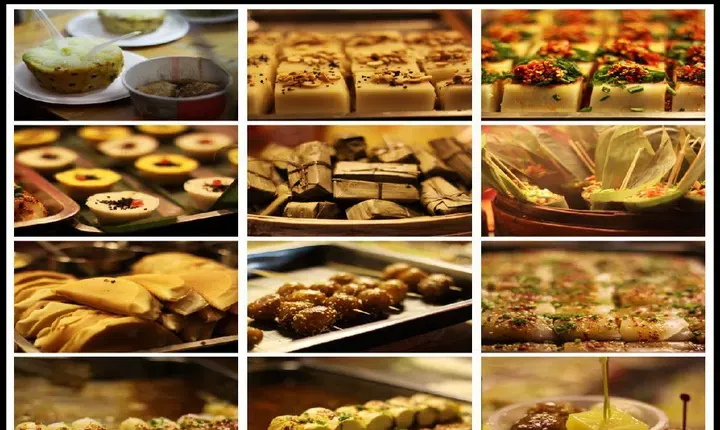
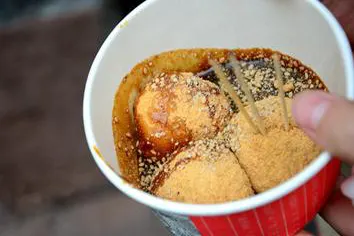
A spread of Chengdu snacks
Hotpot and skewers
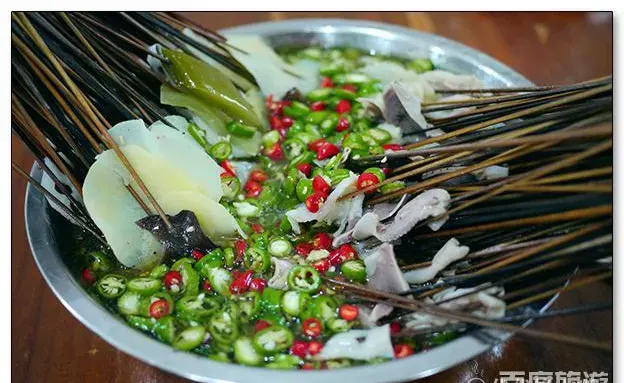
Beef-tallow broth in a nine-grid pot is the classic format, and the only correct dip is garlic in sesame oil — a half-mild yuanyang pot is no shame, locals order it too. Chuan chuan xiang skewers come cold from the fridge, paid by the stick, while bobo chicken is the room-temperature version in mala or green-pepper sauce. Hotpot runs about ¥80–120 a head; skewers less.
Bobo chicken — skewers steeped cold in the sauce
The snack hit list
Zhong shuijiao: all-pork dumplings under red-chili oil with a sweet-salty sauce, about ¥20.
Long choushou: wonton skins thin as paper in a rich milky broth, founded on Chunxi Road in the 1940s.
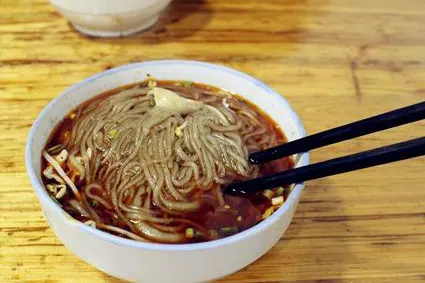
Dan dan noodles: thin noodles under a fragrant spicy-savory meat sauce — the benchmark for Sichuan noodles.
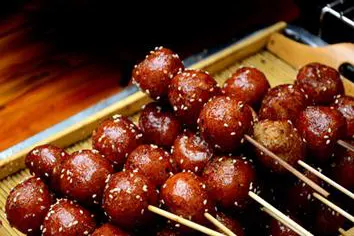
San da pao and sugar-oil balls: glutinous-rice bullets slammed onto the counter with three bangs, dusted in soybean flour and syrup; the sugar-oil version is fried, sesame-rolled and skewered.
Feichang fen: sweet-potato noodles in a pork-intestine broth — 'no feichang fen, no Chengdu'.
Shuangliu rabbit head: mala or five-spice, the meat falling off the bone — locals cross town to queue for it.
Sugar-oil balls: fried, sesame-rolled and skeweredA bowl of red-oil noodles
Where to eat
Sugar-oil balls on a skewer
Kuanzhai Alley and Jinli are for looking; walk out to eat. One street over, Kuixinglou Road is the locals' canteen (about ¥40); Jianshe Road's snack street peaks after dark; Yulin Road hides a whole district of shabby-brilliant eateries, with Mingting in Caojiaxiang market as their king. For mapo tofu, the original Chen Mapo Tofu is the classic (¥60–80 a head).
09Taking Chengdu home
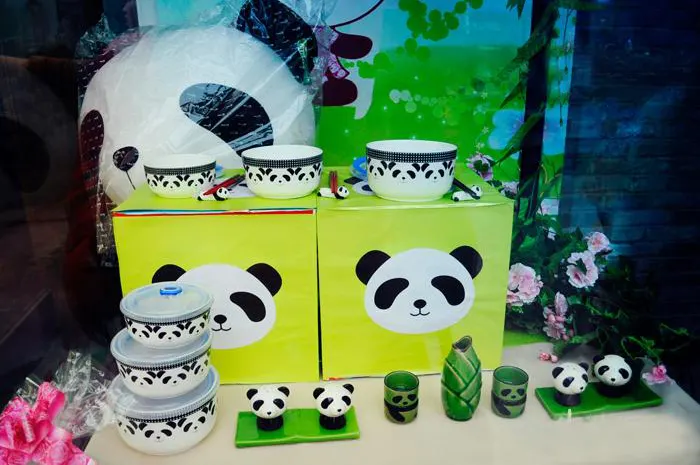
Chengdu's souvenirs revolve around two things: food and pandas. The main shopping streets run through Chunxi Road and Zongfu Road; for panda merchandise, the base's own gift shop or the IFS store guarantee quality and licensing.
Panda merchandise, endless shelves
Pixian broad-bean paste: 'the soul of Sichuan cooking' — look for the Juancheng brand in supermarkets.
Jasmine tea: the default Chengdu drink; Bitan Piaoxue and Sanhua are reliable brands, available at any supermarket.
Shu brocade and embroidery: among China's four great embroidery traditions; small brocade pieces run about ¥200–1,000.
Beef jerky and hotpot base: Zhangfei beef and yak jerky are the good ones; buy hotpot base at a supermarket, never at a scenic area.
Where: Chunxi Road and Taikoo Li for brands and design goods; Kuanzhai Alley has the best atmosphere but tourist prices; for one-stop shopping, the Sichuan Specialty Mall on Yusha Road.
10Getting there and around
Arriving by train
Chengdu is the largest rail hub in southwest China. Chengdu East is the main station — high-speed trains to Chongqing, Xi'an, Leshan, Mount Emei and Huanglong-Jiuzhaigou mostly start here; the intercity to Mount Qingcheng departs from Xipu, reachable on Metro L2. Check trains to Chengdu on this site and book online.
Flying in: the two-airport era
Tianfu (TFU, mostly international, about 50 km southeast): the L18 express reaches South Railway Station in about 37 minutes for around ¥10, taxis ¥180–220. Shuangliu (CTU, mostly domestic, much closer): Metro L10 goes direct, taxis ¥40–60. Airport buses run about ¥25. Check which airport is on your ticket.
The metro: your default
Chengdu's metro ranks among the longest networks in China, covering every major sight. Fares are distance-based: ¥2 covers the first 4 km, network maximum about ¥12. Use the 'Chengdu Metro' Alipay mini program or the Tianfutong app to scan in; a Tianfutong card earns 10% off, and children under 1.3 m ride free.
Taxis and shared bikes
Taxis start around ¥8–10 for the first 2 km, most inner-city rides ¥15–30; rush hours jam badly, so use Didi. Shared bikes are everywhere — for 2–3 km inside the old city a bike often beats a taxi.
Emergency numbers: police 110, ambulance 120, fire 119.
Government service and complaint hotline: 12345 (covers tourism complaints).
Major hospitals: West China Hospital of Sichuan University (37 Guoxue Alley), Sichuan Provincial People's Hospital (32 West Section 2, First Ring Road).
Money: mobile payment is universal — Alipay accepts linked international cards; the metro, convenience stores and even the tiniest eatery take QR codes; carry a little cash as backup.
Weather: clouds and humidity are constants, UV is mild. Summer is muggy, winter damp-cold — an umbrella matters more than sunscreen.
12Packing list and pitfalls
Documents and bookings: carry your passport or ID — the panda base, Dujiangyan–Mount Qingcheng and Sanxingdui are all real-name entry; grab tickets 3–7 days ahead for peaks.
Seasonal kit: an umbrella all year; breathable clothes in summer, windproof layers in winter; proper sneakers are non-negotiable.
Health: pack stomach remedies and calibrate spice from 'barely spicy'; toward Huanglong-Jiuzhaigou (about 3,000 m) skip alcohol the night before and take it easy on arrival.
Electronics: charger and power bank; install Alipay, a map app (Amap), a translator and Didi for rides.
Four pitfalls: panda tickets come only from the official account — every paid 'skip-the-line' service is a scam; the snacks in Kuanzhai Alley and Jinli are pricey and mediocre, so eat on Kuixinglou or Yulin Road; ignore 'free fortune-telling' touts around Wenshu Monastery; and at Jiuyanqiao refuse any bar invitation from a stranger.
13Where 'land of abundance' comes from
Geography and climate
Chengdu sits in the western Sichuan Basin; Minjiang water, tamed by the Dujiangyan Irrigation System, soaks the plain into farmland. The humid subtropical climate averages about 16°C, with rain concentrated in July and August. Clouds rule and sun is scarce — hence the saying 'Shu dogs bark at the sun'.
The ancient Shu
By the Shang and Zhou eras the ancient Shu people had built a sophisticated bronze civilization: the sacred trees and protruding-eye masks of Sanxingdui and the golden Sun Bird of Jinsha all came from this plain. Qin conquered Shu in 316 BCE; the Han set up its brocade office; and the world's first paper money, jiaozi, was printed here in the Northern Song.
A name that never changed
The name Chengdu comes from the old saying about founding a capital: 'in the first year a settlement, in the second a town, in the third a chengdu — a completed capital.' The Shu emperor Meng Chang so loved hibiscus that he had the walls planted with it — for forty li the city bloomed like brocade, hence Hibiscus City, Rongcheng.
14Four routes out of town
Mount Qingcheng, the quietest mountain under heaven
Dujiangyan and Mount Qingcheng (1–2 days)
The Dujiangyan Irrigation System is the world's best-preserved ancient hydraulic works still in use — admission ¥80 (shuttle ¥10 one way / ¥15 return), open from 8:00. Mount Qingcheng, 'the most secluded mountain under heaven', charges ¥80 for the temple-clad front peaks (cableway ¥35 one way / ¥60 return) and ¥20 for the back-mountain gorge hike. Go deep on one per day. The intercity rail from Xipu takes about 30 minutes for ¥10; reserve tickets 1–7 days ahead.
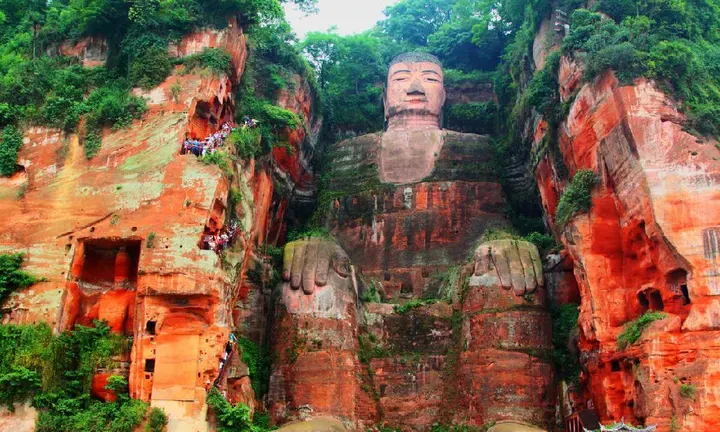
The Leshan Giant Buddha at the river confluence
Leshan Giant Buddha and Mount Emei (2–3 days)
The Leshan Giant Buddha, carved into the cliff where three rivers meet, stands 71 m tall — the largest ancient stone Buddha in existence. The climbing ticket is ¥80 (nine-turn plank road down to the Buddha's feet) or the boat ¥70 for the panorama from the water; the high-speed train from Chengdu East takes about an hour (¥41–54). Mount Emei, one of China's four sacred Buddhist mountains, charges ¥160 in high season (¥110 off), with a full-mountain shuttle at ¥90 return and the Golden Summit cableway ¥65 up / ¥55 down; Chengdu East reaches Emeishan in about 70 minutes for ¥65 — two days covers both comfortably.
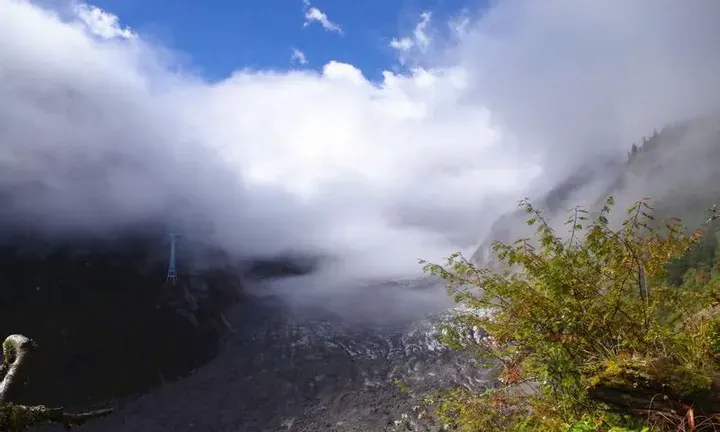
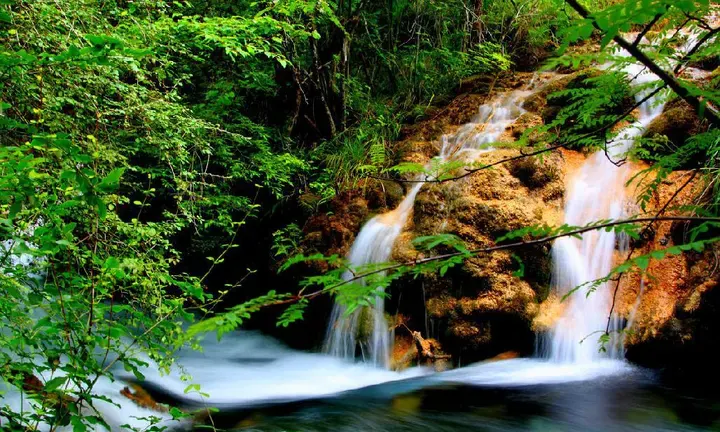
The sea of clouds from Mount Emei's Golden SummitThe waters of Jiuzhaigou
Jiuzhaigou (3–4 days)
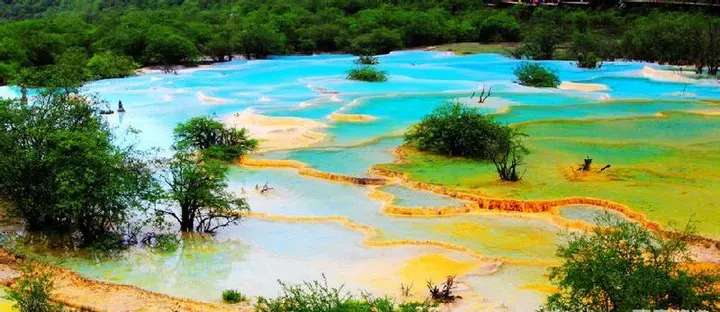
'After Jiuzhaigou, you stop looking at water' — its turquoise lakes, stacked waterfalls, autumn forests and snow peaks live up to the hype. D trains from Chengdu East reach Huanglong-Jiuzhaigou station in about 1.5–2.5 hours (¥130–143 second class), where a shuttle covers the last two hours to the valley entrance (¥51, book on the 'Jiulv Yuexing' mini program) — under four hours door to door. Wuhua Lake and Nuorilang Falls are the highlights; Huanglong, an hour from the station, slots in as a half day.
The Five-Color Ponds of Huanglong
Sanxingdui (1 day)
'Asleep for three thousand years; awake, it startles the world.' The ancient Shu site of Sanxingdui lies in Guanghan — a D train from Chengdu East takes about half an hour, then ten minutes by taxi. The bronze standing figure, the sacred bronze tree and the gold mask all wait in the new galleries; budget three hours with an audio guide. Admission ¥72 by real-name booking on the official account.
15Watch and read before you go
Film
"A Good Rain Knows" (2009, dir. Hur Jin-ho): a quiet romance shot on location in Chengdu, where the Du Fu Thatched Cottage and the city's endless drizzle set the tone — the title quotes Du Fu's 'Spring Night, the Joyful Rain', written right here.
Books
Murong Xuecun, "Chengdu, Please Forget Me Tonight": a generation of Chengdu twenty-somethings wrestling with work, love and marriage — a phenomenon of the early internet era.
Music
Zhao Lei, "Chengdu": the folk song that swept China in 2016 — 'walk with me through the streets of Chengdu'. The little bar on Yulin Road became a pilgrimage site because of it. Understand this song and you understand the city's slowness, and its hold.