The 8D cityTwo-river nightsBeef-tallow hotpotMonorail through a building
In short
Chongqing (重庆, Chóngqìng), China's youngest municipality, sits on the Yuzhong Peninsula where the Yangtze and Jialing rivers meet. Buildings grow straight out of the cliffs, a monorail runs through a residential tower, a cable car crosses the Yangtze, and the 500 metres on your map may involve eight flights of stairs. Three days covers Jiefangbei, Hongyadong, the Yangtze River cableway, Liziba and Ciqikou; add a day for the Dazu Rock Carvings, or two for the Three Natural Bridges at Wulong. March to May and September to November are the comfortable months; summer highs can pass 40°C. A mid-range trip costs roughly ¥1,500–2,500 for 3 days excluding long-distance transport.
Key facts
Known for
Vertical city · Hotpot · Night views · Monorail through a tower
Budget
¥1,500–2,500 for 3 days, mid-range
Days needed
3 days (4 with Dazu, 5 with Wulong)
Comfort
Demanding: hills, stairs and fierce summer heat
Best time to go
March–May and September–November; July–August can exceed 40°C
01What kind of city Chongqing is
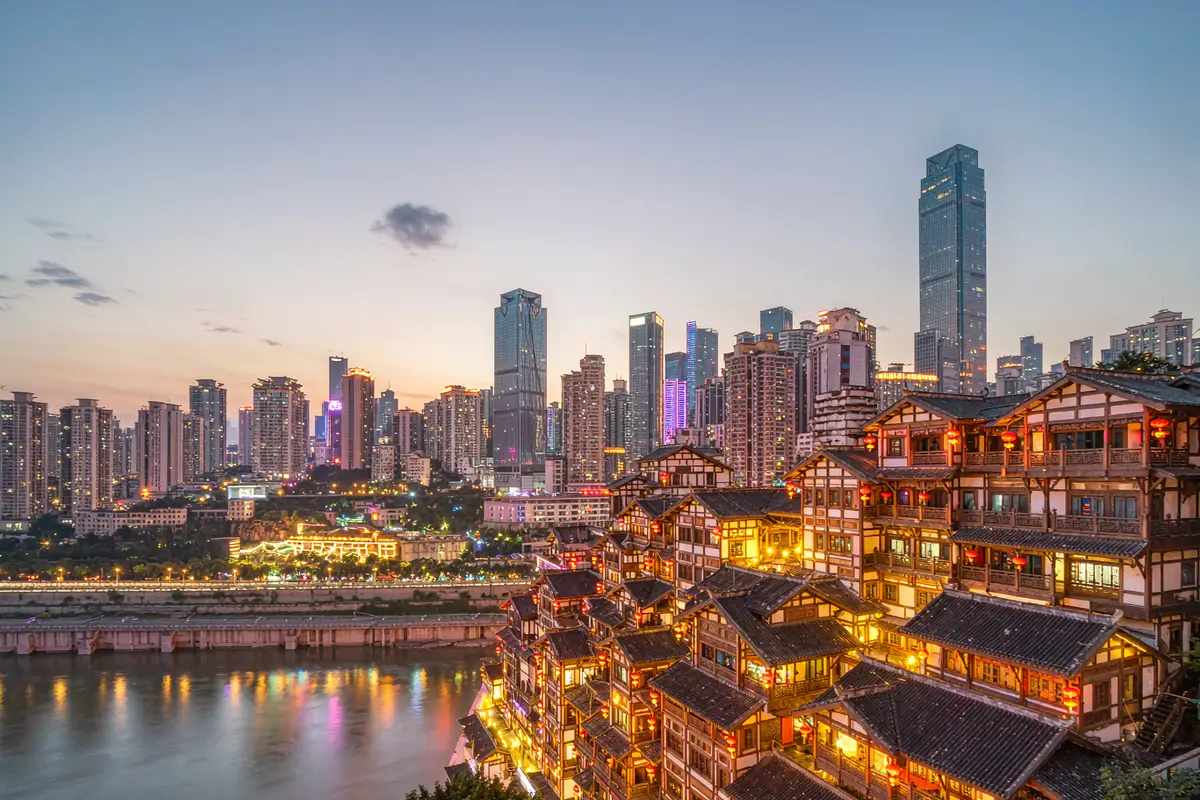
After dark, Hongyadong's lights climb the cliff floor by floor
Chongqing is the youngest of China's four municipalities, upgraded only in 1997, yet it covers 82,400 sq km — larger than many provinces. Thirty-odd million people live among hills folded like crumpled paper, and the old core is squeezed onto the Yuzhong Peninsula between the Yangtze and the Jialing, less than a kilometre wide at its narrowest.
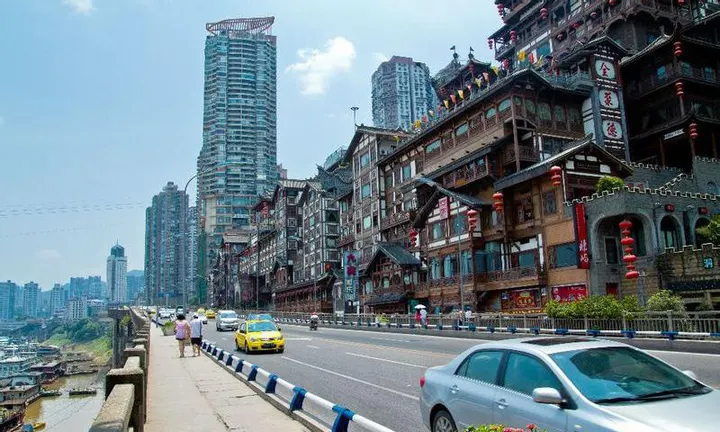
The main attraction is not a single sight but the city itself: a road enters a building on the eleventh floor while the riverfront sits at the first; a monorail passes through the sixth to eighth floors of a residential tower; you cross the Yangtze not by ferry but by cable car; and a 112-metre outdoor escalator solves the drop from Lianglukou down to Caiyuanba. Locals call it the 8D city, because a flat map only has two dimensions.
See no night view, and you have not been to Chongqing.
A Chongqing saying
Plan the day around light, not around a checklist: climb and walk while it is bright — Ciqikou, the Three Gorges Museum, the hillside lanes — then take the cableway or stand at Chaotianmen at dusk, and give the hours after dark to Hongyadong, the Qiansimen Bridge and Nanshan. Three days read the city properly; a fourth adds the World Heritage carvings at Dazu, and a fifth and sixth go to Wulong.
02Six things that only work in Chongqing
HongyadongStilt houses stacked up a cliff
Eleven storeys of stilt houses climb the Jialing cliff. Walk out on the top floor and you are on Cangbai Road; walk out at the bottom and you are on Binjiang Road — the ten levels between are all stairs and lifts. By day you read the timber and upturned eaves; after dark the whole cliff lights up like a golden stage hung over the river.
Admission:Free; real-name booking on the official WeChat account during holidays and summer
Lights on:19:30–23:00 (about 18:30 in winter)
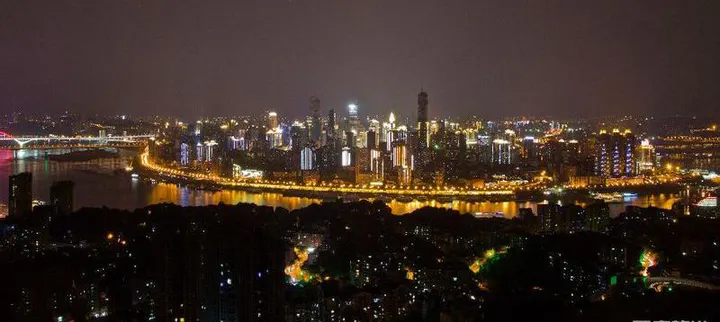
The two-river nightChina's most three-dimensional skyline
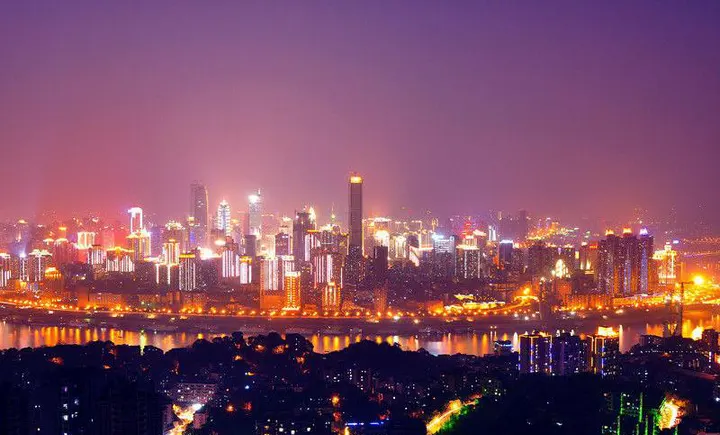
Chongqing's night wins on elevation: the lights do not sit on one plane but step back into the hills, layer behind layer. The Qiansimen Bridge frames Hongyadong whole, Nanshan Yikeshu viewpoint takes in the entire Yuzhong Peninsula, and from Nanbin Road the far bank reads as a wall of light.
Best time:19:30–21:00, the blue hour after the lights come on
Where to stand:Qiansimen Bridge is free; Nanshan Yikeshu ¥28–30
One beef-tallow hotpotA daily habit, not a show
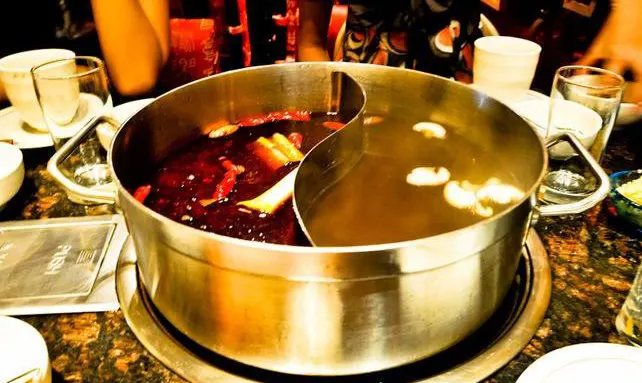
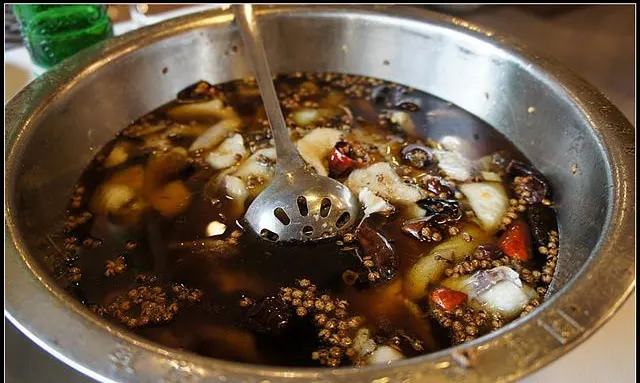
Chongqing hotpot starts with beef tallow and more Sichuan pepper than chilli, aiming at a numb-hot savoury rush. The nine-grid pot is functional: the centre for quick dips of tripe and duck intestine, the corners for blood curd and pork that can take a long simmer. Order a half-mild yuanyang pot if you must — locals do too.
Typical spend:¥60–85 at neighbourhood places; ¥100–150+ at scenic-area names
An afternoon in an old teahouseThe city in slow motion
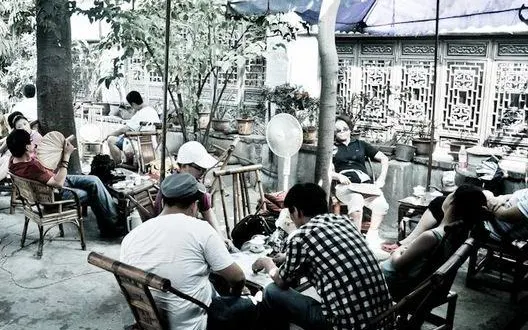
Jiaotong Teahouse in Huangjueping still looks like the last century: concrete floor, worn wooden tables, a lidded cup of tea for about ¥10, railway workers and art-school students sharing one room over chess and gossip. There is no service here, only time.
Tea:¥10–25 a cup, refills included
The Dazu Rock CarvingsA World Heritage cliff of Song-dynasty life
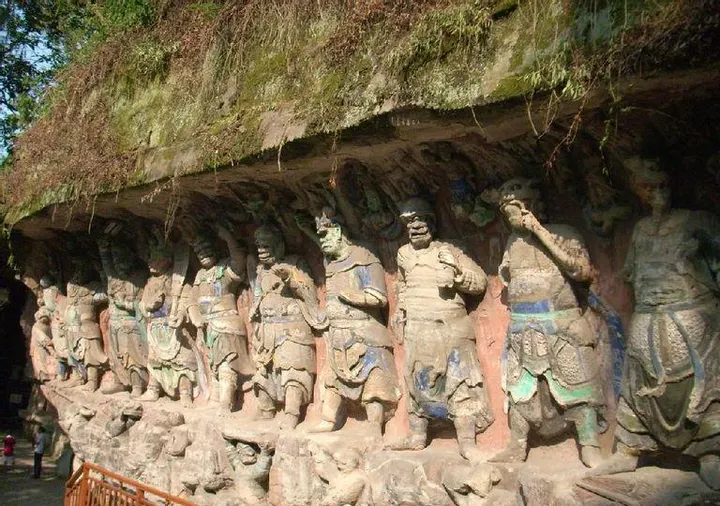
The Dazu carvings are cliff-cut Buddhist, Daoist and Confucian images made between the late Tang and early Song, inscribed by UNESCO in 1999. Baoding is the dense masterpiece: the Thousand-Hand Guanyin, a reclining Buddha, a panorama of hell, and the Ten Ox-Herding pictures — scripture told as comic panels, down to a sutra on the debt owed to parents.
Admission:¥110 for Baoding; ¥135 with Beishan
Getting there:30–50 min by high-speed rail to Dazu South, then 30–40 min by taxi
The Three Natural Bridges at WulongA film set at the bottom of a sinkhole
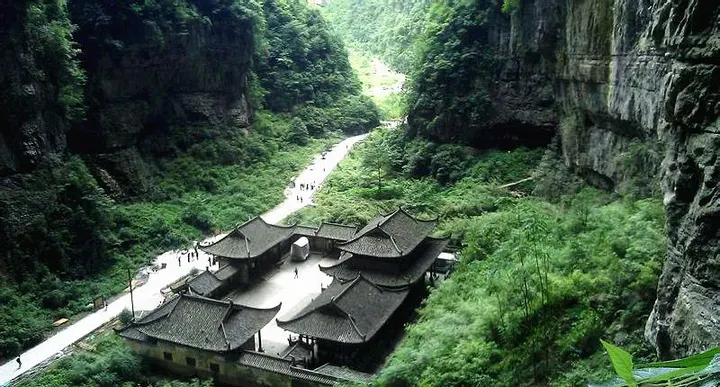
Three natural stone bridges span a vast sinkhole, with the grey-tiled Tianfu post station sitting on the floor below — the set for Curse of the Golden Flower and a location in Transformers: Age of Extinction. An elevator drops you from the rim to the bottom; look up at the bridge arches and people shrink to beans.
Admission:¥125 plus a compulsory ¥40 shuttle (¥155 including the lift)
Getting there:About 30 min from Chongqing East to Wulong South
03The questions everyone asks first
Chongqing is vertical — how do I actually navigate it?
Three rules. First, follow exit numbers, not street names: one station can have four or five exits at completely different elevations. Second, when asking directions, ask 'upper city or lower city' and 'which floor do I leave from' — compass directions are useless. Third, 300 metres as the crow flies may mean ten flights of stairs, so allow 1.5–2 times the walking time your map suggests. Cross the river by metro, not on foot.
How many days do I need in Chongqing?
Three days in the city is the comfortable minimum: one for the Yuzhong Peninsula — Jiefangbei (Liberation Monument), Hongyadong, the cableway — one from Liziba out to Ciqikou, and one for Chaotianmen and Nanshan. Two days still covers the essentials if you drop either Ciqikou or Nanshan. Add a day for Dazu, and 1.5–2 days for Wulong; Dazu plus Wulong plus the Three Gorges needs a week or more.
How do I order hotpot if I can't take the heat?
Ask for a yuanyang pot, and request 'wei la' — mildly hot — even for the red half; Chongqing mild runs about medium elsewhere, so do not bluff. Keep the dip to sesame oil and raw garlic, never a ladle of the broth. Order bingfen jelly, liangxia or a bottle of soy milk to cool down. Skip brains and duck intestine on a first visit; start with tripe, sliced beef, crisp pork and lotus root.
Are the monorail-through-a-building and the Yangtze cableway worth it?
The monorail is not an attraction but ordinary public transport: ride Line 2 to Liziba, step out to the free viewing platform, and spend ¥2 to pass through the tower for one stop; tack on the 20-minute climb to Eling Park for the peninsula view and it is easily worth it. The cableway costs ¥30 one way or ¥50 return for a five-minute crossing, and peak queues often exceed an hour — riding it once at dusk is worth it, queueing two hours for it is not. The ¥2 Huangguan escalator and the Kaisyuan Road lift are the cheap alternatives.
Does Wulong deserve a day of its own?
Honestly, it wants a day and a half to two days. The Three Natural Bridges alone can be done as a rushed day trip from Chongqing East, but the sane version pairs the bridges with Longshuixia Gorge on day one, sleeps in Xiannüshan town, and takes the grassland on day two. Rooms up there are scarce and expensive over May Day and National Day — book ahead.
Just how hot does Chongqing get in summer?
July and August are the furnace: 35–39°C by day, extremes of 40–42°C, with humidity that keeps nights warm. Locals hide at midday — malls, museums, air-conditioned hotpot halls — and come out after sunset for the river. Carry heat-stroke remedy, a hat and a spare shirt. If your dates are flexible, move the trip to March–May or September–November.
Should I stay at Jiefangbei or Nanbin Road?
First-timers should base at Jiefangbei–Hongyadong: night views, Metro Lines 1, 2 and 6 and snack streets on the doorstep, at the cost of noise, price and hills. Nanbin Road is quieter and has the best view back across the river, but reaching Yuzhong means a taxi or the cableway — better on a second visit or with children. On a budget, Guanyinqiao in Jiangbei sits on Metro Line 3 with rooms about 30 per cent cheaper.
04Three days, from river level to cliff top
Chongqing's sights sit close together, but elevation steals the hours. Keep to three or four stops a day, do the climbing in the morning, give dusk to the river and the dark to the lights.
D1
The peninsula: Jiefangbei and Bayi snack street in the morning, xiaomian for lunch, then the Yangtze cableway from Xinhua Road (¥30 one way) to Longmenhao old street and a walk along Nanbin Road to Danzishi. Come back across town before dusk, hold a spot on the Qiansimen Bridge for the 19:30 switch-on, drop to Hongyadong's first-floor riverside road for the upward shot, and finish with hotpot.
D2
Vertical transport and an old town: reach the Liziba platform before 8:00 for the monorail through the tower, ride one stop for the inside experience, then climb to Eling Park for the peninsula panorama. Midday belongs to the Three Gorges Museum (free, closed Mondays) for Ba-Yu and dam history; in the afternoon take Metro Line 1 to Ciqikou for two hours and a bag of mahua. End at Nanshan Yikeshu (¥28–30) as the whole city lights up.
D3
River confluence and the old city: start at Chaotianmen square where the Yangtze and Jialing meet in two colours, then the Huguang Guild Hall (¥32) for Qing migrant guilds and carved opera stages. Lunch on jianghu dishes at Jiaochangkou, an afternoon on the hillside lanes and Shibati steps with a teahouse stop, and a final evening at Guanyinqiao for dinner and Beicheng Tianjie — or take an afternoon train to Dazu if you have a fourth day.
05From Jiefangbei down to Chaotianmen
Jiefangbei, dwarfed by the towers that surround it
Jiefangbei (Liberation Monument)
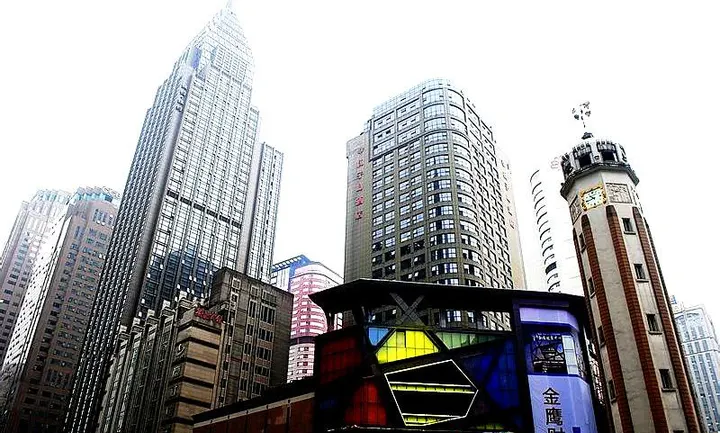
Jiefangbei is the city's symbolic centre: the only monument in China built to mark victory in the War of Resistance, completed in 1947, with western China's densest shopping district grown up around it. The obelisk itself takes ten minutes; what is worth seeing is the proportion — a 27-metre monument ringed by 300-metre towers. Walk from Metro Lines 1 or 2 at Jiaochangkou or Linjiangmen.
Hongyadong
Enter at the 11th floor on Cangbai Road and walk down: design shops on nine and ten, the Hongya Dicui waterfall around five to eight, snacks on four, and the Jialing riverside road at ground level. It is two different buildings by day and night — timber, eaves and banyan roots on the cliff by daylight; a sheet of gold pouring into the river after dark.
Chaotianmen and the Huguang Guild Hall
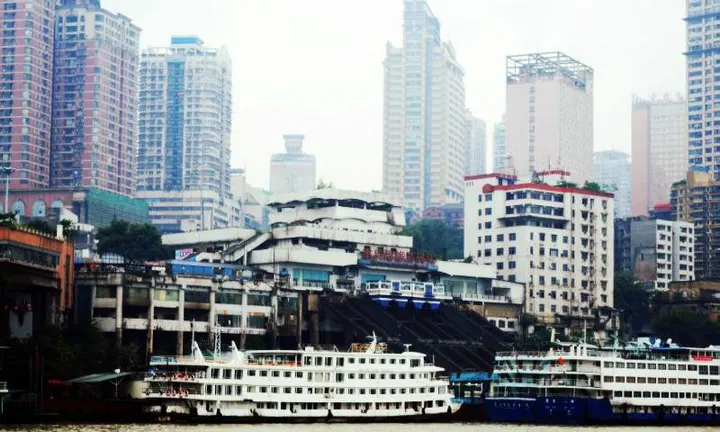
Chaotianmen wharf, cruise boats below a wall of buildings
Chaotianmen was the most famous of Chongqing's seventeen old city gates; in the Southern Song, imperial envoys arrived by river here to deliver edicts, hence 'facing heaven'. Today it is the pier for two-river cruises and the place to see the muddy Yangtze meet the clear Jialing in a visible seam, sharpest in the rainy season. Ten minutes east stands the Huguang Guild Hall, a Qianlong-era complex built by migrant guilds; give half an hour to the carved opera stage in the Yuwang Palace.
Ciqikou
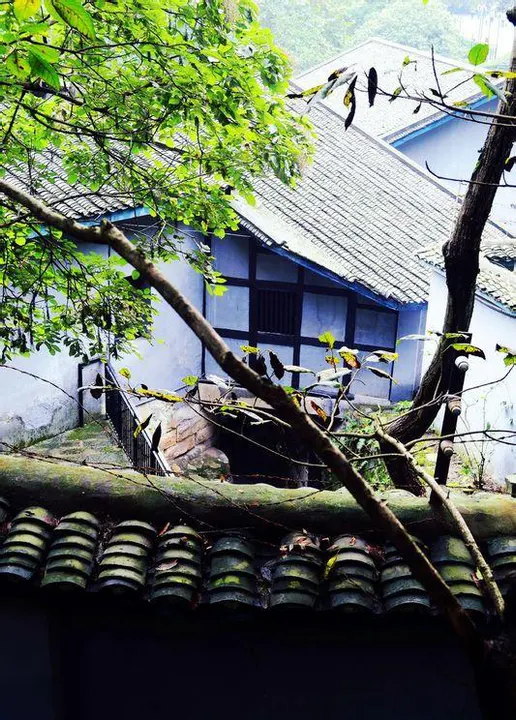
Ciqikou: grey tiles, banyan trees and a stone lane running downhill
Ciqikou began as a river-and-road wharf on the Jialing and is now the only intact old town inside the city proper — free and open all day. The main street is heavily commercial; turn into the side lanes for the good part: old teahouses, trays of drying chillies, grandparents at their doors. The mahua shop with the longest queue is the original; mao xue wang, soft bean-curd sheets and pepper-salt peanuts are the town's three famous dishes. Metro Line 1, exit 1.
The Three Gorges Museum
The Three Gorges Museum faces the Great Hall of the People: free, closed Mondays, 9:00–17:00 with last entry at 16:30, booked on its official account. Four permanent galleries split the work: 'Magnificent Three Gorges' covers the river before and after the reservoir, 'Road of the City' handles the treaty port and the wartime decade, 'Ancient Ba-Yu' shows Ba boat coffins and Han brick reliefs, and 'The War Years' holds the archives of the provisional capital. Two hours is right, and in summer it is the best air-conditioned refuge in town.
The hillside trails and Shibati
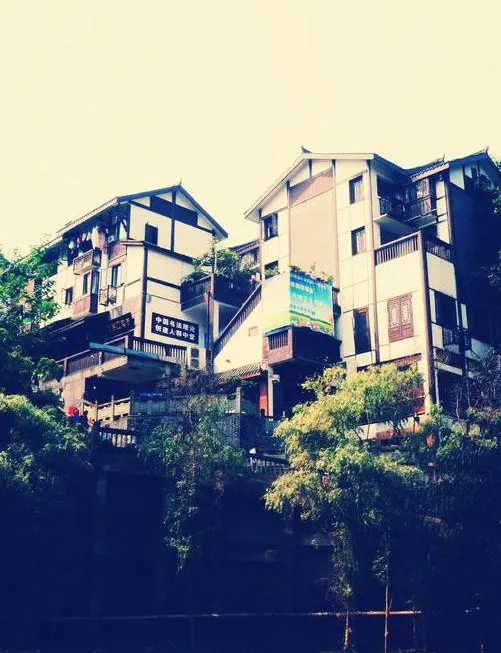
Old stilt houses stacked against the cliff, a slope below
Shibati is the old stone stair linking the upper and lower city; redeveloped into a commercial lane, it still keeps the proportions of the old town in its side alleys. The hillside trail runs as a cantilevered walkway along the cliff from Shibanpo to Zhongxing Road, looking down on the Yangtze and Shanzhuba island. Both are free and best near dusk; wear shoes with grip.
Nanshan
The Yuzhong Peninsula from Nanshan, lifted by two rivers
Nanshan rises on the south bank and is where you read the whole city. The Yikeshu viewpoint charges ¥28–30, open 09:00–22:30 with last entry at 22:00, facing the Yuzhong Peninsula square on; free perches exist along the Huangshan road if you skip the ticket. A full half-day runs botanical garden (¥15.5) by day, spring-water chicken for lunch, and the lights after dark.
06Ride the infrastructure
Cross the Yangtze by cable car
The Yangtze River cableway opened in 1987 and runs about 1,168 metres — once the commuters' air bus across the river. Fares are ¥30 one way, ¥50 return, or ¥40 with an audio guide; it runs 08:00–22:00 from March to November and 08:00–21:00 in winter. Board at the Xinhua Road north station and five minutes later step out at Shangxinjie on the south bank, right by Longmenhao old street. Peak queues pass an hour, so go early or after 21:00 and buy on the official WeChat account first.
Watch the monorail pass through a tower at Liziba
Line 2 runs straight through the sixth to eighth floors of a 19-storey apartment block at Liziba, with a free viewing platform below (06:30–23:00). Trains come every three to five minutes and cross the facade in about six seconds — start burst shooting a second before entry. Do not leave immediately: ride one stop to Fotuguan, climb 700 metres to Lanshengting for the overhead angle, or take the San Ceng Malu trail down to the river.
Take a two-river cruise
Two-river cruises leave Chaotianmen by day and night, ¥88–138 in the standard cabin for about an hour, heading up from the confluence to the Qiansimen Bridge and back. The night sailing is the one for lights, though the deck is windy; the 'switch-on' departure around 19:00 is the sweet spot. Cheaper still are the ¥25–30 cross-river ferries — Liangjiang Xiaodu and Jialing Xiaodu — which locals actually use.
Walk the old city for an afternoon
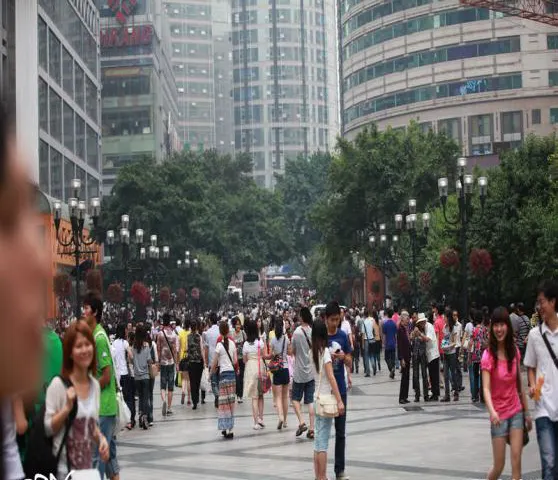
The crowd on a pedestrian street — Chongqing's everyday density
Start at Jiaochangkou and walk via Shibati, Shancheng Lane and Lingshi Lane to Tongyuanmen — the best single walk for understanding the city: old wall, hotpot joints in converted air-raid shelters, banyans hanging off the slope, and up-and-down the whole way. About 3 km and two unhurried hours; wear trainers.
Soak in a hot spring
Chongqing calls itself a city of hot springs, and there are workable ones within reach: Beibei's Beiwengquan, Tongjing in Yubei, and carbonate springs around Nan'an and Ba'nan. Day tickets mostly run ¥100–200. Outdoor pools are best in winter, or after sunset in summer; drink water and keep each soak under 20 minutes.
07Choose by metro exit, not by address
In Chongqing a street address means less than usual: one building can have two entrances at different elevations. When booking, check two things — how far the metro exit is, and whether a lift reaches the lobby. Dragging a suitcase up a flight of steps is this city's first lesson for visitors.
Jiefangbei–Hongyadong: the default for a first visit. Night views and snack streets at the door, Metro Lines 1, 2 and 6 underneath; river-view rooms cost more and street-facing rooms are loud, so ask about floor and orientation. Budget ¥200–350, comfort ¥350–700, high-end river view ¥700–1,500.
Nanbin Road: the best view back at the Yuzhong Peninsula, quiet rooms and rows of restaurants; reaching Jiefangbei means a ¥15–25 taxi or the cableway. Good on a second visit or with older family. Mid-range ¥300–600.
Guanyinqiao in Jiangbei: the best value, with Metro Line 3 running to both Jiefangbei and Chongqing North, and dense eating around Beicheng Tianjie; rooms run about 30 per cent below Jiefangbei.
Shapingba and Chongqing North: for early trains or trips to Wulong and Dazu. Shapingba station sits under the shopping district with hotels straight out of the exit, though nights are quieter than Yuzhong.
08Heat with structure, numbness with reason
Chongqing cooking is built on ma-la — numbing and hot — but not on heat alone: beef tallow gives body, Sichuan pepper gives the electric buzz, broad-bean paste and fermented black beans give savoury depth, ginger and garlic cut the gaminess. Judge a place by how many locals are at the tables, then by whether the base is fried to order.
Hotpot: the city's staple
A beef-tallow base, Sichuan pepper floating on top, thickening as it cooks
A base costs ¥18–48 in neighbourhood places; meat dishes ¥8–38, vegetables ¥1–10, and the oil dip ¥5–10 a head. Order tripe (seven up, eight down), duck intestine (ten seconds), aorta, sliced beef, crisp pork, lotus root and potato. You will leave smelling of tallow; most places hand out aprons and deodorising spray. Expect ¥60–85 a head in a community joint, ¥80–120 in a mall, and ¥100–150+ around Jiefangbei and Hongyadong.
Xiaomian and sour-hot noodles
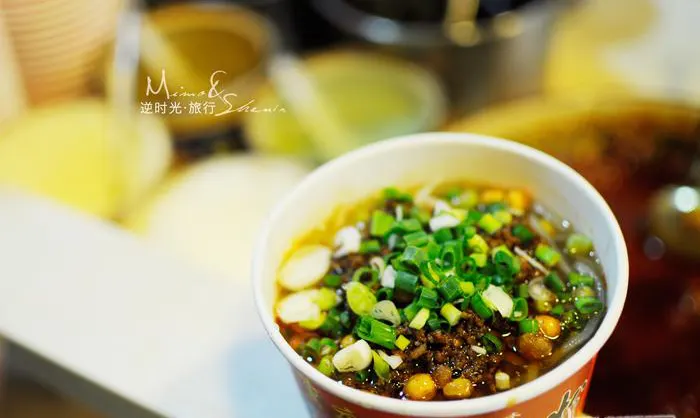
A street-side bowl of sour-hot noodles: chilli oil, peanuts, pickles and scallions
A Chongqing day starts with xiaomian: alkaline noodles blanched for under a minute over a bowl already dressed with chilli oil, soy, preserved greens, garlic water and ground pepper — ¥7–12 for a small bowl, more with beef or intestine. Sour-hot noodles use sweet-potato starch, the sour from vinegar and the heat from chilli oil; in winter one bowl warms you from stomach to fingertips. Street stalls around Haochi Street, Jiaochangkou and Guanyinqiao beat mall outlets.
Jianghu cooking
Jianghu cooking grew out of wharf labour: big portions, heavy oil, no restraint. Mao xue wang, water-boiled fish, chilli chicken, Laifeng fish and spring-water chicken are the standards, and three dishes will feed a table. The spring-water chicken street on Nanshan uses local birds and mountain water, serving one chicken three ways — braised, offal stir-fried, blood in soup — for ¥60–90 a head.
The snack list
Sour-hot noodles: sweet-potato noodles with vinegar, chilli oil, peanuts and pickled mustard, ¥8–12.
Shancheng tangyuan: sesame-filled rice balls in fermented-rice syrup, ¥8–12, the sweet way to cool your mouth.
Liangxia: rice batter dropped into iced brown-sugar water, shaped like tiny shrimp, ¥5–8 in summer.
Dengying beef: sliced thin enough to be translucent, dried and numbing-hot, about ¥18 per 50 g.
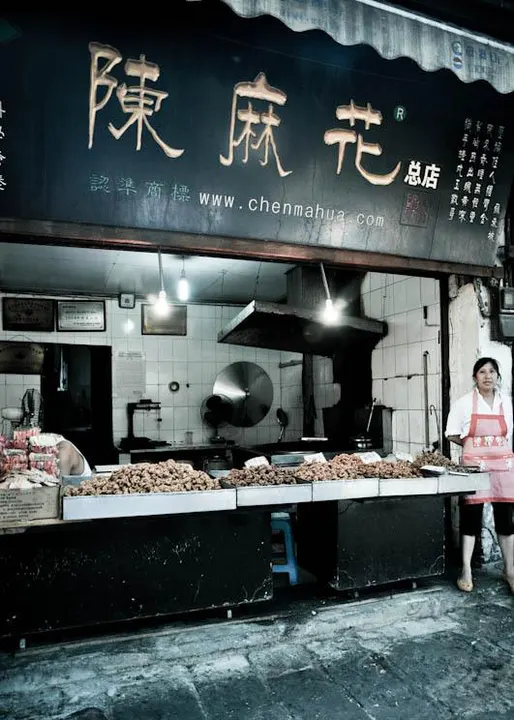
Chen mahua: Ciqikou's twisted dough sticks, crisp and faintly sweet, ¥10–18 a bag.
Bingfen: ice jelly with brown sugar, glutinous rice cake and raisins — the standard finish to hotpot, ¥6–10.
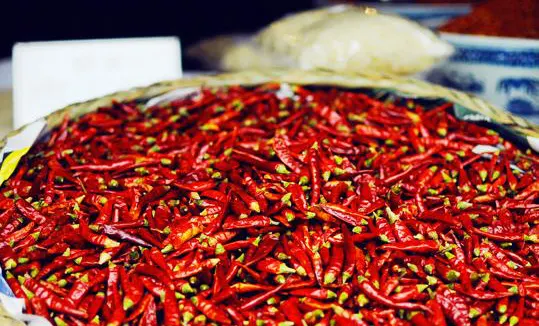
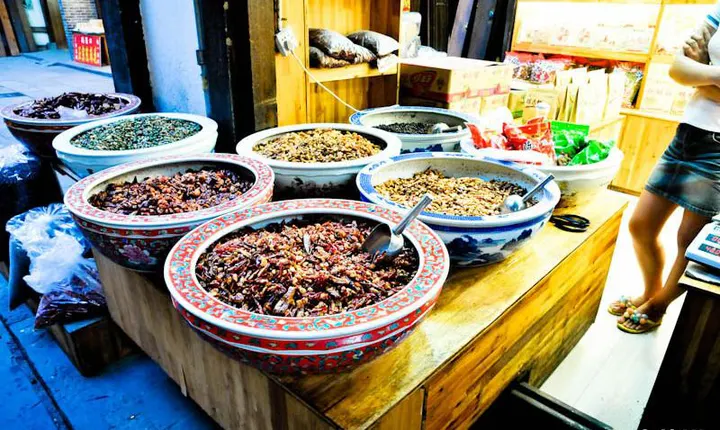
Dried red chillies, the base note of a Chongqing kitchen
Where to eat
Chillies and spices sold by the basin at a street stall
Jiefangbei and Hongyadong are for looking; walk two streets out to eat. Around Jiaochangkou there is the huashi noodle shop, taro chicken behind Rimuguang, and Zhu's hotpot on Linjiang Road — all with local queues. For variety in one go, Bayi snack street (¥30–50 a head) or Guanyinqiao; for late-night food, Jiujie.
09Take the hotpot base home
Chongqing souvenirs are mostly about flavour: hotpot base, pickled mustard, beef jerky, fried dough twists. Buy the base in a supermarket — Yonghui or New Century — for about half the scenic-area price; for mahua, join the queue at Ciqikou's original shop. The Chen Changyin packets in supermarkets are a different brand.
The original Chen Mahua shop in Ciqikou, queue and all
Hotpot base: Qiaotou, Dezhuang, Qinma and Swan, ¥8–20 a packet in supermarkets — choose the beef-tallow version.
Fuling pickled mustard: mustard tuber dried, salted and pressed, crisp and savoury, ¥2–5 a packet.
Dengying beef: translucent slices, numbing-hot and dry, made for beer, ¥20–40 a box.
Chen mahua: ¥10–18 a bag at the Ciqikou original; plain and pepper-salt are the safe picks.
Rongchang folding fans: split bamboo, paper and painting by hand, from tens to hundreds of yuan — a good gift.
Shop at Jiefangbei for the old 'golden cross' retail core, or Guanyinqiao for the younger Beicheng Tianjie crowd. Chaotianmen's wholesale market is for cheap goods — bargain hard. Ciqikou is for food, not for 'antiques'.
10Getting there and around
Arriving by train: know your station
Chongqing North is the biggest hub, handling the Yuwang, Zhengzhou–Chongqing and Chongqing–Lichuan lines — use it for Wanzhou, Fengjie, the Three Gorges and east China; Metro Lines 3, 4 and 10 serve it, and the north and south squares are separate, so check your ticket. Chongqing West takes the Guiyang–Chongqing and Lanzhou–Chongqing lines for Guiyang, Kunming and Lanzhou. Shapingba, buried under the Shapingba shopping district, is the Chengdu–Chongqing intercity terminus and the easiest for Chengdu, with Lines 1, 9 and the loop. Chongqing East, opened in 2025 in Nan'an, handles the Xiamen–Chongqing line and is faster for Wulong, Qianjiang and Changsha. High-speed trains from Chengdu East or Chengdu take about 1–1.5 hours.
Flying in: Jiangbei airport
Jiangbei International (CKG) lies about 20 km from the centre: Terminal 2 is on Metro Lines 10 or 3, Terminal 3A on Line 10, roughly 30–40 minutes into town. T3B is a domestic satellite — check in and clear security at T3A, then take the people mover. Airport bus K01 reaches Jiefangbei for about ¥15 in 70 minutes; a taxi is ¥60–70 and 30–40 minutes.
The metro: the only reliable way
Fares are distance-based: ¥2 for the first 4 km, rising in bands to about ¥11 across the network. Line 2 is a straddle monorail running elevated along the Jialing — a sightseeing line in its own right — while Lines 1 and 6 put you closest to Jiefangbei and Hongyadong at Xiaoshizi and Linjiangmen. Scan in with the Yuchangxing app or Alipay; children under 1.3 m ride free.
Cableway, escalator and ferry
The Yangtze cableway costs ¥30 one way or ¥50 return, north station at Xinhua Road, south at Shangxinjie. The Huangguan escalator links Lianglukou with Caiyuanba, ¥2 for 112 metres — one of Asia's longest hillside escalators — and the Kaisyuan Road lift does the same job from the lower city up to Jiaochangkou for ¥2. Cross-river ferries cost ¥25–30, with piers at Chaotianmen, Ciqikou and Hongyadong.
Taxis and ride-hailing
Taxis start at ¥10 for 3 km, then about ¥2 per km; most inner-city rides land at ¥15–30. Drivers know the vertical road network better than any app — but bridges and tunnels jam at rush hour, so allow 40 minutes of slack for a train. Ride-hailing pins often land on the wrong level; call the driver to confirm the pickup.
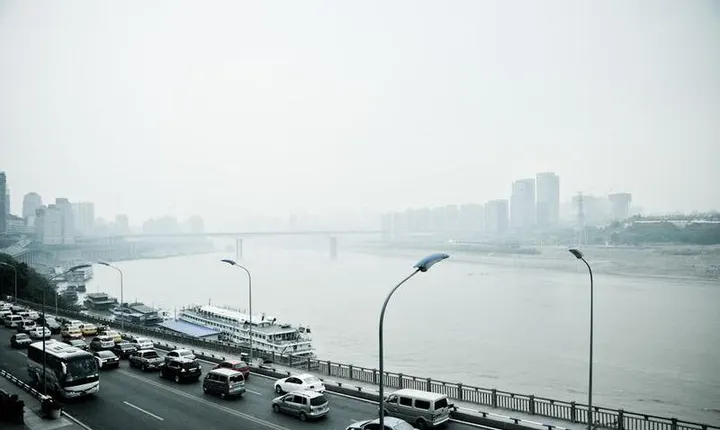
The riverside road, with another one running overhead
Major hospitals: Southwest Hospital of Army Medical University (Gaotanyan, Shapingba), the First Affiliated Hospital of Chongqing Medical University (Yuanjiagang), and Daping Hospital (Changjiang Zhilu, Yuzhong).
Money: mobile payment is universal and Alipay accepts international cards; the metro, convenience stores and street stalls all take QR codes. Carry a little cash as backup.
Weather: humidity stays above 70 per cent most of the year, summers are muggy and winters damp-cold; an umbrella earns its place all year and doubles as shade in summer.
Connectivity: malls, metro stations and chain cafés have Wi-Fi; carry a power bank, because maps and cameras drain a phone fast here.
12Packing list and pitfalls
Shoes: grippy, cushioned trainers come first — the steps are steep and wet stone is slippery.
ID and bookings: carry your passport or ID; Hongyadong on holidays, the Three Gorges Museum, Baigongguan and Zhazidong, and Dazu all require real-name reservations.
Seasonal kit: in summer, sunscreen, a hat, heat-stroke remedy and two spare T-shirts; in winter a windproof layer, since indoor and outdoor temperatures differ sharply.
Electronics: power bank and cable; install Amap, Didi and Yuchangxing, and download an offline map as backup.
Five traps: the '¥10 fast lane' at Hongyadong is a scam — every lift is free; 'free photos' on the Liziba platform end with a ¥10–20 demand, so shoot your own; strangers near Jiefangbei offering tea or fortune-telling should be refused outright; at Ciqikou buy mahua where the queue is longest, not at the first stall; and a taxi driver claiming a river surcharge or a road closure is usually detouring — switch to ride-hailing.
13Hills, rivers and three renamings
Geography: a peninsula between two rivers
The city sits on the eastern rim of the Sichuan Basin, where the Yangtze arrives from the southwest and the Jialing from the north and meets it at Chaotianmen. Built along parallel ridges, it rises more than 200 metres above the water, which is why locals speak of the upper and lower city. Moisture has nowhere to go, so fog settles in on a third of the year's days — hence 'fog city'.
History: Ba, Yuzhou, wartime capital
Three thousand years ago this was the capital of the Ba state. In 583 the Sui emperor Wen set up Yuzhou prefecture, which gave the city its one-character abbreviation, Yu. In 1189 the Song prince later known as Guangzong was enfeoffed here and then took the throne, calling it a double celebration and raising Yuzhou to Chongqing prefecture — the origin of the name. The port opened to foreign trade in 1891, and from 1937 to 1946 the city served as China's wartime capital, drawing factories, universities and millions of people inland and fixing the shape of the modern city.
1997: the youngest municipality
On 18 June 1997 Chongqing left Sichuan and became a municipality, taking on the resettlement of more than a million people from the Three Gorges reservoir area. In the decades since, the metro grew from two lines to over 500 km, bridges multiplied, and the city shifted from climbing steps to riding rails above them.
Wharves and migrants
The great eighteenth-century resettlement brought migrants from Hubei, Hunan and Guangdong upriver, and guild halls, dialects and cooking arrived with them — the Huguang Guild Hall is the surviving evidence. Wharf culture shaped the temperament too: blunt speech, fast decisions, a taste for crowds. Hotpot began as boatmen boiling offcuts and vegetable leaves in one pot.
14Four routes out of town
The Dazu Rock Carvings (1 day)
Take a high-speed train from Chongqing North or West to Dazu South — 30–50 minutes, ¥35–50 second class — then a taxi for 30–40 minutes, about ¥60–80, to Baoding. Admission is ¥110 (some channels charge ¥115), or ¥135 with Beishan; open 8:30–18:00 with last entry at 16:30. Focus on the Thousand-Hand Guanyin, the reclining Buddha, the wheel of rebirth and the ox-herding panels: a 1.5 km circuit, three to four hours. No flash inside the niches.
Wulong (1.5–2 days)
The Three Natural Bridges cost ¥125 plus a compulsory ¥40 shuttle (¥155 with the lift); Longshuixia Gorge ¥85 (¥105 with transfer and lift); Xiannüshan grassland ¥50 with a ¥25 train; Furong Cave ¥80–120. Chongqing East reaches Wulong South in about 30 minutes, while North and West take 1–1.5 hours for ¥67–118; shuttles from the station to Xiannüshan town take 30–40 minutes for ¥9–16. Sleep in the town and take the grassland or the gorge the next morning — far calmer than a same-day return.
The Wujiang gallery and Gongtan (1–2 days)
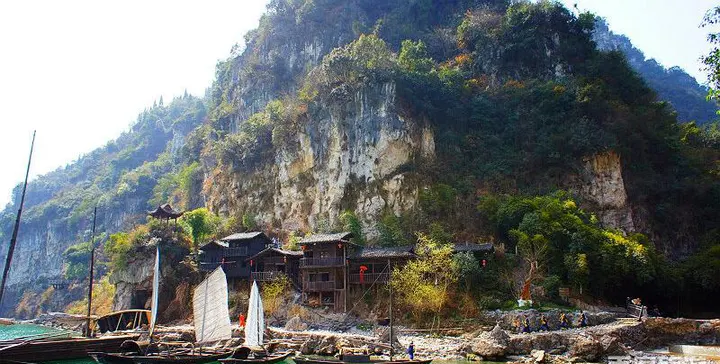
The Wujiang: green water, sheer cliffs and moored cargo boats
Below Wulong the Wujiang cuts a deep gorge; the stretch from Pengshui to Gongtan is called the Wujiang gallery for its green water. Gongtan old town clings to the cliff with a single stone street and stilt houses hanging over the river. High-speed trains from Chongqing East reach Pengshui West in 45–60 minutes for ¥101–110 second class, then an hour by bus; you can also come south from Wulong. Best for travellers who want slow and quiet.
The Three Gorges (2–4 days)
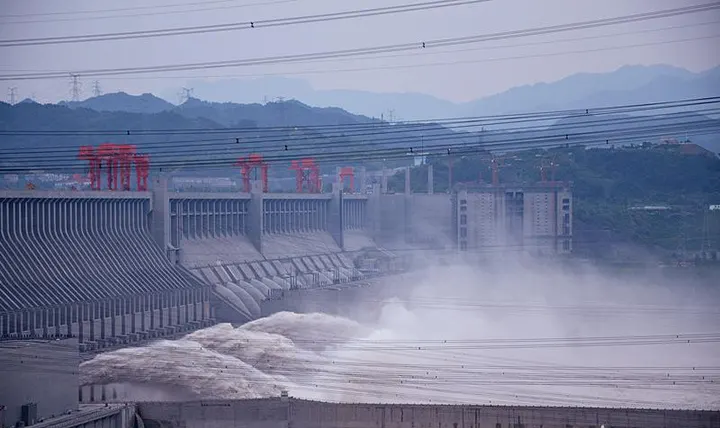
Spillway discharge at the Three Gorges Dam
The Three Gorges run from Baidicheng at Fengjie east to Nanjinguan at Yichang — Qutang, Wu and Xiling gorges over about 193 km. Boats leave Chaotianmen and run downstream to Yichang in three nights and four days: ordinary vessels ¥900–1,500 per person, luxury ships ¥1,700–3,000, and all-inclusive boats ¥2,800–5,000. Alternatively take the train to Fengjie (about two hours) for Qutang Gorge and Baidicheng only, which fits into two days.
15Watch and read before you go
Film
"Crazy Stone" (2006, dir. Ning Hao): one emerald, three gangs and a vertical city. Luohan Temple, the Yangtze cableway and the stacked stairways all appear, and Chongqing's topography does half the comic work.
"Zhou Yu's Train" (2003, dir. Sun Zhou): a woman shuttles by rail between two cities and two lovers. Most of it was shot in Chongqing, where the cableway and river fog carry the film's mood.
"Chongqing Blues" (2010, dir. Wang Xiaoshuai): a ship's captain returns after fourteen years to understand the son shot dead in a supermarket robbery. The title is the city's light — fogbound most days, brilliant when it clears.
Books
Mo Huaiqi, "Baisha Wharf: A Chongqing Character": the story of orphans growing up around a Yangtze wharf, six years in the writing. The Chongqing here is not a set of sights but damp river air, wharf rules and people who refuse to bow.
Music
Li Bo, "Yu Diao": songs about Chaotianmen, Jiefangbei and Hongyadong sung in Chongqing dialect, with Sichuan opera, river boatmen's chants and Tujia gong melodies woven in. For the city's tone of voice, this album gets there faster than any commentary.