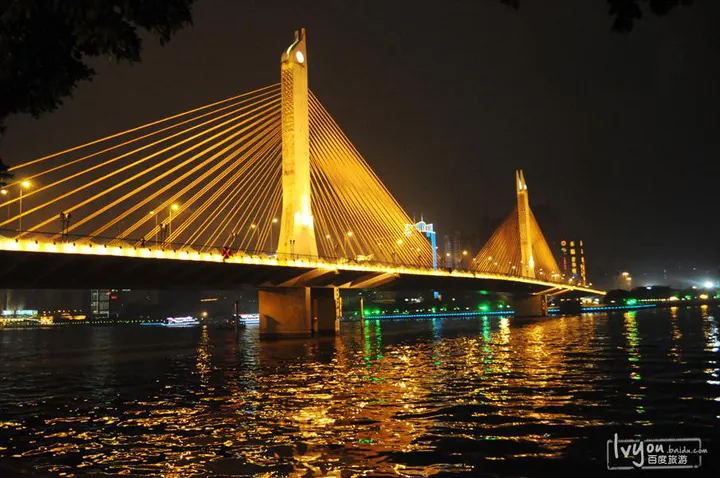
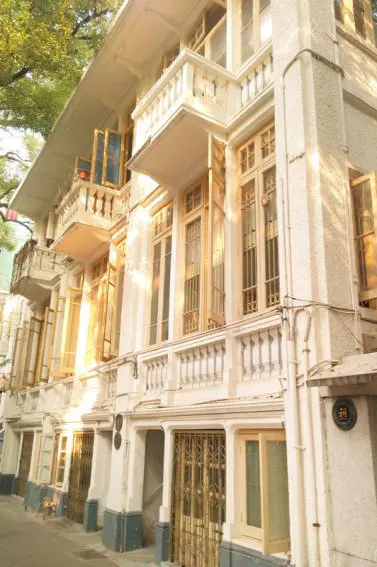
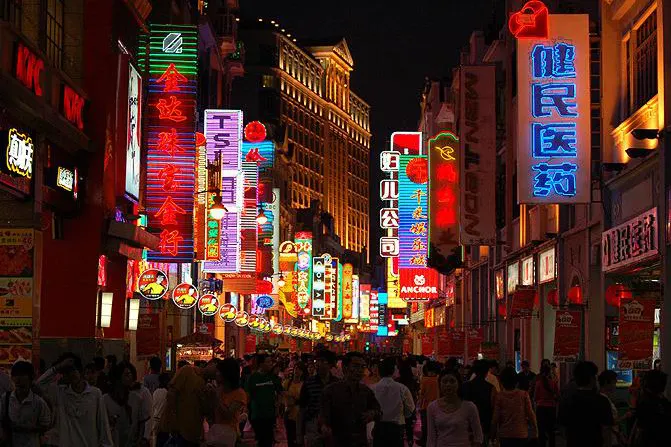
Morning-tea cityArcaded old streetsRiver nightsRail hub of the south
In short
Guangzhou (广州, Guǎngzhōu), capital of Guangdong and a trading port for two thousand years, is where glass towers on the Pearl River stand a metro stop away from arcaded lanes where people still sell rice-noodle rolls at seven in the morning. You come here to eat: morning tea, roast meats, sweet soups and open-air supper stalls set the rhythm of the day. Three days covers the old city, the river and Canton Tower; five adds Foshan or Shunde. October to December is the kindest weather; a mid-range trip runs about ¥2,000–3,500 for 3–5 days excluding long-distance transport.
Key facts
Known for
Morning tea · qilou arcades · Pearl River nights · roast meats
Budget
¥2,000–3,500 for 3–5 days, mid-range
Days needed
3–5 days
Comfort
Comfortable
Best time to go
October–December; humid in March–April, typhoon season July–September
01What kind of city Guangzhou is
Guangzhou is China's southern gate: a city of some fifteen million on the Pearl River, still 120 km from the sea. Foreign ships have moored here since the Tang dynasty, and today the glass skyline of Zhujiang New Town leans over water that once carried Arab and Indian traders. Two metro stops away, laundry hangs from the balconies of 1920s arcade houses. Almost nothing you walk past was built for visitors — the city simply kept living inside its own buildings.
If you remember one thing about Guangzhou, make it this: the city eats. 'Eat in Guangzhou' is not a slogan but a timetable — a pot of tea and two plates of dim sum at dawn, a plate of roast goose at noon, a bowl of sweet soup at four, a wok of beef noodles at midnight. Food is not one item on the itinerary here; it is the itinerary. This guide therefore starts with the table and works outward to the sights.
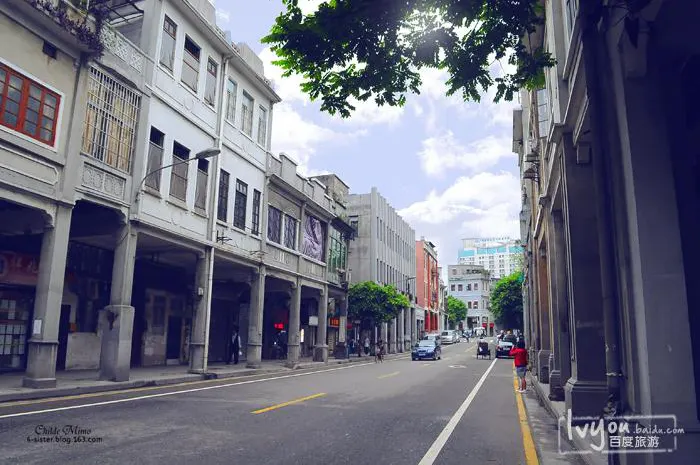
A quiet afternoon under the arcades of the old town
Guangzhou is big without making you feel small. It is prosperous and generous at once, modern and still holding on to its traditions — a little untidy, and completely alive.
"Four Leisurely Days in Guangzhou"
The geography is easy to hold in your head. Baiyun Mountain sits to the north, the Pearl River runs west to east through the middle, Shamian is a small former-concession island in the river, and downstream the towers of Zhujiang New Town face Canton Tower across the water. The old city (Yuexiu and Liwan) lies west, the new city (Tianhe and eastern Haizhu) east, and metro lines 1, 2, 3, 5 and 8 stitch the two together. First-timers do well to sleep in the old city for the food and ride east for the skyline.
Three days is the floor: one for the old city and the river, one for morning tea and Canton Tower, one for Xiguan or Chimelong. Four or five days is where the city opens up — add a run to Foshan or Shunde, or simply spend a whole morning in a Liwan teahouse. Guangzhou punishes box-ticking and rewards anyone willing to sit still.
02Six things worth the trip
A proper morning teaOne pot, two plates
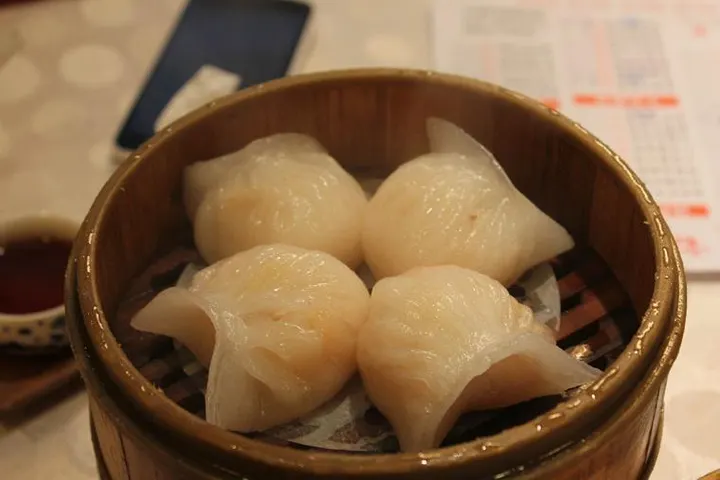
A Guangzhou day begins in a teahouse: a pot of pu'er or tieguanyin, two bamboo baskets, a newspaper, and no reason to leave for three hours. The har gow should be translucent enough to show the pink shrimp inside, pleated thirteen times; siu mai should be pork and shrimp in roughly equal measure; chicken feet are fried then steamed until the bone slips out. This is not breakfast. It is a way of stretching a morning until it holds a whole conversation.
Canton TowerThe slender waist
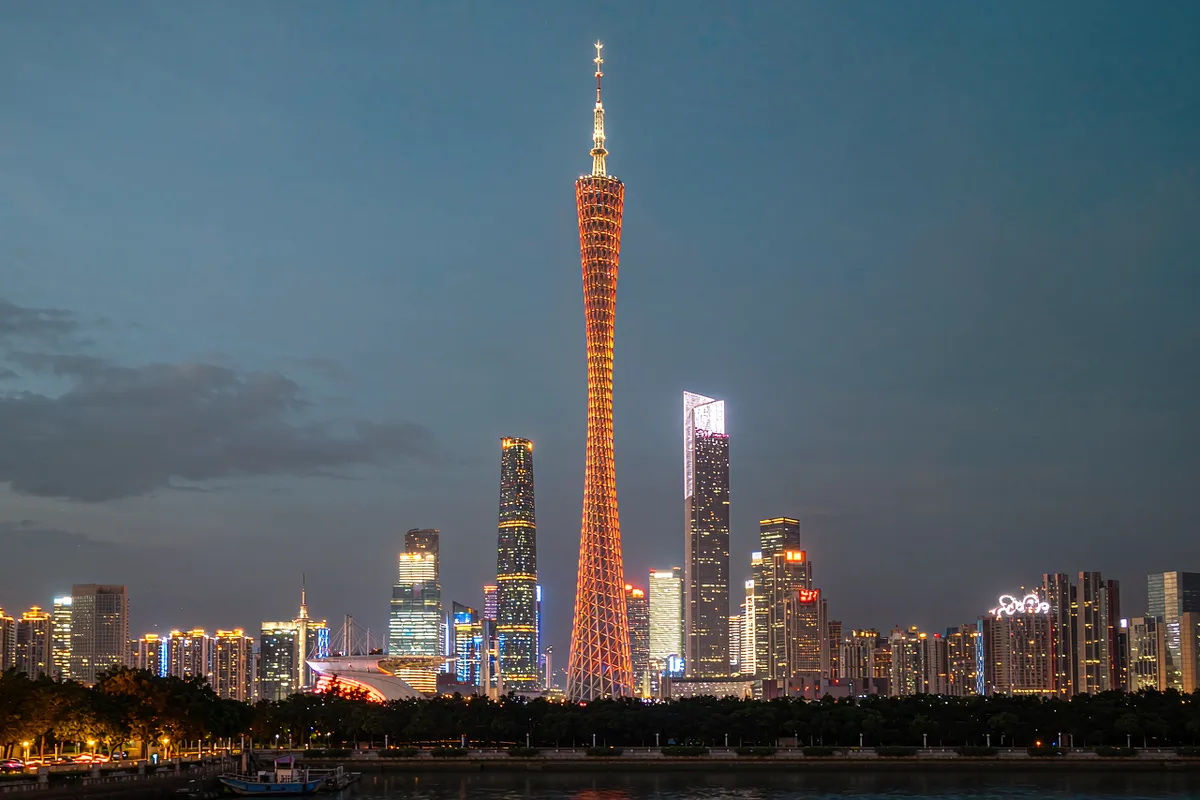
Canton Tower rises 600 m and locals call it Xiaomanyao, the slender waist, because the shaft pinches in the middle and changes colour after dark. The 433 m Baiyun and Starry Sky decks are the entry ticket; another ¥130 buys the 460 m Ferris wheel, the highest horizontal wheel anywhere, whose sixteen glass pods take about twenty minutes to circle the tower. Go up an hour before sunset and you get daylight, dusk and the light show in one ticket.
The Pearl River night cruiseLights on both banks
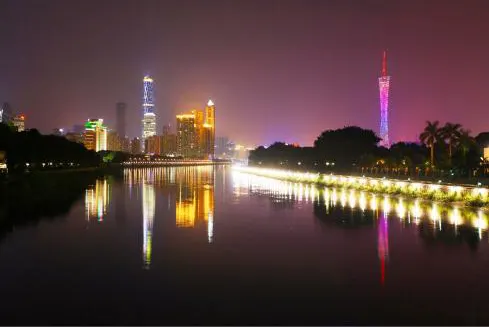
Boats leave from Dashatou or Tianzi piers and run an hour past Haizhu Bridge, Ersha Island, Canton Tower and Liede Bridge. The open upper decks are worth the extra money — no glass, no reflections. The river wind is real: from October onward, bring a jacket.
Shamian IslandThe old concession
Carved out by Britain and France after the Opium Wars, Shamian keeps more than 150 nineteenth-century buildings along a few quiet streets — neo-baroque, colonnaded, vaguely gothic, sometimes all three in one facade. No buses run on the island, only banyan trees, a small Catholic chapel and people jogging. Walk off the island toward Huangsha at dusk and you arrive at the cruise piers.
The Chen Clan Ancestral HallLingnan craft at its peak
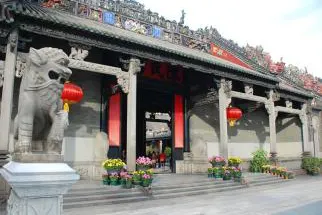
Finished in 1893 with money pooled by Chen clans across the province, this is now the Guangdong Folk Art Museum and the densest concentration of Lingnan craft anywhere: wood, brick and stone carving, pottery figurines along the roof ridge, plaster moulding, cast iron, painted doors. The main ridge alone runs 27 m and carries more than two hundred figures. At ¥10 it is the best-value ticket in the city.
Shangxiajiu and Yongqing FangXiguan, day and night
Shangxiajiu is the city's oldest shopping street, a kilometre and a bit of continuous arcade where you can walk in the rain without an umbrella. Turn north into Enning Road and you reach Yongqing Fang: grey-brick houses, Manchu windows, the Cantonese Opera Art Museum — old Xiguan restored so you can walk inside it. After dark the neon comes on and this becomes the most photogenic stretch of the old city.
03Seven questions everyone asks first
How far is Guangzhou South Railway Station, and how do I get into town?
Guangzhou South sits in Panyu, about 20 km from the Tianhe CBD — the furthest of the city's stations, but the best connected. Metro L2 runs straight to Yuexiu (about 40 minutes to Guangzhou Railway Station, ¥6), L7 serves the university town and Chimelong, L22 is the express, and Foshan Metro L2 connects underground. A taxi to Zhujiang New Town costs ¥70–90 and takes 40–60 minutes. The concourse is over 800 m wide, so allow a full hour for security and walking.
Do hotel prices explode during the Canton Fair?
Yes. The 139th session runs 15–19 April, 23–27 April and 1–5 May 2026; the 140th runs 15–19 October, 23–27 October and 31 October to 4 November. Around Pazhou and Zhujiang New Town rates routinely double or triple, and only bookings made a month or two ahead land near normal. Cheaper options are Yuexiu and Liwan, or even Foshan, with the Guangfo metro line into town.
What should I know about typhoon season in July–September?
Guangdong's typhoon window runs roughly June to October, densest in July–September. Most storms mean days of heavy rain, but a direct hit cancels flights in bulk, shuts Canton Tower and the river cruises, and closes parks. Keep a spare day, book changeable tickets, and watch the track forecast before you fly. The real daily discomfort in summer is the humidity — put museums and malls at midday and walk in the evening.
How many days do I need?
Three days covers the old city, the river, Canton Tower and one serious morning tea, at a brisk pace. Four adds Chimelong or Baiyun Mountain. Five leaves room for a day in Foshan eating Shunde food. If you came for the table, five days is not excessive — morning tea, roast meat, sweet soup and a late-night stall each want their own slot, and your stomach needs a rota.
Will I struggle without any Cantonese?
Barely. Mandarin is the default in the city, metro announcements come in Cantonese, Mandarin and English, and younger staff usually manage simple English. The gaps are in the old city: a teahouse auntie or a roast-meat counter may speak only Cantonese, and pointing at the menu plus a calculator solves it. Two phrases go a long way — 'm goi' for please and thanks, 'gei do chin' for how much. Taxi drivers understand Mandarin fine.
What is the best way in from Hong Kong or Shenzhen?
High-speed rail from Hong Kong is fastest: West Kowloon has co-location, so both borders are cleared before boarding, and the run to Guangzhou South takes as little as 47 minutes — usually 55–75 — with about thirty trains a day at ¥215 in second class. Some services continue to Guangzhou East in about 1 hour 30, closer to Tianhe. From Shenzhen North it is roughly 30 minutes, frequent enough that you need not book far ahead. Remember South is in Panyu and East is in Tianhe; pick the arrival station that matches your hotel.
How do I actually order morning tea?
Sit down and choose a tea first — pu'er, tieguanyin and chrysanthemum are the standards — with a tea charge of ¥8–20 a head, posted on the menu. For two people, four to six baskets is right: har gow, siu mai, chicken feet and char siu buns are the big four, plus a plate of rice-noodle rolls or a bowl of congee. To ask for a refill, tilt the pot lid open; when someone tops up your cup, tap two fingers on the table in thanks. Many old teahouses discount dim sum before 11:00, and deeper after 14:00.
04Three days, arranged around meals
Build a Guangzhou day backwards from its meals: teahouse in the morning, roast meat or noodles at noon, sights in the afternoon to walk it off, the river at dusk, one more meal at night. The route below gives a day each to the old city, the water and the new town — little walking between stops, a great deal of eating.
D1
Old city day: start in Yuexiu Park with the Five Rams Statue and Zhenhai Tower, walk down to the Nanyue King Museum for the jade burial suit (closed Mondays). Lunch on wonton noodles near Beijing Road, then see the excavated Song-to-Qing road under glass, and drift to Shamian to sit under the banyans. Board a river cruise at Tianzi Pier at dusk, and finish with the lights of Huacheng Square and Canton Tower in Zhujiang New Town.
D2
Morning-tea day: be inside a Xiguan teahouse before 08:00 and work through har gow, siu mai, chicken feet and char siu buns until half past ten. Move on to the Chen Clan Ancestral Hall for the roof-ridge pottery (book ahead), and eat claypot rice nearby at noon. In the afternoon wander Yongqing Fang and the Cantonese Opera Art Museum, then cross to Lizhiwan for its canal and old houses. Reach Canton Tower by 17:00, buy the wheel package, and stay from sunset into the light show. Supper is beef noodles at a stall near Dashatou.
D3
Day three splits two ways. With children, or for thrill rides: give the whole day to Chimelong — the safari park's train through the free-roaming zones, or the coasters at Chimelong Paradise, with the circus in the evening. For another day of eating: ride the metro to Foshan's Ancestral Temple for the lion dance and the Ip Man hall, shift to Shunde for raw fish and double-skin milk at noon, and come back to Guangzhou at dusk. Neither route is rushed, but both want an early start.
05From a river island to the top of the tower
Shamian Island
Shamian began as a sandbank off the Pearl River's White Swan Pool and became a British and French concession from 1861, cut off by a canal and built up with churches, banks, clubs and consulates. More than 150 buildings are protected today: the red-brick block at 2–6 Shamian Avenue was the customs club, number 54 was the HSBC branch, number 14 the small Catholic chapel of Our Lady of Lourdes. It is free and open all day, best at dawn or dusk, and the calmest place in the city to walk.
The Chen Clan Ancestral Hall
Formally the Chen Clan Academy, completed in 1893, this was a clan hall and school built so Chen family candidates from across the province had somewhere to stay before the imperial exams. Look for the seven crafts: the 4 m painted door gods are the largest surviving pair in Guangdong, the sixteen double-sided openwork screens in front of the main hall are carved with different operas on each face, and the 27 m ceramic ridge carries more than two hundred figures. Free guided walks leave the front gate at 10:00 and 15:00.
Yongqing Fang and Xiguan
Xiguan was the merchants' quarter outside the old west gate. The grey-brick houses along Enning Road use Manchu windows for light and sliding timber screens for cross-ventilation, and stay cool in summer without air conditioning. Yongqing Fang has turned the block into a pedestrian quarter — Bruce Lee's ancestral house is inside it. At the far end, the Cantonese Opera Art Museum is a free Lingnan garden, closed Mondays, where amateur singers often take the stage in the afternoon.
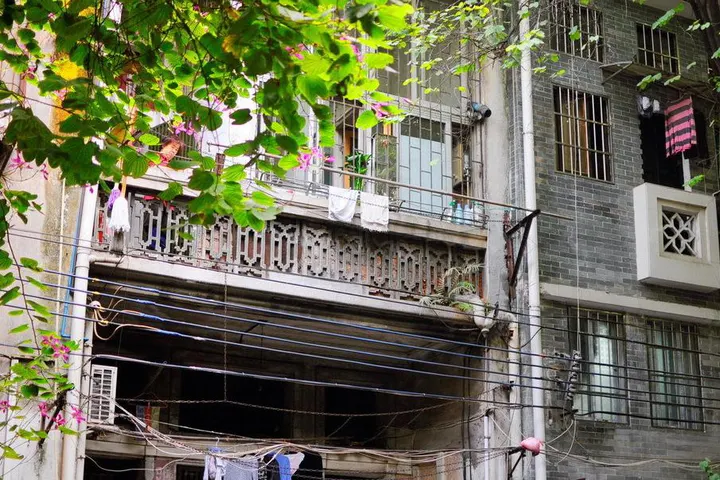
Laundry and flowers on an old-town balcony
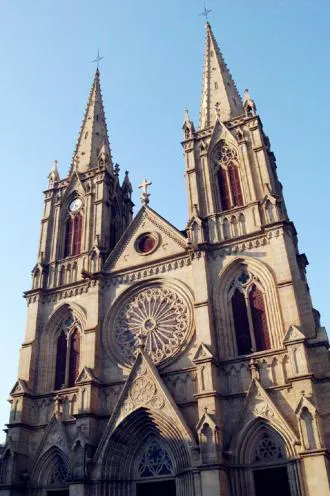
Sacred Heart Cathedral
The twin-spired facade, built entirely of granite
Begun in 1863 and finished in 1888, the cathedral took twenty-five years because every wall, column and spire is granite — locals simply call it the Stone House. It is one of the most complete gothic stone churches in China, its twin towers reaching 58 m. Entry is free, dress modestly, and sightseeing pauses during Mass. From metro L2 Haizhu Square, exit B1, walk west five minutes.
Yuexiu Park and the Nanyue King Museum
Yuexiu Park is free and holds the 1960 Five Rams Statue, the Ming-dynasty Zhenhai Tower that now houses the Guangzhou Museum (¥10), and a stretch of the Ming city wall. Walk out the west gate and you are at the Nanyue King Museum: the tomb of Zhao Mo, second ruler of Nanyue, found intact in 1983 with a jade burial suit stitched in silk and a Persian silver box. Entry ¥10, closed Mondays, and the lower tomb chamber needs a separate booking.
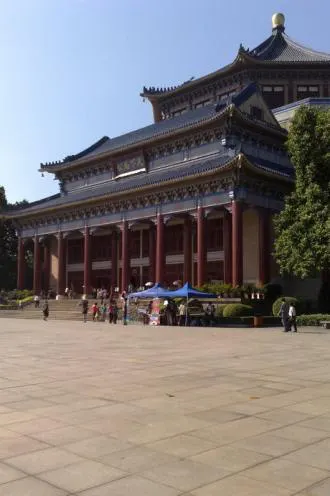
Sun Yat-sen Memorial Hall
The octagonal hall under its blue-tiled roof
Completed in 1931 to honour Sun Yat-sen, the hall hides a 3,000-seat auditorium under an octagonal palace roof, with no interior column blocking the view. The grounds are free and the building costs ¥10. The kapok tree by the gate is over three hundred years old and erupts in red flowers each spring. Metro L2 Jiniantang, exit C.
Lizhiwan and Liwan Lake
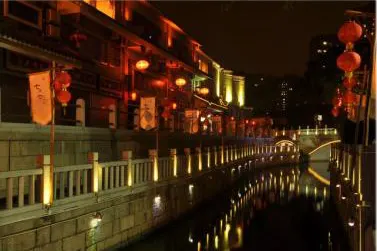
Red lanterns along the Lizhiwan canal at night
Lizhiwan is Xiguan's canal, once lined with lychee trees — the old couplet about green water and red fruit describes exactly this bend. Small boats run along it, past restored houses, a slender pagoda and the Panxi restaurant. Liwan Lake Park next door is free and belongs to locals in the morning: opera singers, taichi, caged birds. Come at dusk when the lanterns come on.
Zhujiang New Town and Canton Tower
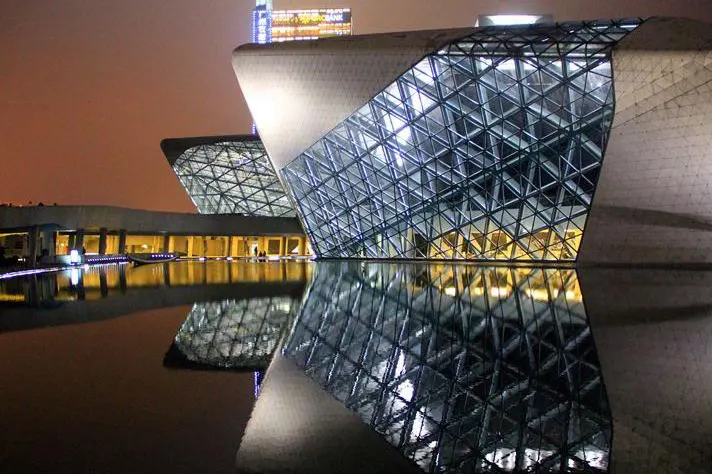
The faceted glass of the Guangzhou Opera House
Zhujiang New Town is the new axis of the city: Huacheng Square opens wide between the library, the Guangdong Museum (free, booked seven days ahead) and the opera house. At the far end sit Haixinsha and the pedestrian Haixin Bridge, which lands you at Canton Tower. Come for architecture by day and lighting after dark; if the provincial museum is full, the Guangzhou Art Museum usually still has slots.
06Time your visit to something happening
How to take the river cruise
The main piers are Tianzi near Beijing Road, Dashatou with the most sailings, Canton Tower and Haixinsha. The classic loop leaves Dashatou, passes Haizhu Bridge, Ersha Island, the tower and Liede Bridge, and returns in about an hour. Fares go by deck: from ¥98 in the main cabin, ¥138–178 on the open upper decks, ¥188–298 with a buffet. Buy only through official channels — the men hawking 'cheap tickets' at the pier are selling nothing good.
Up Canton Tower, and the wheel
Entry is timed and tied to your ID — bring your passport. The 433 m ticket at ¥150 is enough for the panorama; ¥298 adds the wheel; ¥398 buys everything including the 488 m platform and the drop ride. The wheel is often serviced on Monday afternoons. It is windy at the top even in summer, so carry a light layer, and note that liquids are not allowed up — an empty bottle is fine.
Hear some Cantonese opera
Cantonese opera joined the UNESCO intangible heritage list in 2009. The easy introduction is the Cantonese Opera Art Museum in Yongqing Fang: free, a garden with a stage, and excerpts most weekends. For a full production, check the schedule at the Guangdong Cantonese Opera Art Centre or the Nanfang Theatre. In the old-city parks, amateur troupes bring their own instruments and sing for nothing — sit down and listen.
Flower markets and temple fairs
For the three days before Lunar New Year, main streets close and fill with peach blossom, kumquat and narcissus — locals call it walking the flower street, and the year has not properly started until you have. Around the fifteenth of the first lunar month the Guangfu temple fair takes over the City God Temple area with snack and craft stalls. In the second lunar month, the Boluo festival at the Nanhai God Temple in Huangpu is one of the delta's oldest fairs.
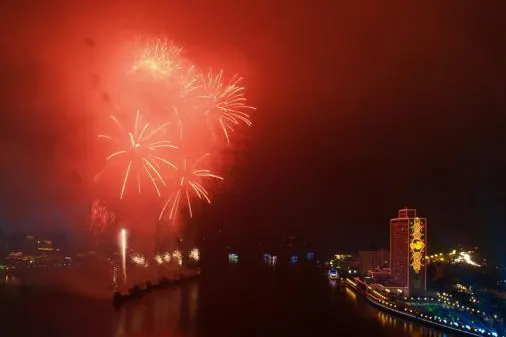
Fireworks over the Pearl River on a festival night
Around the Dragon Boat Festival in early summer, the villages of Liede, Chebei and Zhucun send their dragon boats to visit one another, drums going from morning to night — the loudest and most local event in the calendar. For fireworks, watch official notices around Spring Festival and National Day; launches are usually over the White Swan Pool or off Pazhou, best seen from Yanjiang Road and Haixinsha.
07Old city for eating, new town for views
Three logics govern where you sleep. For food, stay in Yuexiu or Liwan around Beijing Road and Shangxiajiu, where a teahouse and a noodle shop are always downstairs. For skyline views, Tianhe and Zhujiang New Town cost more but sit on the best metro lines. For Shamian and the old concession, Huangsha and Culture Park are quiet and close to the water. Panyu suits Chimelong and Guangzhou South; Pazhou suits the Canton Fair.
Hostels in Yuexiu and Liwan: dorm beds ¥60–120, doubles ¥180–260. In the old city you are paying for the address, not the furniture.
Mid-range chains citywide: ¥300–550, usually within sight of a metro exit. Few include breakfast, but there is almost always a rice-noodle shop downstairs.
Boutique conversions around Shamian and Yongqing Fang: ¥600–1,000, often in heritage buildings. Small rooms, enormous atmosphere.
River-view and landmark hotels in Zhujiang New Town and along the Haizhu waterfront: ¥900–2,000, with tower views from the higher floors.
Hotels inside the Chimelong resort in Panyu: from ¥700, with park shuttles, worth two nights with children.
Two windows need planning: the Canton Fair (mid-April to early May, mid-October to early November) and the National Day and Spring Festival holidays. Fair weeks double rates in Pazhou and Tianhe, so book a month or two out. In the week before Lunar New Year the city empties toward hometowns and stationside rooms actually loosen up. Typhoon season rarely affects bookings, but choose free cancellation anyway.
08Why the food alone justifies the trip
Cantonese cooking is the least forgiving of China's eight great traditions because it hides nothing. There is no chilli or heavy oil to cover a mistake: a poached chicken is cooked in plain water and judged entirely on the bird and the timing; a plate of beef ho fun is judged on wok breath, with noodles unbroken, beef still tender and no oil pooling at the bottom. Doing very little, perfectly, is the hardest cooking there is.
The second reason is density. Guangzhou eats in four or five sittings a day: morning tea, lunch, an afternoon bowl of sweet soup or double-boiled tonic, dinner, then supper. The same ingredients reappear in different guises — rice-noodle rolls at eight, roast goose on rice at one, beef noodles at midnight, congee with pork liver at two. You do not need to hunt for the single best restaurant, because every street has a twenty-year-old shop that has been doing one thing immaculately the whole time.
Morning tea: the opening ceremony
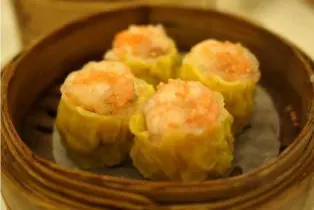
Siu mai straight from the steamer, a shrimp on each crown
The point of morning tea is not the tea, it is the time. Regulars arrive at eight, order a pot of pu'er and two baskets, read the paper, chat with the next table, and leave before noon. Dim sum divides into steamed, fried, pan-fried and sweet; har gow, siu mai, char siu buns and egg tarts are the big four, with chicken feet, sticky-rice parcels, turnip cake and rice-noodle rolls close behind. The tea charge runs ¥8–20 a head, must now be posted, and can be refused if you skip the tea.
Where: Tao Tao Ju on Shifu Road and Guangzhou Restaurant on Wenchang South Road are the century-old houses, folding and steaming to order, with har gow at ¥38–50 a basket and a two-person meal at ¥150–220. Diandude is the reliable chain at around ¥80 a head with shorter queues. Panxi, on the shore of Liwan Lake, has the best garden setting. Most old houses discount dim sum before 11:00 and again after 14:00.
Roast meats: one oven feeds a street
Roast goose, char siu, crisp pork belly, poached chicken and soy-sauce chicken hang in glass cases and are sold by weight. Goose is roasted over lychee wood so the skin crackles when cut and the meat carries a faint fruit-smoke; char siu comes fatty or lean, and good fatty char siu has caramelised edges that taste sweet first and savoury after. Walk into any roast shop at noon and order a two-meat rice plate for ¥30–45 — better than any chain, at half the price of a museum ticket.
Noodles, rice rolls and congee: the daily trio
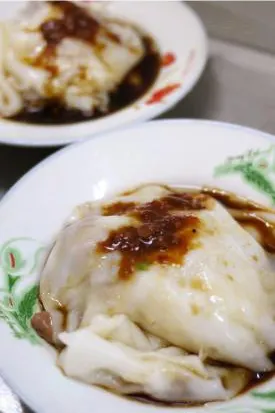
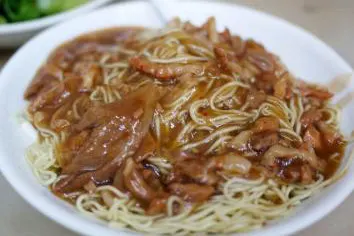
Rice-noodle rolls under sweetened soyA bowl of lo mein, every strand coated in sauce
Rice-noodle rolls are steamed from a thin rice batter, wrapped around beef, prawns or char siu, and dressed with sweetened soy — ¥8–20 a plate and the default breakfast. Wonton noodles use duck-egg bamboo-pressed noodles in a stock of dried flounder and shrimp roe, springy enough to bounce, at ¥20–30. Jidi congee carries pork liver, kidney and meatballs in a base cooked until the grains disappear. Yinji on Shangjiu Road, Wu Caiji and Jianji have all been at it for decades.
Sweet soups and double-boiled tonics: the four o'clock rite
Double-skin milk pudding under fresh mango
Double-skin milk pudding forms two skins as it cools and sets to a soft custard, sweet but never cloying, at ¥15–22; ginger milk curd sets on ginger juice and leaves a warmth at the back of the throat; mango pomelo sago is the summer standard. Nanxin on Shifu Road is the benchmark for the first. The other branch of the ritual is double-boiled soup: a whole coconut stuffed with silky fowl and steamed for three hours, clear and sweet, at Dayang on Wenming Road, where the queue never quite ends.
Dai pai dong and the midnight meal
By eleven at night the folding tables are out on the pavement, plastic stools down, and the order is beef ho fun, salt-and-pepper mantis shrimp, a dozen oysters and cold beer. The dai pai dong is the most democratic table in the city: suits and flip-flops share the next stool. Beef noodles run ¥25–40, stir-fried river snails ¥20–30, blanched prawns by weight. Baohua Road, Wenming Road and Tongfu Road are the densest strips, and they get better the later it gets.
A few places worth the queue
Tao Tao Ju (20 Shifu Road, Liwan): open since 1880; har gow, chicken feet and custard buns are the standards, around ¥100 a head.
Guangzhou Restaurant (2 Wenchang South Road): founded 1935, equally good at full Cantonese dinners and morning tea — the place to order poached chicken and roast goose in one sitting.
Yinji Rice Noodle Rolls (79 Shangjiu Road): the benchmark for the steamed-sheet style; beef rolls and sampan congee, about ¥25 a head.
Nanxin Dairy Desserts (47 Shifu Road): double-skin milk, ginger curd and beef tripe soup, around ¥25 a head.
Dayang Double-Boiled Soups (160 Wenming Road, Yuexiu): coconut-steamed silky fowl, about ¥45 a head.
09Taking the taste of the city home
The best souvenirs here are edible: cured meats, pastries, herbal tea, soup packs. The old bakeries — Tao Tao Ju, Lianxiang Lou, Guangzhou Restaurant — vacuum-pack their chicken biscuits, sweetheart cakes and lotus-paste mooncakes, and the cured sausages from Huangshanghuang or Guangzhou Restaurant's Qiuzhifeng line are what Cantonese families actually give at New Year.
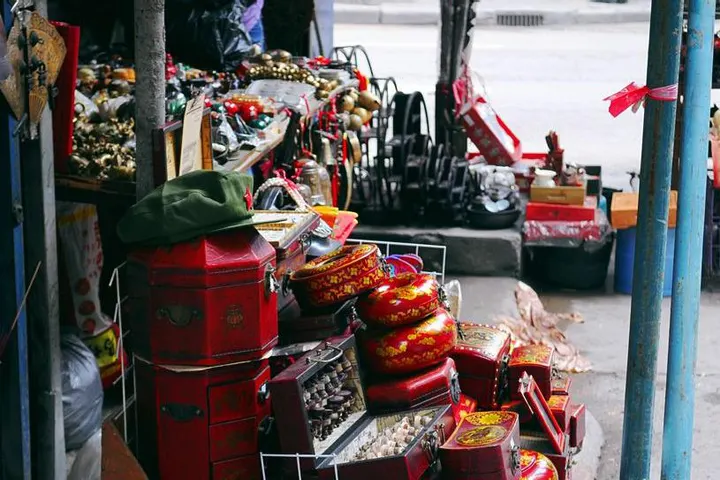
A pavement stall of lacquer boxes and old brass
Cured meats: Cantonese sausage runs sweet with a wine note; Huangshanghuang and Qiuzhifeng are the safe buys, sold at any supermarket counter.
Pastries: chicken biscuits are savoury-sweet with fermented bean curd, sweetheart cakes hold winter-melon paste, and Lianxiang Lou's lotus paste is the finest grind — ¥20–60 a box.
Dried seafood: Yide Road is the trade street for oysters, scallops, fish maw and squid. If you cannot judge quality, buy from a supermarket with fixed prices instead.
Herbal tea and soup packs: Huang Zhenlong and Ping An Tang sell banxia and twenty-four-flavour brews at ¥8–15 a bottle, and they are seriously bitter. Soup packs are sold in pharmacies and supermarkets.
Embroidery, porcelain and jade: the Hualin Temple lanes are the jade quarter and Wende Road the antiques and old-book street. Ask for a certificate with jade, and look at the stitching before the price on embroidery.
Where to shop
Shangxiajiu and Beijing Road are the people's shopping streets, chains and old names mixed under the arcades. Teemall and Taikoo Hui cover the high end in the new town. For cheap clothes, Zhanxi and Shisanhang are the wholesale quarters — busiest by day, and usually willing to sell a single piece. Tea comes from the Fangcun tea market, flowers from the Lingnan flower market.
10Getting there and around
Arriving by train
Four main stations, and the choice matters. Guangzhou South in Panyu takes almost every high-speed and cross-border train; it is 20 km out but sits on metro L2, L7 and L22. Guangzhou East in Tianhe handles the Shenzhen line and some cross-border services and is closest to Zhujiang New Town. Guangzhou Station in Yuexiu is mostly conventional trains with a few EMUs. Baiyun Station, opened at the end of 2023, absorbs part of the Beijing–Guangzhou conventional traffic. Sleep in the old city and either South or the old station works; sleep in Tianhe and you want East.
From Hong Kong and Shenzhen
West Kowloon uses co-location: you clear both Hong Kong and mainland immigration inside the station, then board an ordinary high-speed train. Guangzhou South is as little as 47 minutes away, usually 55–75, with around thirty departures a day at ¥215 in second class or ¥344 in first. Some trains continue to Guangzhou East in about 1 hour 30. From Shenzhen North it is roughly 30 minutes and frequent enough to treat like a metro; if you cross at Luohu or Futian, the Guangzhou–Shenzhen intercity reaches Guangzhou East in about 1 hour 10.
Flying in
Baiyun International Airport is about 28 km from the centre. Terminal 1 uses Airport South and Terminal 2 uses Airport North on metro L3, reaching Tiyu Xilu in 45–50 minutes for ¥7. L3 is the most crowded line in the city, so avoid 07:30–09:30 and 17:30–20:00 with luggage. Airport coaches cost ¥20–35 and stop at the main hotel districts; a taxi runs ¥120–180 and 40–60 minutes, more at night or in rain. Terminal 3 has no direct metro yet — take the shuttle to T2 first.
The metro: your default
Nearly twenty lines cover almost every sight and all the main stations. Fares are distance-based: ¥2 for the first 4 km, then ¥1 per 4 km to 12 km, ¥1 per 6 km to 24 km, and ¥1 per 8 km beyond; the APM shuttle is a flat ¥2. A one-day pass costs ¥20 and a three-day pass ¥50, both unlimited and valid on the Foshan metro too. QR entry is easiest, and both Alipay and WeChat accept foreign cards.
Taxis, buses and bikes
Taxis start at ¥12 for the first 2.5 km, then ¥2.6 a kilometre, with a night surcharge after 23:00; short hops in the old city often lose to the metro. Buses are mostly ¥2, night buses ¥3–4, exact fare only. Shared bikes start around ¥1.5–2 and suit the riverfront and Shamian best. A Yangchengtong card takes a ¥20 deposit plus top-up and works on metro, bus and ferry, and ¥2 water buses cross the river at several points.
Check trains and fares from Hong Kong West Kowloon to Guangzhou South
Emergency numbers: police 110, ambulance 120, fire 119. For complaints and tourist help, 12345 is the city hotline and has English operators.
Major hospitals: Guangdong Provincial People's Hospital (106 Zhongshan 2nd Road, 020-8382 7812) and the First Affiliated Hospital of Sun Yat-sen University (58 Zhongshan 2nd Road). International clinics cluster in Tianhe.
Visa-free transit: since December 2024 the old 72 and 144 hour schemes have been replaced by a single 240-hour (ten-day) allowance for 57 countries, available at Baiyun Airport, West Kowloon rail port and Nansha, with movement permitted across all of Guangdong. You need a confirmed onward ticket to a third country within 240 hours.
Payment: malls, metro and chains all take QR codes, and Alipay and WeChat link to Visa and Mastercard. Small old-city shops and teahouses are often QR or cash only, so carry ¥100–200 in notes.
Connectivity and power: tourist SIMs are sold at the airport and eSIM works. Power is 220V with flat two-pin and angled three-pin sockets; UK plugs need an adapter.
Tax refund: visitors spending ¥500 or more in a single refund-designated shop on one day can claim departure tax back, at roughly 11%, processed at the airport or rail port with the goods on hand. It matters for jade, silk and electronics; it will never come up over dim sum.
12Packing list and pitfalls
Documents and bookings: carry your passport. The Chen Clan Hall, Nanyue King Museum, Guangdong Museum and Whampoa Academy all require real-name booking; the provincial museum releases slots seven days ahead and peak times vanish on the day.
Seasonal kit: March and April bring the returning damp, when walls sweat — pack quick-dry clothes. May to September is hot and wet, so sunscreen, a folding umbrella and repellent. October to December needs only a light jacket. Bring shoes for 20,000 steps, all year.
Stomach kit: dim sum is rich, sweet soups are sweet, herbal tea is bitter — do not try everything on day one. Pack digestive tablets and oral rehydration salts; pharmacies are everywhere.
Typhoons and downpours: in July to September watch the track forecast and book changeable flights. In heavy rain avoid underpasses and low-lying roads; the metro beats a taxi every time.
Four pitfalls: skip the touts selling 'cheap' river cruises at the piers and buy official tickets only; keep bags in front of you around the stations and Beijing Road; avoid the electronics markets unless you can tell real from grey stock; and ask about the tea charge before you sit — it must be posted, and you can decline it by declining the tea.
13Two thousand years of port, one century of arcades
Geography and climate
Guangzhou sits at the northern edge of the Pearl River delta, high in the northeast and low in the southwest: the Baiyun Mountain ridge forms the city's northern shoulder, and everything south of it is alluvial plain where the East, North and West rivers meet the sea. The climate is subtropical monsoon, averaging 22°C and about 1,900 mm of rain a year. April to June is the first rainy season, July to September is hot with typhoons, and October to November is the reward — dry, breezy, and often good until December.
The city of Rams: legend and harbour
Five immortals on five coloured rams are said to have come down and left rice ears with a city in famine, which is why Guangzhou is still called the city of rams, and why a stone herd stands in Yuexiu Park. Recorded history begins in 214 BC, when Qin armies took the south and set up Nanhai commandery. By the Tang this was one of the starting points of the maritime silk road, with Arab and Persian merchants living in their own quarter; the Portuguese set up here in the sixteenth century and the British in the seventeenth.
The single port and the Thirteen Factories
From 1757 to 1842 the Qing court allowed Western trade at Guangzhou only — the single-port system. The hongs of the Thirteen Factories monopolised tea, silk and porcelain exports from the quarter that still carries the name. After the Opium Wars and the opening of five ports, Guangzhou lost its exclusivity but kept the trade; in 1957 the first Canton Fair opened here, and it remains the country's largest general trade exhibition.
1911 and the modern city
On 27 April 1911 the Revolutionary Alliance rose in Guangzhou and attacked the viceroy's headquarters. More than a hundred died; the journalist Pan Dawei gathered seventy-two bodies and buried them at Huanghuagang, where the graves still stand. Wuchang rose that October and the Qing fell. Guangzhou then became a base for the revolution, and the Whampoa Military Academy, founded on Changzhou Island in 1924, trained a generation of commanders.
Arcades and Xiguan houses
The qilou arcade came back to Lingnan from Southeast Asia in the early twentieth century: porticoes joined into a continuous covered walkway, shops below, flats above, pedestrians out of both sun and rain. The densest runs are on Shifu Road, Shangxiajiu, Yide Road and Renmin South Road. The Xiguan house is the other tradition — grey brick on stone footings, a triple-door front of low swing gates, sliding timber screen and solid hardwood door, with a light well for air. Together they are what old Guangzhou actually looked like.
Cantonese, opera and herbal tea
Cantonese keeps the entering tones and six contrasting pitches lost in Mandarin, which is why Tang poems scan better in it; it is also the language of Hong Kong, Macau and most Chinatowns. Cantonese opera grew out of the southern drama tradition and was already established in Guangdong by the mid-sixteenth century; UNESCO listed it in 2009. Herbal tea is the third pillar: in a hot, damp climate, locals treat 'internal heat' with banxia and twenty-four-flavour brews, bitter enough to make you wince — which is how you know it is working.
14Four routes out of town, all within two hours
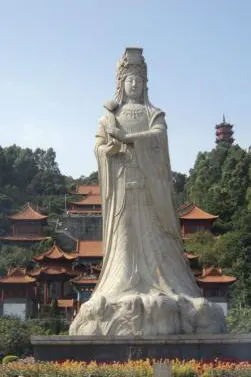
The Mazu statue at Nansha, the estuary behind it
Foshan: the Ancestral Temple and Lingnan Tiandi
The Guangfo metro line runs straight there, about 40 minutes from Xilang. The Ancestral Temple (¥20) dates from the Northern Song and holds the full set of Lingnan decoration, with Shiwan pottery figures on the ridge that outclass anything in Guangzhou; martial arts and lion dance demonstrations run daily, and the Ip Man and Wong Fei-hung halls are inside the compound. Next door, Lingnan Tiandi is a restored block of lanes made for sitting down with a drink.
Shunde: worth the trip for one fish
About 15 minutes from Guangzhou South by intercity rail, or metro L7 changing to Foshan L3. Shunde is one of the birthplaces of Cantonese cooking and a UNESCO city of gastronomy: raw fish sliced thin enough to read through, fish steamed under a herbal steam bath, and the original double-skin milk pudding in Daliang. Qinghui Garden, one of Lingnan's four great gardens, is small, cheap and immaculate.
Shawan ancient town
An 800-year-old town in Panyu, one of the birthplaces of Guangdong music and of ginger milk curd. The lanes are free; a ¥30 combined ticket opens the ancestral halls, including Liugeng Tang. The grey-brick alleys are narrow and long, oyster-shell walls and brick carvings survive, and there are far fewer visitors than in Foshan. Metro L3 to Shiqiao then a 20-minute bus, or 15 minutes by taxi.
Huangpu Ancient Port and Nansha
Huangpu Ancient Port east of Pazhou was the customs registration point in the Qing single-port era, where foreign ships waited; today it is a quiet village lane with a small museum and a few shops serving sampan congee, reached by metro L4 to Wanshengwei and a bus. Nansha is further — about 1 hour 20 to the end of L4 — where the Tianhou Palace (¥10) faces the estuary, with wetlands and the ShijiuChong seafood market alongside. Give it a full day.
15Watch and read before you go
Film
"The Yamaha Fish Stall" (1984, dir. Zhang Liang): the first film to put Guangzhou's early private traders on screen, all arcades, night markets and fish counters, in Cantonese throughout — the fastest way into the city's commercial DNA. "The Disappearing City of Rams" (2010, dir. Xie Wenjun, produced by Tian Zhuangzhuang): a 42-minute documentary on the demolition of the Dongshan villas and arcade streets; the title is the argument.
Books
Tian Fei and Li Guo's "Looking for Guangzhou" is a district-by-district human map running from the Nanyue palace ruins to Huangpu port — good to carry. Chen Yang's "Living in Guangzhou" collects columns by a local broadcaster who writes the street in Cantonese grammar; if you read Cantonese, it is very funny. For the food itself, the cookbooks of Jiang Xianzhu or Chen Mengyin explain Cantonese technique better than any restaurant list.
Music
"Moonlight on the City of Rams" by Dongshan Shaoye stitches a Cantonese nursery rhyme, opera phrasing and R&B into one track; it spread online in 2009 and became a kind of generational statement. The nursery rhyme underneath it, "Moonlight Bright", is far older — almost every Guangzhou childhood includes it, though hearing it live in a teahouse is a matter of luck.
Television
"Migrant Daughters-in-Law, Local Sons" has run since 2000, following a Xiguan family whose four sons marry women from elsewhere — the longest-running sitcom in Guangdong. It works as a slow civic chronicle: over two decades the Guangzhou on screen moved from arcade houses into tower blocks. Put on one episode over dinner and you will hear the city's tone of voice faster than any guide can explain it.