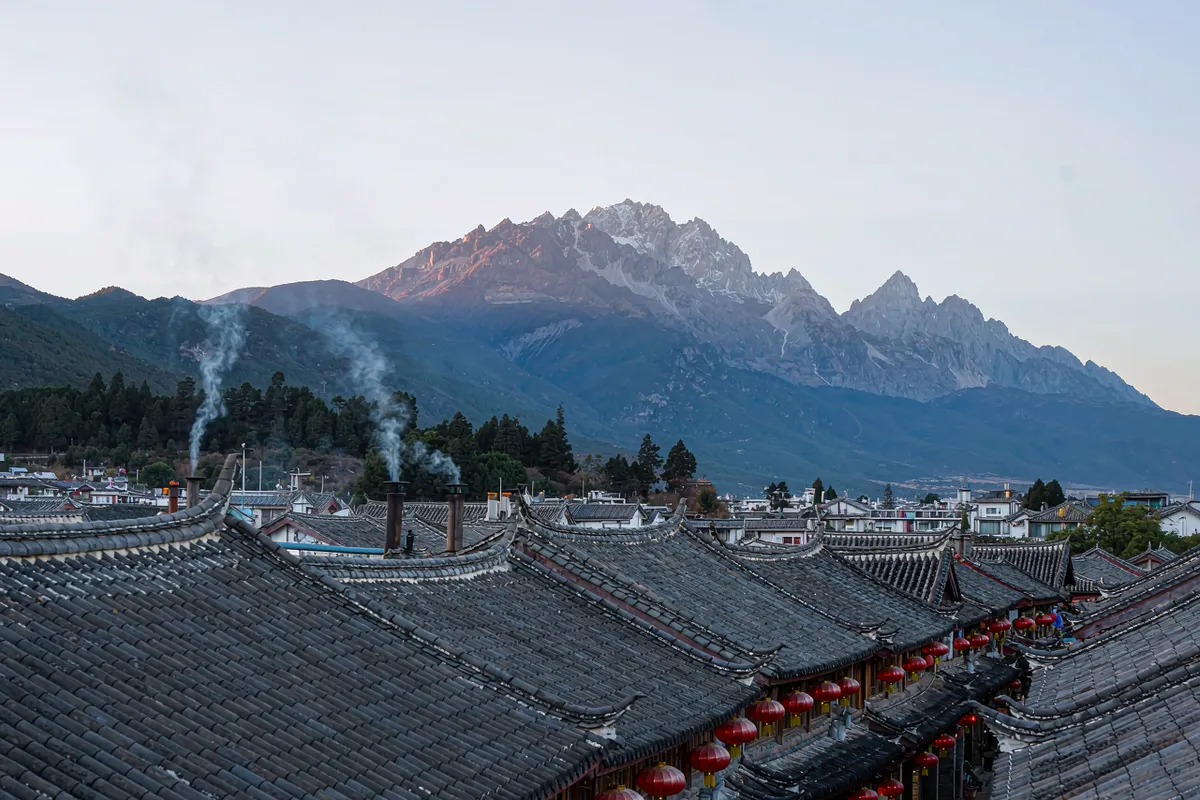
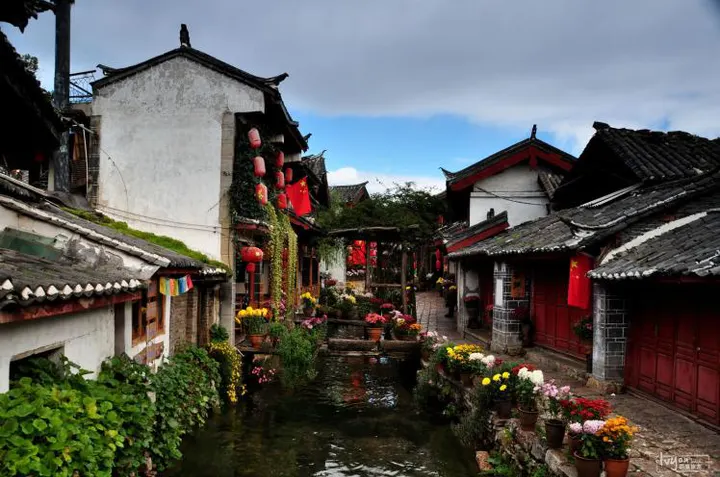
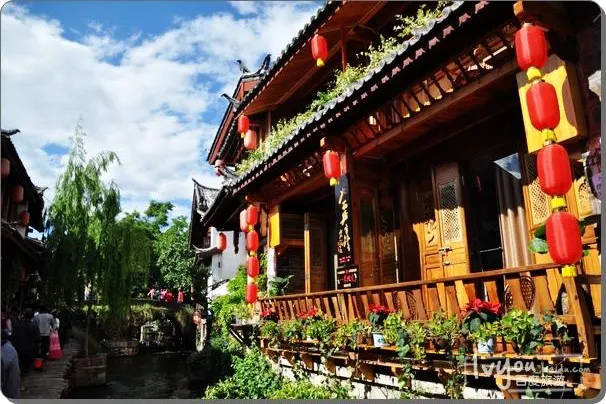
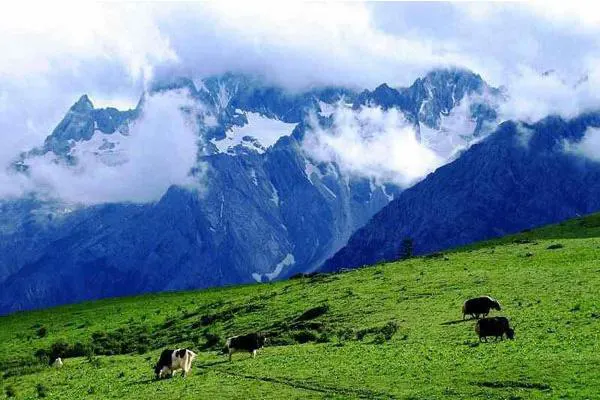
UNESCO old townJade Dragon Snow MountainLugu Lake and the MosuoCourtyard inns under the peak
In short
Lijiang (丽江, Lìjiāng) sits in northwestern Yunnan at about 2,400 m: a UNESCO-listed old town of canals and cobbled lanes, Jade Dragon Snow Mountain — the 5,596 m massif north of town — and a natural line onward to Lugu Lake, Tiger Leaping Gorge and Shangri-La. Three days cover the old town, Shuhe, Baisha and the snow mountain; add a day or two for Lugu Lake or the gorge. March–May and September–November are best; a mid-range trip costs roughly ¥1,500–3,000 for 3–5 days excluding long-distance transport.
Key facts
Known for
Old town · Jade Dragon Snow Mountain · Lugu Lake · Naxi Dongba culture
Budget
¥1,500–3,000 for 3–5 days, mid-range
Days needed
3–5 days
Comfort
Comfortable
Best time to go
Spring (Mar–May) and autumn (Sep–Nov); winter for the clearest mountain views
01An old town watched over by a snow mountain
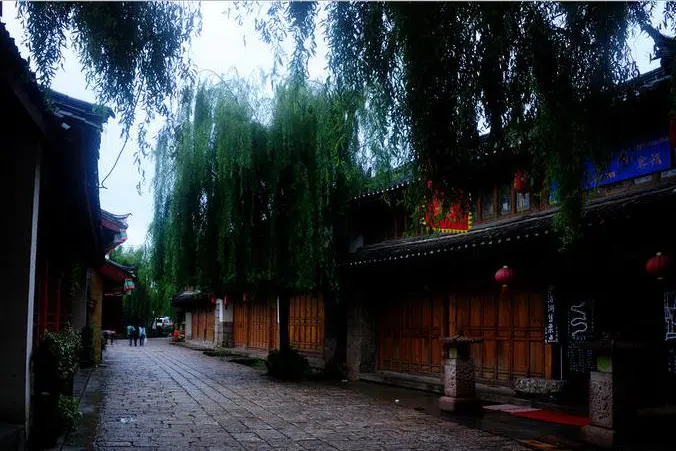
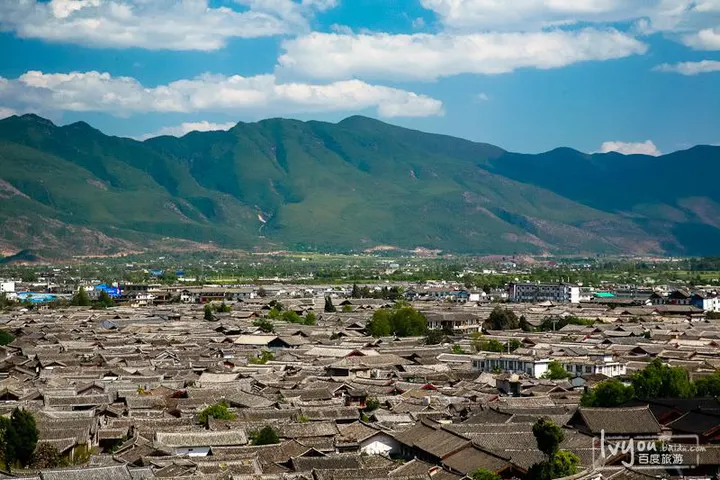
Lijiang sits in northwestern Yunnan at about 2,400 m, with Jade Dragon Snow Mountain — the 5,596 m massif north of town — visible on clear days from any rooftop cafe. The Naxi people began building the town in the late Song and early Yuan eras: no city wall, Sifang Street at the center, three stream systems threading past nearly every doorway. In 1997 the Old Town of Lijiang was inscribed by UNESCO as a World Heritage site.
Grey tiles, red lanterns and flowing water in Lijiang Old Town
Lijiang today works in layers. Lijiang Old Town (Dayan) is the main stage — architecture by day, bar streets by night. Shuhe Ancient Town is a notch quieter and keeps the bones of a Tea Horse Road staging post. Baisha Ancient Town is the smallest and the earliest Naxi settlement, home to the Baisha murals and the best casual mountain views. Beyond town lie Lashi Lake's wetlands and horse trails, the glaciers and meadows of Jade Dragon Snow Mountain, and Lugu Lake, two days there and back.
People love to call Lijiang over-commercialized, and the main streets at 21:00 can feel that way. But timing fixes most of it: Sifang Street at 7:00 is nearly empty, the mountain owns the morning, the town owns the slow afternoon, and a quiet side lane owns dinner. Slow down and Lijiang remains one of the few places in China where doing absolutely nothing for five days feels entirely justified.
Lijiang is loud, if you want to party all night. Lijiang is quiet, if you would rather sit in a sunlit courtyard and let the whole afternoon go by.
《我是驴友·丽江攻略》
02Six things worth remembering
If you keep only five memories, let these be the six: an empty Sifang Street at dawn, the 4,680 m platform at the top of the Glacier Park cable car, Shuhe's waterwheels, horses on the old trails by Lashi Lake, a pig-trough canoe on Lugu Lake, and the unreal water color of Blue Moon Valley.
Sifang Street at dawnThe heart of the old town
Sifang Street is the geometric center of the old town, with four main lanes radiating out. By day it belongs to tour groups and circle dances; around 7:00 it is nearly empty, the cobbles still wet and reflective — the only hour to see the town's bones. In the evening Naxi grandmothers lead the guozhuang circle dance, and anyone may join.
Glacier Park on Jade Dragon Snow MountainThe 4,680 m walkway
The big cable car lifts you from the Ganhaizi meadow at 3,356 m to Glacier Park at 4,506 m, and a boardwalk climbs to the 4,680 m viewing platform. Glaciers, seracs and a sea of clouds pass underfoot; the altitude is real, so climb slowly. Tickets open 7 days ahead on the official mini-program and sell out fast in season.
Shuhe Ancient TownThe slow version
Shuhe, 7 km north of Dayan, was a Tea Horse Road mart for hides and leather. The layout echoes the old town at half the density: Qinglong Bridge, Jiuding Dragon Pool, waterwheels and rows of old willows. Cafes sit at the field edges, and nobody minds if you nurse one cup all afternoon.
Horse trails at Lashi LakeThe Tea Horse Road on horseback
Lashi Lake is a plateau wetland west of town where tens of thousands of migratory birds winter. Village stables lead horses up the old post road through pine woods and orchards for an hour or two; you can also row onto the lake for the mountain reflection. Stables are scattered across villages with wildly varying prices — pick a licensed operator and confirm route and duration before mounting.
Lugu LakeKingdom of women
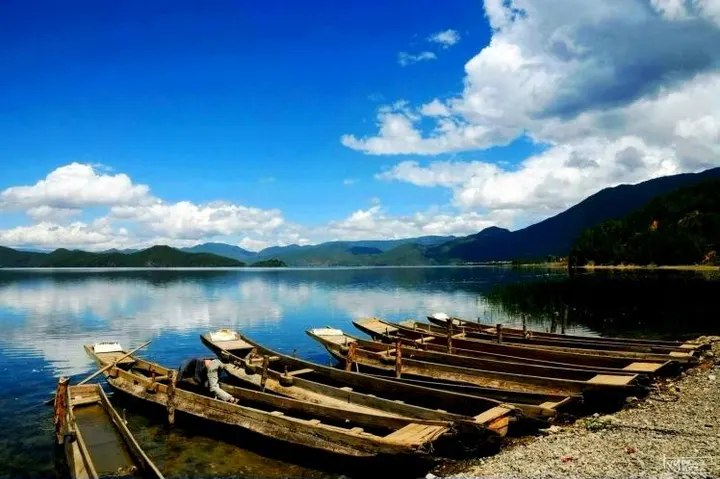
Straddling the Yunnan–Sichuan border, Lugu Lake lies at about 2,690 m, water so clear it seems lit from within. The Mosuo people keep their matrilineal households and the walking-marriage tradition. A pig-trough canoe takes you into the morning mist; village bonfires light up at night. The drive is 4–5 hours each way — stay two nights.
Blue Moon ValleyWhite Water River
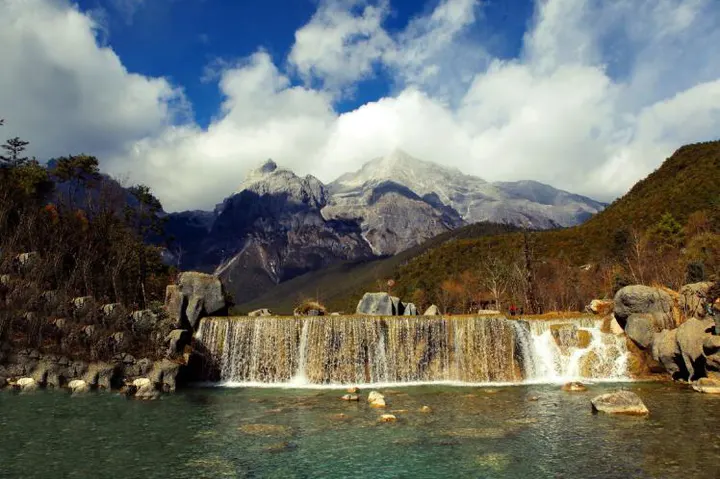
Meltwater from the snow mountain drops in terraced travertine falls here; minerals tint the pools an opaque turquoise on sunny days, making it the most photographed corner of the reserve. The valley itself costs nothing extra — the electric cart is ¥10 a leg or ¥40 the loop, though the walk is short. Crowds build fast; come in the morning.
03The questions everyone asks first
How many days do I need for Lijiang?
Three days is the minimum complete unit: day one for Lijiang Old Town (the Mu Mansion, Wangu Tower, Black Dragon Pool), day two for Jade Dragon Snow Mountain, day three for Shuhe plus Baisha. Add Lugu Lake and it becomes five days; the Tiger Leaping Gorge hike adds another one or two. A single night spends half your time on the road — skip it.
Will I get altitude sickness?
Lijiang town is at about 2,400 m — most people feel only mild breathlessness. The real test is Jade Dragon Snow Mountain: the cable car tops out at 4,506 m and the walkway at 4,680 m, a fast ascent there and back in one day. Skip alcohol the night before, walk slowly, and carry a canister of oxygen (a pharmacy in town sells one for a bit more than ¥10; the mountain charges several times that). Anyone with cardiovascular conditions should not take the big cable car. Lugu Lake, at 2,690 m, is easy.
Is the rainy season a write-off?
June to September is the wet season, but Lijiang's rain mostly arrives as afternoon showers and mornings are often clear. The real cost is cloud: the main peak hides behind it for days, so if you come for the alpenglow on the snow summit, aim for October to March. In return you get fewer crowds, the lowest room rates and the greenest hillsides. Pack a waterproof shell rather than an umbrella.
Do I still have to pay the old town maintenance fee?
Under the regulation effective 1 August 2025, the Lijiang Old Town maintenance fee is ¥50 per person per purchase, valid 365 days, covering Dayan (including Black Dragon Pool), Baisha and Shuhe; eight categories are exempt (children under 12 or 1.2 m, seniors 60+, military, disabled visitors and others), and tour groups pay through the agency. In practice individual travelers mainly encounter the check at Black Dragon Pool — the shopping streets have no gates. Several media reports in 2026 say collection has been dropped, which conflicts with the standing rule, so confirm on the official 'Lijiang Old Town' mini-program or the city government website before you go; refuse anyone personally collecting an 'entry fee' in the street.
How do I get a big cable car ticket for Jade Dragon Snow Mountain?
Tickets go on sale 7 days ahead on the official 'Lijiang Tourism Group' mini-program: Glacier Park releases at 20:00 nightly, Spruce Meadow and Yak Meadow at 21:00 — set an alarm in high season. Face verification is required; foreign visitors must register passport details in advance, and passports cannot be mixed with mainland ID cards in one order. If the big cable car sells out, Spruce Meadow (3,240 m) is the graceful fallback with equally lovely meadow views. Afternoon sailings stop for wind or fog, so book a morning slot.
How do I get from Lijiang Station to the old town?
Lijiang Station is about 10 km from the old town. Buses 4, 16 and 18 cost ¥1–2 and take 25–50 minutes to various old town entrances, but most stop running around 19:00. A taxi or ride-hail is ¥20–30 and 20 minutes; the old town is pedestrian-only, so ask the driver for the gate nearest your inn. Late arrivals have no choice but a cab — ignore the touts at the exit.
Is the local 'salmon' actually salmon?
No. The 'salmon' on Lijiang menus is almost always rainbow trout farmed in snowmelt — similar in color, but not safe raw because of parasite risk; the local way is to poach it in hotpot or grill it. Ask how it is served before ordering, and reserve raw fish for places that clearly label imported ocean catch. It is the region's most famous case of wishful naming, though cooked it is genuinely good.
04Three days minimum, five at ease
Lijiang works best when you alternate effort and ease: old town days for lanes and sunshine, one early start for the mountain, outlying days for stables and lakes. The four days below suit most travelers; Lugu Lake deserves its own two nights.
D1
Old town day: walk Sifang Street and the Big Stone Bridge before the crowds, then the Mu Mansion (¥40, students ¥20) to see how the Naxi chieftains lived. After lunch climb Lion Hill to Wangu Tower (about ¥31–35) for the town-plus-mountain panorama, and finish at Black Dragon Pool for the classic reflected peak (the maintenance fee may be checked). Dinner in a small kitchen on Wuyi Street; early night — tomorrow starts before dawn.
D2
Mountain day: leave at 6:30 and transfer to the park shuttle at Ganhaizi. Ride the big cable car to Glacier Park in the morning and walk the boardwalk slowly to 4,680 m. Descend for the falls and pools of Blue Moon Valley; if legs and lungs allow, add Spruce Meadow or the Impression Lijiang show (¥280). It is a high-altitude day — keep the evening alcohol-free.
D3
Shuhe and Baisha: taxi or bus to Shuhe in the morning for Qinglong Bridge and Jiuding Dragon Pool, with brunch at a field-edge cafe. Continue north to Baisha Ancient Town after lunch — the Baisha murals (about ¥20), old Naxi courtyards — then wait for the alpenglow from a rooftop before heading back.
D4
Lashi Lake half day, then farewells: ride the Tea Horse Road trails with a licensed stable in the morning (about ¥120–180), back to town by lunch. Fill the afternoon with anything missed — the Mu Mansion or Black Dragon Pool — and spend the last evening choosing between the bar street and a quiet kitchen, shopping for Dongba paper and flower cakes on the way.
05From Sifang Street to 4,680 m
A sea of grey rooftops seen from Lion Hill
Lijiang Old Town (Dayan)
Built from the late Song into the Yuan era, Dayan famously has no city wall — legend says the ruling Mu family refused one, since a wall around the character for 'Mu' spells 'trapped'. Three rivers thread the town past nearly every door. Sifang Street anchors the center, with the Mu Mansion and Lion Hill to the west and the quieter lanes of Wuyi Street and the Big Stone Bridge to the east. Free to enter; dawn and late night show its true face.
The Mu Mansion and Wangu Tower
The Mu Mansion was the seat of Lijiang's hereditary Naxi chieftains — a Ming-style axis of audience halls, the Ten-Thousand-Scroll Library and the Dharma Hall that earns it the nickname 'the little Forbidden City'. Entry is ¥40 (students ¥20) with free guided tours. On Lion Hill nearby, Wangu Tower is a five-storey timber pavilion with the town below and the snow mountain ahead, about ¥31–35. After 16:00 the light from up there is at its best.
Black Dragon Pool
At the foot of Elephant Hill at the north end of town, Black Dragon Pool frames the classic reflection of Jade Dragon Snow Mountain, with the Moon-Embracing Pavilion and a five-arched bridge in front. The park is free but, under the current rule, shows your old town maintenance fee receipt at entry. Morning gives the best light and the clearest peak; wind and cloud build after noon. The Dongba culture institute by the pool demonstrates the Dongba script.
A lane at dusk as the lamps come on and the crowds thin
Baisha Ancient Town
Baisha is the earliest Naxi settlement in the Lijiang basin and the cradle of the Mu chieftains. One or two streets wide, its draw is the Baisha murals — Ming-era religious frescoes blending Han, Tibetan and Naxi styles (about ¥20). Workshops sell tie-dye and hammered copper along the street, and the town owns the best casual snow-mountain view around: on clear days the main peak fills the sky at the end of the lane.
Jade Dragon Snow Mountain scenic area
The main peak, Shanzidou, rises 5,596 m and has never been climbed. The park charges ¥100 entry plus a mandatory ¥20 shuttle, then à la carte: the Glacier Park big cable car about ¥120–140, the Spruce Meadow cableway ¥40, the Yak Meadow mid-cableway ¥60 (suspended on and off in recent years), Blue Moon Valley carts ¥10 a leg. Cable tickets are reserved by real name 7 days ahead. Glacier Park plus Blue Moon Valley is the standard single-day route.
You can enjoy the mountain without the big cable car: Ganhaizi meadow (about 3,000 m) is made for photos with the peak behind, Spruce Meadow (3,240 m) wraps old-growth spruce forest around an alpine lawn, and Yak Meadow is the wildest with the finest angle for the alpenglow. In winter the snowline drops and the whole face glows white; in summer only the upper reaches hold snow.
06Beyond wandering the old town
Take in a show
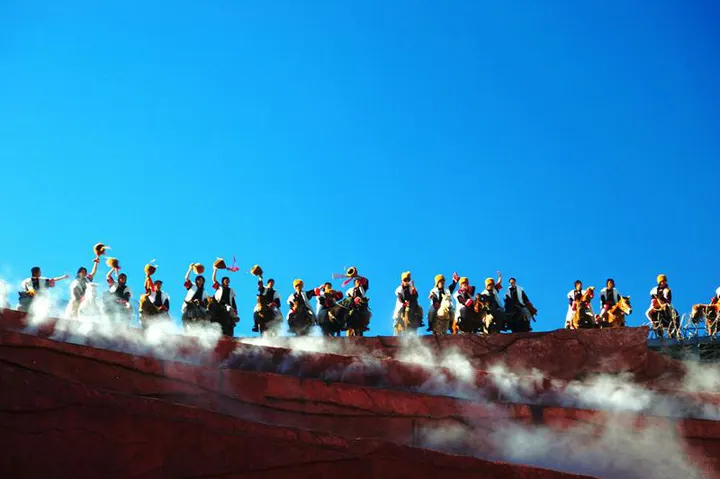
Three resident shows, pick one. Impression Lijiang plays in the open-air theater at Ganhaizi with the snow mountain as its backdrop — ¥280 regular, ¥346 VIP, and easiest to catch on mountain day. Lishui Jinsha condenses Yunnan's ethnic song and dance into a theater production downtown, ¥280 (children ¥200). Lijiang Romance goes heaviest on lights and spectacle, from about ¥280. For something quieter, hear Naxi ancient music played by old musicians from Tang- and Song-era scores.
Open-air ethnic performance beneath the peak
Horses and boats
Seven or eight Naxi villages around Lashi Lake run stables; rides follow Tea Horse Road branch trails uphill for an hour or two, with licensed packages at about ¥120–180, usually including a chicken hotpot lunch. Kayaks and punts ply the lake itself. Politely decline upsells for photographers, glass walkways and the like — buy what you actually want. The pig-trough canoes of Lugu Lake (¥80–150 a head) are another matter entirely: the silence of a plateau lake at dawn is worth the early alarm.
Hike the Tiger Leaping Gorge high trail
Tiger Leaping Gorge is 1.5–2 hours from Lijiang. Casual visitors walk the Upper Gorge boardwalk (entry ¥45), an hour-plus loop facing the Jinsha River rapids; trekkers take the two-day high trail over the 28 Bends, sleeping at the famous terrace of the Halfway guesthouse. In the June–September rains watch for rockfall and landslides; solo hikers should team up or join an organized group.
Two kinds of night
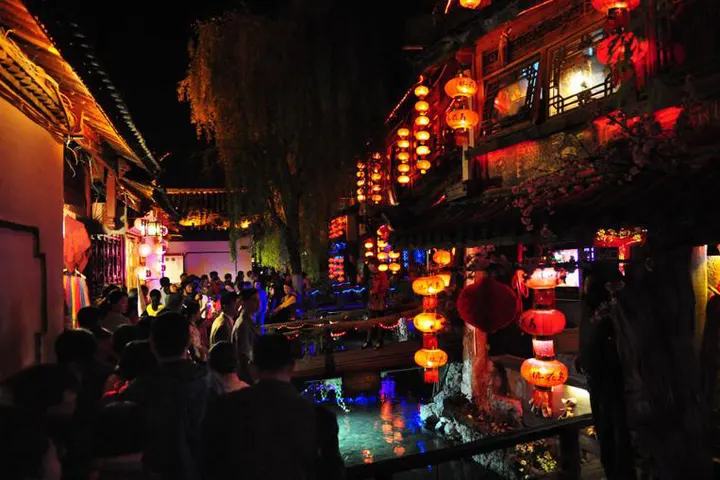
Bar Street along Xinhua Road is Lijiang loud: waterside taverns shoulder to shoulder, live singers until late, and the bridges are free listening. Quiet Lijiang lives in the side lanes of Wuyi and Qiyi streets — a pot of pu'er in a small courtyard, or the circle dance locals still hold on Sifang Street. Try both once; you will know which one is yours.
Lantern light on the water along Bar Street
07Old town, Shuhe or the new city
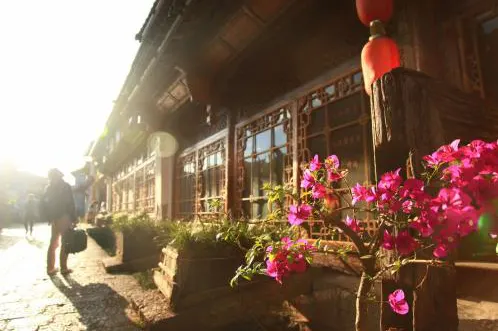
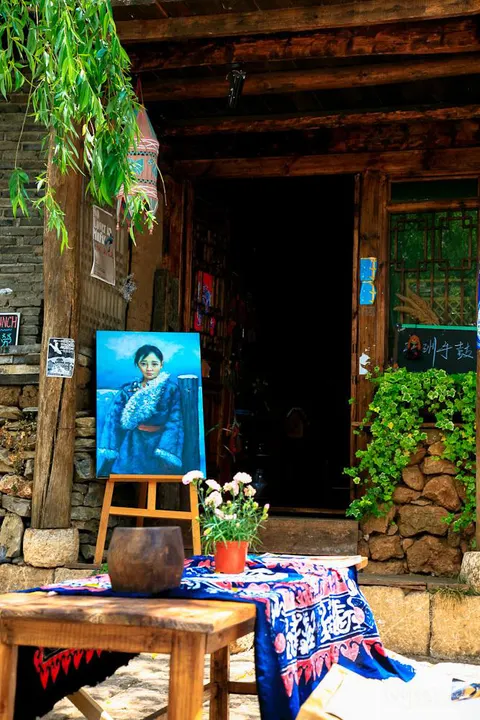
A Naxi courtyard inn: red lanterns and timber galleries
The classic Lijiang stay is a Naxi courtyard converted into an inn: timber buildings around one or two yards, with rooftop terraces that often frame the snow mountain. Inside the old town the atmosphere is best but luggage over cobbles is punishing — count on ¥300–600 in high season. Around the old town and in Shuhe runs about 30% cheaper, and ¥150–300 buys something genuinely lovely. Chain hotels in the new city, ¥100–200, suit anyone chasing an early bus.
Dayan: full atmosphere, noisy nights — best on a first visit built around the old town
Shuhe: quiet and cheaper — for stays of three nights or more, or anyone who wants to sit still
Baisha: the fewest and most rural guesthouses, at the cost of thin dinner options
New city: chain hotels with smoother station and airport runs — ideal for early flights or late trains
In high season (July–August, Golden Week) book two to three weeks ahead; mountain-view rooms go first
Before booking, ask three questions: is there a lift or someone to carry bags (most old town houses mean stairs and shoulders), is it air conditioning or an electric blanket (winter nights drop below zero), and is hot water around the clock. Old timber houses are thin-walled — light sleepers should pick a courtyard deep in a lane.
08Pork-rib hotpot, chickpea jelly and yak yogurt
Cured pork rib hotpot
The city's signature table is cured pork rib hotpot: air-dried salted ribs simmered with potatoes, tomatoes and celery, the broth deepening as it cooks. Xiangshan Market is where locals go — a pot for two or three runs ¥100–150; in the old town count on ¥60–90 a head. Add a bottle of Fenghuaxueyue lager or a pot of plum wine.
Chickpea jelly and Lijiang baba
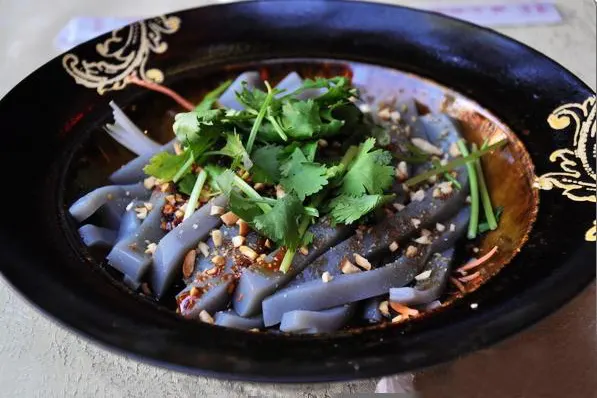
A cold bowl of chickpea jelly
Chickpea jelly is made from jidou, a highland cousin of the chickpea: served cold with vinegar and chili, or pan-fried until both sides crust, ¥5–10 a plate and good at any hour. Lijiang baba is a pan-fried or baked layered flatbread — sweet with rose sugar, savory with Yunnan ham, ¥5–15, perfect beside a cup of butter tea. Buy from street stalls cooking to order, not from trays pre-arranged on the main drags.
Butter tea, yak yogurt and 'salmon'
Naxi and Tibetan tastes meet here. Butter tea is salty and filling — the classic breakfast with baba — and yak yogurt is thick enough to hold a spoon upright; ¥8–15 with sugar or honey. As for the 'salmon' on menus, it is nearly always rainbow trout farmed in snowmelt: fine cooked in hotpot or over charcoal, refuse it raw. In the wild mushroom season (June–September) look for matsutake and mixed-mushroom hotpot — but eat them fully cooked, in proper restaurants.
Xiangshan Market ribs street: follow the shops with whole rows of cured meat hanging at the door
Black goat hotpot: a whole street near Jinkai Square, skin-on goat and offal pots
Ottelia greens: a water plant with white blooms, stir-fried or hotpotted, June–September only
Mushroom season: say no to raw matsutake; only fully cooked hotpot is safe
Per-head guide: ¥60–100 in the old town, ¥30–60 in the new city and market streets
09Souvenirs that survive, silver that needs care
A craft shop in the old townPainted hand drums hanging for sale
The souvenir that matters is Dongba paper, hand-made from the bark of a local wikstroemia and famous for lasting a thousand years — notebooks and lampshades from ¥30–100. Next come flower cakes (best bought warm from the oven, about ¥10 each), spirulina and yak jerky. Hand drums are the old town's soundtrack; buy one only if you intend to play it. Woodblock Dongba script, tie-dye and hammered copper are all made in workshops across the three towns.
Dongba paper: choose workshops where you can watch sheets being pulled
Flower cakes: chain brands for shelf life; street-baked ones eat the same day
Silver and jade: jade pricing is a minefield — skip anything expensive without expertise; judge silver by weight plus labor fee
Pu'er tea: taste before buying loose leaves; ignore the markups of 'ancient tree' tales
Hand drums and music boxes: the same stock on every corner — compare before buying
Haggling is normal — open at half — though workshops with fixed prices may be honored as marked. High-priced silver and jade accompanied by 'certificates' clusters on tour-group routes; independent travelers should walk past. Big Dongba paper paintings and copperware can be shipped home by the shop.
10Getting there and getting around
Arriving by train
Lijiang Station is the rail hub of northwestern Yunnan: 3.5–4.5 hours from Kunming by EMU, second class ¥166–199, plus an overnight conventional sleeper (hard sleeper about ¥123–129); Dali is 1.5–2 hours; Shangri-La about 1.5 hours on the Lijiang–Shangri-La railway. Book early through 12306 in high season. For the station-to-old-town run, see the FAQ.
Flying in
Sanyi Airport lies 28 km south of town. The airport coach costs ¥20–25 and takes 40–50 minutes to the old town area; a taxi is ¥80–100 and about 40 minutes — pre-book a pickup for late arrivals. Coaches also run direct toward Dali and Shangri-La.
To the snow mountain and Lashi Lake
Jade Dragon Snow Mountain: bus 101 reaches the gate for about ¥15 but runs infrequently; most people take a shuttle or shared van, ¥40–50 each way. Lashi Lake: buses 30/31/32 reach the lakeside villages. Between the towns, bus 6 and ¥5 direct shuttles link Shuhe and Baisha; taxis run ¥20–30 from Dayan to Shuhe and about ¥35 to Baisha.
Inside the old town: on foot only
The cores of Dayan, Shuhe and Baisha bar cars and shared bikes — everything is walking. Cobbles turn slick when wet, so wear grippy soles; wheelie cases are deafening on stone, so leave big bags with an inn near the gate or in the new city. The lanes maze easily: follow any stream upstream and you will find the big waterwheel at the north entrance.
Longer journeys and drivers
To Lugu Lake, take the coach from the bus station (¥70–100, 4–5 hours) or a shared van (¥100–150 a head); Tiger Leaping Gorge has direct shuttles (about ¥50 one-way, ¥68 return). A private car with driver costs ¥350–500 a day, sensible for three or four people covering Lashi Lake and Yuhu village. Mountain roads shed rocks in the rainy season — never drive them at night.
Lijiang sits at about 2,400 m with fierce ultraviolet — you can burn through cloud, so SPF50 sunscreen, a hat and sunglasses are non-negotiable. Day–night swings reach 15 degrees; carry a jacket even in summer, and a down jacket is no joke in winter, when days hover near 15 degrees and nights sink below zero. The air is dry: bring real moisturizer and lip balm.
Payments: WeChat Pay and Alipay rule, and foreign cards now link to both; keep some cash for tiny shops
Reservations: snow mountain cable tickets and Lugu Lake entry are booked online by real name; register passport details early
Oxygen: about ¥15 a canister at city pharmacies, several times that on the mountain — buy in advance
Medical: Lijiang People's Hospital sits just north of the old town; go straight to emergency care for severe altitude symptoms
Crowds: Golden Week doubles room rates and empties cable-car slots — travel shoulder season if you can
Safety: fire rules are strict — no smoking inside inns; swimming in Lugu Lake is banned
Refuse anyone collecting a personal 'maintenance fee' or 'entry fee' at the town gates — legitimate charges always come with official receipts and channels. Self-driving is unfriendly to novices: northwestern Yunnan's roads are tight and rockfall-prone in the rains, so hire a car with a driver instead.
12Bookings, packing and a gentle ascent
Preparation comes down to three things: tickets bought at the right moment, the right clothes, and a gentle pace. Big cable car tickets open 7 days ahead at 20:00 sharp — fix your dates first; reserve rooms two to three weeks out in season; buy train tickets early on 12306. Plan nothing strenuous on arrival day and let your body adjust to 2,400 m over one easy afternoon.
Clothing: sun kit plus a windproof shell; a down jacket from November to March
Footwear: grippy walkers or chunky sneakers — heels and wet cobbles do not mix
Medicine: cold and stomach remedies, throat lozenges; anyone with cardiovascular conditions should consult a doctor before the big cable car
Documents: carry your passport or ID — cable cars and parks check names against tickets
Extras: a power bank (photos drain batteries), rain gear in season, and a little cash
Put the mountain on day two or three: two days moving around at 2,400 m prepares you for 4,680 m. And keep at least one afternoon of doing nothing in the old town — that is what Lijiang is for.
13The Naxi, the Tea Horse Road, and a turning point
The Naxi trace their roots to ancient Qiang peoples moving south, settling the Lijiang basin by the Tang and Song eras. The Mu family ruled as hereditary chieftains appointed by the imperial court, expanding across northwestern Yunnan into Kham; the Mu Mansion was their seat of power. The town grew rich on the Tea Horse Road — caravans carrying tea, salt and horses to and from Tibet — and Sifang Street was the open market at its heart.
The great 1996 earthquake wrecked swaths of old housing yet unexpectedly put the town on the world map: reconstruction followed strict restoration principles, and in 1997 the three ensembles of Dayan, Shuhe and Baisha were inscribed by UNESCO as a World Heritage site, after which tourism exploded. Lijiang today lives in permanent tension between heritage and commerce. As a visitor, choosing the quiet lanes and respecting residents' daily life is the kindest thing you can do for the town.
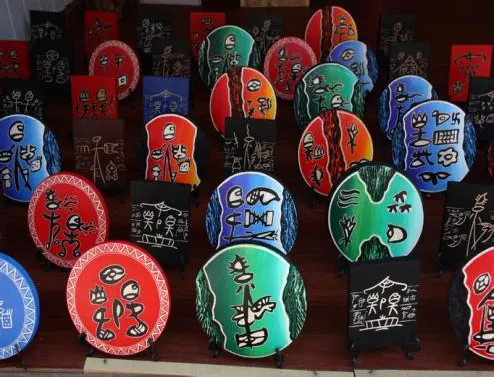
Dongba culture is the Naxi spiritual substrate: Dongba priests write scripture in more than 1,400 pictographs, among the very few picture scripts still in living use. The Three-Eyed Well system — drinking water in the first pool, vegetables in the second, laundry in the third — still governs daily water use in the old town. Understand those two things and Lijiang stops being a stage set.
14Lakes, gorges and Shangri-La
Lijiang's geography makes it the trailhead for all of northwestern Yunnan: north to Tiger Leaping Gorge and Shangri-La, east to Lugu Lake, south to Dali. The three routes below are ordered by time cost; book your return legs before setting out.
Tiger Leaping Gorge (1–2 days)
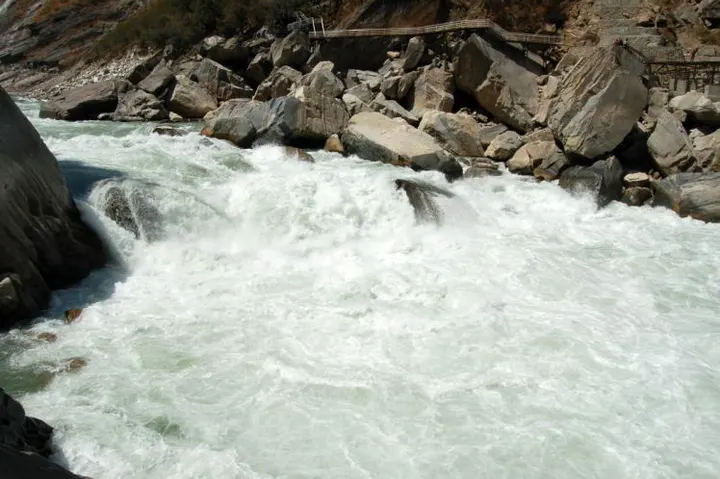
The Jinsha River raging through the Upper Gorge
Between the snow walls of Jade Dragon and Mount Haba, the Jinsha River saws a gorge more than 3,900 m deep, pinching to some 20 m across. A day trip covers the Upper Gorge boardwalk (entry ¥45, optional escalator ¥30–70); the two-day high trail sleeps at the Halfway guesthouse with the two massifs glaring at each other across the river. The drive from Lijiang is 1.5–2 hours.
Lugu Lake (2 days)
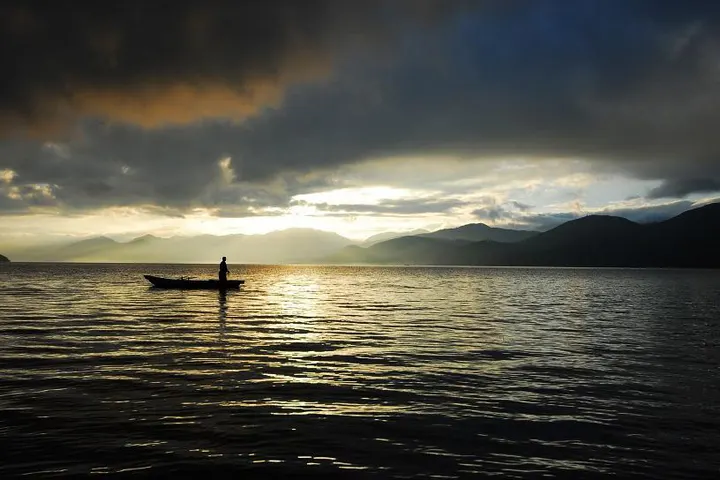
Morning on Lugu Lake, canoes resting on still water
With 4–5 hours each way, give it two nights. Day one circles the lake: Daluoshui, the Lige viewing platform, the Walking-Marriage Bridge and the reed marsh. Take a canoe into the morning mist and join a Mosuo bonfire at night. Entry is ¥70 from the Yunnan gate, valid 7 days, fully reserved online since 2026. The ring road runs 60–70 km; a shared van or private car is the painless way round.
By the lake in the early light
Shangri-La and Dali
Since the Lijiang–Shangri-La railway opened, Shangri-La is 1.5 hours away: Dukezong old town, Songzanlin Monastery and Pudacuo National Park frame a two-day visit, with the altitude climbing to 3,300 m — go easy. The other way, Dali is 1.5–2 hours by train; the Cangshan range, Erhai Lake and Bai three-course tea run at a different tempo, and together with Lijiang they make a fine 7–9 day northwestern-Yunnan loop.
15Dongba script, ancient music and the 'stars and moon' cape
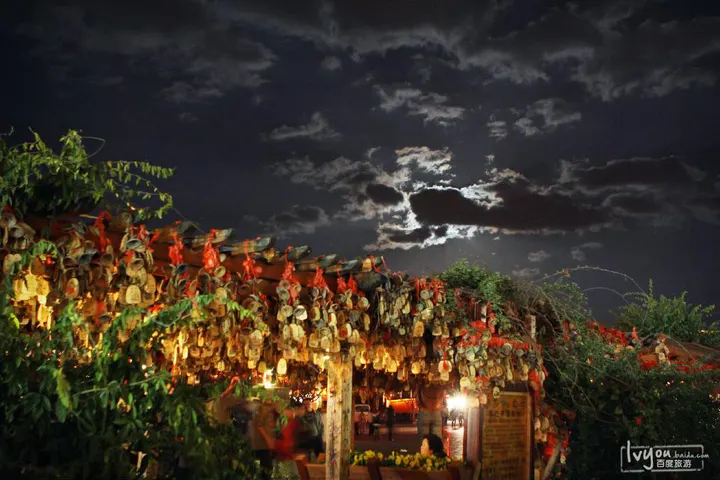
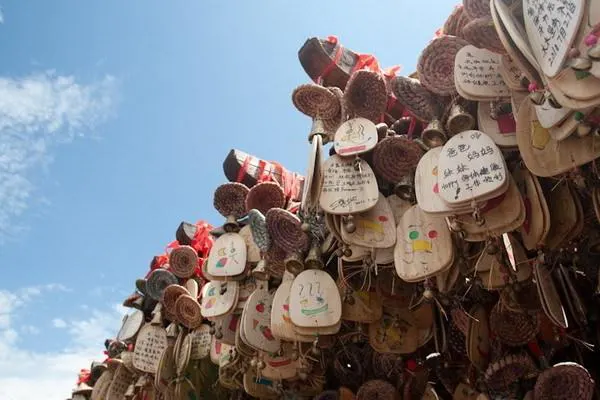
Wooden Dongba wish plaques crowded with hopes
Dongba culture and the Three-Eyed Well
The Dongba script holds some 1,400 characters and is called a living pictographic script; Dongba scriptures preserve the Naxi creation epic. Wish plaques around town are written in both Dongba and Chinese and hung in ranks at wishing pavilions. The Three-Eyed Well is the Naxi civic ethic of water: three adjoining pools divide drinking, vegetable-washing and laundry, top to bottom — unsupervised, yet honored. It is the key to how the old town still keeps its order.
Naxi ancient music and the circle dance
Naxi ancient music is said to preserve Tang and Song melody titles alongside Daoist ritual music; players are mostly white-haired elders, and the ensemble includes the rarely seen sugudu lute and short-necked pipa — nightly performances run in the guildhalls of Dayan. The guozhuang circle dance is the folk counterpart: most evenings on Sifang Street and town squares, Naxi grandmothers lead visitors around in song, and the steps are simple enough to master in two rounds.
The 'stars and moon' cape
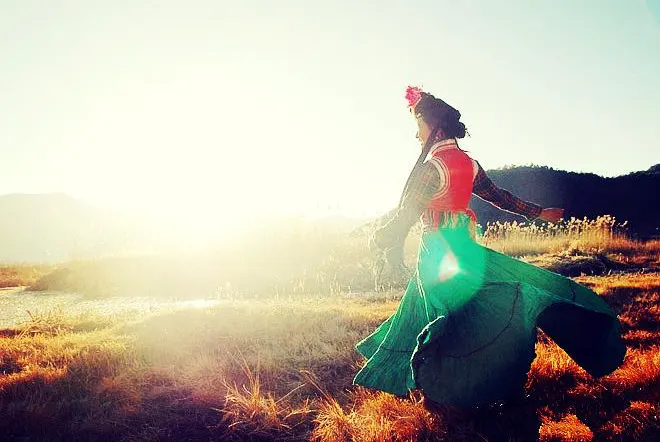
The traditional Naxi woman's dress carries a sheepskin cape embroidered with seven discs for the stars, with sun and moon at the shoulders — 'wearing stars and moon' praises the diligence of women up before dawn, and doubles as their emblem. Elders in full dress still walk the old town; greet them before photographing, and lower the camera if they decline. The Mosuo matrilineal households and walking marriage are another system entirely — come to Lugu Lake to learn with respect, not to gawk.
The snow mountain says nothing; the streams of the old town have spoken for it for eight hundred years.