Half in Yunnan, half in Sichuan, and unnervingly still
Book entry onlineCanoe at first light68 km round the lakeThe grandmother's house
In short
Lugu Lake (泸沽湖, Lúgū Hú) sits on the Yunnan–Sichuan border at 2,690 m, roughly 50 square kilometres of water with a 68–78 km road around it. No railway reaches it: you take a train to Lijiang first — 3.5–4.5 hours from Kunming, second class ¥166–199 — then a 3.5–4.5 hour drive into the mountains, or come the other way from Xichang in Sichuan on a five-to-six hour road. Entry is ¥70 at the Yunnan gate and ¥80 at the Sichuan gate, valid for seven days, and since 2026 it must be booked online by passport or ID. Stay at least two nights: one for the mist and the canoes at dawn, one for the evening water and a Mosuo grandmother's hearth. A mid-range trip runs about ¥1,200–2,200 for three days and two nights, excluding travel to Lijiang.
¥1,200–2,200 for 3 days, mid-range, excluding travel to Lijiang
Days needed
Three days minimum, four to slow down
Comfort
Comfortable — 2,690 m, with sharp day-night swings
Best time to go
October and November for the bluest water; May–September for the water flowers; November–March for gulls
01Cloud at the shoulder of the mountain, water at your feet
The road from Lijiang crosses the Jinsha River, climbs two ridges, and keeps climbing until the air thins to 2,690 m. Then the last bend swings onto a shoulder of hill and the lake is simply there, below you — not a strip of water but an open palm, with five islands sitting in it like knuckles. Lugu Lake straddles Ninglang county in Yunnan and Yanyuan county in Sichuan: about 50 square kilometres of surface, over 90 m deep in places, one of the deepest freshwater lakes in China and one of the few plateau lakes whose water still measures Class I.
The shore is not a beach but a string of bays, each with a village at the back of it. On the Yunnan side the road passes Daluoshui, Lige, Nisai and Xiaoluoshui; on the Sichuan side it runs through Dazui, Luowa, Wuzhiluo, Dazu and Luguhu town, the old trading post also known as Zuosuo. At the north-east corner the lake suddenly shallows into the Reed Sea — a marsh of reeds and open channels where the water stops being blue and starts being green.
Three things are worth the journey, and they peak at different hours. The water is best before eight, when the surface is one sheet of glass and the mist lies in bands a metre above it. The villages are clearest at midday, when hard light shows you how the log walls are jointed. The households come alive in the late afternoon, when people are back from the fields and the hearth in the grandmother's room has been lit. Two nights is the cheapest way to catch all three.
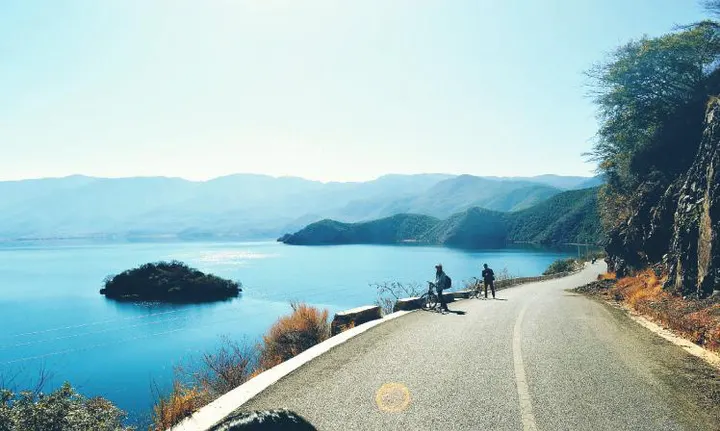
The loop road above the water: two riders, a guardrail, one small island offshore
The sky and the water meet so quietly you feel you could reach out and touch the join. The water flowers sway; the small waves say, this is Lugu Lake.
"Memories of Walking in Yunnan: Lugu Lake"
Orientation comes down to two facts. First, there is no station and no airport at the lake: you arrive by road from Lijiang (about 200 km) or from Xichang (about 250 km), and the last stretch on either is mountain. Second, since 1 January 2026 entry has been online-only — reserved by real name, with no ticket window to argue with. The two gates, Ninglang in Yunnan and Yanyuan in Sichuan, run separate booking systems, so reserve for the gate you will actually reach; the ticket is then good for seven days of re-entry and works on both sides of the provincial line.
02Six things worth arranging your day around
Lige Peninsula, where the lake bends twiceThe photograph everyone carries home
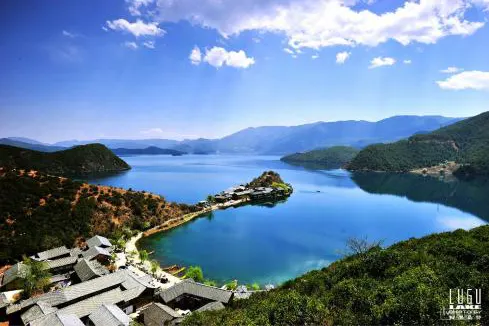
Lige sits on the west shore where a ridge of land pushes out into the water; the village rides the spine and spills into a bay on either side. The viewing platform is on the road above the village, twenty minutes' walk up, and it is the most photogenic angle on the lake: the water bends twice around the peninsula, two blues on a clear day, two greys on a cloudy one. Before eight you are shooting into the light and the surface is smoking with mist; after four the light comes from behind you and you can see stones on the bottom.
A pig-trough canoe at first lightA boat hollowed from one log
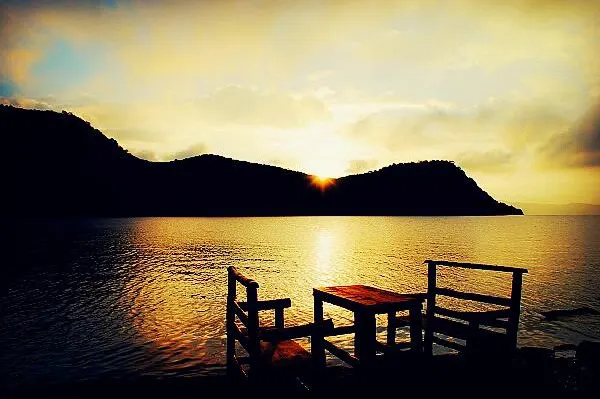
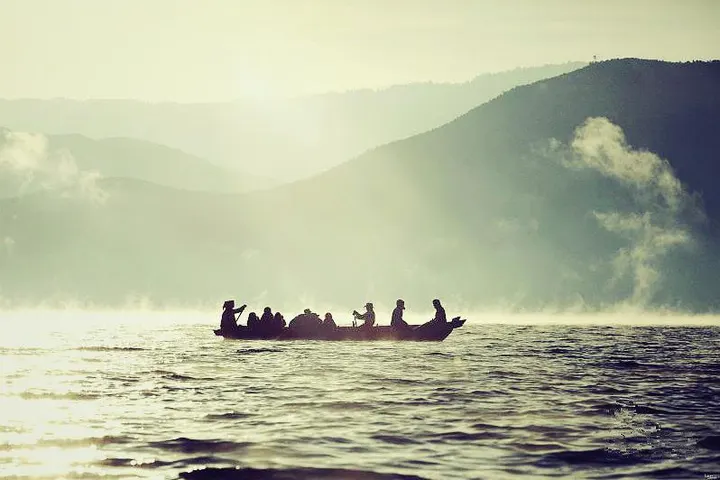
A pig-trough canoe is a single log hollowed out and sharpened at both ends, shaped like the stone troughs pigs were fed from — hence the name. The Mosuo have rowed them for centuries, and they remain the only way across the lake that is not a motor. Board at half past six for the best of it: the sun comes up over the eastern ridge, the water flattens to a band of gold, and the oars are the only sound, with the drip of water off the blade audible between strokes.
The Reed Sea and the Marriage BridgeWhere the lake turns into grassland
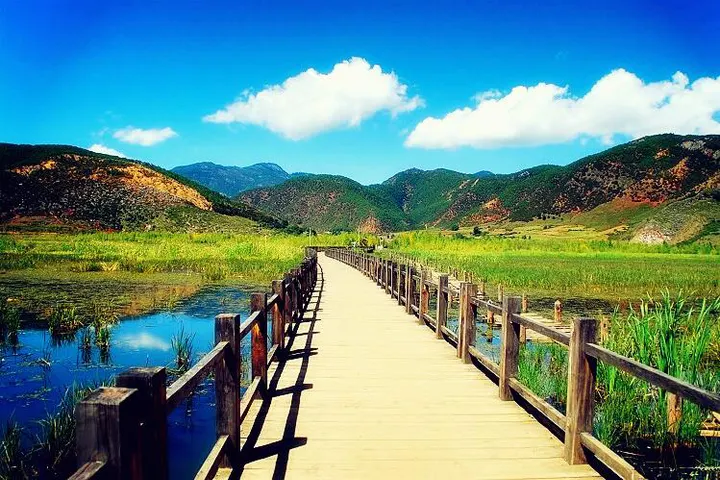
The Reed Sea fills the lake's north-east corner, where reeds cut the water into channels and boats slide between walls of green taller than a person. The Marriage Bridge crosses it on timber piles, a little over 300 m long with the deck less than a metre above the water. It exists because the villages on either side needed to reach each other; the name comes from the visiting partners who lived at its two ends. The old bridge still stands beside it, half collapsed into the reeds.
Gemu Goddess Mountain: the whole lake from 3,450 mTen minutes by cable car, three hours on foot
Gemu Goddess Mountain is the highest thing around the lake at 3,754 m, and the Mosuo treat it as the body of a goddess, climbing it in pilgrimage on the twenty-fifth day of the seventh lunar month. The cable car rises from the foot of the mountain to the Goddess Cave halfway up; from the top station a short walkway brings the whole lake into view at once — an ear, or a leaf. On a cloudy day you see nothing at all; on a clear morning the light is at its best.
Sunset at Goddess BayThe one place facing straight into the sun
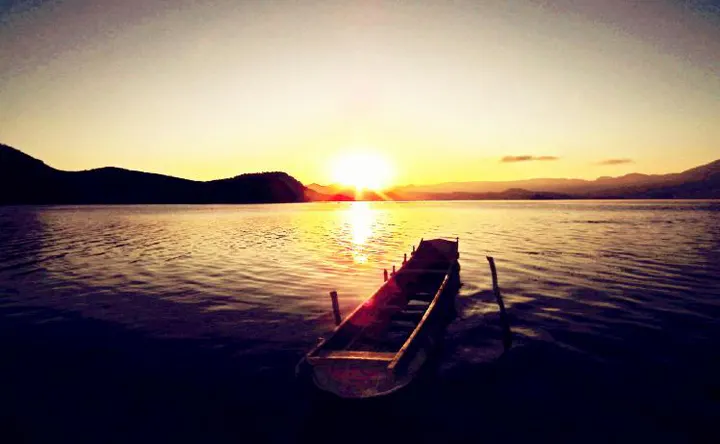
Goddess Bay, once called Zhaojiawan, opens on the Sichuan side facing Gemu Goddess Mountain and, more usefully, facing straight west. The wind drops in the evening, the surface goes flat, and for the dozen minutes while the sun sinks behind the ridge the whole bay runs from copper to a dull violet. It is quieter than Lige, and the walk back to the village takes ten minutes, so you are not driving in the dark.
Sitting in a grandmother's houseA hearth, log walls, one fire that is never let out
A Mosuo courtyard is built around one room: the grandmother's house. Inside is the hearth, and the seating around it is fixed by age and by sex, with the seat facing the door belonging to the oldest woman in the household. A visit is not a show; it is a bowl of butter tea and an explanation of who in this house is whose sister's child, who holds the money, who deals with guests. Take your hat and sunglasses off at the door, never step over the hearth, and ask before you photograph.
03Seven questions to settle before you book
Should I come in from Lijiang or from Xichang, and which is closer?
Lijiang, comfortably. Daluoshui is about 200 km from Lijiang, and since the new road opened in November 2025 a car takes roughly 3.5 hours; the bus takes 4–4.5 hours for ¥71–98, and a shared van ¥80–150 a head. From Xichang it is 240–270 km and 5.5–6 hours, with only one or two morning coaches (about ¥90–100) and a more winding route. Coming from Chengdu or Chongqing, Xichang works well — high-speed rail runs to Xichang West — but if Lijiang, Dali or Shangri-La are also on your list, come in from Lijiang. The gates charge differently: ¥70 in Yunnan, ¥80 in Sichuan.
How long does the loop take, and should I use an e-bike, a car or a bicycle?
The ring road is 68–78 km and takes two and a half hours without stopping. A car with driver is ¥300–400 a day for four to six people and turns the loop into a full day of stopping wherever you like — the easy option with luggage or older travellers. An e-bike at ¥50–80 a day has a range of about 50 km, so a full circuit needs a battery swap or a charge halfway; going anticlockwise puts the afternoon light behind you. A mountain bike at ¥30–50 a day covers the loop in five to seven hours, with real climbs and hard sun in summer. On foot it is two or three days, sleeping in villages. On a first visit, hire a car for one day, then cycle your favourite stretch on the second.
Where should I stay: Lige, Daluoshui or Langfang?
The three villages answer three different wishes. Daluoshui has everything: supermarkets, restaurants and the jetty downstairs, sunrise from the door, no hill to drag a case up, plain rooms ¥150–300 and lake-view ¥240–500 — the safest first choice. Lige has the view: on the peninsula the water is at your window, but the village has few restaurants, prices are higher, there is a slope to walk up, and lake-view rooms run ¥450–700, or ¥600–900 in season. Langfang, at the southern end near the airport, was developed late: quiet, low light pollution, good for stars and for doing nothing, ¥300–550, with resort rooms to ¥1,200 — at the cost of needing a car for every meal.
What is the road like in the rainy season, and how bad is the rockfall?
June to September is the wet season. Rain mostly comes in the afternoon and at night and stops again, but once the slopes are saturated, rockfall and small landslides are a genuine risk — especially on the old Lijiang–Ninglang road and the cliff sections of the loop. The new road has more tunnels and fewer bends and is clearly better in rain, though tunnel mouths and washouts can still be closed at short notice. Rules that work: do not drive at night; ask your guesthouse about the day's road before you set out, because they know better than the map app; never stop for photographs under a rockfall sign; and if a driver proposes a detour, ask whether it is a landslide or an extra fare. The compensation is mist, cloud seas and the greenest Reed Sea of the year.
Do I have to pay twice, once in Yunnan and once in Sichuan?
Once only. The Yunnan gate charges ¥70 and the Sichuan gate ¥80, which includes a parking fee; you pay at whichever gate you arrive through, and the ticket then covers seven days and both provinces, so circling the lake costs nothing more. Students and visitors aged 60–69 pay half (¥35 or ¥40); over-70s, children under 1.2 m and serving military are exempt, but still need to reserve a zero-yuan ticket online. Since 1 January 2026 booking is online and by real name only, there is no ticket window on site, and daily numbers are capped at roughly 5,400 — reserve a week ahead for National Day and Spring Festival. The two systems are separate: a Yunnan booking will not open the Sichuan gate. Drivers merely passing through on the S307 can register and get the deposit back if they leave within an hour.
Is a Mosuo family visit worth it, or is it just a show?
It depends which one you get. A visit arranged by your guesthouse, where you actually sit in someone's courtyard and drink tea, is worth it: you can see how a matrilineal household runs — who keeps the money, who looks after the children, where the maternal uncle sits, why nobody steps over the hearth. The package version sold with song, dance and a photo stop is a set, over in forty minutes, with a script identical to yesterday's. The tell is simple: a real visit does not have a cash box at the gate and does not steer you towards a silver shop. If you only want dancing, the village bonfire costs ¥30–50 and is honest about being a show for visitors. Actual ceremonies — the coming-of-age rite, the pilgrimage festival — are not staged for tourists; if you happen on one, that is luck, not an attraction.
How many days do I need, and is one night enough?
Two nights is the floor; three is comfortable. One night means arriving at midday, half-circling in the afternoon, and leaving after sunrise the next day — eight hours of driving for sixteen hours at the lake, with a real chance of missing the morning mist, which is the best forty minutes of the day. Two nights gives you arrival and a Lige sunset, then a dawn boat, the full loop and Goddess Bay at dusk, then one more slow morning before you go. Three nights buys a family visit, the cable car, or a whole day of doing nothing at all.
04Two days as a base, four without rushing
One constraint governs everything: light. The eastern shore faces the sun in the morning, the western shore in the afternoon, and sunset only works from the west side and Goddess Bay. So the direction you circle in is a matter of timing, not habit — start in the morning and go clockwise through Sichuan first, start after lunch and go anticlockwise through Yunnan. The plan below assumes a midday arrival, which is what an eight o'clock bus from Lijiang delivers.
D1
Reach Daluoshui at midday, check in, eat a bowl of stone-pot fish. Head north along the shore in the afternoon: paddle at Lovers' Beach, stop at the Lige viewing platform, walk through Lige village, and be back on the platform before half past five for sunset. Dinner in the village and an early night — tomorrow starts at six. If you are staying in Lige, take your bags straight there and the sunset is at your door.
D2
Onto a canoe at half past six, twenty minutes out, and wait for the sun to clear the eastern ridge. Back for breakfast, then a car at nine for the loop: the pair of trees at Nisai, the boundary stone at Xiaoluoshui where Yunnan becomes Sichuan, and Dazui village, with lunch in Luguhu town. In the afternoon, the Reed Sea and the Marriage Bridge, a short boat through the reeds, then Goddess Bay by four to wait for the light to go. Back in Daluoshui before dark.
D3
Morning, one of two: the cable car up Gemu for the whole-lake view, or a boat to Liwubi Island from the Daluoshui jetty, an hour return, with a temple and a white stupa on top. Leave the afternoon empty — sleep, read by the water, or cycle to the wetland boardwalk at Langfang. In the evening, arrange a family visit, drink butter tea indoors, and let your host explain the household.
D4
With a fourth day, drive north to Yongning, 25 km away: the morning market, Zhamai Temple, the hot springs, and a town that does not run on visitors. Or go the other way to Luyuan Cliff, where prayer flags mark the lake's outlet. Lunch back at the water, on the road by two, in Lijiang old town by six.
05Bay by bay, all the way round
Lige Peninsula
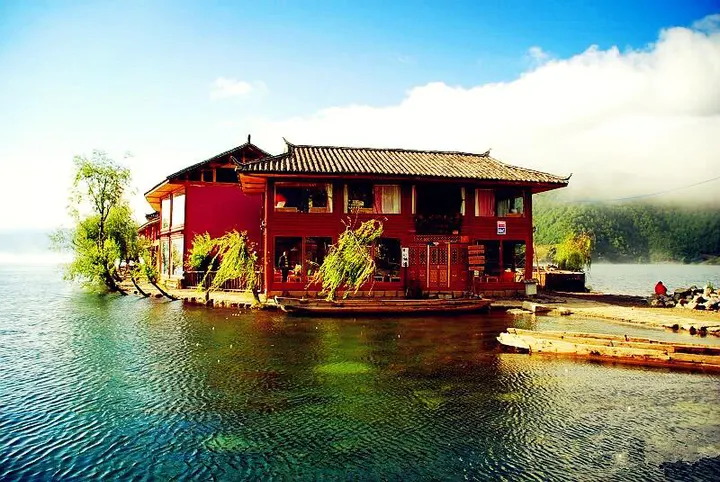
Lige is the best-known stretch of the west shore and one of the first places to take in guests. The houses on the peninsula sit almost on the water, their timber posts standing in the lake when it rises. The road above the village is the viewing platform, and from there the lake bends once in each of the two bays with thirty-odd households packed onto the ridge between them. Tour groups arrive by the busload through the day and the platform gets crowded; after eight in the evening the village goes quiet and there is only water and a few lamps.
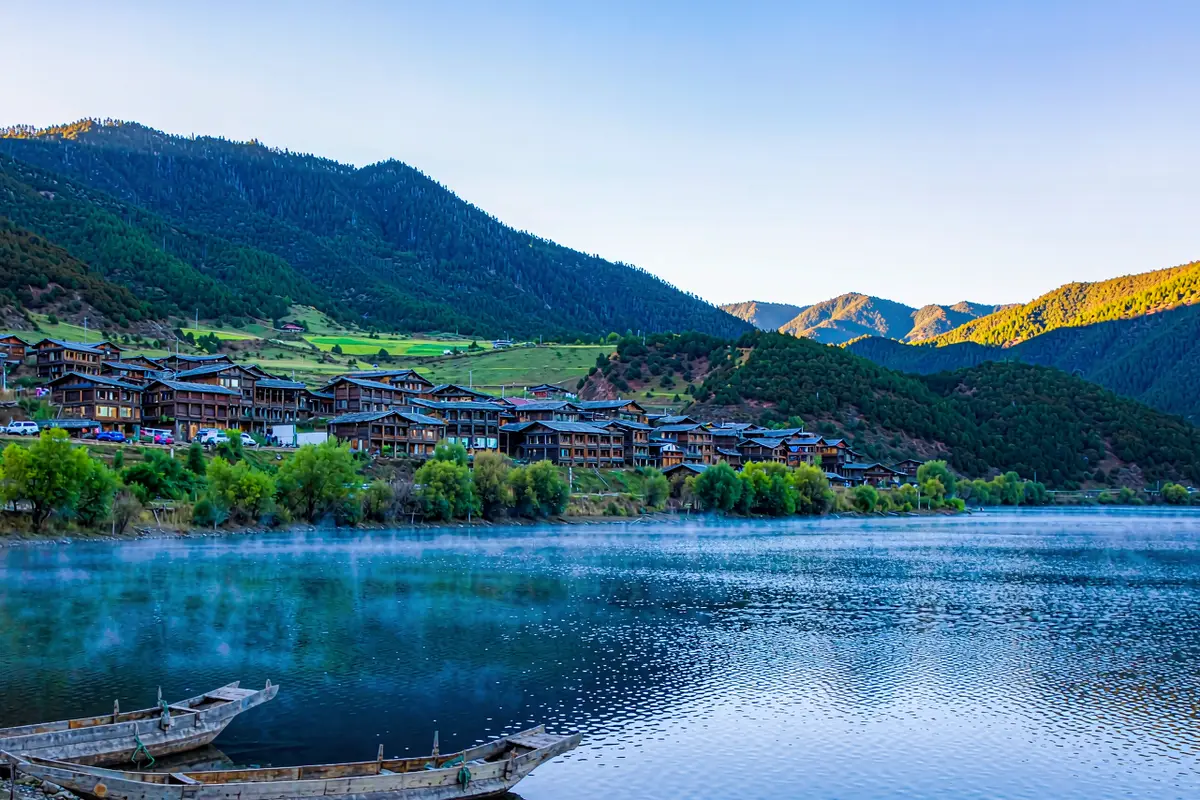
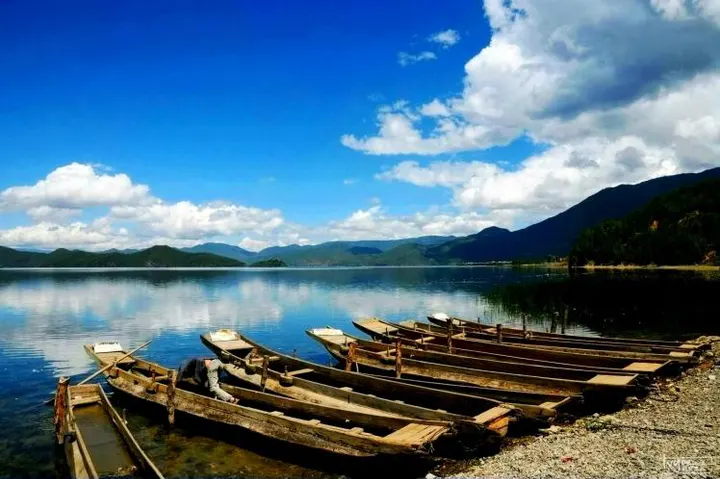
The canoes hauled up on the pebbles at a bay, waiting for the first fare of the morning
Daluoshui
Daluoshui was the first village to take visitors and is now the lake's transport and shopping centre: jetty, supermarket, restaurants and post office all on one lakeside street. A row of log houses faces the water, most of them converted to guesthouses with small tables and chairs outside and more cats in the sun than people. It is not the prettiest village on the lake, but it is the most useful — the place to base yourself on a first visit, with older travellers, or with too much luggage.
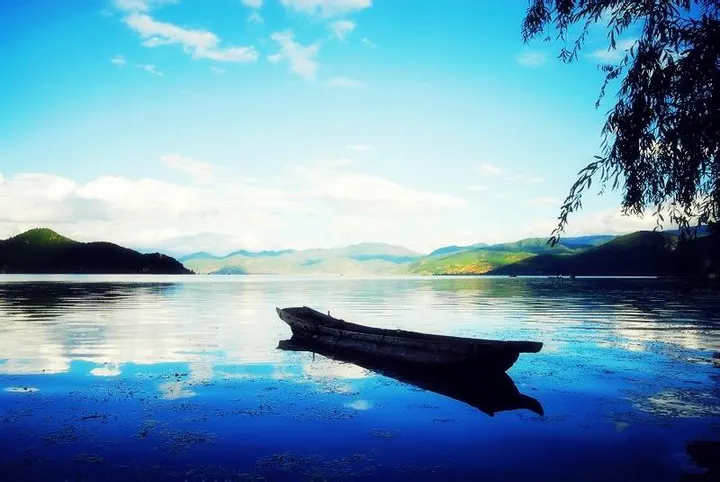
An empty canoe under the willows, the water flat enough to count clouds in
Liwubi Island
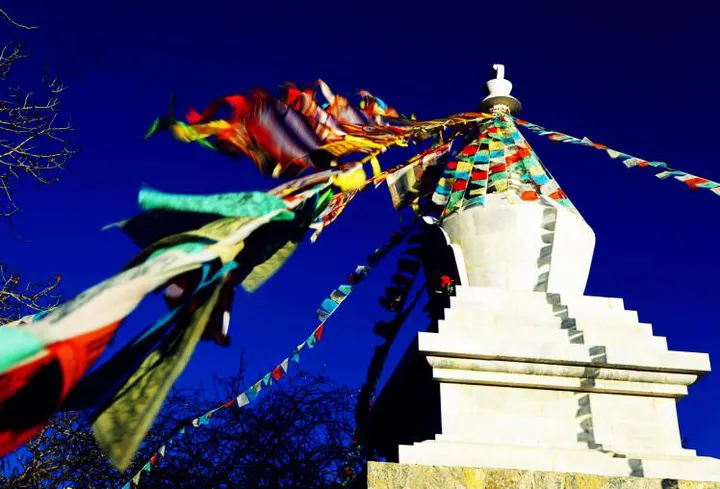
Twenty minutes by canoe from the Daluoshui jetty. The island is small: a stone stair climbs through rhododendron and wild cherry to a Tibetan Buddhist temple halfway up, where the painted eaves put the phoenix above the dragon — an order you will not see elsewhere. A white stupa stands at the top, and pilgrims walk around it clockwise. The boat is about ¥65–70 return including landing; sailings stop when the wind gets up, so go in the morning.
A white stupa strung with prayer flags, the wind pulling them flat
The Reed Sea and the Marriage Bridge
The Reed Sea is the lake's shallow end, a patchwork of reeds, water weed and open channels that comes up green in spring, turns yellow in autumn, and fills with winter birds. The Marriage Bridge is a timber footbridge a little over 300 m long with the deck less than a metre above the water, so you can hear the gap between plank and surface as you walk. The name is often read as a lovers' bridge; it is really the crossing between two villages, and the old bridge beside it, half collapsed, is the more honest evidence of time.
Gemu Goddess Mountain
Locals also call it Lion Mountain; at 3,754 m it is the highest point on the rim. The cable car runs to the Goddess Cave halfway up, where a stalactite is read as the body of the goddess and the wind at the mouth is strong enough to want a jacket. From the top station the lake's shape appears whole for the first time: wide in the south-west, narrow in the north-east, with the Reed Sea bitten out of one corner like a leaf. On the pilgrimage day, the twenty-fifth of the seventh lunar month, the queue of climbers runs from the foot of the mountain to the middle.
Goddess Bay and Lovers' Beach
Goddess Bay, or Zhaojiawan, opens on the Sichuan side facing Gemu and is the best sunset seat on the lake. On the Yunnan shore opposite there is a Lovers' Beach of shallow water, pale gravel and a bottom you can see: fine for paddling in summer, but not for swimming, because the lake is a drinking-water source and locals are explicit about it. There is a second beach of the same name near Mukuang village in Sichuan, with fewer people on it.
Nisai and Xiaoluoshui
Two hamlets on the north shore with fewer than fifty households between them. Nisai is known for a pair of trees growing together at the water's edge, and is quiet enough that a hen can be heard twice. Xiaoluoshui sits on the provincial boundary itself, hills on three sides and the lake on the fourth, the last village of the Yunnan section. Neither has an attraction; there is only the village and the water, which is reason enough to stop the car and walk for half an hour.
06On the water, on the road, after dark
Take a pig-trough canoe
There are a dozen jetties and the fare scales with distance: Daluoshui to Liwubi Island is about ¥65–70, the longer flower-sea and reed routes run to ¥130, and a private boat is priced separately. The canoe is hollowed from one log, takes three or four passengers, and is rowed by one boatman fore and aft. Settle the route, the duration and whether landing is included before you step in, so nobody renegotiates mid-lake; life jackets live under the seats, so put them on before you push off. At midday in summer the glare off the water is fierce — hat and sunscreen are not optional.
A full canoe in the morning mist, the ridges stepping away behind it
Cycling and e-bikes
Rentals cluster at Daluoshui and Lige: ¥50–80 a day for an e-bike, ¥30–50 for a mountain bike, against a deposit or your passport. The quoted e-bike range is 50 km and the loop is 68–78 km, so a recharge at Luguhu town or by the Reed Sea is compulsory — restaurants usually charge ¥10–20 for it. The surface is asphalt, but the bends are blind, rockfall sections are marked, coaches pass close, and the descents should not be taken fast. Go anticlockwise and the afternoon sun stays on your right.
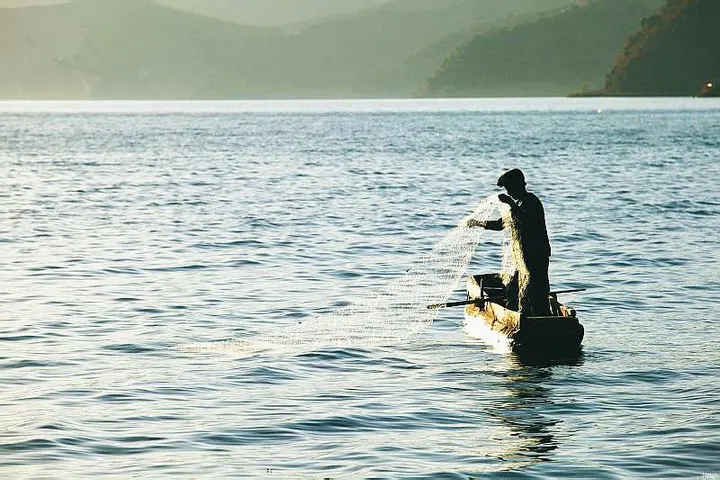
Morning work on the lake: one man, one net, one small boat
Stargazing
At 2,690 m with no large city anywhere near, the Milky Way on a clear night is a visible band rather than a rumour. The best spots are the boardwalk at Langfang, the bridge over the Reed Sea, and any stretch of the loop road without streetlights. Go near the new moon, carry a torch but keep it off the water, and bring a tripod — it will do more than a high ISO. Winter nights go below freezing; half an hour is enough before you want a room.
The bonfire: know what you are watching
Daluoshui, Lige and Nisai run one every evening for ¥30–50, with the jia cuo circle dance and visitors invited to join the ring. Be clear about what it is: a show organised for visitors, with simplified steps and a shortened repertoire, and not the same thing as a village ceremony. Go if you want to, without expecting authenticity, and without feeling cheated that it is a performance — the families earn from it, and that is real enough. Touts selling an "upgraded" version deliver almost the same programme for more money; what you buy is a better seat.
07Three villages, three ways to sleep
Accommodation splits by village, and the price difference is mostly about how close you are to the water and whether you can see the sunrise. Guesthouses converted from log houses are thin-walled, first-floor lake-view rooms are often blocked by a tree or the building in front, so ask which floor, which way the window faces, and look at real photographs before booking. Rates rise 30–50% in July, August and the October holiday, and Lige's lake-view rooms need two or three weeks' notice.
Daluoshui: ¥150–300 plain, ¥240–500 lake view. The most complete village — jetty and restaurants at the door, best with luggage or older travellers.
Lige: ¥450–700, ¥600–900 in season, and four figures for the best rooms on the peninsula. The finest view, thin dinner options, and a slope to walk up.
Langfang: ¥300–550, resort rooms ¥500–1,200. Southern end, near the airport, few people and little light pollution — car needed for everything.
Dazu, Xiaoluoshui and Nisai: ¥150–300. Log houses, hearths, home cooking — simple rooms and the closest thing to ordinary life here.
Hostel beds: ¥50–80. A few in both Daluoshui and Lige, with shared-car and boat-ticket boards at the desk.
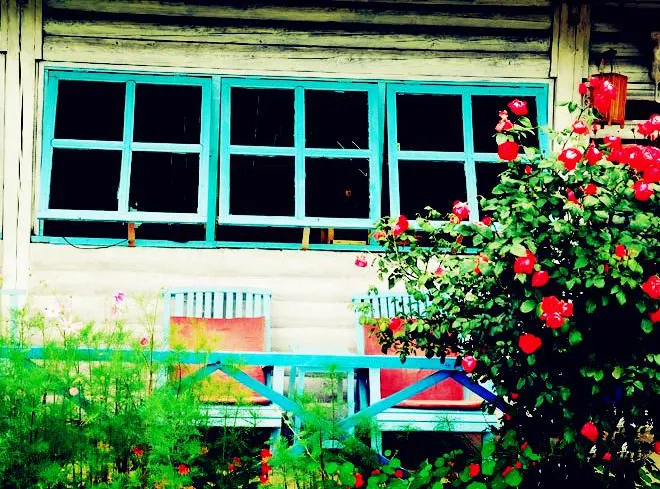
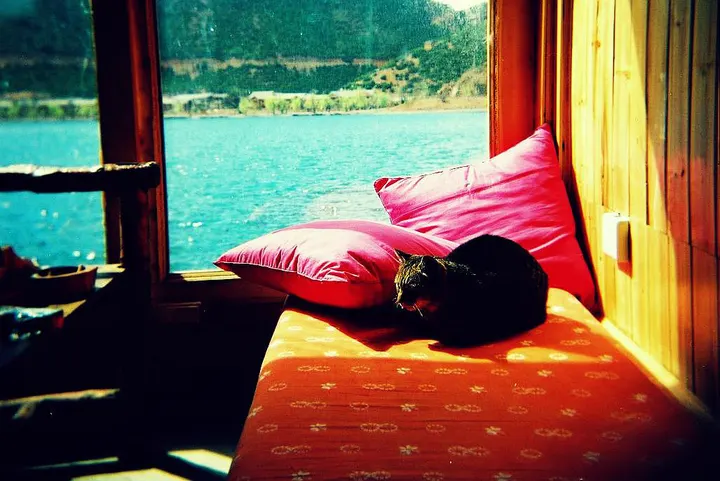
A lake-view room: the window frames the water in three panels, and the cat got the bed first
Four questions before you book: is there an electric blanket or underfloor heating, because November to March nights are genuinely cold; is hot water available around the clock; is there parking; and will they collect you from the gate. Many lakeside guesthouses no longer supply disposable toothbrushes, so bring your own. With children, note that the shore is mostly stone and steps rather than a gentle beach.
08A pot of fish, a plate of cured pork, a jug of sulima
The table here is plain: fish from the lake, chicken from the hillside, pork cured in the yard, bitter buckwheat from the slope. The cooking is not complicated — salt, ginger, chilli, Sichuan pepper — and the timing is by experience. At this altitude water boils below 100°C, so rice needs a pressure cooker and vegetables overcook easily; that is a plateau kitchen, not a lack of skill.
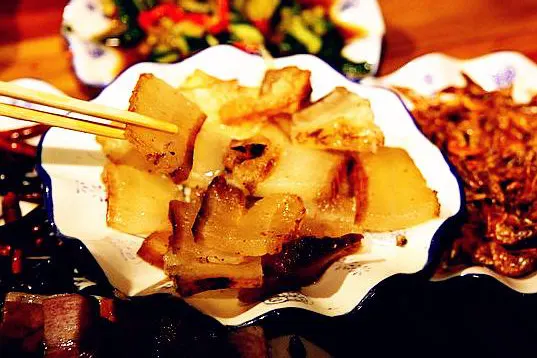
Zhubiaorou: a whole pig boned, salted and air-dried, served in thick slices
Five things to order
Stone-pot fish: cold-water fish in a stone pot with ginger and pickled greens, simmered over wood until the broth turns milky. ¥60–100 a head, one pot feeds two or three.
Preserved pork: the whole animal boned, rubbed inside with salt and Sichuan pepper, sewn shut and air-dried, keeping for years. It used to be a household's visible savings; now it is sliced thick and fried or steamed, with chilli powder on the side. ¥40–70 a plate.
Bitter buckwheat cakes: batter of tartary buckwheat baked in embers or on a griddle, faintly bitter with a sweet finish, eaten with honey. ¥5–10 each, and the right breakfast with butter tea.
Sulima wine: highland barley, maize and buckwheat fermented together into a cloudy, sweet-sour low-alcohol drink that behaves like a light beer. Sold by the jug at ¥20–40 and made for pork.
Water flowers: ottelia stems that bloom only in clean water, tenderest June to September, stir-fried or dropped in hotpot, with a slippery texture. ¥20–30 a plate, and gone out of season.
Where to eat
The lakeside street at Daluoshui has the widest choice, noodles to stone-pot fish, ¥50–80 a head; Lige has fewer kitchens at higher prices, with the water at your elbow; Luguhu town on the Sichuan side is where locals shop and eat, and the same fish costs about twenty per cent less. A row of grills sits at the bridge over the Reed Sea — potatoes, fish, buckwheat cakes — where ¥30 fills you. Ask the price and the weight before ordering fish, so that "market price" does not appear at the end.
09Shawls, dried apples, and the cigarettes to refuse
What is worth carrying home here is agricultural and hand-made: woven shawls, wool scarves, dried apples, prickly-ash oil, buckwheat tea. Mosuo women set up looms on the street, and a scarf takes two or three days from winding the warp to finishing the edge, at ¥80–200; a machine copy costs ¥30 and the edge tells you which is which.
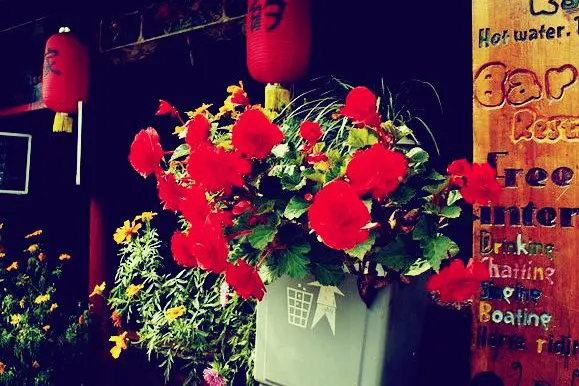
A hand-painted board on a village lane: hot water, bar, free internet
Handwoven shawls and scarves: ¥80–200; check the finished edge — machine edges are suspiciously neat.
Dried apples: local fruit sliced and sun-dried, dark and irregular, ¥20–40 a bag, and better than the factory version.
Prickly-ash seed oil: a traditional cooking and medicinal oil, ¥50–120 for a small bottle — buy one with proper production labelling.
Buckwheat tea and flour: ¥30–60, light, keeps well, easy to carry.
Skip the "Dongba" and "caravan" cigarettes: unclear origin, inflated prices, and locals do not smoke them either.
Haggling is normal — open at seventy per cent — though weavers working at the loom usually hold their price. High-ticket silver and jade with "certificates" cluster on the tour routes and are best walked past. Shops will post larger items for you; from the lake to a major city takes three to five days.
10Reach Lijiang first, then climb
By train to Lijiang
No railway reaches the lake. The nearest useful station is Lijiang: a dozen intercity trains a day from Kunming, the fastest 3 h 29 m and most 3.5–4.5 hours, second class ¥166–199. The overnight conventional train has hard sleepers at ¥123–129 and arrives in the morning. Dali is 1.5–2 hours away, Shangri-La about 1.5 hours on the new line. Book early on 12306 in season, and note that most departures use Kunming South, not Kunming station.
Lijiang to the lake: 3.5–4.5 hours
About 200 km. Since the new Lining road opened in November 2025 a car takes roughly 3.5 hours, with more tunnels and fewer bends — noticeably kinder to anyone prone to car sickness. The old road follows the Jinsha River and is prettier but an hour slower. Buses leave Lijiang coach station for Daluoshui at ¥71–98, four to four and a half hours, with departures around 09:00, 10:00, 12:00 and 15:00. Tourist shuttles cost ¥98 one way or ¥180 return, valid a week, picking up at the old town's north and south gates and at Shuhe. Shared vans are ¥80–150 a head and drop you at your guesthouse; a private car is ¥500–800.
Flying: Ninglang Lugu Lake Airport
Ninglang Lugu Lake Airport (NLH), at 3,293 m, is the highest in Yunnan and about 50 km — 40 to 45 minutes — from Daluoshui. The shuttle is ¥30 and a taxi about ¥80. Routes are thin: mainly Kunming (about an hour), Chengdu, Chongqing and Guiyang, and not daily, so check the current season's schedule before relying on it. Weather cancels flights here more often than at lowland airports; do not put a connection on the same day.
The other way in: from Xichang
Xichang to the lake is 240–270 km, five and a half to six hours, on the G348 through Yanyuan: winding but well surfaced. One or two coaches a day run from Xichang's tourist bus station to Luguhu town (Zuosuo) for ¥90–100, leaving at 08:00 and 10:00; miss them and you change at Yanyuan. The Xichang–Shangri-La expressway is under construction and officially due to reach the lake in 2027, which would cut the run to a little over two hours — do not plan on that yet.
Getting around the lake
Car with driver: ¥300–400 a day for four to six seats, ¥150–250 for a short hop; arrange at any guesthouse and confirm waiting time and fuel.
E-bike: ¥50–80 a day, about 50 km of range, one recharge needed for the loop; deposit or passport held.
Bicycle: ¥30–50 a day, five to seven hours for the loop, and not at midday in summer.
Village minivans: ¥5–10 from Daluoshui to Lige, no timetable, flag them down; after 19:00 there is nothing.
On foot: inside the villages it is all walking, on stone and steps, so wear grippy soles.
Altitude: the lake sits at 2,690 m. Most people are merely short of breath on slopes; a few get headaches. Skip alcohol and very hot baths on the first night, move slowly, and if symptoms are clear, descend to Lijiang at 2,400 m.
Emergencies: police 110, ambulance 120, fire 119; the lake's tourism police are on 0888-588 1110.
Medical: the nearest clinic is at Yongning, 17–25 km away, and Ninglang county hospital handles most emergencies with limited facilities. Anything serious means Lijiang, three and a half hours by road — carry insurance that covers evacuation.
Cash and payment: QR codes work almost everywhere, but boatmen, stallholders and shared-van drivers often want cash or a transfer — keep ¥200–300 in small notes. ATMs are at Daluoshui and Luguhu town and occasionally run dry.
Signal: 4G and 5G work in the villages, but stretches of the loop road and the mountain are weak; screenshot your map and ticket QR code before setting out.
Safety: swimming is banned everywhere in the lake — the water is cold and the shore drops away. Lakeside stone is slippery, unlicensed boats should be refused, and the loop road is no place to walk alone after dark.
One rule is not on any sign: this is somebody's home. Ask before photographing a courtyard gate, keep the lens off the hearth, the prayer room and the old people in the house. The local "shy culture" means that matters of intimacy and childbirth are not discussed in front of relatives of the opposite sex; you do not need to know the whole system, but do not make jokes about walking marriage at dinner — to the family listening, it lands the way a joke about your own parents' marriage would.
12Bookings, packing, and carsickness
Fix three things first: the entry ticket, booked online under your real name for the right gate, a week ahead in season; the train to Lijiang on 12306 from Kunming South; and the first night's room, because Lige's lake-view stock is gone two or three weeks out in summer. Work backwards from the day you enter the lake, forwards from the day you leave, and keep at least two full mornings in between.
Clothing: 15–25°C by day with a ten-degree swing at night, so a light jacket even in summer and a down coat from November to March. It is windy at the water; a scarf beats a hat.
Sun: high altitude means hard UV — SPF50, sunglasses and a wide brim, cloud or not.
Carsickness tablets: 200 km of mountain road, better on the new alignment but still winding — take them half an hour before and sit at the front.
Rain gear: June to September brings afternoon showers, and a shell beats an umbrella in the wind.
Medicine and papers: stomach remedies, cold tablets, plasters; carry your passport, since tickets and rooms are both booked against it.
Five traps. Do not follow anyone at the gate offering to "get you in without a ticket" — nothing is sold there at all. Settle the canoe route and whether landing is included before boarding. Agree a car's hours and waiting terms up front. Buy the official bonfire ticket; roadside touts charge more for the same programme. And do not step outside the guardrail for a photograph — some of that roadbed is fill, not rock.
13A fault line, a lake, and a society that keeps its books through women
How the lake got here
Lugu is a fault lake: the crust pulled apart here, the surrounding mountains kept rising, and the gap filled with rain and groundwater. The surface lies at 2,690 m across some 50 square kilometres, averaging around 40 m deep with holes past 90, and clear enough to see 12 m down at its best. Almost all the water arrives as springs and seepage, and only one small river leaves at the south-east corner, so the lake turns over extremely slowly — which is exactly why it has to be protected. Once spoiled, it would not clean itself in a lifetime.
Seasons, and what the water is doing
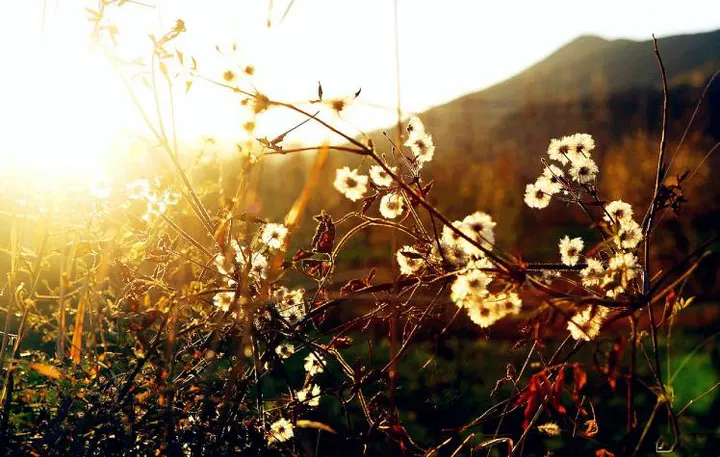
The water changes colour by season and by hour. October and November are the bluest, once the rains stop and the sediment settles, with visibility past ten metres; from May to September the surface fills with water flowers — white petals, yellow centres, an ottelia that blooms only in clean water; and from November to March red-billed gulls arrive from the north and gather at the jetties in the morning, waiting to be fed. Spring paints the roadside green, and after October the cosmos and the poplars take over.
Wildflowers in hard backlight along the roadside, at their peak in October
Names and the boundary
Old gazetteers call it Lukuhai or Zuosuohai; locals call the open water lianghai, the bright sea, as opposed to the reed beds. The lake crosses two provinces: the eastern and northern shores belong to Yanyuan county in Sichuan's Liangshan prefecture, the western and southern shores to Ninglang county in Yunnan's Lijiang. The boundary bends through the water itself, so a full circuit crosses a provincial line twice and your phone changes network with it. That single fact explains much of what you will notice: two ticket gates, two booking systems, and two different paces of development — Yunnan started earlier and has the infrastructure, Sichuan has fewer people and villages that look more like themselves.
Who the Mosuo are
The Mosuo live around the lake and in the Yongning basin, some forty to fifty thousand people speaking a Tibeto-Burman language with no traditional script. They are not one of the fifty-six officially recognised ethnic groups: in Yunnan they are counted as Naxi, in Sichuan as Mongol — an administrative classification that does not change what they call themselves. Historically this was a branch of the Tea Horse Road, with Yongning as a staging post where caravans moved salt, tea and cloth over the passes, while the lakeside villages lived on ferries and fishing.
From a week's mule ride to a million visitors
Before the 1990s the journey from Lijiang took days; once the road arrived, visitor numbers doubled by the decade. Tourism has genuinely improved lives — houses rebuilt, children in school, young people earning without leaving — and brought its own problems: nutrient pressure on the lake, new buildings crowding the shoreline, and a marketing language of a "kingdom of women" that flattens a complicated social system into a curiosity. Recent years have seen farmland retired back to the lake, sewage trucked out, and visitor numbers capped by reservation. Whether that holds is a question for the next decade.
14Three directions away from the water
Yongning (25 km, half a day)
Yongning is the nearest town beyond the lake and the other centre of Mosuo life. The market runs from six until ten, selling vegetables, cured meat and hardware, and is far more real than anything at the water; Zhamai Temple is the largest Tibetan Buddhist monastery locally, Gelug, and quiet inside; outside town there are hot springs where locals soak in the evening — basic facilities, genuine water. A return car from Daluoshui is ¥200–300, or take a shared van for ¥5–10.
Lijiaju (Muli, Sichuan; 3–4 hours)
Lijiaju sits in the mountains of Muli county, Sichuan, a village on the old walking route towards Daocheng Yading. The road is rough and needs a hired four-wheel drive, three to four hours each way. It is known for keeping a fuller version of matrilineal household life, which also means it is a place where people live rather than a sight — do not expect to "tour" it. You stay with a family and keep their rhythm for a couple of days. Ask about road conditions and whether anyone can host you before setting out.
Back to Lijiang, or further north
The return need not retrace the outbound: come in from Lijiang through Ninglang and leave towards Xichang, or the reverse, making a loop between northwestern Yunnan and Liangshan. Short on time, go back to Lijiang and connect to Dali (1.5–2 hours by train) or Shangri-La (about 1.5 hours). With more of it, head north from Xichang on the Chengdu–Kunming line.
15Matrilineal households, visiting relationships, and a hearth you do not step over
To understand Mosuo society, put two words down first: matrilineal does not mean matriarchal, and walking marriage does not mean casual. The accurate description runs like this. Descent, property and household membership are traced through the mother's line; a house contains one matrilineal family — the oldest woman, her children, her daughters' children, sometimes her own siblings. A man in that house is an uncle, not a father. He helps raise his sisters' children; his own children are raised in their mother's household.
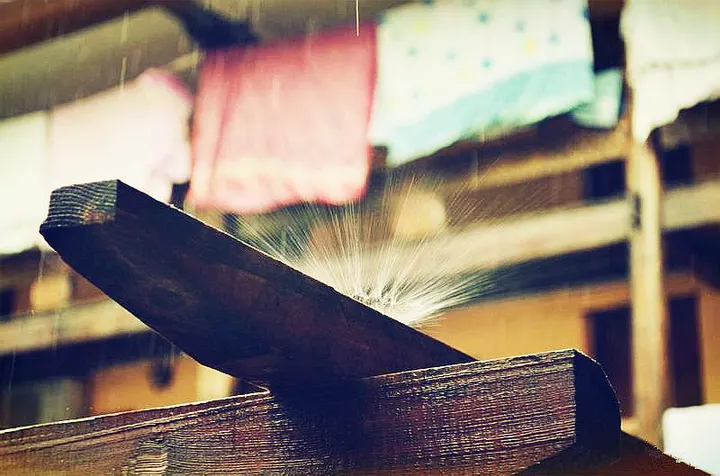
Rain in a courtyard: a wet beam, the eaves, washing still on the line
What tisese actually is
The Mosuo word is tisese, literally "walking back and forth"; anthropologists call it a visiting relationship. Two adults choose each other; the man walks to the woman's house at night and returns to his mother's house before dawn. They do not set up a household together, do not pool property, and take on no obligation to support each other's families. Either party can end it, with no paperwork and no explanation owed to anyone. Children belong to the mother's household and are raised by mother, grandmother and maternal uncles together. The uncle fills the father's role; the biological father is not a secret, he simply carries no duty of support.
The system is tightly regulated from the inside, and the most important rule is what locals call shy culture: matters of intimacy and childbirth are not discussed in front of relatives of the opposite sex, and certainly not in public. So this is neither licence nor performance; it places the whole subject in a very private room. To describe it as changing partners at will, or to describe Mosuo women as a kind of scenery, is wrong — and it is the misreading locals resent most.
Changing, and fast
Mosuo households around the lake today are mixed: some keep visiting relationships, some register marriages, some live in two places, and some leave for city jobs and do not come back. Educated young people tend to prefer legal marriage, while tourism income turns "matrilineal" and "walking marriage" into a story that sells — and the two pull against each other. What you are looking at is not a fossil but a community making choices, which matters more than any single custom.
The hearth, the daba, and the mountain
The hearth in the grandmother's house is never allowed to go out; it is where the household eats, argues and receives guests, and it is the centre of the building — rooms can be rebuilt, the hearth does not move. Seating is fixed by age and sex, with the place facing the door belonging to the oldest woman; guests sit where they are put and do not choose. Belief here is two layers at once: the indigenous daba tradition, with orally transmitted texts, no temples, and daba priests who conduct funerals and coming-of-age rites, alongside Tibetan Buddhism, which arrived in the Yuan era. The two run in parallel, and a wedding or a funeral will often involve both. On the twenty-fifth day of the seventh lunar month comes the pilgrimage festival, when families climb Gemu and the queue runs from the foot of the mountain to the middle.
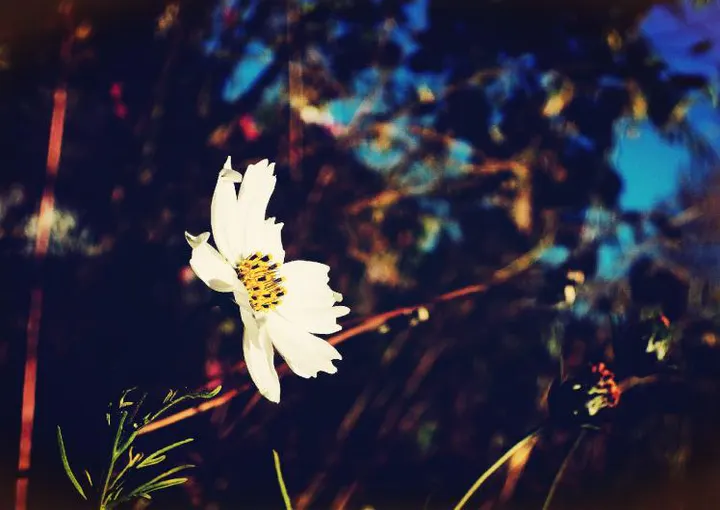
A single white flower by the road, autumn on the slope down to the village
As for "kingdom of women": that is a phrase from ticket banners, advertising and a book published decades ago, not an anthropological category and not what the Mosuo call themselves. Use it to tell a driver where to go if you must, but try not to summarise somebody's family with it to their face. To read seriously, start with Chuan-kang Shih's English ethnography of Mosuo kinship, or the Chinese study 'A Land Without Fathers or Husbands' — either will serve you better than a commentary at the viewing platform.