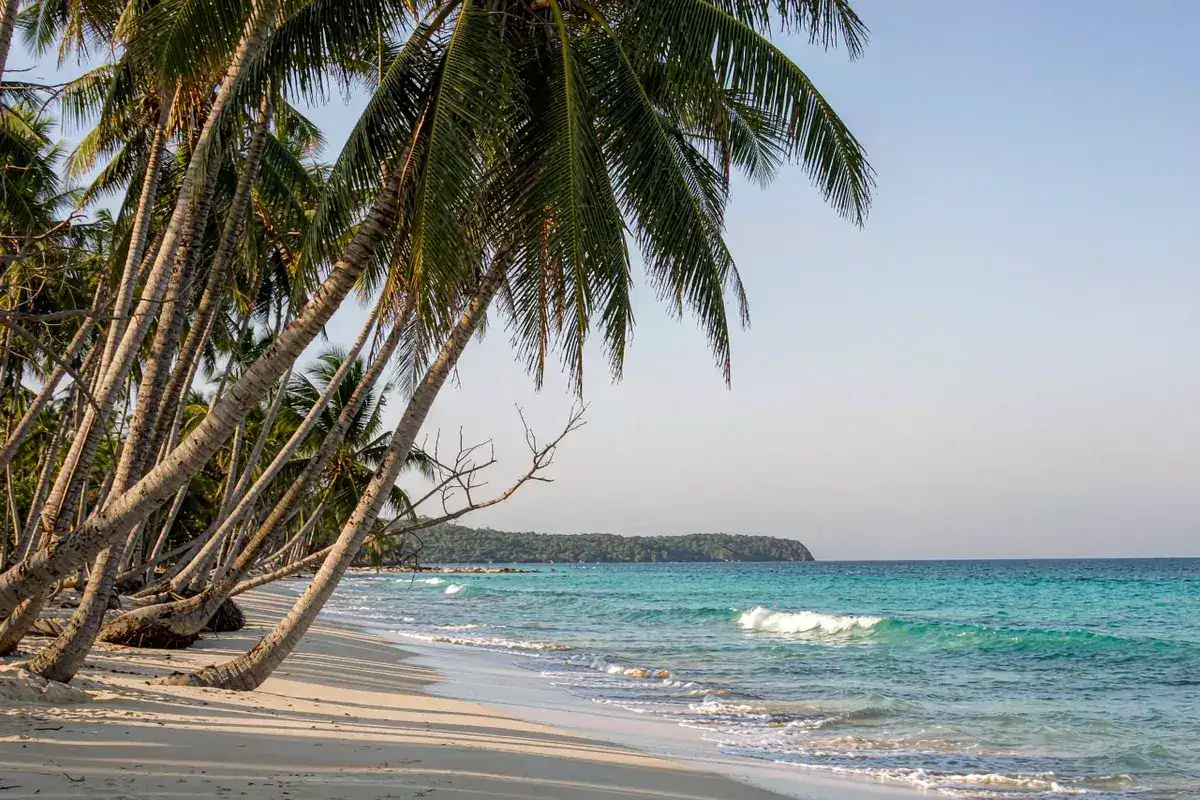
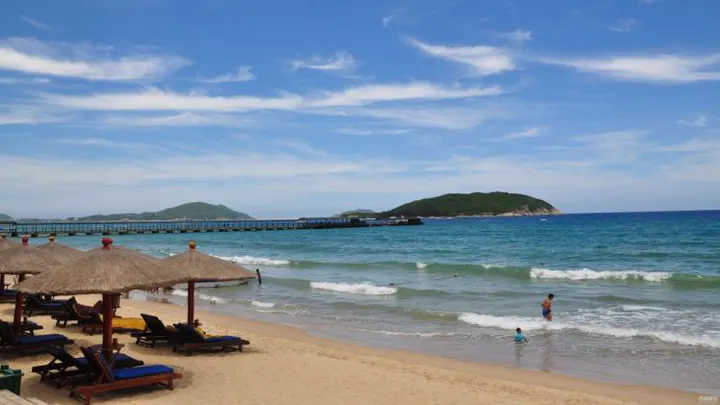
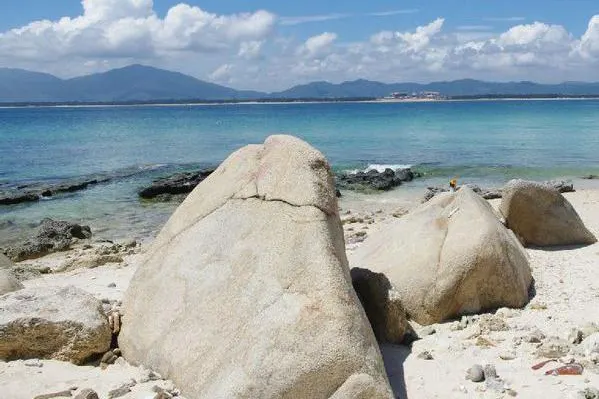
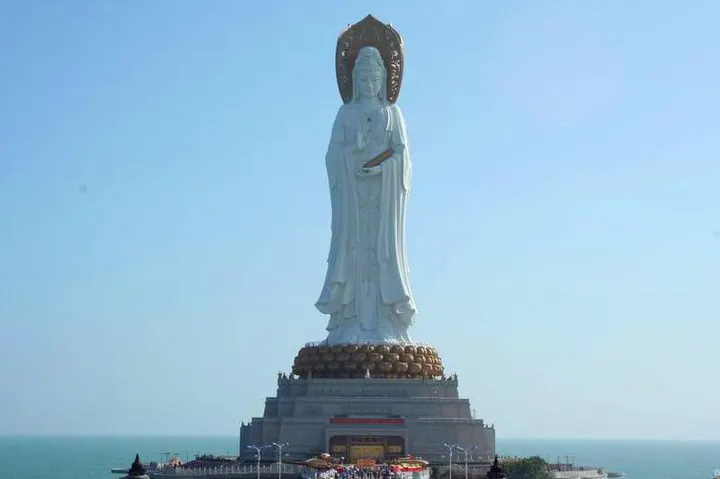
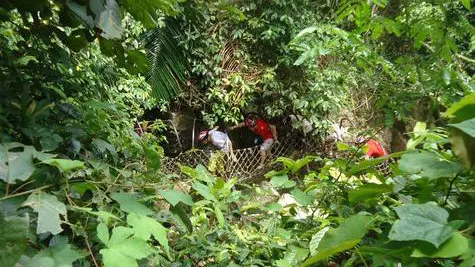
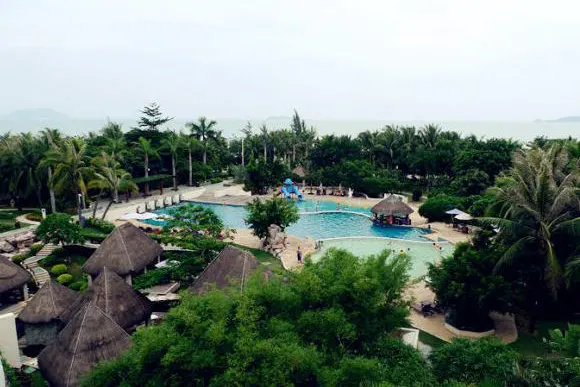
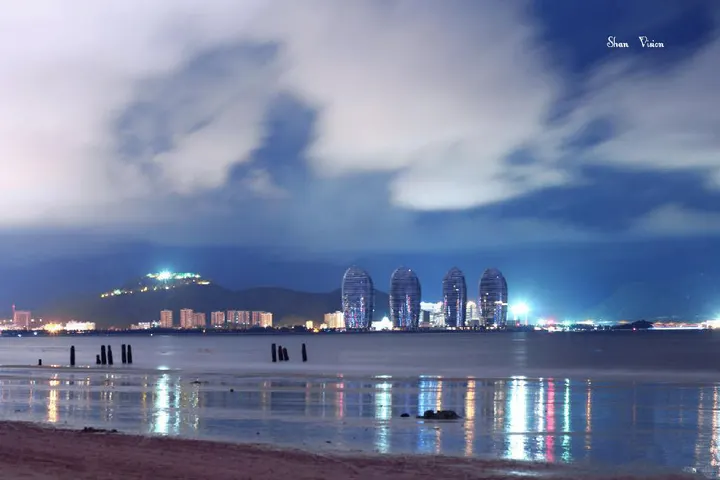
Four distinct baysGlass-clear island waterMarket seafood, cooked to orderA high-speed ring railway
In short
Sanya (三亚, Sānyà) sits at the southern tip of Hainan, China's only tropical seaside city, where the island ring railway strings together a handful of resort bays, coral islands, rainforest parks and a 108 m sea statue of Guanyin. Four bays — Yalong Bay, Haitang Bay, Sanya Bay and Dadonghai — each have their own character; Wuzhizhou Island and Xidao are the diving and snorkelling trips; and the 108 m Nanshan Guanyin stands out at sea. Four days is enough for one bay, one island, Nanshan and a market-to-table seafood dinner. Come between October and April for dry, sunny weather; July to September is typhoon season. A mid-range trip runs roughly ¥3,500–6,500 for 4–5 days, excluding long-distance transport.
October–April, the dry season at 20–28°C; typhoon risk July–September
01What kind of city Sanya is
Sanya sits at the southern tip of Hainan island, on latitude 18 north, and is the only tropical seaside city in China. Two branches of the Sanya River meet here in the shape of the character for 'fork', which is where the name comes from. The Li, Miao, Hui and Han peoples live side by side, coconut palms line the streets, and the sea breeze never takes a day off.
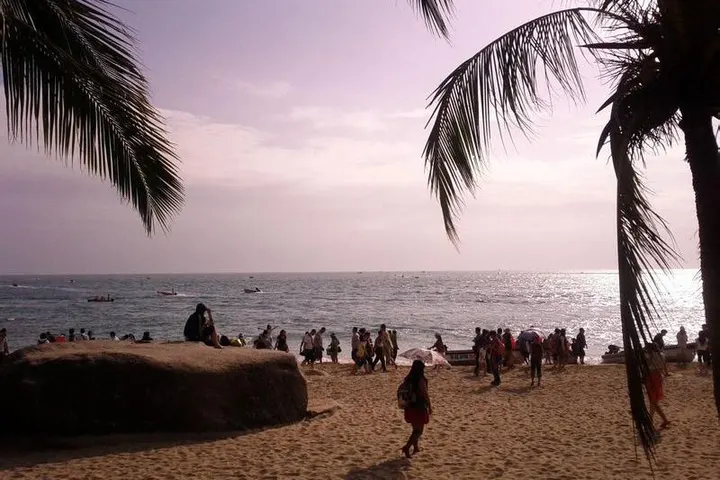
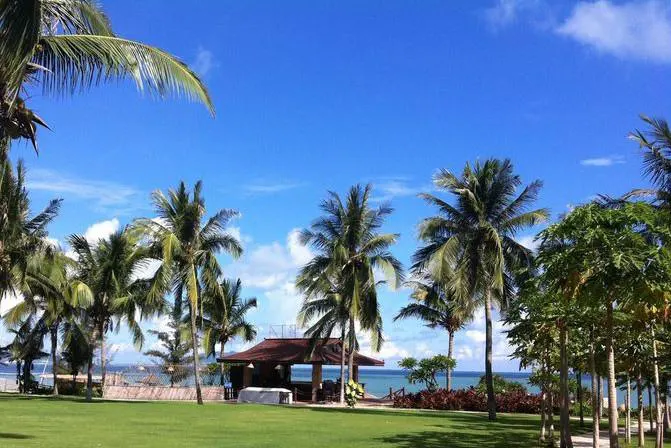
Yalong Bay, umbrellas and all
The city is strung along four bays, each facing a slightly different way: Sanya Bay, Dadonghai, Yalong Bay and Haitang Bay, west to east. Sanya Bay hugs downtown behind the twenty-kilometre Coconut Dream Corridor, which makes it the easiest sunset in town. Dadonghai is the lived-in one, cheap to eat in and cheap to sail from. Yalong Bay has the finest sand and the calmest water in the country. Haitang Bay is rougher and windier, but it holds the newest mega-resorts and the duty-free mall.
Sanya has hosted the Miss World finals and a string of other international events, all on the strength of this coastline. The other half of the story is fair to state too: plenty of supply, uneven service, and a national reputation for overcharging, touting and swapped scales at the seafood market. Regulation has tightened considerably since — high-season rooms and seafood restaurants now sit under government guide prices and price caps, and the 12345 hotline plus the Sanya travel-complaint platform can pay compensation first and settle later. Bring ordinary street sense and an itemised bill, and Sanya is a very easy place to enjoy.
Sunshine, seawater, sand, climate, forest — Sanya lacks none of them. Feel them properly and this latitude gets under your skin.
"Sunny Sanya — Heaven Is Barely This Beautiful"
The short version of how to play it: pick one bay and stay there, spend a day or two on the water or an island, give half a day to Nanshan or the rainforest, and hand the rest of the time to the beach and the seafood market. Trying to tick off three bays in one day only turns the holiday into a traffic jam.
02Four things not to miss
The sand at Yalong BayOne of China's best beaches
Seven kilometres of pale sand on a gentle gradient, with small surf — the beach in China you can put a child into without worry. Hotels maintain the strip but public access points are open and the sand itself is free. Early morning and late afternoon are the sweet spots; at midday the UV index is brutal.
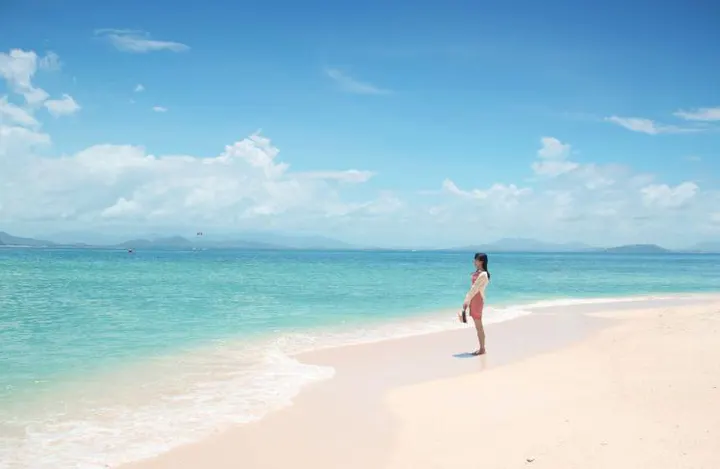
Wuzhizhou Island and its glass-clear waterThe water-sports island
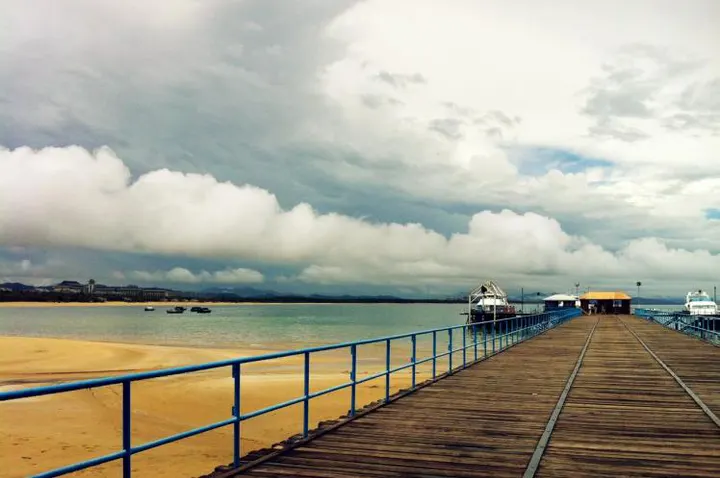
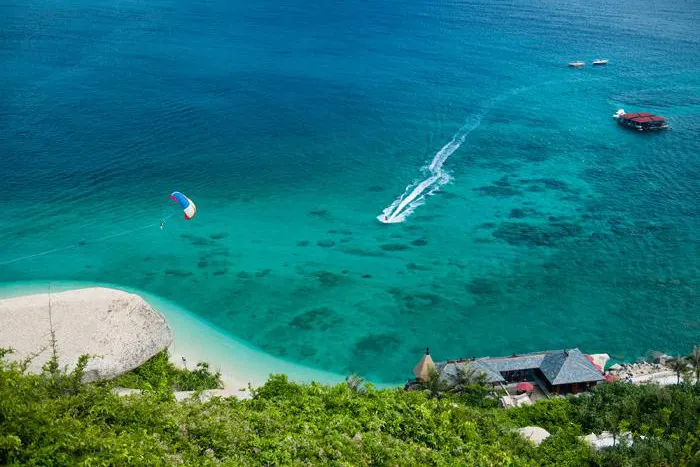
A small island inside Haitang Bay with the clearest water on the coast — you can see coral and reef fish on a shore dive. Access is by ferry, which stops running in heavy swell, so check the sea state the night before you go.
The Nanshan GuanyinA 108 m statue at sea
The heart of the Nanshan Cultural Tourism Zone is a three-sided, 108 m Guanyin raised on an artificial island, with a lift up into the base. The park is vast — you will want the shuttle bus as well as your legs — and its vegetarian dining hall is worth one meal.
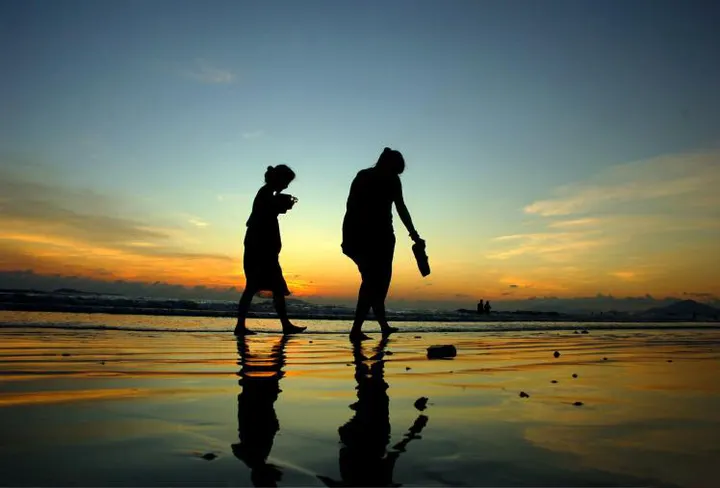
Sunset on the Coconut Dream CorridorThe best twenty minutes of the day
The palm-lined seafront road along Sanya Bay, where the sky runs from orange to blue in the half hour after sundown — the most photogenic twenty minutes of any day here. Come straight from the sunset to the First Market or Chunyuan for seafood; it is on the way.
03Seven decisions you actually have to make
How many days does Sanya deserve?
Four days is the comfortable minimum: one for the bay you sleep in, one for Wuzhizhou or Xidao, one for Nanshan plus Tianya Haijiao, one for the rainforest or the duty-free mall and a slow beach day. With only three, drop the rainforest. With five or more, add Fenjiezhou Island and Monkey Island in Lingshui — or simply schedule nothing at all.
Yalong Bay, Haitang Bay, or downtown?
It depends what you came for. Travelling with children who will live in the sand, pick Yalong Bay: fine sand, gentle water, pools at every hotel — the price is that dinner means hotel restaurants or the small retail strip. For brand-new hardware and water parks, take Haitang Bay, close to the duty-free mall and the Wuzhizhou ferry pier, though the surf is too rough for small swimmers. To eat well and cheaply every night, stay in Dadonghai or downtown around Jiefang Road and the First Market, and accept a 20–40 minute taxi to the other bays. Sanya Bay sits between the two: moderate rates, close to both the airport and town.
How do I eat seafood without being ripped off — and how is the cooking fee calculated?
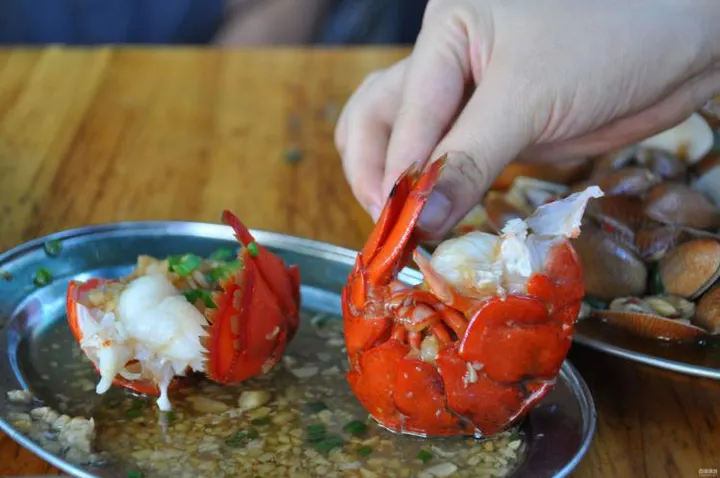
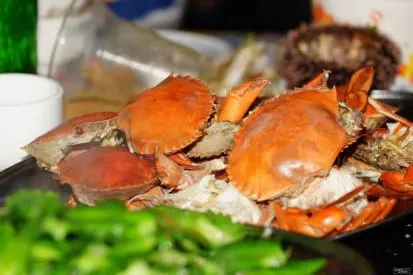
Learn the routine by heart: choose your own live seafood in the market, have it weighed, then take it to a licensed kitchen that cooks it for you. The cooking fee is charged by method — at the First Market in 2026 the usual reference is about ¥15 per 500 g steamed, ¥25 for chilli-fried and ¥30 for salt-and-pepper, with plain-boiled prawns around ¥15; a whole table runs ¥100–200 a head. Three habits save real money: read the market's scrolling price board before comparing stalls, bargain as a matter of course, and make the vendor drain the water and ditch the thick bag before the scale. Do not follow touts at the gate; look for stalls carrying the official traceability QR code. In high season seafood prices sit under government guide prices and caps, and overcharging can be reported.
When should I come, and should I avoid typhoon season?
October to April is the dry season: 20–28°C, plenty of sun, little rain and calm seas, which is what diving and island boats need. Late November and March give you the same weather at a better price. Heat and humidity build from May; June to September is the rainy season with a half-hour downpour most afternoons, and July to September carries the real typhoon risk — under warning, ferries stop and parks may close. If you must come in summer, book refundable flights, choose a sheltered bay such as Yalong Bay, and read the forecast daily. Chinese New Year is the most expensive and busiest window, with rooms running well over three times low-season rates.
What should I know about sun and safety?
Sanya's UV is Hawaiian: SPF50+, a wide hat, sunglasses and a rash vest are standard kit, and between 11:00 and 15:00 you should not be standing in the open — reapply every two hours. Swim only inside flagged areas with lifeguards, and watch for rip currents: if one pulls you out, swim parallel to the shore until you are free of it, then angle back in rather than fighting it head-on. Jellyfish are common in the rainy months, and a stinger suit is cheaper than the alternative. Dive only with an accredited operator and read the insurance clause; no diving after drinking or when unwell. Agree duration and price before you climb onto a jet ski or parasail.
How does the ring railway work, and which Sanya station should I book to?
The Hainan Ring High-Speed Railway runs an east loop and a west loop, with the east loop far more frequent. Sanya to Haikou East costs about ¥100–119 in second class and takes anywhere from 1 hour 30 minutes to 2 hours 20 minutes depending on stops. Sanya has four passenger stations. Sanya Station is the downtown hub, best for Sanya Bay and Dadonghai, with the most departures. Yalong Bay Station sits at the entrance to the Yalong Bay resort area, about 3 km from the beach and also the closest to Haitang Bay, but fewer trains call there. Yazhou Station on the west loop is 6–10 km from Nanshan and handy for Daxiaodongtian. Phoenix Airport Station is beside the terminal for air-rail connections. Choose your hotel first, then the station — it saves half an hour to an hour of driving.
Should I join a day tour, and how do I dodge the hard-sell ones?
Buses and ride-hailing cover the main sights well enough that an independent trip is entirely realistic — you do not need a tour. If you do book one, use a licensed operator whose product says in writing that there is no shopping stop, and get the itinerary, inclusions and cancellation terms on paper or in a chat record. The old tricks are being diverted to a jade or latex showroom, being swapped into a different park with a similar name, and having your seafood re-weighed. Call 12345 if it happens, or file through the Sanya travel-complaint platform, which can pay out first and investigate after. Buy tickets and ferry seats a day ahead on the park's official account or a major platform; it is usually cheaper than the ticket window.
04How to spend three to five days
The plan below assumes you are sleeping in Yalong Bay or Dadonghai, and it separates the two most distant targets — Nanshan and Wuzhizhou — onto different days so you are not crossing the city twice. Every day keeps a midday break; pushing through the tropical noon will wreck the days after it.
D1
Land in your bay: check in, find the sand and the pool, then rest through the middle of the day. In the afternoon climb into Yalong Bay Tropical Paradise Forest Park for the 168 m Crossing Dragon Chain Bridge and the view over the whole curve of the bay, and be back on the beach for sundown. Seafood dinner number one near the hotel or in town.
D2
A day on the water: take the first ferry to Wuzhizhou Island, walk the loop past Lovers' Bridge and Sun Watch Rock, then dive or snorkel once, and be back at the pier in the afternoon. Detour to Houhai village to watch the surfers, or go straight to the duty-free mall in Haitang Bay. If you prefer fewer people and a fishing-village feel, swap Wuzhizhou for Xidao on this day.
D3
The west line: spend the morning at the Nanshan Cultural Tourism Zone for the 108 m Guanyin and Nanshan Temple — the park is huge, allow 4–6 hours. Continue to Tianya Haijiao, the 'Ends of the Earth', now free to enter, and on to Daxiaodongtian. Drive back along the Coconut Dream Corridor for sunset, then buy seafood at the First Market and have it cooked.
D4
Rainforest or retail, pick one: walk the boardwalks of the Yanoda rainforest park for strangler figs and tree ferns, or spend the day at Binglanggu for Li and Miao villages and the Betel Nut Rhyme show. If hills are not your thing, give the day to the duty-free mall and a sailing trip instead. Close with a slow dinner at a seafront restaurant.
With three days, drop D4 and squeeze Xidao or the rainforest into the afternoon of D1. With five or more, add a day in Lingshui for Fenjiezhou Island or Monkey Island — the ring railway gets you there in about half an hour — or add nothing at all and simply sleep in. The most expensive thing in Sanya is an afternoon without plans.
05Bays, islands and a temple
Nanshan Cultural Tourism ZoneThe 108 m sea statue
A Buddhist culture park about 40 km from downtown, built around the three-sided 108 m Guanyin standing offshore, with a lift up inside the statue's base. There is also a Tang-style Nanshan Temple, the Hall of Thirty-Three Guanyins and broad coastal gardens. The grounds are far too large to walk — buy the shuttle ticket — and the vegetarian dining hall is genuinely good.
Tianya HaijiaoThe 'Ends of the Earth'
In imperial times this was where the empire ended, and the boulders inscribed Tianya, Haijiao and the South Sky Pillar are Sanya's calling card. Entry has been free to all visitors since 1 June 2023 — you only book a free timed slot online. Inside, shuttle buses and a wedding-photography zone are among the newer additions.
Xidao, West IslandA fishing island, four centuries old
The inhabited island in Sanya Bay, about 2.8 square kilometres, with a coral-reef reserve just off the shore. One half is fishing lanes and a small cultural centre, the other is diving and water sports, and Niuwang Ridge has the best sunset. The crossing takes 15–20 minutes and sailings change with the swell.
Yalong Bay Tropical Paradise Forest ParkThe bridge from If You Are the One 2
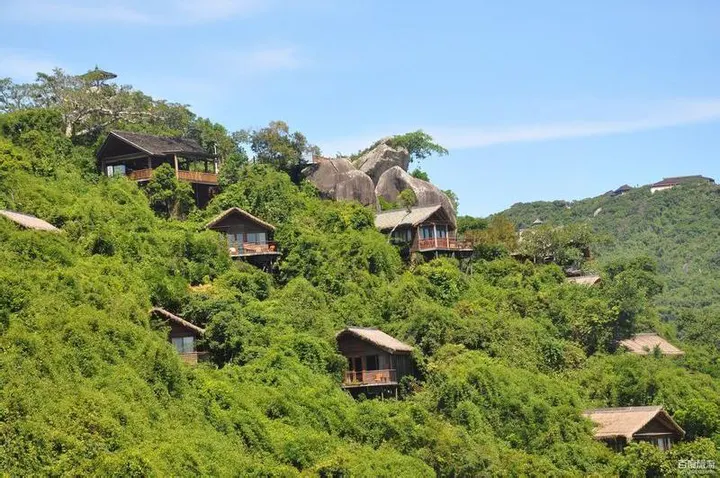
A rainforest park draped over the hills behind Yalong Bay, with more than 1,500 tropical species, a full-sea-view glass walkway on the summit and the 168 m Crossing Dragon Chain Bridge as its signatures. The bird's-nest villas from the film If You Are the One 2 sit in the valley below. It is a five-minute walk down to the sea, and shuttles link the park's sections.
Sanya Bay and the Coconut Dream CorridorThe closest sea to downtown
Twenty-odd kilometres of palm-shaded seafront, hotels and apartments on one side, a gentle beach on the other. The sand is coarser than Yalong Bay's, but nothing beats the convenience: ten minutes from the centre, and the place where locals run, fly kites and watch the sun go down.
The pier at Wuzhizhou Island
Three more fill a spare half-day cheaply. Luhuitou Park, on the hill at the southern edge of town, is the place to look down over Sanya Bay and its night lights, free since 1 July 2022. Daxiaodongtian, out in Yazhou, is known for its coastal rocks and ancient pine, free since 1 October 2022. Dadonghai is the handiest place in the city to actually get in the water, with a free beach and restaurants packed around it.
06Sea and rainforest
Everything here falls into three buckets: in the water (diving, snorkelling, jet skis, parasailing, sailing), up the hill (rainforest boardwalks and suspension bridges), and doing nothing at all. The third is the cheapest and the most underrated. Book water-sport bundles online in advance — they undercut the on-site desk — and check weather and sea state before committing to anything.
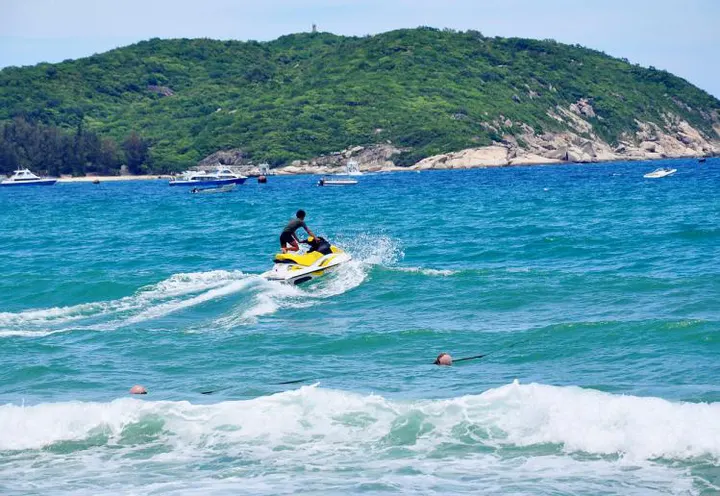
Diving and jet skisAt Wuzhizhou, Xidao and Yalong Bay
Wuzhizhou maintains four dive sites priced by difficulty — shore, coral-reef and deep dives — and both Xidao and Yalong Bay run accredited dive operators. Non-swimmers can snorkel or take a semi-submersible. Jet skis, parasails and banana boats operate out of every bay; settle the duration before you climb aboard.
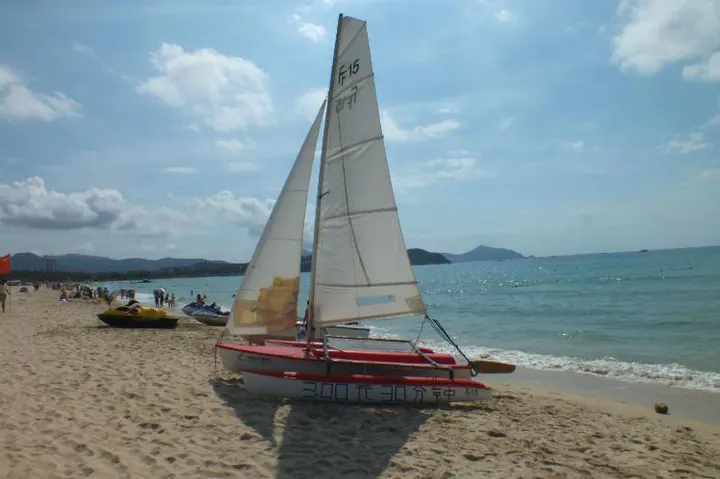
Sailing and boat tripsThe coast from outside
A half-day sailing or yacht charter is the best angle on all four bays, usually bundled with snorkelling, fishing or drinks and fruit. Mornings, when the wind is still, are the comfortable sailings; if you are prone to seasickness, medicate early and sit amidships.
Flowers and lianas in the rainforest
Surfing at Houhai
Houhai village on Haitang Bay has become the country's busiest surf community: small waves, a sandy bottom, surfable year round, and dozens of surf shops and guesthouses in the lanes. A beginner lesson runs about two hours and boards rent by the hour — around ¥100 an hour in 2026 listings — while three to five days gets you a real foundation. It is also on the way to the Wuzhizhou ferry pier.
Hot springs and after dark
The Nantian area behind Haitang Bay has hot-spring resorts, and a soak after two days in the salt does wonders. Nights are quiet: a few beach bars and barbecue stalls, the qingbuliang carts still serving at the First Market after midnight, and hotel shows. Do not come for late-night economy — Sanya's evenings belong to the sand and to early beds.
07Pick a bay, then a hotel
Choosing where to sleep in Sanya is choosing a bay, not a hotel: the four bays are 20–50 minutes apart by taxi, and picking wrong means crossing the city every day. Fix the bay first, then look at budget and whether the property has its own beach. High and low season differ by a factor of three, so book one to two months ahead for peak weeks and Chinese New Year.
The Yalong Bay resort stripBest sand, priciest meals
The beachfront is almost entirely taken by large resorts with their own sand, pools and kids' clubs — ideal for families and honeymoons. The trade-off is limited, expensive dining and a taxi for anything else. Serviced apartments on the second row cost less and put you a few minutes' walk from the sand.
Haitang Bay and Houhai villageNew hardware, surf guesthouses
Haitang Bay holds the newest resort complexes and the duty-free mall — fresh rooms and huge water parks — but the surf is heavy, so swim only where flags allow. Around Houhai village, surf guesthouses are cheap, young and sociable, which suits travellers on a budget who do not mind simple rooms.
Dadonghai and downtownCheap to eat, cheap to sleep
Dadonghai is a lived-in district where seafood canteens, noodle shops and night markets sit within walking distance, at a third to a half of Yalong Bay rates. Around Jiefang Road and the First Market you are best placed for food and transport; the trade-offs are no sea view and a busier beach.
Confirm three things when booking: whether breakfast and the pool are included, whether that sea view is genuine — plenty of 'sea-view' rooms offer a sliver at an angle — and the cancellation terms. In high season Sanya imposes guide prices and caps on rooms, and you can report anyone charging above the posted rate. With elderly parents or small children, pick a property with lift access and a pharmacy nearby.
08Seafood and Hainan flavours
Eating here runs along two lines. One is seafood, best done market-to-kitchen: pick your own live catch, watch it weighed, and pay a posted cooking fee by method. The other is Hainan home cooking — Wenchang chicken, Jiaji duck, Dongshan goat and Hele crab, the 'four great dishes', with a bowl of noodles alongside.
The First Market and Chunyuan: buy it, then have it cookedThe most Sanya meal there is
The First Market is the busiest seafood hub in the city: choose prawns, crab, fish and shellfish on the ground floor, have them weighed, then take them to a licensed kitchen nearby that cooks to your chosen method. Chunyuan Seafood Plaza is tidier and a little dearer. If you would rather not haggle, order a set menu at the restaurant — ¥100–200 a head.
Hele crab and the four great dishesThe front row of Hainan cooking
Hele crab comes from Hele town in Wanning, heavy with roe, and steaming it plain is the honest test. Alongside it sit Wenchang chicken, served poached with chicken-fat rice; Jiaji duck, poached or in soup; and Dongshan goat, tender-skinned and free of gameiness, usually hotpotted or braised. Coconut-milk chicken hotpot is the pot everyone orders now — young coconut water as the base, clean and faintly sweet.
Baoluo noodles and Hainan noodlesThe local breakfast
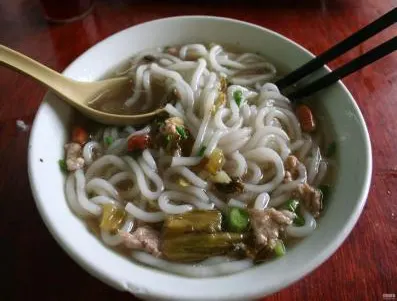
Baoluo noodles come from Baoluo town in Wenchang: thick round rice noodles in a glossy gravy with dried beef and peanuts. Hainan noodles are finer, tossed with gravy, pickled greens and sesame, usually with a bowl of conch soup. Street shops charge a few yuan to about ¥20 — the cheapest and most local meal you can have.
QingbuliangA cold bowl for a hot night
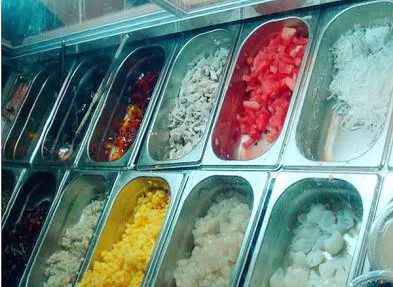
Coconut milk or coconut juice as a base, then a dozen-odd toppings — red and mung beans, job's tears, taro, macaroni, watermelon, quail eggs — served over ice. Stalls around the night markets and the First Market stay open late, and it is the most democratic dessert in town.
Three last practical notes. Do not eat at places whose main pitch is a free shuttle — the ride is already in the price of the crab. Check the bill line by line, and if something you bought alive has died on the way to the kitchen, halve the price. For coconuts, buy young green ones cut open in front of you; the stall outside the park is half the hotel's price. Mango, wax apple and jackfruit are cheapest by weight at produce markets with prices posted.
09Duty-free and island souvenirs
Sanya International Duty-Free City¥100,000 a year, per person
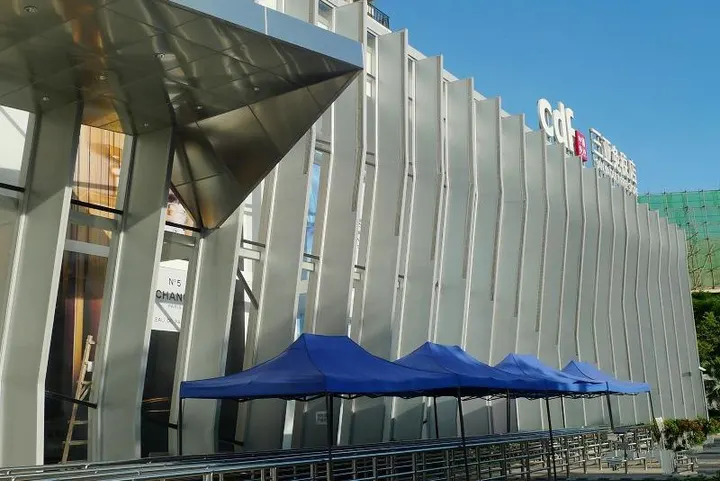
The big duty-free complex in Haitang Bay, and the main reason many visitors come shopping. The rules: an annual allowance of ¥100,000 per person with no limit on the number of purchases, coverage now extended to 47 categories including pet supplies and portable instruments, and you must present your own outbound ticket — flight, train or ferry — plus valid ID.
Shells, pearls and carved coconutThe old three souvenirs
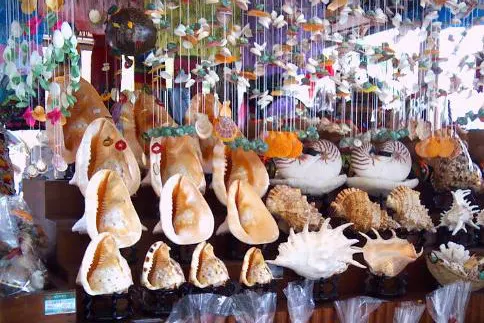
Seawater-pearl jewellery, shell crafts and carved coconut shell are the traditional local goods, sold around the First Market and at park shops. Judge pearls by lustre and blemishes and ask for a certificate; check that shell products are not from protected species. Bargaining room is large — open at a third of the asking price.
Tropical fruit and tea
Mango, wax apple, jackfruit, rambutan and mangosteen sell by weight at produce markets and roadside carts, with boxes of cut mango the easiest thing to carry onto a plane — though many countries restrict fresh fruit, so check before you fly. For dry goods, coconut candy, pepper, Hainan bitter tea and Lan Guiren tea are safe bets, and supermarkets post prices more honestly than park shops do.
Three shopping rules
Buy duty-free only through official channels under your own allowance; proxy buying and allowance-sharing are illegal, and the registered buyer carries the liability.
With jade, jewellery and latex products at high ticket prices, walk away unless it is a brand you know or a proper mall — this is where complaints concentrate.
Keep receipts and payment records for everything; call 12345 first in a dispute, or file through the Sanya travel-complaint platform for compensation ahead of investigation.
10Getting there and around
Flying in
Sanya Phoenix International Airport sits in Tianya district, about 15 km from downtown and 20–30 minutes from Sanya Bay, roughly ¥30–50 by taxi. Phoenix Airport Station on the ring railway is right beside the terminal, so flying in and continuing by train to Haikou or the west loop is seamless. Beijing, Shanghai, Guangzhou and Chengdu all fly direct, with the densest schedules in winter.
The ring railway: how Hainan moves
The Hainan Ring High-Speed Railway was the world's first loop high-speed line, running east and west around the island. Sanya to Haikou East costs about ¥100–119 in second class and takes 1 hour 30 minutes to 2 hours 20 minutes, with the east loop the busiest at a train every 20–30 minutes in peak. It is the easiest way to string together Haikou, Wenchang, Qionghai, Wanning and Lingshui.
Which station for which bay
Sanya Station: on Yuxiu Road in downtown Jiyang, about 5 km from the centre. Best for Sanya Bay, Dadonghai and the city, with the most departures; Yalong Bay and Haitang Bay are still a 30–40 minute taxi away.
Yalong Bay Station: at the entrance to the Yalong Bay resort area, about 3 km from the beach and the closest station to Haitang Bay at roughly 25 km. Fewer trains stop here, so check the timetable before booking.
Yazhou Station: a small stop on the west loop, 6–10 km from the Nanshan zone and handy for Daxiaodongtian, some 30 km closer than coming from Sanya Station. Facilities are thin, so arrange a car before you arrive.
Phoenix Airport Station: north of the terminal, a five-minute walk into the departures hall, ideal for air-rail connections. Sanya Station to Yalong Bay Station takes about 10 minutes and costs about ¥8.
Buses, taxis and car hire
Sanya has no metro, so you move by bus, taxi or ride-hailing. City buses are mostly zoned, a few yuan for short hops and about ¥12 on route 28 out to the Wuzhizhou pier; check the fare on the stop board or the on-board screen before you pay. Take metered taxis or app cars, since the same trip can vary widely, and avoid the drivers quoting fixed prices at the airport and park gates. For a group crossing bays, a car and driver for the day is often simpler. To self-drive you need a mainland Chinese licence or a notarised temporary permit, and in high season book well ahead.
The honest bit about crossing town
The bays are 20–50 minutes apart by car, and in high season the Coconut Dream Corridor and the Haitang Bay approach jam up in the evening. You can do exactly two things about it: put sights that lie in the same direction on the same day, and put the furthest one on the first departure of the morning. Patience handles the rest.
Complaints and compensation: call 12345 or file through the Sanya travel-complaint platform, which draws on a government compensation fund and can pay out before the investigation closes.
Price control: high-season rooms and seafood restaurants sit under guide prices and caps — check the in-store QR code or official notice, and report anything above the cap.
Medical care: general hospitals and pharmacies are plentiful downtown and most Yalong Bay and Haitang Bay resorts keep a clinic; cuts, sunburn and heatstroke are the three things resorts treat most.
Payments and connectivity: mobile pay is universal, international cards work at large hotels and the duty-free mall, while small shops and carts often take mobile pay or cash only — carry some cash.
Language: resorts and major parks have English signage and staff; buses, small restaurants and markets run on Mandarin and Hainanese. Keep an offline translator and your hotel's card with the address in Chinese.
Tap water is not for drinking, though rooms usually have a kettle or bottled water; avoid long stretches outdoors between 11:00 and 15:00.
12What to pack and book
It is summer in Sanya all year, so you can pack light — but three categories are non-negotiable: sun protection, waterproofing and documents. Sort those and the bookings, and buy the rest on arrival; supermarkets and pharmacies are everywhere.
Sun: SPF50+ you can reapply easily, a wide-brimmed hat, sunglasses, a sun shirt or stinger suit, and more after-sun than you think you need.
Water: a phone dry bag, quick-dry towel and a spare swimsuit; add a light rain jacket and waterproof shoes in the rainy months.
Documents: ID card or passport, needed at check-in, for duty-free purchases and to board island ferries; your outbound ticket, which duty-free shopping requires; and a driving licence if you plan to hire a car.
Medicines: seasickness tablets, insect repellent, stomach remedy, plasters and any regular prescription; do not fly within 24 hours of diving.
Bookings: reserve rooms one to two months ahead for peak weeks and Chinese New Year; buy island ferries and park tickets a day ahead online; in typhoon season favour refundable products.
Mains power is 220V/50Hz with mainland sockets; bring a power bank and any adapter you normally need.
One last thing: leave the schedule loose. What Sanya actually sells is the sea breeze after four in the afternoon, a seafood dinner nobody rushes, and a sunset you are not late for — not two extra parks ticked off.
13Name, history, climate
Where the name comes from
The Sanya River, once called the Linchuan, splits into east and west branches that meet by the town in the shape of a fork — which is what the name means. The Li, Miao, Hui and Han communities live here together, the Hui concentrated around Yanglan and Huihui, where mosques and a distinct community survive.
From Yazhou to resort city
For centuries this coast was the ends of the earth in the Chinese imagination: Yazhou was where exiled officials were sent, and they wrote the phrase 'the sky's edge, the sea's corner' into poetry until the boulders on the shore became the landmark they are today. The real turn came in the last three decades — Hainan became a province and special economic zone in 1988, international pageants and resorts arrived after 2010, and the free trade port began island-wide customs closure in December 2025. Sanya is now both a resort and the southern gate of that port.
Climate
A tropical maritime climate with no winter at all. The dry season, October to April, runs 20–28°C with strong sun and little rain; the wet season, May to September and sometimes into October, brings daily afternoon downpours, with typhoon risk peaking July to September. The sea is swimmable year round, still around 24°C in winter. UV is fierce all year — the latitude is Hawaii's.
14Beyond the city
An hour north-east lies Lingshui, the day most worth adding: the ring railway reaches Lingshui Station in about half an hour, or drive the G98 ring expressway to the Niuling exit. To the north-west, the west loop towards Yazhou and Ledong pairs naturally with a morning at Nanshan.
Fenjiezhou IslandHainan's Maldives lookalike
Straddling the Lingshui–Wanning border, this is the only island in Hainan offering deep dives and swimming with manta rays, with clearer water and fewer people than Wuzhizhou. The crossing takes about 12 minutes; inside there is a marine theatre, semi-submersibles and dive programmes.
Monkey Island and Daidai IslandA 2,138 m cableway over the sea
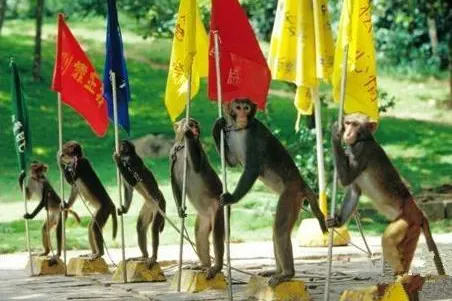
The world's only island reserve for macaques, with more than 2,000 wild monkeys on the peninsula, reached by a 2,138 m cableway that crosses above a floating village of fishing rafts. Daidai Island next door has a clean beach good for photos, and the two combine easily.
Yanoda rainforest and BinglangguTwo sides of Li and Miao culture
Yanoda, in Sandao town in Baoting, is an intact tract of tropical rainforest with boardwalks, cableways, a glass platform and zip lines — the place for rainforest activities. Binglanggu, in the Ganshi hills, is about Li and Miao villages, intangible-heritage crafts and the Betel Nut Rhyme outdoor show. They are close together; pick one unless you have a very full day.
Further north is Haikou: arcaded old streets, a city beach and morning markets more lived-in than anything in Sanya, reachable in 1.5–2.5 hours on the ring railway — a natural south-north pairing. Short on time? Stay in Sanya another day instead. The sea here needs no justification.
15Li, Miao, boat families, island life
Three communities are worth knowing. The Li are Hainan's first inhabitants, and their brocade weaving is on the UNESCO list of intangible heritage in need of urgent safeguarding, its patterns holding their legends. The Miao came later to the hills, known for batik and silverwork. The boat-dwelling fishing families have lived on the water for generations, and the raft settlement at Xincun harbour in Lingshui is still a village at sea.
Where you can actually see it
Binglanggu: Li and Miao villages, heritage crafts — pottery, bamboo weaving, tie-dye, Li brocade — and the Betel Nut Rhyme outdoor show, the most concentrated introduction.
The fishing rafts at Xincun harbour in Lingshui: the Monkey Island cableway passes right over them, and raft restaurants serve meals on the water.
The First Market and the old streets: watch locals buying vegetables, eating noodles and drinking qingbuliang — more real than any staged show.
Yazhou old town and its Confucian school: the earliest administrative and cultural centre of southern Hainan, an easy add-on after Nanshan.
How the island behaves
Life here runs slow. The midday break is taken seriously and the streets only wake again around three or four; by nine at night they are quiet. People speak directly, and bargaining is ordinary rather than offensive. There is one rule by the sea: treat the beach and the water as someone else's home — carry your litter out, never stand on coral, and never feed the monkeys.
Beautiful Sanya, romantic Tianya — the city slogan is not marketing. It is a description of what this coastline does every single day.
Sanya's official city song, "Beautiful Sanya, Romantic Tianya"