Shanghai (上海, Shànghǎi) is China's most international city: the colonial-era Bund faces the towers of Lujiazui across the river, while shikumen lanes and fine-dining rooms share the same blocks. Three days covers the Bund, Yu Garden, Nanjing Road, Tianzifang, Xintiandi and a ride up one of Pudong's towers. Spring (March–May) and autumn (September–November) have the best weather; a mid-range trip costs roughly ¥1,000–1,500 for 3 days excluding long-distance transport.
Key facts
Known for
The Bund · Shikumen lanes · Xiaolongbao · Skyline
Budget
¥1,000–1,500 for 3 days, mid-range
Days needed
3 days
Comfort
Comfortable
Best time to go
Spring (Mar–May) and autumn (Sep–Nov); hairy crab season in autumn
01What kind of city Shanghai is
Shanghai — old-timers still call it 'Shanghai Bund' — is an international metropolis that is ultra-modern without ever letting go of its Chinese soul. Sitting at the midpoint of China's long coastline, it is one of the country's four direct-administered municipalities and a nationally designated historic city. For more than a century Shanghai has been China's commercial center and wealth magnet, and the country's tightest bond with the wider world.
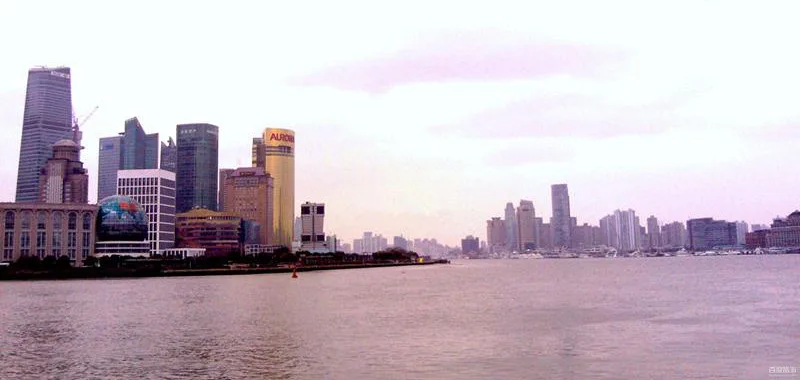
On the Puxi side, the Bund and the shikumen lanes hold the old city's memory; on the Pudong side, the Oriental Pearl Tower, Jinmao Tower and the twisting Shanghai Tower crown one of the most spectacular skylines on earth. Yesterday's Shanghai was the 'ten-mile foreign settlement', a stage for old Shanghai dreams. Today's Shanghai, changing by the month in Pudong, is the window through which China shows its economic rise.
Dad held me up at the Bund and said: listen — the ships are crying.
"Glamorous Shanghai, Gentle Water Town"
For travelers, Shanghai is the city least suited to box-ticking. It does shopping, sightseeing and lazing about equally well, but what it rewards is slowing down: a proper breakfast in a lane, an evening breeze on the riverside promenade, and a fair taste of both its glamour and its calm.
02Six things worth remembering
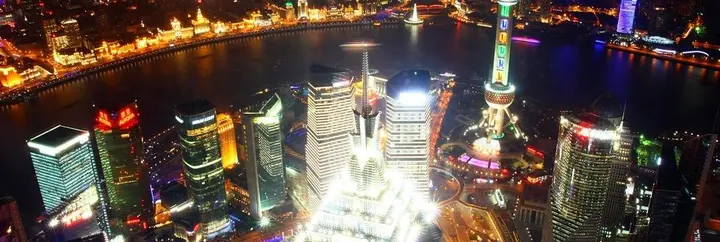
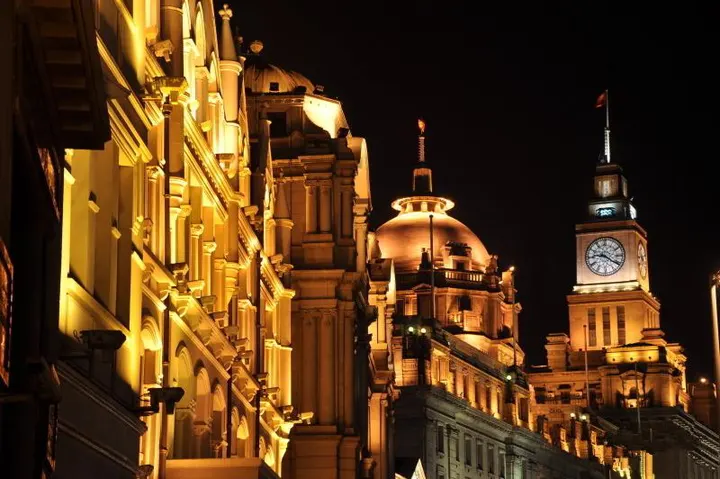
Huangpu River by nightNeon river
When the lights come on, the 'exhibition of world architecture' glows in a dozen styles, and the towers of Lujiazui shimmer just across the water. This is the one stop every Shanghai visitor makes — the old ten-mile settlement and modern Pudong, more beautiful by night than by day.
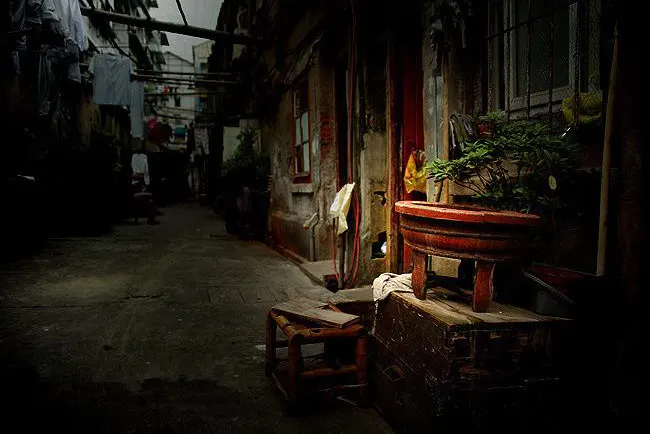
Shikumen and longtang lanesOld Shanghai daily life
Shikumen gate-houses embody the traditional Shanghai way of life, and the longtang lanes they form are a housing style found nowhere else. As the old districts are redeveloped, many shikumen are already gone — catch this vanishing Shanghai while you still can.
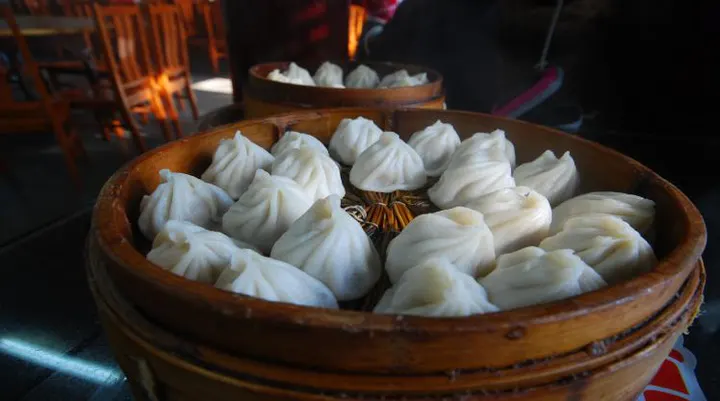
Xiaolongbao at City God TempleA century-old bite
Shanghainese joke that the city's specialty is every specialty in China combined. The best known is Nanxiang xiaolongbao at the City God Temple, a hundred-year craft — poke the skin, sip the broth, dip in vinegar and ginger, and try not to burn your tongue.
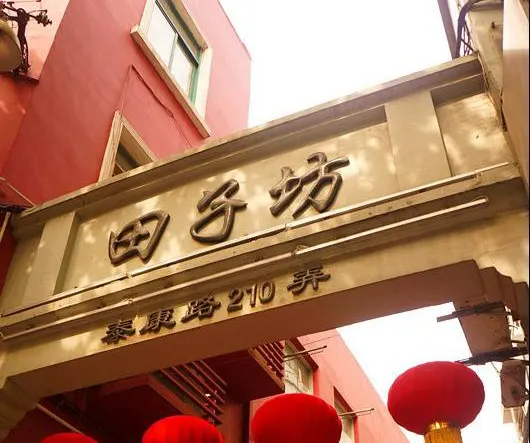
TianzifangCreative micro-cosmos
Wander the maze-like lanes and one quirky shop or artist studio after another jumps into view: teahouses, open-air cafés, galleries, handicrafts and some of the city's best-known creative workshops — all crammed into a few blocks of old housing.
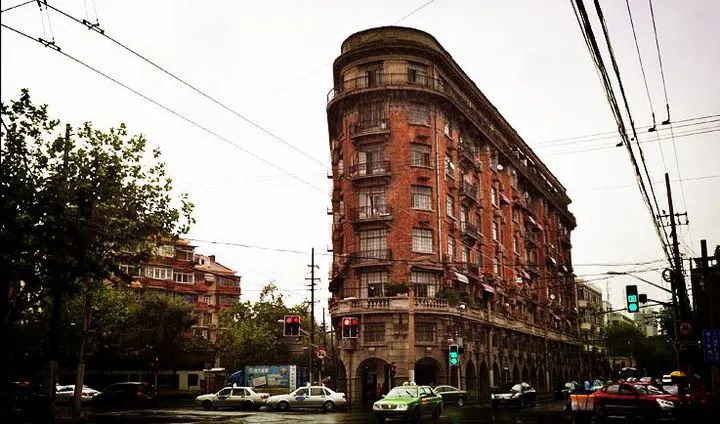
Old garden villasHaipai elegance
Along quiet streets stand red-tiled, white-walled villas with pointed roofs and arched steel windows — once the badges of old Shanghai's elite, each one carrying a legend of the era. The pencil-shaped Wukang Mansion is the most photographed of all.
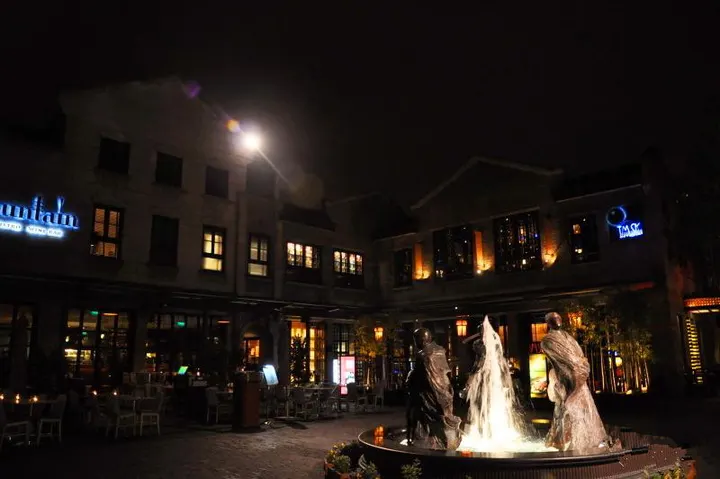
XintiandiNightlife in shikumen walls
Weathered shikumen gates and deep lanes blend seamlessly with flagship stores, bars and cafés. Outside the door is a lane from another century; inside, thoroughly modern Shanghai — one step between two worlds.
03The questions everyone asks first
When is the best time to visit Shanghai?
Spring and autumn. March–May is mild and good for day trips; September–November brings proper autumn air and hairy-crab season. Summer is hot, humid and typhoon-prone; winter is damp-cold but indoors are heated and crowds are thin.
Where should I go shopping in Shanghai?
Nicknamed the 'Paris of the East', Shanghai is one of China's top shopping cities. Big mall clusters sit at Xujiahui, Zhongshan Park, People's Square and Huaihai Road; Nanjing Road pedestrian street mixes time-honored brands with new names. On a budget: the underground Diemei mall at People's Square has cheap, haggling-friendly stalls popular with students.
Is Shanghai expensive?
It splits in two. High-end spending can be absurd, yet ¥15 still buys a filling, decently nutritious meal if you know where to look. The metro is cheap and distance-fare based; lodging runs from ¥50 hostel bunks to five-star suites; and tickets split too — the Bund and Nanjing Road cost nothing, while an observation deck starts around ¥199.
What's the fastest way from Pudong Airport into the city?
The Maglev: Pudong Airport to Longyang Road in 8 minutes — ¥50 one way, ¥80 return, 20% off with a same-day plane ticket — then change to Metro L2/L7/L16/L18. If you're not in a hurry, Metro L2 runs the whole way in about an hour for a few yuan.
Is the metro easy to use, and can I pay with a foreign card?
Very. Twenty lines reach every major sight, and fares start at ¥3 for the first 6 km. Since 28 June 2025 the whole network accepts Visa and Mastercard contactless at the gates; 1-day (¥18) and 3-day (¥45) unlimited passes are also on sale.
Which area should I stay in?
First-timers should base themselves around People's Square and East Nanjing Road: three metro lines meet there, the Bund is a short walk, and hotels pack every price point — hostels from ¥50–80 a bed. For old-Shanghai atmosphere, a boutique room in a restored villa in the former French Concession (Wukang Road area) is the splurge worth making.
When is hairy crab at its best?
September to November. When the autumn wind rises, the crabs fatten — this is the season for roe-heavy hairy crab, crab-roe tofu and steamed whole crab at Benbang restaurants. Specialist crab houses like Cheng Long Hang peak then; budget about ¥300 a head.
04One, two or three days
With one day, stay central: Nanjing Road in the morning, City God Temple snacks at noon, the Bund after dark. Two days add a ride up a Pudong tower; three days let you slow down and work the lanes of Tianzifang and Xintiandi into the plan.
D1
The classic day: start at People's Square and visit the Shanghai Museum (free, book 7 days ahead) for the city's history; then walk Nanjing Road's pedestrian stretch, photographing the buildings and snacking at Wang Jia Sha or Shen Da Cheng. In the afternoon continue to the Bund for river breezes and the world-architecture row. End at the City God Temple for street food — off-peak hours, please — and, if you like, step into Yu Garden for the zigzag bridge and a touch of Jiangnan.
D2
Culture, day two: spend the morning on Nanjing Road and, if time allows, meet the stars at Madame Tussauds; lunch at the old temple quarter and browse the bazaars; rest inside Yu Garden. In the afternoon walk ten minutes to the Dongmen ferry, cross to Pudong and ride up Jinmao Tower or the Shanghai Tower, then circle Lujiazui's towers. Watch the skyline light up from Binjiang Avenue, or ferry back.
D3
Slow day three: browse Tianzifang's creative shops in the morning, then walk Sinan Road past Zhou Enlai's former residence and other celebrity homes. In the afternoon settle into Xintiandi's shikumen cafés and drop by the Site of the First CPC Congress (free, reservation needed). Finish with shopping along Huaihai Road or at Xujiahui.
05From the Bund to the lanes
The world-architecture row of the Bund after dark
The Bund
The Bund is Shanghai's postcard and its must-see. Built up over a century from a muddy towpath trodden by boatmen and laborers, it now lines up 52 buildings in a dozen architectural styles — the 'exhibition of world architecture' — each telling a dreamlike story of old Shanghai. To cross to Pudong, catch the ferry at the Jinling Road pier or take the Bund Sightseeing Tunnel near Nanjing Road.
Free and open all day; the 19:00–22:00 lighting is the most photogenic. Getting there: Metro L2/L10 East Nanjing Road.
Yu Garden and the City God Temple
'If you haven't been to the City God Temple, you haven't seen Shanghai.' Yu Garden, praised as a 'mountain-and-forest in the city', is the city's classic Jiangnan garden, while the temple quarter around it packs snack stalls and trinket markets — compare before you buy. Yu Garden tickets: ¥40 peak season (Apr–Jun, Sep–Nov), ¥30 off-season, open 9:00–17:00 (last entry 16:30); the temple itself charges ¥50 in peak season.
Nanjing Road pedestrian street
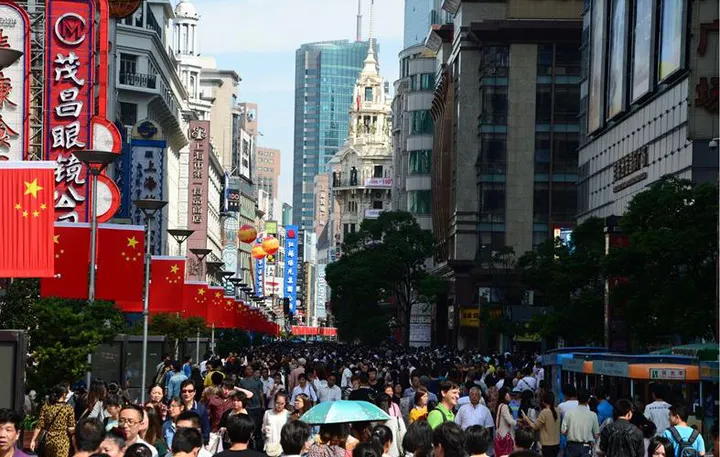
The crowds of Nanjing Road
Long billed as 'China's No. 1 shopping street', Nanjing Road strings together time-honored stores and new brands — and its neon signs are an attraction in their own right after dark. Free; Metro L1/L2/L8 People's Square or L2 East Nanjing Road.
Oriental Pearl Tower
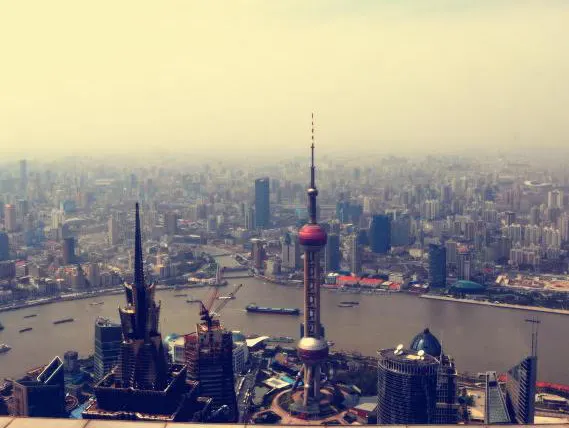
Looking down on Lujiazui and the Bund
Just across the river from the Bund, the Oriental Pearl is Lujiazui's most visited sight. Its two-sphere ticket (¥199; three spheres ¥299, children ¥99/¥149) covers the 263 m main deck and the 259 m fully transparent glass walkway; open 9:00–21:00. The Shanghai Tower observation deck sits nearby — if you only pay for one, compare first.
Tianzifang
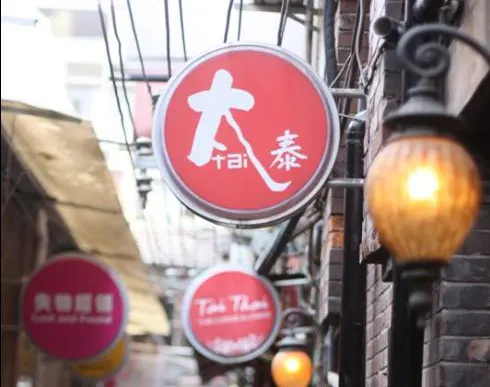
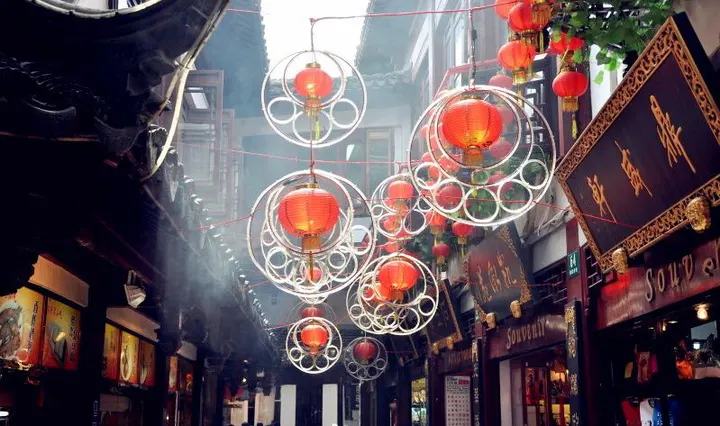
Lanterns and signboards in the lanes
A fashion-forward creative quarter carved out of old shikumen housing. Come camera-first and wallet-later; respect the private homes tucked between the shops, and mind the no-photography signs some stores post. Metro L9 Dapuqiao, Exit 1, five minutes on foot.
Xintiandi
A shikumen-walled entertainment district with European flair and the city's trendiest nightlife. On its edge sits the Site of the First National Congress of the CPC, now a free memorial museum (reservation required). Metro L10/L13 Xintiandi.
Shanghai Museum
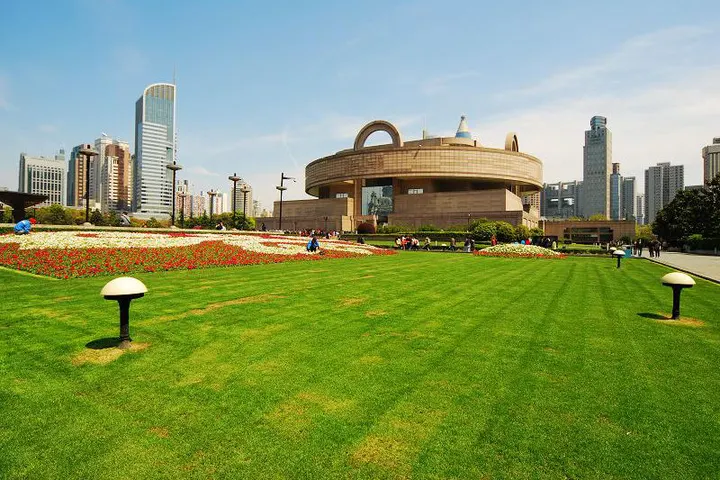
The Shanghai Museum by People's Square
One of China's four great museums, famed for bronzes, ceramics and classical painting. Admission is free but you must reserve up to 7 days ahead through official channels. Metro L1/L2/L8 People's Square.
Side trips: Qibao Old Street and Fengjing
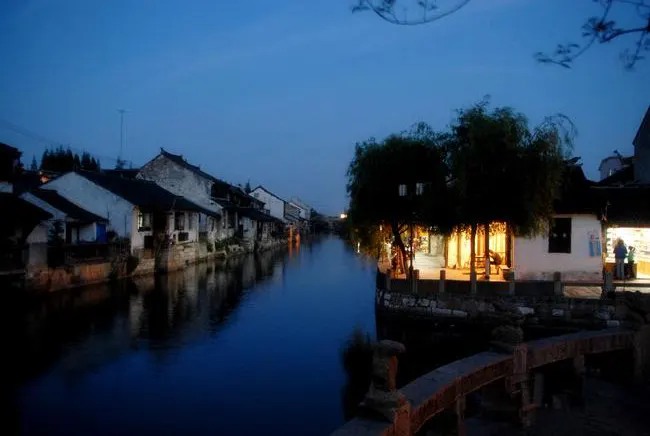
The canals of Qibao Old Street
Qibao Old Street packs folk customs, snack stalls and shops into a canal-side quarter — free entry, direct on Metro L9. Fengjing, one of Shanghai's best-preserved water towns, is free to enter with a ¥50 combined ticket for its sights; take Metro L1 to Jinjiang Park and the 45-minute Fengmei express bus.
06Time your trip to an event
Lantern season at Yu Garden
Yu Garden lantern festival
Around Lantern Festival each new year, the old temple quarter fills with intricately made lanterns, street performances and themed light installations — Shanghai's liveliest New Year scene, now a phenomenon-scale event.
Shanghai International Film Festival
Founded in 1993 and held every June, this Category-A competitive festival awards the Golden Goblet by an international jury, with a global lineup of screenings — an annual pilgrimage for film fans.
Formula 1 Chinese Grand Prix
The Chinese Grand Prix runs at the Shanghai International Circuit, usually in spring (March–April). It is one of the year's loudest single events and sells out fast — watch official sales early.
Jazz Shanghai
Every golden October, bands from around the world gather in Shanghai for a run of open-air sets. Since its founding in 2004, Jazz Shanghai has drawn waves of young listeners.
07From hostel bunks to five stars
Shanghai covers every budget, from five-star suites to ¥50 hostel bunks. Backpackers do well in hostels around People's Square or the Suzhou Creek (¥50–80 a bed); mid-range chains run ¥200–350; for comfort, book a boutique hotel in a restored heritage building.
Mingtown Suzhou River Hostel: a 1933 warehouse turned hostel and a UNESCO Asia-Pacific heritage award winner; dorm beds from about ¥55–80, with some metro rumble.
Mingtown E Ease Hostel: steps from People's Square and Nanjing Road, Chinese-courtyard style; 6-bed dorms about ¥55–80, doubles ¥150–250.
Jinjiang Inn (Bund riverside): three minutes' walk to the Bund promenade; business rooms around ¥209–320, clean and tidy.
Swissôtel Grand Shanghai: a five-star in Jing'an near West Nanjing Road and Jing'an Temple; premium rooms from about ¥550 online, with spa and underground parking.
08Benbang: red-braised and glossy
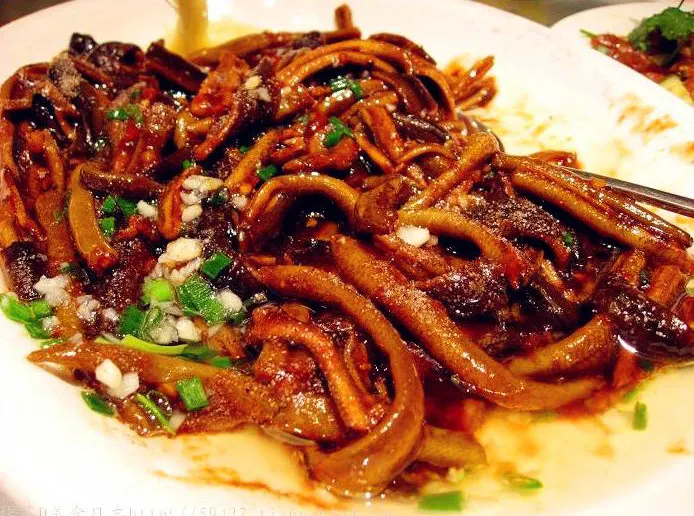
Local cooking — 'Benbang cuisine' — is famous for glossy, soy-rich sauces and respect for the original flavor. The densest food streets are the City God Temple quarter, Yunnan South Road, Huanghe Road, Zhapu Road and Qibao. Classics: xiangyou shanhui (stir-fried eel sizzling in hot oil on arrival), babao chili sauce over rice, and red-braised longsnout catfish, sweet-savory and melting. If you're not into sea cucumber, skip the shrimp-roe braised variety.
Xiangyou shanhui — sizzling eel
Four snacks to hunt down
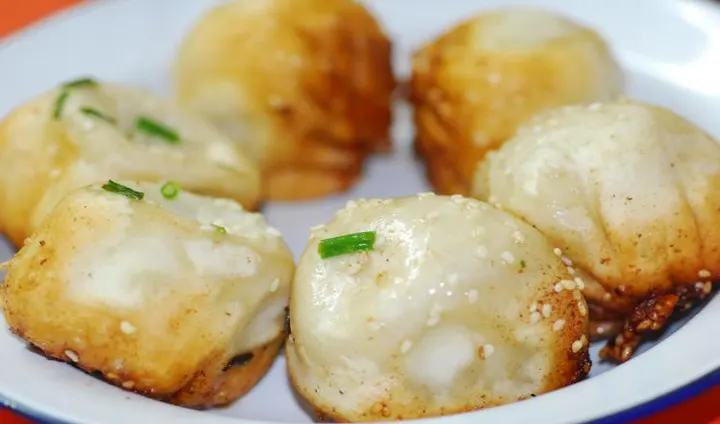
Shengjian: half-leavened buns stuffed with pork and aspic, pan-fried and finished with scallion and sesame — crisp on top, soup inside. Yang's Fry-Dumpling is the famous name; about ¥12 a head.
Nanxiang xiaolongbao: paper-thin translucent skins steamed in tiny bamboo baskets. The Nanxiang Mantou Dian at the temple quarter is the famous one (about ¥36 pp); the town of Nanxiang in Jiading is the true home.
Kehuang ('crab-shell yellow'): flaky pastry biscuits baked to the color of a boiled crab shell — crisp, loose, fragrant.
PaiGu NianGao: fried pork chops over chewy rice cakes, sweet with a hint of chili. The Xiande Lai shop is the classic.
Shengjian fresh off the pan
Restaurants worth the queue
Lan Xin Restaurant (130 Jinxian Road): an old couple's tiny dining room doing the definitive glossy red-braised pork; about ¥61 pp, always a queue.
Cheng Long Hang Crab Palace (216 Jiujiang Road): a whole-menu crab house — crab-roe tofu, steamed hairy crab; about ¥309 pp, best in autumn.
Shen Da Cheng (636 East Nanjing Road): an old brand for rice-flour sweets — tiaotou gao, double-stuff tuan, qingtuan — plus solid crab-roe xiaolongbao; about ¥17 pp.
Nanxiang Mantou Dian (85 Yuyuan Road): the ground-floor takeaway is cheaper than upstairs; skip the line at the Wujiang Road or Fuzhou Road branches.
09Taking Shanghai home
Shanghai's souvenirs range from street snacks to fine crafts. The classics — City God Temple spiced beans and pear-syrup candy — sell everywhere from specialty shops to supermarkets; Jiading bamboo carving and Shanghai embroidery make weightier, pricier gifts.
Spiced broad beans: invented by the Guji Xinglong shop at the temple; the saying goes you haven't seen Shanghai without tasting them.
Pear-syrup candy: white sugar simmered with fourteen medicinal herbs including apricot kernel and fritillaria; two dozen flavors, best known as a cough soother.
Jiading bamboo carving: a noted craft since the Ming and Qing, in relief and full-round styles, with refined, understated patterns.
Shanghai embroidery and weaving: seven categories from needle lace to rugs, headed by four-century-old Gu embroidery.
Where to buy
Start craft-hunting in Tianzifang's shop-filled lanes; traditional edibles are best at the Yu Garden bazaar; big brands cluster on West Nanjing Road and Huaihai Road; and the Diemei underground mall at People's Square is the budget hunter's patch — inspect and haggle.
10Getting there and around
Arriving by train
Shanghai's main passenger stations are Shanghai Railway Station ('Xinkezhan'), Hongqiao, Shanghai South and Shanghai West. Beijing- and Nanjing-bound high-speed trains mostly use Shanghai and Hongqiao; Hangzhou and Kunming services favor Hongqiao and South. Hongqiao sits directly above the 'Hongqiao Railway Station' metro stop (L2/L10/L17) — walk straight down to the metro; Shanghai Station has L1/L3/L4. Check trains to Shanghai on this site, then book online in a couple of minutes.
Flying in, and the Maglev
Shanghai has two international airports: Pudong (PVG, mostly international, ~30 km east of downtown) and Hongqiao (SHA, mostly domestic, ~13 km west). From Pudong, ride the Maglev — 8 minutes to Longyang Road, ¥50 one way or ¥80 return, 20% off with a same-day plane ticket — and change there to Metro L2/L7/L16/L18; or simply take Metro L2 all the way in.
The metro: your default
Shanghai's metro is one of the longest systems on earth — twenty lines blanket the city. Fares are distance-based: ¥3 up to 6 km, plus ¥1 per extra 10 km. A 1-day pass (¥18, unlimited for 24 h) or 3-day pass (¥45, 72 h) suits short visits. Paying by transport card or the Suishenma QR code earns a ¥1 transfer discount between bus and metro within 120 minutes, and a 10% metro discount past ¥70 a month. Key update for foreign visitors: since 28 June 2025 the whole network accepts Visa and Mastercard contactless cards straight at the gates.
Taxis and ride-hailing
Taxis start at ¥14 for the first 3 km (¥16 for Touran or Ei5 EV cabs), then ¥2.7/km; beyond 15 km the per-km rate rises 50%, and between 23:00 and 5:00 everything is 30% higher. Big fleets' booking lines: Qiangsheng 6258 0000, Dazhong 96822, Jinjiang 96961. At rush hour street-hailing is hopeless — use the Didi app, or queue outside an office tower or hotel.
Ferries and sightseeing
The Huangpu ferry costs just ¥2 — the locals' commute and the cheapest view of both banks. The 'Shanghai Golden Tourism Loop' open-top buses run several routes (red for downtown, green for temples, blue for Pudong) with audio guides in eight languages — a solid pick for first-timers. Watch out for copycat 'sightseeing bus' touts around Lujiazui.
11Emergency and help
Emergency numbers: police 110, ambulance 120, fire 119.
Major hospitals: Zhongshan Hospital of Fudan University (180 Fenglin Road, 021-6404 1990), Huashan Hospital (12 Wulumuqi Middle Road, 021-5288 9999), Ruijin Hospital.
Shanghai Tourist Information & Dispatch Center: 2409 South Zhongshan 2nd Road, 021-2409 5555, with coach lines to nearby sights.
Money: big malls and chain hotels take foreign cards and mobile payment; the metro has accepted Visa/Mastercard taps since June 2025.
12Packing list and pitfalls
Documents: passport or ID, bank cards (a transit card or mobile wallet saves the most hassle), student ID for discounts.
Seasonal kit: an umbrella in summer (rain and sun), a real coat in winter (the damp cold bites), light layers in spring and autumn. Comfortable sneakers are non-negotiable — Shanghai rewards walking.
Electronics: charger and power bank; install Alipay/WeChat Pay, a map app, a translator and Didi for rides.
Health: stomach remedies and plasters in your kit; carry any insurance documents.
Three pitfalls: skip the ¥3 pirated maps sold inside metro stations (the legit ¥5 bus map is at newsstands); avoid rush hour (7–9 am, 5–7 pm) on sightseeing buses and the metro; and be wary of tea-house and antique-shop push tactics around Tianzifang.
13Where Haipai culture comes from
Geography and climate
Shanghai sits at the mouth of the Yangtze on the midpoint of China's coast — bounded by the river to the north, the East China Sea to the east and Hangzhou Bay to the south — on a river delta averaging just 4 m above sea level. Chongming Island to the north is China's third largest. The climate is northern-subtropical monsoon: four distinct seasons, with May to September delivering about 70% of the year's rain.
Haipai culture
Shanghai's culture is called 'Haipai' — Wu-culture roots blended with everything the treaty ports brought in, open yet unmistakably its own. The local opera Huju is state-listed intangible heritage; first-rate venues like the Shanghai Grand Theatre, Museum and Library, plus yearly arts and film festivals, are Haipai's modern voice.
A short history
Shanghai has been a city for two millennia: Wu territory in the Spring and Autumn era, then the fief of Lord Chunshen of Chu (hence the nickname 'Shen'). It became a county under the Tang and Yuan, opened as one of five treaty ports after the 1842 Treaty of Nanjing, and grew into the Far East's finance hub through the concession era. Made a special municipality in 1927 and enlarged to today's bounds in 1958, it now holds both the Bund's century-old facades and one of the densest skyscraper clusters anywhere.
14Three routes out of town
Evening at Zhujiajiao
Zhujiajiao (1 day)
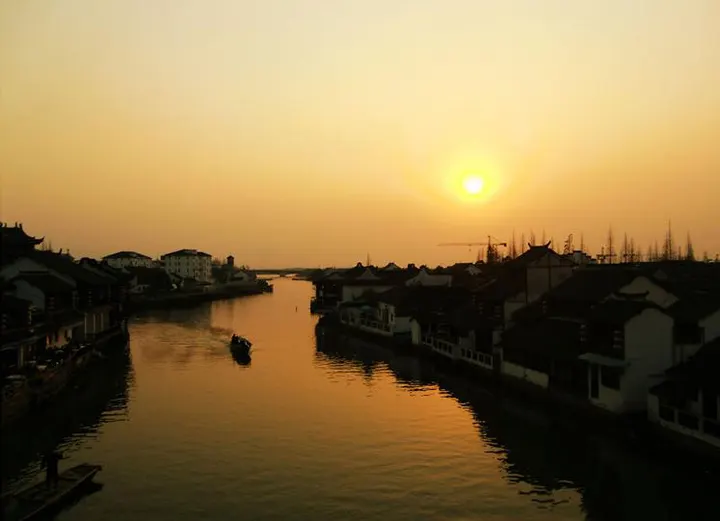
The thousand-year water town of Zhujiajiao: nine long streets along the canals, 36 stone bridges still in service. Free entry, shops open 8:00–22:00. Take the Huzhu express bus from Puxi Road at People's Square (every ~20 min) or drive via the G50 Zhujiajiao exit. Walk the Art Museum → Old Post Office → City God Temple → Fangsheng Bridge line; try zharou braised pork, 'granny' zongzi and stinky tofu. It is wonderfully quiet at dawn and after dark — an overnight stay is a good call.
A Jiangnan water town at dawn
Shaoxing (2 days)
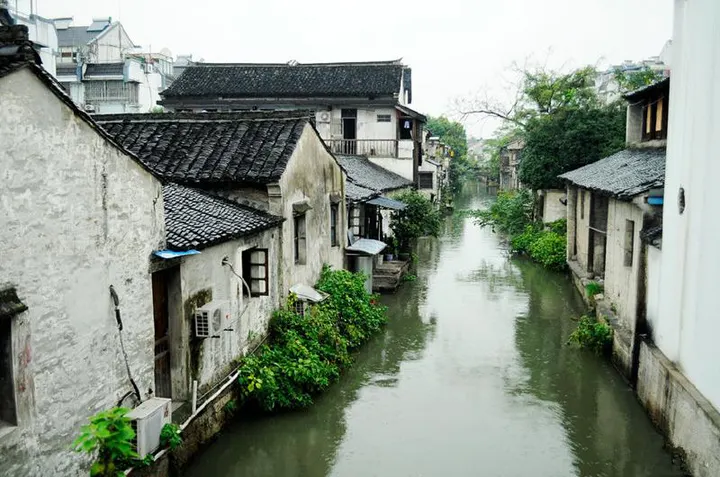
A 2,500-year-old city, 'a museum without walls': order a plate of fennel beans, a pot of yellow wine and a black-awning boat ride, and walk in the footsteps of Lu Xun, Wang Xizhi and Lu You straight out of the schoolbooks. High-speed rail from Shanghai takes 1–1.5 h. Day 1: Lu Xun's hometown (free ticket with ID) and Lu Town, with an evening opera; Day 2: the Orchid Pavilion and Shen Garden before heading back. Pedicabs start at ¥5 — agree the fare first.
A Huizhou village in southern Anhui
Huizhou villages: Tangyue–Hongcun–Xidi (3 days)
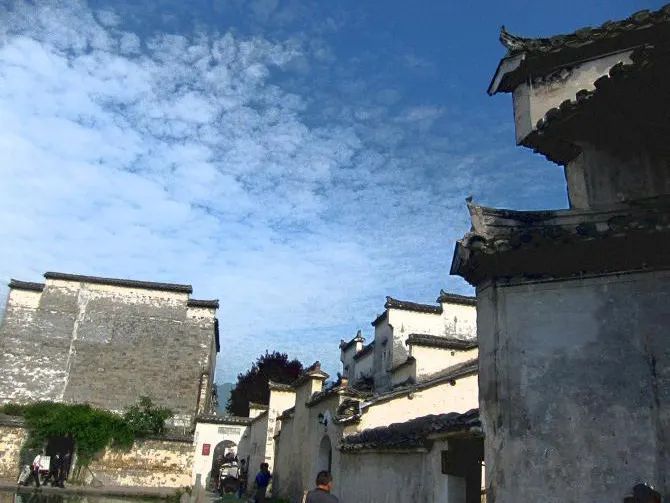
'The one place a whole life's longing cannot reach is Huizhou.' High-speed rail from Shanghai to Huangshan North (Tunxi) takes about 3 hours. Day 1: the Tangyue archways and Yuliang Dam in Shexian; Day 2: Hongcun — mirror-still South Lake and Moon Pond — with a night in an old inn, when the night market outshines the day; Day 3: Xidi, then home. Huizhou cooking runs rich and dark; hairy tofu and stinky mandarin fish are the rites of passage. Xidi offers free guided tours for groups of five.
15Watch and read before you go
Film
"Everlasting Regret" (2005, dir. Stanley Kwan): adapted from Wang Anyi's novel, it follows one legendary Shanghai woman through four decades — watch it and the longtang lanes start making sense.
Books
Eileen Chang, "Half a Lifelong Romance": a handful of Shanghai men and women entangled through wartime, and the definitive portrait of old Shanghai's human weather. Ma Shanglong, "Shanghai Women": if you want to know why this city is at once thrifty and effortlessly stylish, start here.
Music
Frances Yip, "The Bund": theme of the 1980 TV classic and a landmark of Cantopop — two lines in and you can hear the river. Jay Chou, "Shanghai 1943": Vincent Fang's lyric turns the weathered walls of old Shanghai into a letter from the past.