A palace, a warlord's house, two imperial tombs — and a city that will not flatter you
China's other complete imperial palaceHalf of Republican history in one houseTwo imperial tombs inside the cityChicken frames and cheap beer
In short
Shenyang (沈阳, Shěnyáng) is the capital of Liaoning and, before 1644, the capital of the Qing — a low-rise northern city of wide avenues whose two headline sights are an imperial palace older than the one in Beijing and the walled compound of the warlords who ran Manchuria. It holds the only other complete imperial palace complex in China besides Beijing's, the house where Zhang Zuolin and Zhang Xueliang ran the northeast, and two imperial tombs — Zhao Mausoleum in the north park, Fuling in the east — all inside the city. Tickets run ¥50 for the palace and ¥48 for the residence, ¥30–50 for each tomb, and metro lines 1 and 2 connect most of it. Beijing Chaoyang is 2 hours 29 minutes away at the fastest, Harbin two hours, Dalian about ninety minutes. It is the stop most travellers skip between Beijing and Harbin, and the one they most regret skipping.
Key facts
Known for
The Mukden Palace · Zhang Family Residence · Zhao Mausoleum · Fuling · Tiexi
Budget
¥1,200–2,300 for 2–3 days, mid-range, excluding long-distance transport
Days needed
2–3 days
Comfort
Comfortable
Best time to go
Late September to mid-October; January and February are the most photogenic and minus twenty; July and August are hot, wet and sticky
01First thing to understand: this was a capital, not a film set
Shenyang sits in an awkward spot on the travel map. The Beijing–Harbin high-speed line passes straight over it, and most people treat it as a station rather than a destination. Spend one full day in the city, though, and it turns out to be one of the few places in China where the founding of a dynasty and the twentieth century sit on the same street plan. In the morning you stand in front of the hall where Nurhaci took counsel; in the afternoon you are looking at Republican-era furniture in the building where Zhang Xueliang worked.
In 1625 Nurhaci moved the Later Jin capital here from Liaoyang and called it Shengjing. In 1636 Hong Taiji proclaimed the Qing dynasty in Chongzheng Hall. In 1644 the Qing took Beijing and Shengjing became a secondary capital. So the palace here is not a small version of the Forbidden City — it is the version from before the conquest: an octagonal throne hall with double eaves, ten banner pavilions ranged in front of it, and living quarters built around a kang and a single chimney standing free of the roof. None of that survived the move to Beijing.
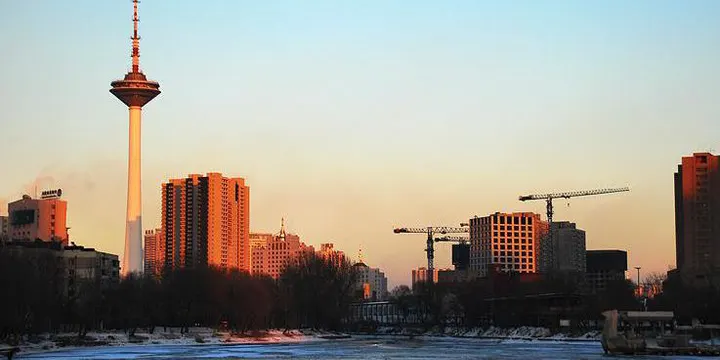
Dusk over the Hun River: a television tower, apartment blocks, tower cranes and water not yet frozen
The second layer is Republican. From 1916 Zhang Zuolin ran the northeast from Fengtian, and in 1928 his son Zhang Xueliang switched allegiance to the Nationalist government and in 1929 changed the city's name back to Shenyang. The family residence stands four hundred metres south of the palace: a three-courtyard Chinese compound bolted onto a Roman-revival mansion, the two idioms jammed together. The building is itself a document of its decade. On the night of 18 September 1931, Japanese troops blew up the South Manchuria Railway track at Liutiaohu and attacked the Chinese barracks at Beidaying; the fourteen-year war began there. The city's museum of that event is factual, restrained and very clear.
The third layer is industry. The first Five-Year Plan made Shenyang the Ruhr of the East; Tiexi district was wall-to-wall factory sheds, and the country's first machine tools and first jet aircraft came out of them. The state-enterprise reforms of the 1990s put hundreds of thousands out of work and emptied Tiexi for a decade; today the sheds are museums and creative parks. Walking those streets you realise the city's face is worth more attention than its sights: it does not decorate itself and it is not trying to please you.
The practical shape of the city is simple. The old town is a compact square: palace, residence and Middle Street are all within ten minutes of each other on foot. Beiling is north, on metro line 2. Dongling is east, half an hour by bus or taxi. The September 18th museum sits in the northeast corner. The city is flat, the roads are wide, and winter is genuinely cold — January averages around minus eleven and has touched minus twenty-nine. Summer is the mirror image: July is humid, thundery and can hit thirty-six.
So how much time? If you are travelling the Beijing–Harbin line, give Shenyang one clear day: palace in the morning, Middle Street at noon, the residence in the afternoon, then either the September 18th museum or Beiling before dinner. With two days, start the second morning at Beiling among the locals doing their exercises, then come back for a museum. With three, add Dongling and Tiexi. With less than a day, do only the palace and the residence: they are ten minutes apart, you can walk both in two hours, but each deserves two.
02Six reasons to get off the train
The Mukden PalaceThe Qing before China
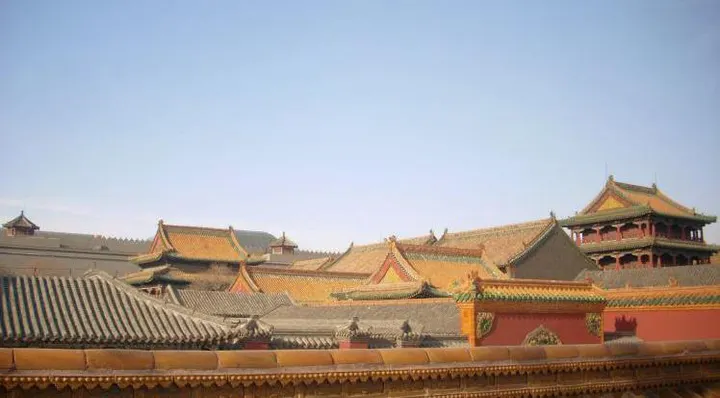
The Mukden Palace is the Qing imperial palace built before the conquest of China, and the only other complete palace complex in the country. A hundred-odd buildings run in three routes. The east route is Nurhaci's: the octagonal Dazheng Hall with its double eaves, and the ten pavilions of the eight banners plus the two wing princes arranged in front of it — a layout that shows a state that had not yet learned the ceremonial grammar of the Central Plains. The centre is Hong Taiji's: Chongzheng Hall, the three-storey Phoenix Tower, and Qingning Palace with its pocket-shaped room, its heated kang platform and its chimney rising free beside the building. The west route is the Qianlong addition, with a library and a stage. It is about a sixth the size of the Forbidden City, you can see it in two hours, and it is extremely dense.
Admission:¥50; ¥25 for students, ages 60–69 and Shenyang residents; free under 18 and over 70
Hours:10 April–10 October 8:30–17:00, last entry 16:15; 11 October–9 April 9:00–16:30; closed Mondays
Booking:Timed morning and afternoon slots via the official account; passports are checked manually at the gate
Zhang Family ResidenceHalf of Republican history in one address
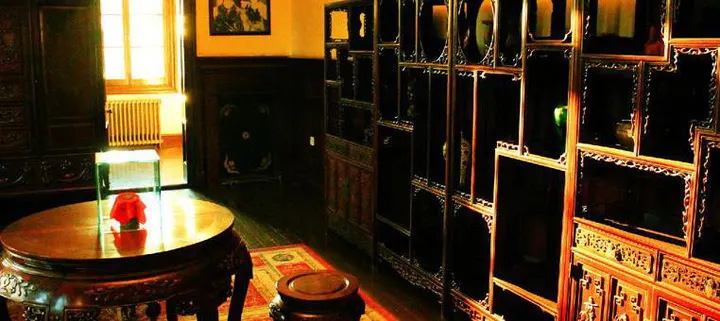
This was the office and home of Zhang Zuolin and his son Zhang Xueliang. The east court holds the 1910s three-courtyard compound and the Small Blue Building; the Grand Blue Building, finished in 1922, is the Roman-revival block — columns, round windows, balustraded balconies, a pair of stone lions at the door. The rooms keep the furniture, carpets, silver and photographs of the period, and Zhang Xueliang's office is on the first floor. East of the wall stands the small Japanese-style house built for his companion Zhao Yidi; south of it, the Shenyang Financial Museum occupies the 1930s bank building, with its vault and banking hall intact. One ticket covers all of it.
Admission:¥48; ¥24 for students and ages 60–69; free under 18 and over 70
Combined ticket:¥58 with the Financial Museum, ¥68–78 with the 5D dome film
Hours:Summer 8:30–17:00, last entry 16:30; winter 9:00–16:30, last entry 16:00; closed Mondays
Beiling Park and Zhao MausoleumAn emperor's tomb that doubles as the city's back garden
Beiling is the local name for Zhao Mausoleum, where Hong Taiji and his empress are buried. Work began in 1643 and was largely finished by 1651; at over three hundred hectares it is the largest of the three tombs outside the Great Wall. You enter at the red gate onto a spirit road lined with stone animals, then pass the stele pavilion, the square city, the Hall of Eminent Favour and the burial mound, the whole axis climbing gently northward. Outside the walls stand several hundred pines, many over three centuries old, and at six in the morning the park belongs to locals running, doing taiji and rehearsing yangge troupes. That scene is more Shenyang than the tomb is.
Admission:Park ¥5, often free after 17:00; the tomb ¥40–50 in season, ¥30 in winter
Hours:Park 5:00–21:30; tomb 8:00–17:00
Note:Metro line 2 to Beiling Park, then ten minutes on foot to the south gate
Dongling Park and Fuling MausoleumOne hundred and eight steps
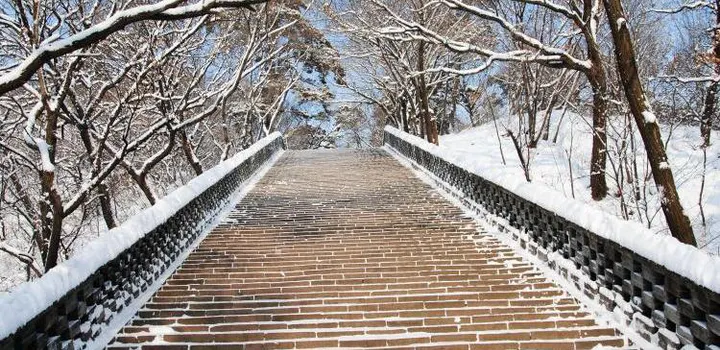
Fuling holds Nurhaci and his empress. The site was chosen in 1629, backed by Tianzhu Hill and facing the Hun River, on roughly twenty hectares. The whole tomb climbs a slope: past the red gate comes a flight of 108 steps — the number stands for the thirty-six spirits of the Great Dipper and the seventy-two earthly powers — and only at the top do the stele tower, the square city and the burial mound begin. The stair is the main event, and on a snowy day, with the pines loaded and almost nobody else there, it is the quietest place in the city.
Admission:Tomb ¥30 (¥20 in winter); country park ¥8
Hours:8:00–17:00
Getting there:Bus 148, 168 or 218; about 25 minutes by taxi from the old town
Middle Street and the old cityFour hundred years of shopfronts
Middle Street is the city's oldest shopping street, running east from the palace gate for about a kilometre on the same line it has held for four hundred years. Modern malls — Joy City, Plaza 66, the old Commercial City — line it alongside time-worn shopfronts and lane-mouth stalls. Turn south into Marshal's Lane and four hundred metres later you are at the Zhang residence. The old city is laid out as a grid of nine blocks with the palace in the middle; walking the whole thing takes under forty minutes and is the fastest way to understand Shenyang.
Cost:Free to walk
Getting there:Metro line 1 to Middle Street; fifteen minutes on foot from line 2 at Shifu Square
LaobeishiTemple fair, night market, chicken frames
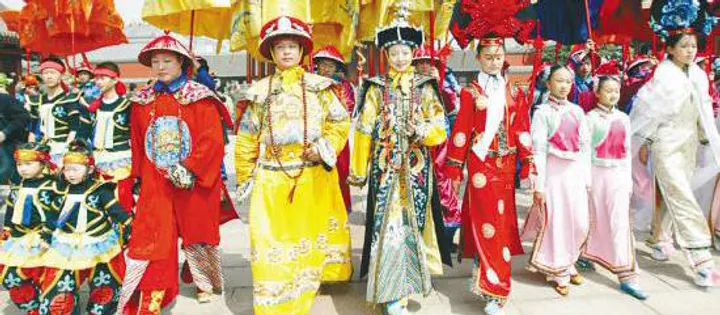
Laobeishi, in Heping district, is the most successful piece of old-quarter renewal the city has done in a decade: a four-hundred-year-old site rebuilt as lanes of grey brick and tile, teahouses and craft shops and a stage by day, stalls spilling into the street once the lanterns come on. At Spring Festival, in May and in October it hosts the Huangsi temple fair, the largest in the northeast, with parades in banner costume and bridal sedans and two-renzhuan on the stage. At the end of July the chicken-frame festival takes over, dozens of stalls and whole families out gnawing bones.
Cost:Free; very crowded during temple fairs
Getting there:Twenty minutes on foot from metro line 1 at Taiyuan Street, or a short taxi
03Seven things worth settling before you book
How many days do I need, and is one enough?
One day covers the spine: palace in the morning, lunch on Middle Street, the residence in the afternoon, then Beiling or the September 18th museum before dinner. It will feel rushed, though, and half of Shenyang's value is in its slower layer — the six o'clock exercisers at Beiling, Middle Street after dark, the old factory sheds of Tiexi turned into studios. Two days is comfortable. Three lets you add Dongling and Tiexi. Beyond that, use the city as a base for Benxi, Dandong or the Qian Mountains at Anshan.
I have seen the Forbidden City. Is this one still worth it?
Yes, and for the opposite reason. The Forbidden City shows the system after it was finished: the long axis, the three courts, the rigid hierarchy. The Mukden Palace shows it before it was finished: an octagonal throne hall with ten banner pavilions arranged around an open yard, emperor and ministers conducting business outdoors; living quarters shaped like a pocket with a heated platform and a chimney built as a separate stack, exactly as houses were built in the northeast. You cannot see any of that in Beijing, because it was all standardised after 1644. Two hours is enough; three is not too many if you care about buildings.
Do I arrive at Shenyang North or at Shenyang station?
Both are in the city, so do not panic. Shenyang North Railway Station sits three kilometres north of the old town and carries most of the Beijing–Harbin high-speed traffic plus the Harbin and Changchun services; metro lines 2 and 4 both stop there, and it is a short ride plus one change from Middle Street. Shenyang Railway Station, two kilometres west of the old town, opened in 1899 as Fengtian station and handles the Dalian, Dandong and some Beijing services — the fastest train from Beijing Chaoyang, G951, terminates here — with metro line 1 at the door. Either way a taxi to Middle Street costs around ¥15. Read the station name on your ticket: getting it wrong is not two extra steps, it is a crossing of the city.
What has to be booked ahead, and can I just turn up?
The palace needs a booking, split into morning and afternoon slots; in peak periods — Spring Festival, the October holiday, summer weekends — the same-day allocation may only have afternoon left, so book a day ahead on the official account. The September 18th museum is free but requires a reservation through the Yiyou Shenyang mini-programme, and same-day slots often remain. The residence and both tombs can be bought on the spot or as e-tickets. One thing to remember: the palace, the residence, the September 18th museum, the provincial museum, the city museum and the industrial museum all close on Mondays, public holidays excepted. Give Monday to Beiling, Dongling and Middle Street.
How cold does it get, and is winter actually workable?
January averages minus eleven and nights drop into the low twenties below zero, with minus twenty-nine on record. It is workable if you dress for it: down jacket, fleece, thermal base layer, hat, gloves, thick socks, and shoes with grip, because snowy flagstones are treacherous. Every indoor space is heated to twenty-plus, so layering matters more than thickness — you will be taking a layer off every time you go inside. The reward is that the palace and Dongling are nearly empty after snow, red walls and yellow tiles under white, and that is the best this city looks. The cost is that it is dark by half past four and outdoor sights shut around five.
What should I eat first, and how do I eat a chicken frame?
Start with three things in this order: Lao Bian dumplings on Middle Street, where steamed, boiled and pan-fried all appear and the signature is the crisp-bottomed potsticker; Li Liangui's smoked pork with flatbread, the meat stuffed into a flaky round with a bowl of egg-drop soup; and Ma family shaomai, thin-skinned and filled with beef or lamb. Then the chicken frame — the city's national snack, smoked, roast, deep-fried or stir-fried with chilli, about ¥10, torn apart with your fingers and eaten with a cold beer. There is barely any meat on it; what you are eating is the flavour in the bones and the time it takes. To cover everything at once, go to Xita, the Korean-Chinese quarter, for cold noodles, charcoal-grilled meat and rice cakes, or Laobeishi for the night market, which hosts a chicken-frame festival each July.
Can Shenyang work as a stop between Beijing and Harbin?
Very much so, and it is the most efficient way to do it. Beijing Chaoyang to Shenyang is 2 hours 29 minutes at best (¥349 in second class) and Shenyang North to Harbin West is 1 hour 58; the two legs together beat flying direct, with a day in the middle. It works in reverse too. Service is dense — more than twenty pairs of flagship trains a day on the Beijing–Harbin line, and over three hundred trains handled daily at Shenyang North — so you rarely need to book far ahead. Two things to watch: Beijing now departs from Chaoyang, Beijing station and Beijing West, so check which; and your train may call at Shenyang North, Shenyang or Shenyang South, the last of which is out in Hunnan, furthest from the old town.
04One, two or three days
The sights are easy to sequence; the hard part is legs. The palace and the residence are both standing-up work, four hours between them; Beiling and Dongling are walking, two hours each; the museums are the spare tyre in good weather and the rescue in bad. One rule: outdoors early and late, when the light is good and the crowds thin, and indoors in the middle of the day, when it is warm in winter and cool in summer.
D1
Into the palace at 8:30, starting on the east route at Dazheng Hall and working through the centre — Phoenix Tower, Qingning Palace, Chongzheng Hall — for two hours. Out of the east gate and you are on Middle Street: dumplings or smoked pork flatbread for lunch. At 13:30 the residence, taking in the courtyard, the Grand Blue Building, Zhao Yidi's house and the Financial Museum over two and a half hours. Walk back up Marshal's Lane at dusk and stand on Middle Street as the lights come on. If you still have legs, take in a two-renzhuan show at the Liulaogen theatre.
D2
Beiling at seven, walking a loop through the pines with the locals, then into the tomb at eight for the Hall of Eminent Favour and the burial mound, out by half past ten. Back into town for lunch, then the September 18th museum in the afternoon — two hours, and you will want to sit somewhere quiet afterwards. End the day at Laobeishi or Xita with chicken frames, skewers and cold noodles. Nothing about this day is rushed, but it moves you around, which is why the easy part belongs in the evening.
D3
Dongling in the morning for the 108 steps and the view down to the Hun River. Back for lunch, then Tiexi in the afternoon: the China Industrial Museum, free and closed Mondays, for the first metal national emblem and the machine tools, followed by the 1905 creative park nearby. With children, swap the day for the Fangte theme park or the botanical garden. Leave from Shenyang North in the evening, or stay one more night and run down to Benxi the next morning.
05From the throne hall to the 108th step
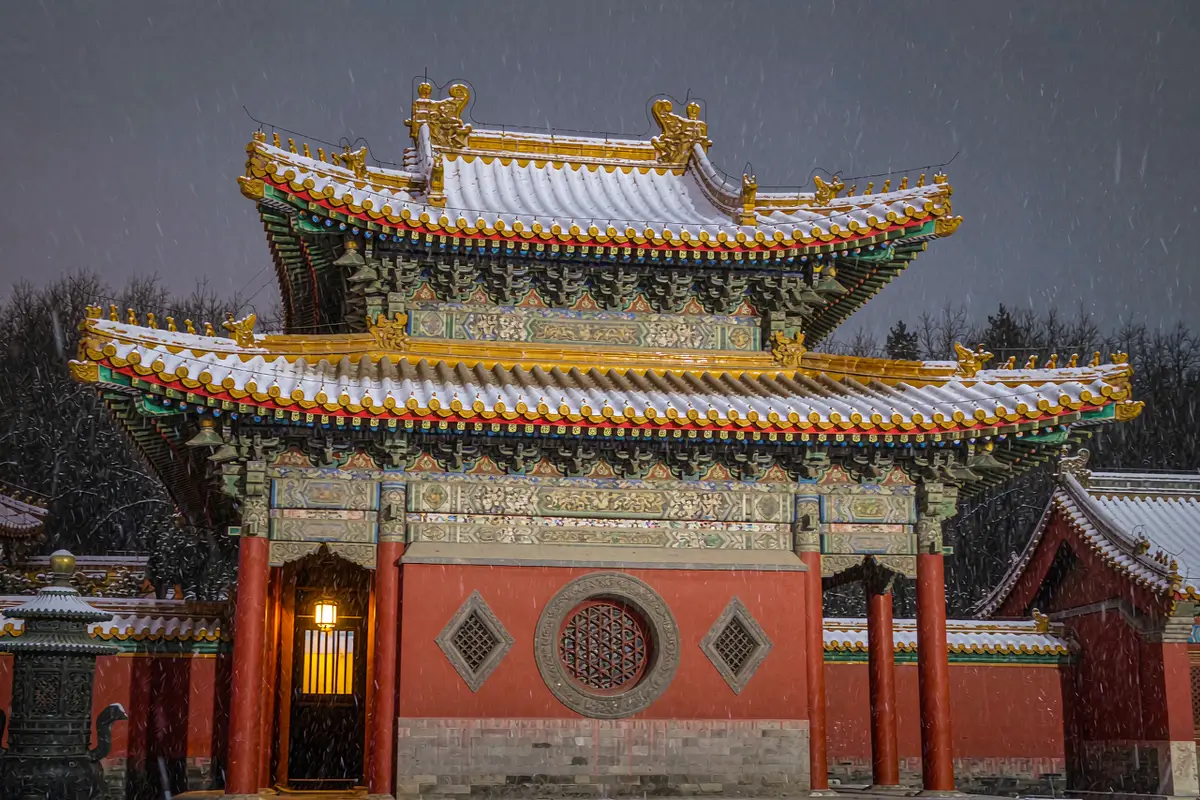
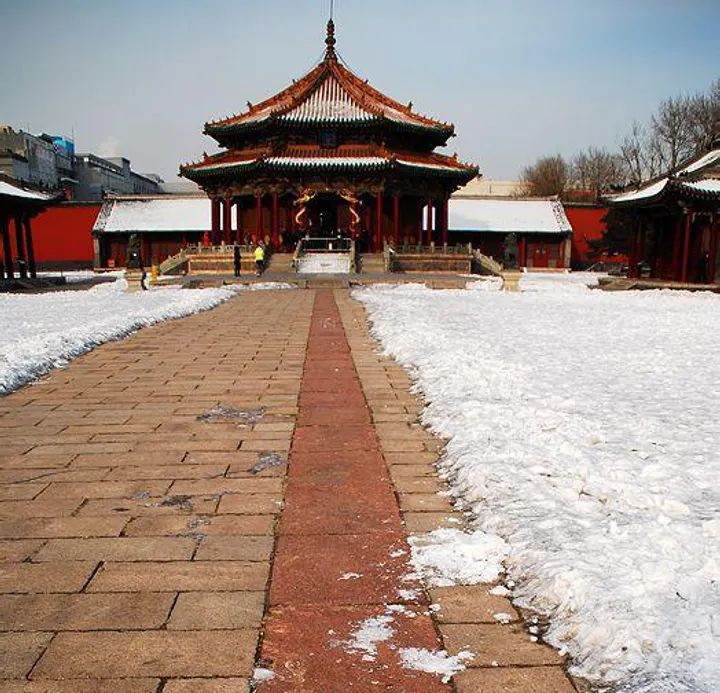
Dazheng Hall after snow: octagonal, double-eaved, with a straight red-brick path leading to it
The palace: three routes, three logics
Read the palace by route, not by courtyard. The east route is the oldest, built from 1625 under Nurhaci, and its core is Dazheng Hall: octagonal, double-eaved, yellow tiles with a green border, with five pavilions on each side of the forecourt — ten in all, one for each of the eight banners plus one for each wing prince. Ministers stood in front of their own pavilion in banner order, and the yard was the court. That habit of writing the army's structure straight into the architecture disappeared once the Qing moved south.
The centre belongs to Hong Taiji: the Great Qing Gate, then Chongzheng Hall, then the Phoenix Tower and Qingning Palace on a raised terrace behind. The tower is three storeys and about twenty metres, the tallest thing in the city when it went up, high enough to see over the wall. Qingning Palace was the emperor and empress's residence: you enter into a pocket-shaped room, with heated platforms running around three sides, and the chimney is not on the roof but built as a separate stack against the outside wall — a Manchu fire precaution and the surest sign of a Manchu-era house.
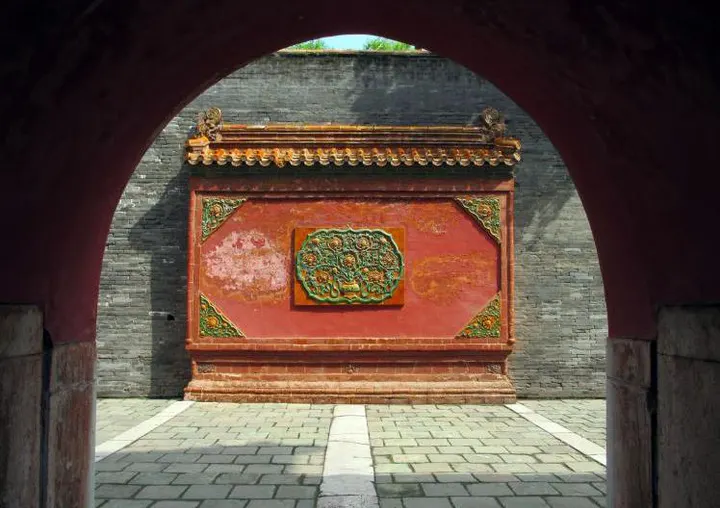
A screen wall seen through a brick arch: red ground, a glazed dragon roundel, flagstones underfoot
The west route was added under the Qianlong emperor, and its strangest building is the Wensu Library: black glazed tiles with a green border, modelled on the Tianyi Pavilion in Ningbo, built to hold one of the seven manuscript copies of the imperial library. Black because in the five-element scheme black is water, and water defeats fire, which is the thing a library fears most. The books left long ago; the logic is still legible. There are over a hundred buildings, and three hours does them justice. With two, drop the west route and give the time to Dazheng Hall and Qingning Palace.
The Zhang residence: a courtyard compound welded to a Roman block
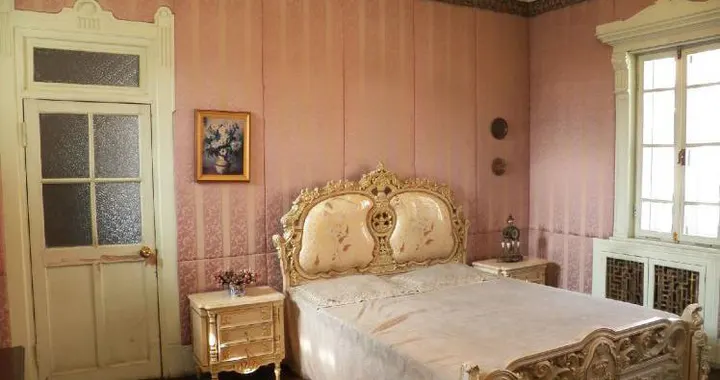
The residence has three courts. The middle one is a 1910s three-courtyard compound in grey brick with carved timber — a standard official's house of the northeast. In the east court, the Small Blue Building went up in 1918 for the fifth wife, and the Grand Blue Building followed in 1922: three storeys of Roman revival, with a big semicircular balcony and Ionic capitals, offices and reception rooms on the ground floor and bedrooms above. Twenty metres separate the two buildings and a continent separates their styles. That is not confusion; it is the political posture of the northeast in the 1920s — an old-style family on one side, a government that had to deal with the world on the other.
A bedroom in the residence: pink wall covering, a carved wooden bed, a white-painted door
Beyond the east wall stands Zhao Yidi's house, a small two-storey block in ochre built in 1928, where she lived for several years. South of it, the Financial Museum occupies the 1930s bank building, with the marble counters of the banking hall and the basement vault intact; the displays trace northeastern money from silver dollars through the provincial notes to the puppet-state currency, and the thread is easy to follow. The combined ticket is better value than two singles, and this is the part most visitors skip.
Two tombs: one north, one east
Zhao Mausoleum in the north and Fuling in the east, together with Yongling at Fushun, are the three tombs outside the Great Wall, listed by UNESCO in 2004. They share one plan: red gate, spirit road, stone animals, stele pavilion, square city, Hall of Eminent Favour, burial mound, all climbing northward. The difference is temperament. Beiling is inside the city and wrapped in a park, busy in the morning and full of ordinary life. Dongling sits on a slope east of town with a hill behind it and the river in front, lifted by 108 steps, and is much quieter. On a first visit choose Beiling; add Dongling if you have another morning.
The September 18th Historical Museum
The September 18th Historical Museum stands on Wanghua South Street in Dadong, close to where the Liutiaohu explosion happened, and opened in 1999. The entrance is a monumental stone calendar torn open at 18 September 1931 and pockmarked as if by shrapnel. Inside, two floors of displays run in chronological order from the attack on the Beidaying barracks that night through the fourteen years that followed, using documents, photographs and objects, with captions that stay factual and never editorialise. Two hours covers it, and you will want to sit down somewhere afterwards. Entry is free with a booking through the Yiyou Shenyang mini-programme; Tuesday to Sunday 9:00–17:00, last entry 16:30, closed Mondays. Twenty minutes and about ¥20 by taxi from the old town.
The South Gate church and the rest of the old city
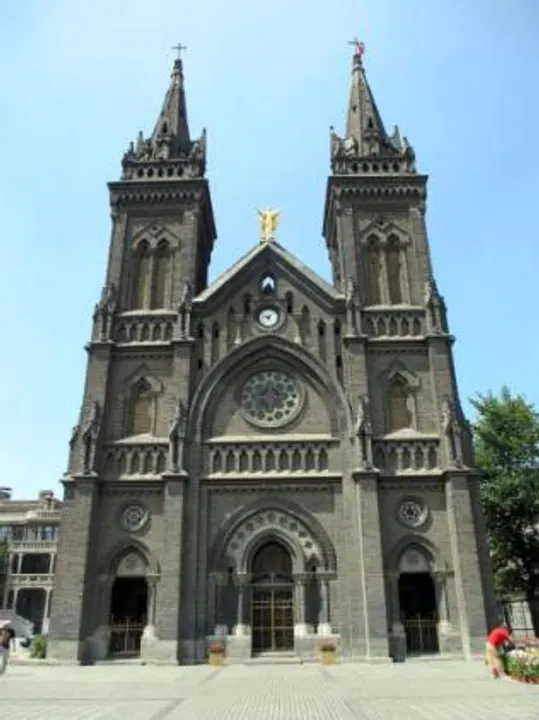
The South Gate Catholic church: twin spires, grey brick, a rose window over the door
The South Gate Catholic church stands in the southeast of the old city, finished in 1912: Gothic, twin spires, grey brick, a rose window above the door. The square in front is one of the city's favourite wedding-photograph locations, and on a weekend afternoon you will find three or four couples at work. It is free, opens around services, and asks for quiet. Ten minutes north is Taiqing Palace, the largest Quanzhen Taoist temple in the northeast and busy on the first and fifteenth of the lunar month. Northwest of that, beside Shifu Square, the Shenyang Museum occupies the provincial museum's old building — free, no booking, and a good answer to rain.
One correction worth making, because old guides still get it wrong: the provincial museum, the Liaoning Provincial Museum, has moved to Hunnan at 157 Zhihui Third Street, on metro line 2 at the Provincial Museum stop. The new building opened in 2018 and is strongest on Jin, Tang, Song and Yuan painting, silk tapestry, Hongshan jade and Liao ceramics. It is free and closed on Mondays. The address given in a lot of older writing, 363 Shifu Road, is the old building, which now houses the city museum. Do not turn up at the wrong one.
06Evenings and winter are when the city relaxes
Two-renzhuan
Two-renzhuan is the northeast's folk variety form: two performers, one comic and one female role, alternating talk, song, mimicry, dance and stunts, mostly domestic stories with improvised banter. The Liulaogen theatre on Middle Street is the famous one, ¥580–680 a seat, plush, with faces you may have seen on television, and plenty of tour groups. The Nanfeng theatre in Huanggu is far cheaper at ¥50–220, with a local audience and rougher, wilder material. You will follow seventy or eighty per cent of it without Mandarin, since the screens flash the key words. Note that some routines are blue, so think twice with children.
The bathhouse
For locals a bathhouse is not a wash, it is an evening out: soak, scrub, sauna, steam room, then into a lounging hall in a cotton suit to lie down with fruit, tea and a phone, or sleep. Some places add a buffet and a cinema. Entry runs from about ¥30 to a couple of hundred, with the scrub charged separately. It is one of the cheapest ways to understand the city and one of the easiest to get wrong: ask about the sequence at the desk, bring swimwear because some areas require it, and put valuables in a locker. For a long trip, one afternoon here buys back two legs.
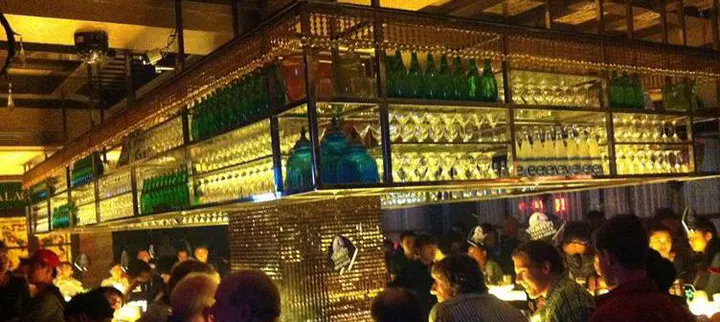
Inside a Shenyang bar: bottles stacked to the ceiling and a line of warm lamps over the counter
Temple fairs and night markets
The Huangsi temple fair runs at Laobeishi during Spring Festival, the May holiday and the October holiday, and is the biggest in the northeast: parades in banner costume with bridal sedans, two-renzhuan and conjuring on the stage, and stalls selling sugar painting, blown sugar figures and carved gourds on both sides. Laobeishi was comprehensively rebuilt a few years ago and after dark, with the lanterns on, it is one of the best-looking quarters in the city. At the end of July it hosts the chicken-frame festival, dozens of stalls and whole families out gnawing bones. Ordinary night markets are scattered through Tiexi, Xita and around Middle Street, but few run late — do not expect much after ten.
Ice and snow
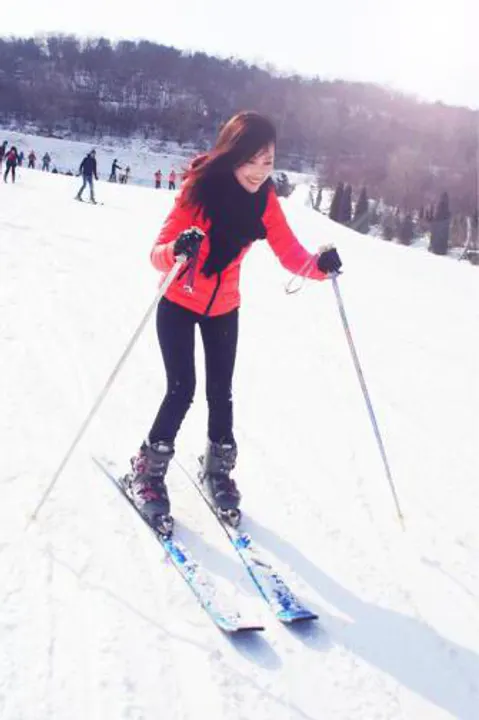
The snow season runs from mid-December to the end of February. City parks such as Beiling and Nanhu build snow sculptures and ice slides for a token fee, which is the easy option with children. For real skiing, head to Mount Qipan (Qipanshan), where the runs sit inside the scenic area — short, but forty minutes from the centre by taxi; the Guaipo slope is further out. Snow here is dry and holds well, so falling hurts less. In the coldest weeks of January the daytime sits around minus ten, and the resorts run night sessions, which is a different thing altogether under floodlights.
A skier in a red jacket on a groomed slope
The river
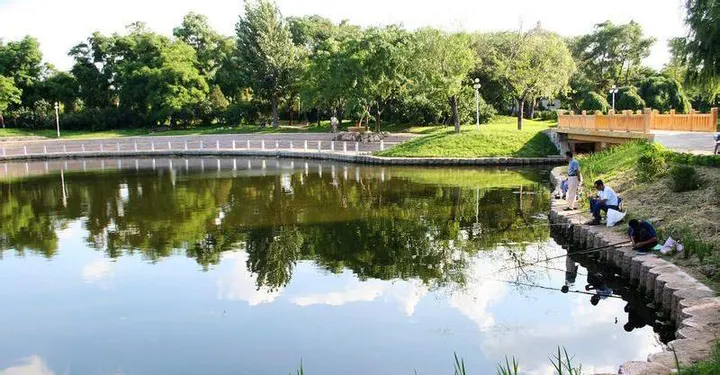
A park on the Hun River: trees mirrored in still water, people sitting on the stone edge
The Hun River runs along the south edge of the city, with dozens of kilometres of riverside greenway linking Wulihe Park, Shenshui Bay and the Olympic park. Locals run, cycle, fish and fly kites here; on a summer evening the bridges catch the wind and it is the coolest place in town. Metro line 2 at Wulihe or line 9 at the Olympic Sports Centre will get you there. Most visitors never come, but if you have a spare half-day and cannot face another building, this is the answer.
07Old town, station or Hunnan
Shenyang is cheap to sleep in — expect thirty to forty per cent less than Beijing for the same standard. Area matters more than the specific hotel. Middle Street and the old city put the palace and the residence within walking distance and suit a first visit. Around Shenyang station and Taiyuan Street transport is easy and rooms are cheaper, though the evenings are quiet. Youth Avenue, with Plaza 66 and the MixC, is the business spine: newer hotels, better malls. Hunnan is close to the airport and metro line 2, useful for early flights, but far from everything you came to see.
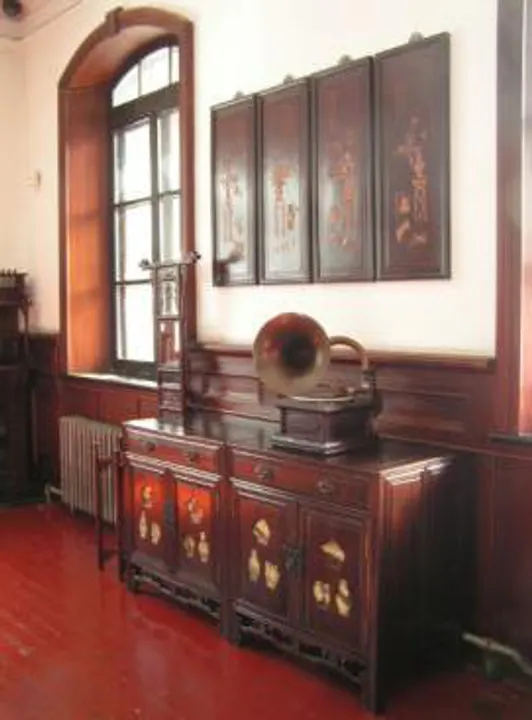
A room in a converted old building: wood panelling, a wind-up gramophone, a red-painted floor
Hostels: a handful near the old town and the station, bunks ¥50–90 and simple doubles ¥150–220. There are not many of them, so book early in peak season.
Budget chains: Home Inn, Hanting and Jinjiang fill the city at ¥180–280, small but clean, and often in excellent positions — on Middle Street, on Taiyuan Street, at the gate of Beiling.
Mid-range: ¥300–500 for the Ji, Atour and Holiday Inn tier, rooms of 25–35 square metres with breakfast, mostly along Youth Avenue and around Middle Street.
Top end: from ¥600, the five-stars around the MixC and Youth Avenue, with pools and gyms; ask for a south-facing high floor if you want river views.
Three questions at booking: is the heating adequate, since winter here depends on it entirely — ask whether it is municipal supply; which way the window faces, because north-facing rooms are cold and dark from November; and how far the metro is, because at minus twenty an extra five hundred metres is a punishment. Prices are fairly stable but rise thirty to fifty per cent at Spring Festival, the October holiday and summer weekends, and tighten again during the Qing culture festival in late September.
08Big northern plates, and one chicken frame
The cooking here is Liaoning food at its base: savoury, oily, generous, heavy on stews and ruthless with pickled cabbage. First-timers are usually startled by the portions — three dishes feed four people, and two dishes for two will leave a table of leftovers. Manchu and Korean-Chinese traditions sit alongside: pork with blood sausage and pickled cabbage from the Manchu side, cold noodles, rice cakes and grilled meat from the Korean side, and Muslim cooking around the west gate.
Six things to order
Chicken frame: the city's national snack. Smoked ones carry fruitwood, roast ones are dusted with sugar, stir-fried ones are sweet-hot, fried ones crunch through to the bone. Around ¥10 each, torn apart by hand, with a cold local beer. Do not expect much meat; the point is the flavour and the ritual.
Lao Bian dumplings: open since 1829, and the signature is the filling — pork is fried first, then fed slowly with chicken stock, which leaves it loose and savoury rather than compact. Order the pan-fried version for the crisp lace of starch at the bottom. The original is at 208 Middle Street and queues at mealtimes.
Li Liangui smoked pork with flatbread: created in 1842, the meat cured with a herbal recipe so it stays rich without grease, the bread crisp outside and soft within, and the two eaten together. Add a bowl of egg-drop soup; the whole thing costs about ¥20 and fills you.
Ma family shaomai: a Muslim institution, beef and lamb filling, wrappers thin enough to see through, pleated into a flower at the top. Eight to a steamer, with vinegar and chilli oil.
Guobao rou: the set piece of northeastern cooking. Pork loin battered and fried twice, then dressed in a sweet-sour sauce — crisp shell, tender centre, and the balance between sugar and vinegar is the whole test. Old restaurants get it right; bad ones drown it in syrup.
Xita cold noodles: buckwheat noodles rinsed in ice water, beef broth poured over, with kimchi, sliced beef and half an egg. In July one bowl resets you. The Xita street area has the densest cluster.
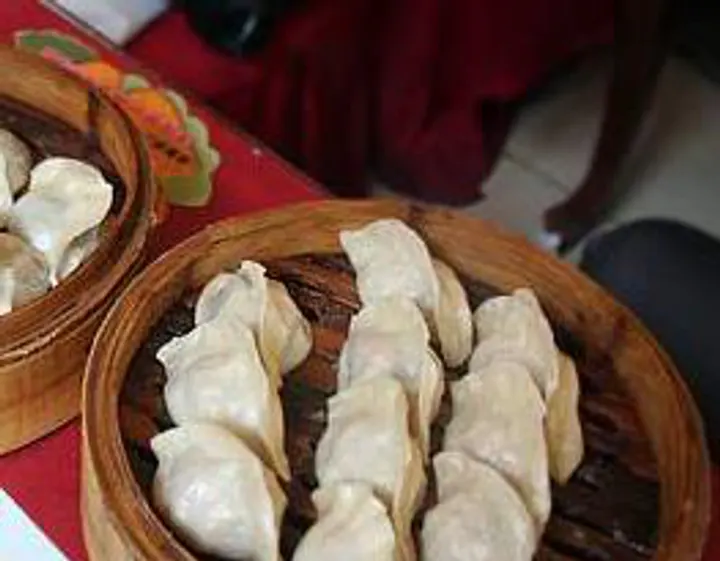
Dumplings in bamboo steamers, thin-skinned, neatly ranked and still steaming
Where to eat
Middle Street is the convenient choice: Lao Bian at 208, Li Liangui at 88 Zhengyang Street and the Ma shaomai shop all within a walk, ¥40–70 a head. For something more local, go west to Xita, a whole street of Korean-Chinese restaurants — grilled meat, cold noodles, soy-crab, rice wine — at ¥60–120. Or head to the workers' quarters in Tiexi, where homestyle places are cheap and the plates are enormous. Laobeishi's night market is for eating while walking.
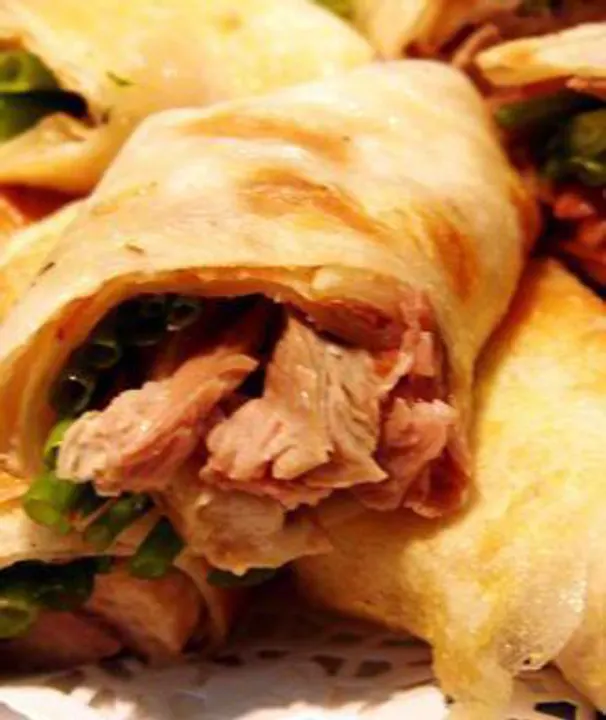
Smoked pork flatbread: the crisp round split open and packed with meat and shredded scallion
Breakfast is its own system. Locals take savoury tofu pudding with fried dough sticks, or a bowl of hand-pulled noodles with a chicken frame — the broth made from the frames, the noodles soaking up the meat. Street stalls also sell hanging-oven flatbread, sugar cakes and fried rice-flour dumplings. ¥10 buys a good start, but go early: by nine many stalls have packed up.
09Three ways to shop: Middle Street, Taiyuan Street, Wu'ai
Middle Street comes first. It has held the same line for four hundred years, and today the malls — Joy City, Plaza 66, the old Commercial City — sit between old shopfronts and lane-mouth stalls. Since August 2025 it has been the city's departure-tax-refund quarter: refund-designated shops went from 34 to more than 140, purchases of ¥200 or more in a single shop on a single day qualify, the refund rate is eleven per cent, and service counters at Shengjing Dajiating and the MixC process it on the spot. Bring your passport and the receipts. For a foreign visitor this is a real discount and most people walk past it.
Taiyuan Street works differently. East of Shenyang station, it was once the busiest retail district in the city; metro construction and ageing shops have pulled footfall down, and it is mid-renovation, with old department stores changing their signs while younger crowds drift to the underground malls and to Middle Street. Worth a look if you are staying near the station, not worth a detour.
Bulaolin candy: the city's best-known sweet, a peanut nougat type that has been made for decades. Sold in supermarkets and specialty shops for ¥20–30 a bag, and easy to give away.
Middle Street Big Fruit: the local ice cream, heavy on cream, ¥2–3 a stick, sold even in winter. There is often a queue outside the shop on Middle Street.
Feather pictures and coloured-stone inlay: local crafts that build landscapes and birds from feathers or cut stone. Small panels start around ¥100–200 and larger pieces are made to order. Check whether it is actually handwork before you pay.
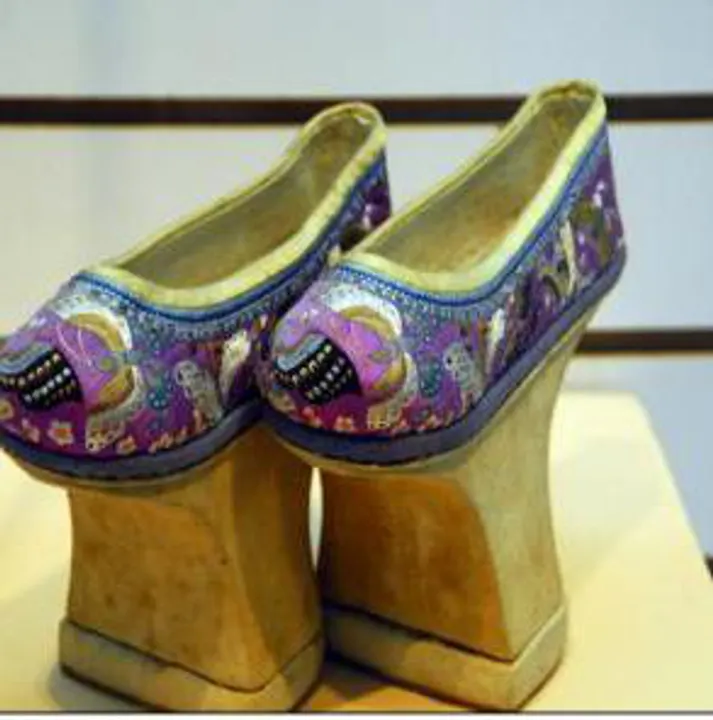
Manchu embroidered shoes, small Xiuyan jade pieces and Songhua stone inkstones: the palace's own shop and its weekend market carry them from about ¥30 to several hundred, and the quality is more reliable than the stalls outside the gate.
A pair of Manchu embroidered shoes: purple ground, dense silk work, raised wooden soles, upturned toes
Wu'ai market is a different animal: the northeast's biggest wholesale market for clothing and light goods, twenty thousand product lines, prices that look like misprints. The catch is that the cheap prices are for quantity; single items go at retail. It opens at five or six in the morning and shuts by three or four in the afternoon, so a late arrival sees nothing. It is crowded and the aisles are narrow — watch your pockets. Not everyone needs it, but if you want the city without any finishing coat, it is more direct than any sight.
10Three stations, one airport, six metro lines
North station and Shenyang station
Shenyang North Railway Station is the hub three kilometres north of the old town: the Beijing–Harbin railway and high-speed line, the Shenyang–Dalian pair, and the new line to Baishan all pass through, with more than three hundred trains a day — one of the largest passenger stations in the northeast. Most Harbin, Changchun and Beijing high-speed services call here, and metro lines 2 and 4 meet underneath: three stops to Beiling, and one change for Middle Street. The forecourt is a bus terminal with twenty-odd routes starting there.
Shenyang Railway Station, two kilometres west of the old town, opened in 1899 as Fengtian station and its building is part of the city's memory. It handles the Dalian and Dandong services, some Beijing trains and most conventional-speed trains, and the fastest departure from Beijing Chaoyang, G951, terminates here; metro line 1 runs underneath. Getting between the two takes one change on the metro, or fifteen minutes and about ¥20 in a taxi. Check the station name on your ticket carefully — many trains call at both, in different orders.
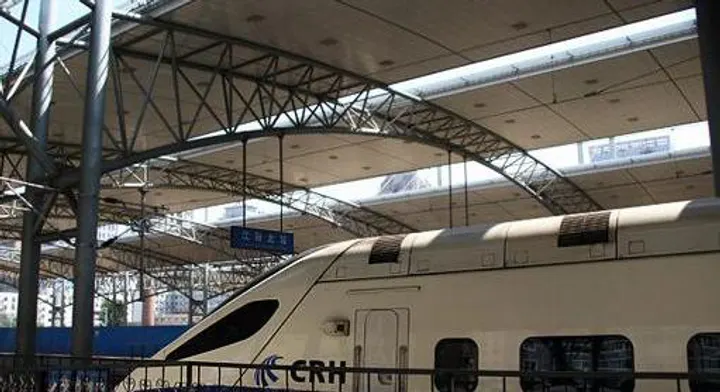
A high-speed train under the station's steel canopy
From Beijing, Harbin and Dalian
From Beijing: since the Beijing–Shenyang section of the Beijing–Harbin line went to 350 km/h in July 2025, the fastest run is 2 hours 29 minutes — G951 leaves Beijing Chaoyang at 09:00 and reaches Shenyang station at 11:29, ¥349 in second class and ¥558 in first. There are more than twenty pairs of flagship trains a day, roughly hourly from seven in the morning to seven at night. From Harbin: 1 hour 58 minutes from Shenyang North to Harbin West, a bit over ¥200. From Dalian: 1.5–2 hours at ¥120–180. Changchun is about an hour, Dandong about ninety minutes.
Airport and metro
Taoxian International Airport (SHE) lies twenty kilometres south of the centre and is the northeast's largest airport, shared by Shenyang, Fushun, Benxi, Liaoyang, Anshan and Tieling. The easiest way in is metro line 2, which runs from the terminal to Shenyang North in about forty-five minutes for under ¥10 and never sits in traffic. A taxi to the city is ¥50–70 and forty minutes. Airport coaches run to Shenyang station, Shenyang North and the Middle Street area for ¥15–20, timed to arrivals.
The metro now runs six lines: line 1 east–west through Middle Street, Taiyuan Street and Shenyang station; line 2 north–south through Beiling Park, Shenyang North, Shifu Square, the provincial museum and the airport; plus the western section of line 3, line 4, line 9 and line 10 covering the rest — just over two hundred kilometres and more than 140 stations. Fares start at ¥2 and top out around ¥7 by distance, paid by QR code with Alipay or WeChat. Buses cost ¥1–2 but stop early, many by eight or nine in the evening. Taxis flag down at ¥9 for three kilometres, then ¥1 per 500 metres, with surcharges late at night and for air conditioning.
Getting around
The old town is walked. Palace, residence and Middle Street are all within ten minutes of each other, and a day there runs to about fifteen thousand steps. Beiling is metro line 2; Dongling is bus 218 or a taxi, twenty-five minutes and around ¥30 from the old town; the September 18th museum is twenty minutes by taxi. Shared bikes are plentiful but useless in winter, when the road surface ices and the wind is not negotiable. Ride-hailing works well and undercuts taxis slightly.
Hospitals: the First Affiliated Hospital of China Medical University (155 Nanjing North Street, 024-96615) and Shengjing Hospital (36 Sanhao Street) are the two biggest tertiary centres, with 24-hour emergency departments. Foreign visitors are best served at these two, which have international clinics.
Cash and payment: WeChat Pay and Alipay are accepted almost everywhere, down to morning-market stalls and taxis; foreign cards can be linked, though small merchants occasionally fail. ATMs cluster around Middle Street, Taiyuan Street and the stations, and ¥200–300 in cash is plenty of insurance.
Tickets: the palace, the residence and the September 18th museum all sell through official accounts and mini-programmes. Train tickets go through 12306, which accepts passport registration, and you scan the passport at the gate. Do not buy from touts outside the sights — the palace states plainly that tickets from unauthorised platforms may be fake.
Climate: temperate, semi-humid, continental monsoon, with four sharp seasons. January averages minus eleven, July twenty-five, and the seven hundred millimetres of annual rain falls mostly in July and August. Spring is windy and dusty; autumn is the shortest season and the best.
Air and heating: municipal heating runs from November to March, keeping interiors above twenty while the street sits at minus ten or lower; the constant switching makes people ill, so a coat you can take off beats a thick sweater. Winter air quality is occasionally poor, and sensitive travellers should check the daily index.
12A packing list and five ways to not get stung
Shoes: this city is seen standing up and walking. The palace is brick paving, Beiling is dirt paths and stone steps, and in winter everything ices over. Soft soles with real grip matter more than anything else on this list.
Documents: carry your passport — the palace and the residence both scan ID at the gate, and the September 18th booking asks for the number. Keep a photocopy or a phone photo as backup.
Seasonal kit: in winter a down jacket, fleece, hat, gloves, scarf, thick socks and chemical hand warmers, which genuinely help. In summer short sleeves plus a light layer for the ferocious air conditioning, sunscreen and repellent. In spring and autumn the day swings fifteen degrees, so a jacket that packs small is essential.
Electronics and money: power bank, plug adapter, Alipay or WeChat Pay linked to a foreign card, an offline map and a translator. Save your hotel address as a screenshot in Chinese — showing a driver is faster than saying it.
Booking rhythm: the palace a day ahead, the September 18th museum on the morning of, the residence and both tombs at the gate. Every museum closes on Monday, so give that day to Beiling, Dongling and Middle Street.
Five ways to avoid being stung. First, ignore the touts at station and airport exits offering a day tour by car; the quote is vague and the price per head comes later. Second, there is no fast lane at the palace gate — tickets are name-linked and time-slotted. Third, taxis in winter will pick up extra passengers, which is normal here; say so if you would rather not share. Fourth, some of the old-brand signs on Middle Street are franchises, so trust the street number over the signboard. Fifth, May to October is the comfortable window and therefore the crowded one; hotel rates in Shenyang double over the October holiday, so avoid it if you can.
13Why the city looks the way it does
Geography and the name
Shenyang sits in the middle of the Liao River plain with the Hun River, once called the Shen, running along its south side. The name means north of the Shen, because in Chinese convention the sunny side of a river is its north bank. The land is almost perfectly flat, around fifty metres above sea level, which is why the city spreads rather than stacks, growing ring by ring. The climate is temperate continental monsoon: dry and cold in winter under the Siberian high, humid and wet in summer under the southeast monsoon.
Three layers of time
The oldest layer is the Xinle site, where people were living seven thousand two hundred years ago; the carved wooden bird and jet ornaments found there show a craft tradition that was already sophisticated. In the third century BC the state of Yan set up a garrison town here, which is where the city's history begins. Under the Liao and Jin it was Shenzhou, under the Yuan Shenyang circuit, and under the Ming a guard town whose rammed-earth wall is the ancestor of everything since.
The second layer begins in 1625, when Nurhaci moved the Later Jin capital here from Liaoyang and began building palace and walls. In 1634 Hong Taiji renamed the city Shengjing, and in 1636 proclaimed the Qing dynasty from it. After 1644 it became the secondary capital, and emperors came back on eastern tours to sacrifice at the ancestral tombs — Shunzhi, Kangxi, Qianlong, Jiaqing and Daoguang all made the journey. From 1657 the prefecture was called Fengtian, a name that lasted more than two hundred and seventy years until Zhang Xueliang changed it back to Shenyang in 1929.
The third layer starts after 1898, when the southern branch of the Chinese Eastern Railway reached the city, the Russians laid out a railway settlement west of the wall, and after the Russo-Japanese war of 1905 the Japanese took it over and ran a grid of streets, banks and villas south from the station — a second city with a different logic entirely. From 1931 the northeast was occupied for fourteen years. After 1948 the first Five-Year Plan turned Shenyang into a heavy-industry base, and Tiexi filled with factory sheds almost overnight.
After the 1990s
The state-enterprise reforms of the 1990s hit Shenyang harder than almost anywhere: hundreds of thousands lost their jobs, the Tiexi sheds emptied, and the workers' housing estates became the quietest part of the city. That is when the chicken frame became the national snack — under ¥2, enough to taste like meat, and the bones made a broth for noodles. The northeast revival strategy from 2003 pulled part of Tiexi down and converted other parts: the foundry museum and the 1905 creative park are both products of that.
Today Shenyang has just over nine million people, the largest city in the northeast and the centre of its economic zone. Its problems are real: people leaving, a slow industrial transition, a winter that lasts too long. Its advantages are equally real: cheap housing, cheap food, wide streets and people who do not talk in circles. As a visitor you notice quickly that the city does not perform — it has not staged an old street for you and it does not pretend everything is fine. That is precisely why it is worth more of your time than several better-known places.
14Four ways out of town
Benxi: water cave and Mount Guanmen (Guanmenshan)
Benxi is twenty-odd minutes by high-speed rail and makes an easy day. The Benxi Water Cave is a limestone system you enter by boat, three kilometres of it, a constant twelve degrees inside, so bring a layer in summer; the Taizi River runs past the mouth and in autumn the maples along it are the best in Liaoning. Further south, Mount Guanmen (Guanmenshan) turns red from early to mid-October. Weekends there are heaving, so aim for a weekday.
Dandong: the Yalu River and Hushan
An hour and a half by rail. Dandong sits on the Yalu River with the North Korean town of Sinuiju on the far bank; the broken bridge, whose span was bombed in 1950, still stands in the water and you can walk out along it. Thirty kilometres northeast, Hushan is the eastern end of the Ming wall, built along a ridge above the river and climbable in about an hour. The city is known for its clams and its strawberries, best in May.
Anshan: the Qian Mountains
Half an hour by rail. The Qian Mountains mix Taoist and Buddhist sites across a ridge of peaks so numerous the old name means a thousand lotus flowers; the walk past Wuliang Temple, Longquan Temple and the Five Buddha Summit takes five or six hours. Autumn is the season — early October foliage here is as good as Benxi's with half the crowd. Anshan itself is a steel town, and the Angang exhibition hall is worth an hour on the way back.
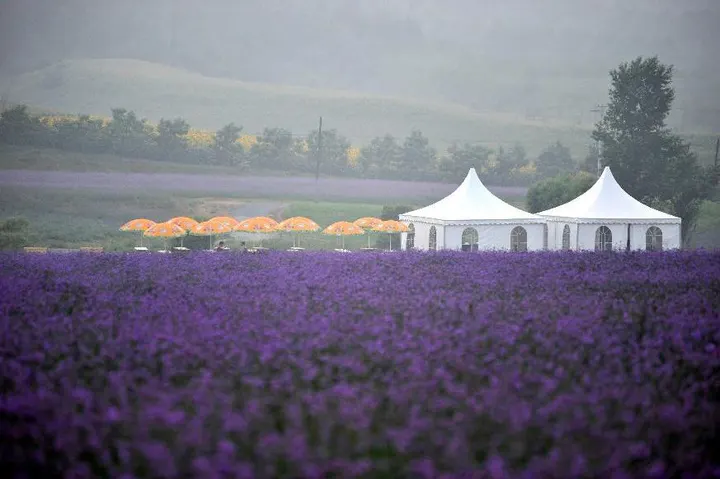
A lavender field north of the city: purple rows, two white peaked tents, low hills behind
Shenbei: lavender and the strange slope
You can also leave town without going far. Shenbei has a lavender farm that peaks from mid-June to mid-July, ¥60, small and photogenic — do not expect Provence. Next to it, the Strange Slope is a stretch of road where cars appear to roll uphill and stall downhill; the ticket is ¥60, raised from ¥40 in September 2025, and the explanation is a perceptual trick of the visual reference points, but watching a car creep uphill by itself is still entertaining. Families with children may prefer to spend the day at the Fangte theme park or the botanical garden instead.
15Watch and read before you go
Film
Lucky Ears (2008, Zhang Meng): Fan Wei plays a retired railway worker who spends his first day of freedom walking the city looking for something to do. It was shot in Shenyang — the bicycles, the disused workshops, the bathhouse, the street stalls — and it catches the mid-2000s city exactly. Watch it first and you will recognise corners. The Piano in a Factory (2010, same director): laid-off workers build a piano out of factory scrap for one man's daughter, blackly funny, with the snow and the workshop floor as its real leads.
Books
Shuang Xuetao's Moses on the Plain is the direct route in: a writer from Tiexi, a cold case from the layoff years, taxis, old blocks, snow, and a tone that never warms up. Banyu's Winter Swimming covers the same ground in short stories — workers' estates, short sentences, feeling kept under the floor. For non-fiction, the Liaoning archive's chronicle of Fengtian stacks events year by year and is more useful than any general history.
Music
Na Ying is from Shenyang, and her 1998 album Conquest sold more than two million copies across the Chinese-speaking world; the straight, unhedged way she sings is a northeastern habit. Ai Jing was born on Yanfen Street here, and her 1992 song My 1997 is one of the starting points of mainland folk — it is about leaving and coming back, which is both the opposite of this city's temperament and its complement.