Nine World Heritage gardensFree canal lanes30 minutes from ShanghaiHairy crab in autumn
In short
Suzhou (苏州, Sūzhōu) is the canal city half an hour from Shanghai: nine of its classical gardens are World Heritage, Pingjiang Road and Shantang Street cost nothing to walk, and water towns begin thirty minutes out of town. Two days covers gardens and lanes, three adds Tiger Hill and the Suzhou Museum, four earns you a night in a water town. Spring and autumn are best — azaleas in April, osmanthus in October, ginkgo and hairy crab in November. A mid-range trip runs about ¥1,400–2,600 for 3–5 days, excluding long-distance transport.
Spring (Mar–May) and autumn (Sep–Nov); azaleas in April, osmanthus in October, ginkgo and hairy crab in November
01What kind of city Suzhou is
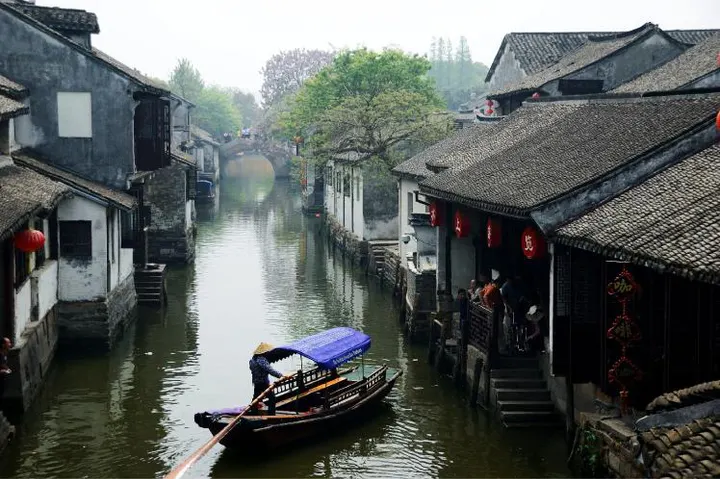
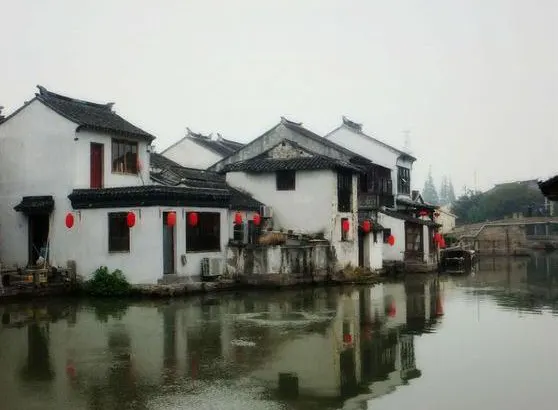
Old Suzhou is a net woven out of water. A rectangular moat, six gates, canals running north to south and east to west, houses built with their backs to the water and a stone bridge at the end of every lane. In 2,500 years the city has never moved and the street plan has barely changed: the alley you are standing in was already drawn on the Song dynasty stone map of the city, the Pingjiang Tu.
The city is famous for two things, and both are about proportion. One is the garden: a few mu of ground in which rock, water, trees, corridors and windows are arranged so that every turn produces a new scene. The other is the day itself — a bowl of noodles, a pot of tea, a passage of pingtan, taken slowly. Suzhou does not do spectacle. It does detail, which means it rewards time rather than a checklist.
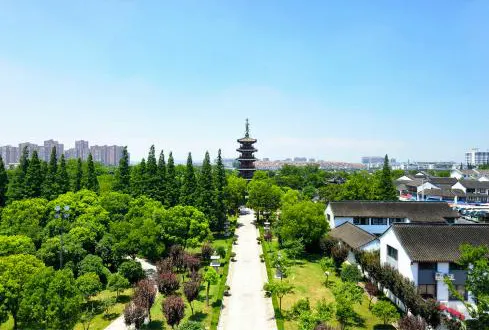
A path through a temple yard, the pagoda closing the view
Come to Gusu and you will see: every house lies down with the river. Little spare ground where the old palace stood, many small bridges over many small canals.
Du Xunhe, 'Seeing a Friend Off to Wu', Tang dynasty
For a visitor the hard part is not what to see but what to leave out. See three World Heritage gardens in one day and by the third you will registering nothing but another pavilion, another rockery. A better rhythm is two gardens a day with a lane walk in between, half a day for Tiger Hill or the museum, and — if you have one more day — a night out in a water town, so you can walk it after the day-trippers leave.
02Six things worth doing
These six cover the six faces of the city: a garden, a lane, a song, a hill, a table, a craft. With time for only three, take the garden, the lane and the table.
Learning to read a garden at the Humble Administrator's GardenThe mother of gardens
Fifty-two thousand square meters, the largest garden in the city. Its virtue is not size but the way one pond divides the world into three: the central section is built around water, with halls, pavilions and open rooms set on all four sides, so that you walk the rim and the view rearranges itself. Treat it as your first lesson in how a Suzhou garden works.
An afternoon on Pingjiang RoadThe street that still looks like Suzhou
A street and a canal running side by side for 1.6 km, a dozen stone bridges across it, and side lanes to the east that still keep the original water-lane shape. Look at doorways and river steps by day; by evening sit on the bank with tea and a little pingtan. It is the best free afternoon in the city.
Hearing a set of pingtanSoftness without armour
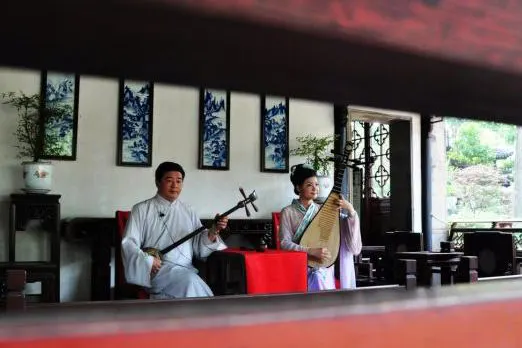
One player on the pipa, one on the sanxian, telling a story and singing snatches of it in Wu dialect that sounds like water. You do not need the words. The rhythm, the sunflower seeds being cracked in the audience, the click of tea lids — that is Suzhou too.
The leaning pagoda at Tiger HillWu's first scenic spot
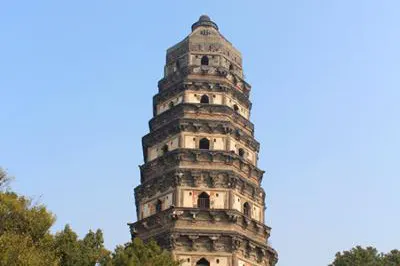
A hill only 36 m high that manages to hold a pagoda, a sword pool, a slab of rock big enough for a thousand people and a bonsai garden. The Yunyan Pagoda on top went up at the end of the Five Dynasties, a brick core under wooden eaves, and it leans unmistakably to the northwest — two centuries before the tower at Pisa started to do the same.
A table of Suzhou cookingSweet, and it makes sense
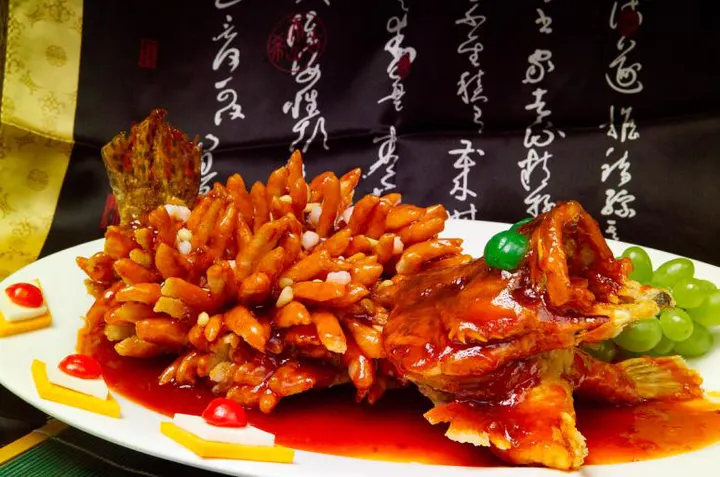
Suzhou cooking is built on seasonality and heat control; it leans sweet without turning cloying. The squirrel-shaped mandarin fish arrives with boiling sauce poured over it and gives off an audible hiss — the signature of the dish is not the flavour but that sound.
Watching Su embroidery being stitchedOne thread split dozens of ways
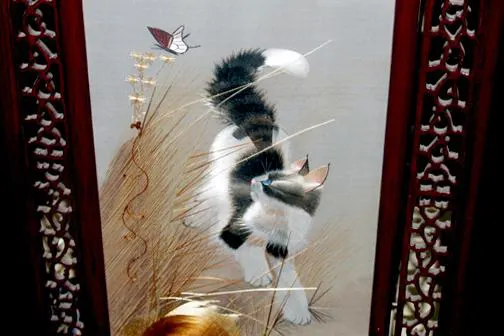
The craft lies in splitting silk: one strand can be divided dozens of times until it is nearly invisible. Double-sided pieces carry different images on each face with every knot hidden, and it takes a long look through the glass before you understand what the difficulty actually is.
03Seven questions people ask before booking
Suzhou Railway Station or Suzhou North — which ticket should I buy?
Buy Suzhou Railway Station almost every time. It sits in Gusu district on the north edge of the old town, 3.5 km from the Humble Administrator's Garden: Metro L2 to L6 takes about 20 minutes for ¥3, a taxi 10–15 minutes for ¥15–20. Suzhou North is the Beijing–Shanghai high-speed halt out in Xiangcheng, 12–15 km from the walls; from there it is nine stops on L2 to Suzhou Railway Station, a change to L4, and roughly 50 minutes in total, or ¥40–60 by taxi. Coming from Beijing or Jinan you may have no choice but North — accept it and allow 40 extra minutes. Check whether your ticket says Suzhou or Suzhou North; they are not the same place.
Do I have to book garden tickets in advance?
Yes. Every city-run garden uses real-name timed entry — the Humble Administrator's, Lion Grove, Lingering, Master of the Nets, Tiger Hill alike — with slots released seven days ahead at midnight and entry by passport or ID. Weekends, holidays and the April–May, July–October peak fill days in advance. Ignore anyone on Dongbei Street offering to skip the queue: the official mini-programs, Jundao Suzhou and Suzhou Garden Tourism, are the only channels, and both accept passport details. Off-peak weekday slots sometimes survive into the same morning, but do not build a trip on that hope.
Can I see Suzhou in a day, or do it as a day trip from Shanghai?
A day trip works: Shanghai Hongqiao to Suzhou takes as little as 20 minutes for ¥30–45, more than a hundred trains a day, so you can leave when you like. But one day buys exactly one garden and one lane — say the Humble Administrator's in the morning, Pingjiang Road at noon, the Suzhou Museum after — and it will feel like a survey. Staying a night changes the trip: a garden at 07:30 and a canal at 21:00 are not available to day-trippers. If a day is all you have, take an early train, put the garden first through the gate, and come back on a late one.
Humble Administrator's or Lingering — if I can only pick one?
Take the Humble Administrator's first. It is the biggest and the most complete, a single pond organising three groups of buildings, and it teaches the idea of water as the centre of a garden — after it, every other garden has a reference point. The Lingering Garden is for a second visit: its strength is architecture and sequence, a 700 m covered walk that strings halls, courtyards and light wells together so that each step reframes the view, with the great Taihu stone Guan Yun Feng at the end. If you see both, give each half a day rather than cramming them together.
Pingjiang Road or Shantang Street?
Both are free and they feel different. Pingjiang Road is the more intact and the quieter of the two, a street and canal running parallel with original water lanes off to the east — good for a slow daytime walk and an afternoon of tea. Shantang Street is the seven-li lane that Bai Juyi had cut in the ninth century: more commercial, and at its best after dark when the lanterns come on. With time, do both — Pingjiang in the afternoon, Shantang at night. With one, choose Pingjiang for quiet and Shantang for the lit-up canal.
Which month is Suzhou at its best?
April and October. In mid-to-late April the azalea show fills the Humble Administrator's Garden and the wisteria hangs at the same time, which is when the gardens are at their most colourful; October brings dry air and osmanthus everywhere, the best walking weather of the year. November is ginkgo and maple season on Tianping Hill and the peak of hairy crab — the Yangcheng Lake season opened on 28 September 2026, with the best eating from mid-October to mid-December. Summer is humid and winter is damp and cold, but winter is also the emptiest, and the gardens are never quieter.
What do I do in Suzhou when it rains?
Rain improves the city. The gardens were designed for it: water off the eaves, ripples on the pond, and covered walks that connect the whole garden into a route you can take without wet feet. Bring shoes with grip, walk the corridors at the Humble Administrator's or the Lingering Garden, then spend two hours in the Suzhou Museum — indoors, free, booked ahead. For something more local, find a pingtan teahouse or settle in with Biluochun for an afternoon. Skip Tiger Hill in heavy rain; the stone steps get slippery.
04One, two or four days
Suzhou's sights cluster. The Humble Administrator's Garden, Lion Grove, the Suzhou Museum and Pingjiang Road all sit within walking distance of each other in the northeast quarter — a golden triangle. Get that day right and everything else is an extension: Tiger Hill and the Lingering Garden to the west, the Master of the Nets and Canglang Pavilion to the south, Jinji Lake to the east.
D1
The old town core. Be at the Humble Administrator's Garden for the 07:30 opening — first through the gate means still water and clean reflections — and give it two hours for the east, central and west sections. Walk ten minutes to Lion Grove and spend an hour in the rockery maze, then eat noodles on Dongbei Street. The Suzhou Museum in the afternoon on a slot booked seven days earlier; leave through the Zhong Wang Mansion exit and walk fifteen minutes to Pingjiang Road, where you should find a canal-side teahouse and stay until dark. Dinner back at Guanqian Street.
D2
The western line. The Lingering Garden in the morning, watching how the covered walk threads one courtyard into the next, and the Taihu stone Guan Yun Feng; lunch on Liuyuan Road or Shantang Street. Tiger Hill in the afternoon, entering at the south gate and leaving by the north — pagoda, sword pool, the thousand-man rock — about three hours. That lands you at Shantang Street by dusk: walk the canal from Tiger Hill or take a rowing boat down to Changmen, and eat by the water as the lanterns come on.
D3
The southern line and a night garden. The Master of the Nets in the morning — barely half a hectare, so take it slowly and look at the windows, each one framing a small picture — then Canglang Pavilion nearby, the oldest surviving garden in the city, whose trick is the strip of water outside its wall. Afternoon on Shiquan Street and Guanqian Street for shopping. Return to the Master of the Nets in the evening for the night garden (mid-March to mid-November), when Kunqu, pingtan and guqin take turns in the pavilions over the water: eight short pieces on one ticket.
D4
Out of town for a night. Take a morning bus or train to Tongli or Zhouzhuang and hide from the crowds in the gardens and teahouses — the Retreat and Reflection Garden at Tongli, the Shen and Zhang halls at Zhouzhuang. Come out again at dusk when the coaches leave, and watch mist rise off the canal as the lanterns go on. Set an alarm for before seven the next morning: an empty water lane at that hour is the best half hour of the trip. Then back to Suzhou, or straight on to Shanghai.
With a single day, cut D1 down to two things — the garden and Pingjiang Road — with a bowl of noodles between them, and resist adding a third. With children, the Lion Grove maze and the museum courtyard beat Tiger Hill.
05Gardens, a pagoda, a museum and two streets
Nine Suzhou gardens hold World Heritage status: the Humble Administrator's, the Lingering, the Master of the Nets and the Mountain Villa with Embracing Beauty in 1997; Canglang Pavilion, Lion Grove, the Garden of Cultivation, the Couple's Retreat Garden and the Retreat and Reflection Garden in 2000. They speak one language, but each has its own strength. Five minutes spent learning four terms will change how much you see.
Four things to look for: borrowed scenery, framed scenery, Taihu stone, and the moving view
Borrowed scenery means pulling something outside the wall into the garden as if it were yours. Stand west of the Hall of Distant Fragrance in the Humble Administrator's central section and look northwest: the North Temple Pagoda sits exactly on the top of the wall, hundreds of metres away yet apparently inside the garden. From the earth mound in the Lingering Garden's western section you see fields and a canal beyond the boundary. None of this is accident; the sightlines were calculated when the garden was laid out.
Framed scenery uses a door, a window or the posts of a corridor as a picture frame, cropping the distance into a composition. Suzhou's lattice windows come in hundreds of patterns, and walking a corridor cuts the view into a series of separate pictures. The pavilion Yue Dao Feng Lai in the Master of the Nets has windows on four sides and four different subjects: rock, water, bamboo, sky. When you pass a window, stop. Do not walk on.
Taihu stone is limestone worn by water over centuries into a shape full of holes, described in Chinese as thin, wrinkled, perforated and translucent — a mountain in miniature for scholars to own. The Guan Yun Feng in the Lingering Garden stands 6.5 m, the tallest single Taihu stone in the region; the Lion Grove piles them into a three-dimensional maze of nine routes and twenty-one openings. Do not just look at the outline. Look at how the stone divides light from shadow.
The moving view means the scene changes with each step. The Lingering Garden demonstrates it best: a 700 m covered walk strings together halls, light wells, courtyards and rockeries so that every doorway shifts the light, the width and the distance, and you keep having the sense of having just left somewhere else. This is why gardens cannot be ticked off. They can only be walked slowly.
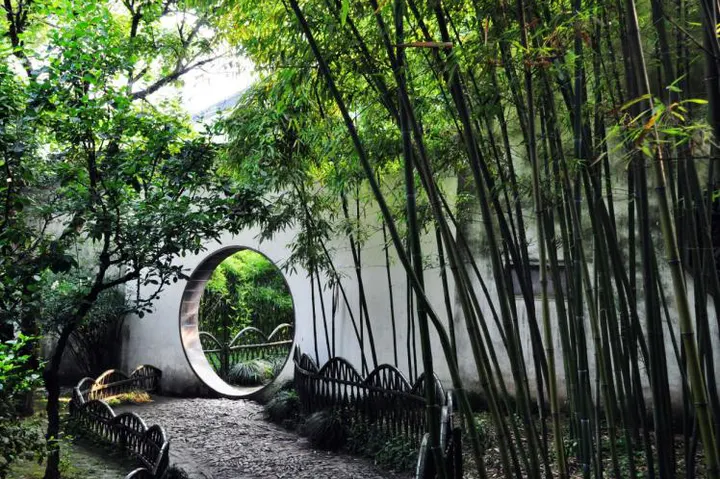
A moon gate turning a courtyard of bamboo into a picture
The Humble Administrator's Garden
Around 1509 the censor Wang Xianchen retired, came home and built this garden, naming it from a line by the Jin poet Pan Yue about 'the clumsy man's politics' — roughly, gardening is all a dull official is good for. It is self-deprecation. The 52,000 sq m split into east, central and west: the east is open lawn and earth mounds; the centre is the heart of the garden, a pond taking a third of the space with the Hall of Distant Fragrance, the Little Flying Rainbow bridge, the Fragrant Isle and the Mountain-viewing Tower arranged around it; the west holds the Thirty-Six Mandarin Ducks Hall and the Eighteen Camellia Hall, whose windows still carry Qing dynasty coloured glass that turns the light blue-green.
Practical: ¥80 in peak months (April, May, July–October), ¥70 off-peak (January–March, June, November–December); open 07:30–17:30 with last entry at 17:00; real-name timed booking, slots released at midnight seven days ahead. From mid-June into early October the gate sometimes opens at 06:45 — worth checking the day's notice if you want the first hour. The evening show, Zhuozheng Wenya, is ticketed separately, 18:30–21:00, about ¥198 midweek and ¥228 at weekends and on holidays.
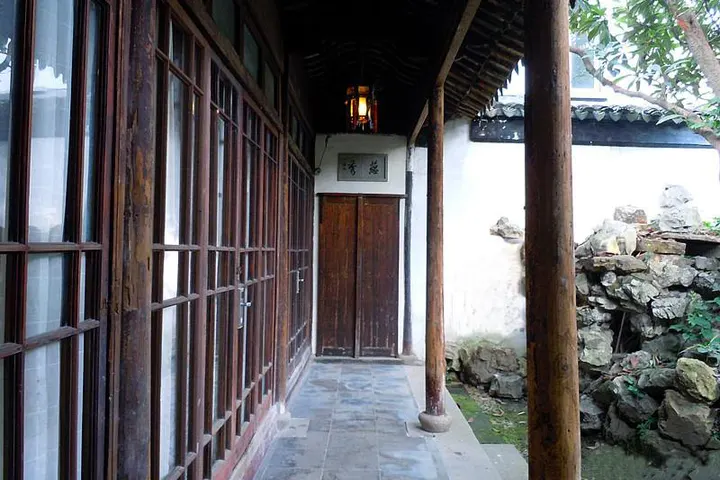
A covered walk linking halls, light wells and courtyards into one dry route
The Lingering Garden
The Lingering Garden is counted with the Humble Administrator's, the Summer Palace in Beijing and the Chengde mountain resort among China's four great gardens, but its temperament is the opposite of the Humble Administrator's: where that one spreads out, this one closes in. The entrance is deliberately narrow and a zigzag corridor squeezes you tighter and tighter before suddenly opening into a large court — the classic manoeuvre, compress first, then release. The centre is landscape, the east is architecture, the north is a bonsai garden.
¥55 in peak months and ¥45 off-peak, open 07:30–17:30 with last entry at 17:00. Look for three things: Guan Yun Feng, the tallest single Taihu stone in the region, standing thin and upright with two smaller stones flanking it like attendants; the nanmu hall, its beams and columns all in nanmu wood; and the corridor itself. After three in the afternoon the light comes in at an angle and the grain of the wood finally shows.
The Lion Grove Garden
Founded in 1342, the only garden in the city where the rockery is the star. The Taihu stones are piled into nine routes and twenty-one openings, and once inside you will get lost: the way out is visible ahead, and then it is a wall of stone. It is the best garden in Suzhou for children; for adults the pleasure is finding light through the gaps. ¥40 peak, ¥30 off-peak, an hour is enough, and the passages jam when it is busy.
The Master of the Nets Garden
Barely half a hectare, and the most refined of the city's medium-sized gardens — 'the ultimate small garden', people call it. The name refers to a fisherman, with the implication of withdrawal from office. Its subject is compactness: one pond, one ring of corridor, a handful of halls, all held in proportions so exact that no viewpoint feels cramped. The courtyard called Dian Chun Yi is the famous one; the Astor Court in New York's Metropolitan Museum is a copy of it.
Daytime ¥40 peak, ¥30 off-peak, 07:30–17:30. The night garden runs mid-March to mid-November: ¥100 covers the whole programme, gates at 18:25, performances from 19:30, and on Fridays, Saturdays and holidays it runs until 22:20. This is the only classical garden in Suzhou with a standing night programme, and the best ¥100 in town.
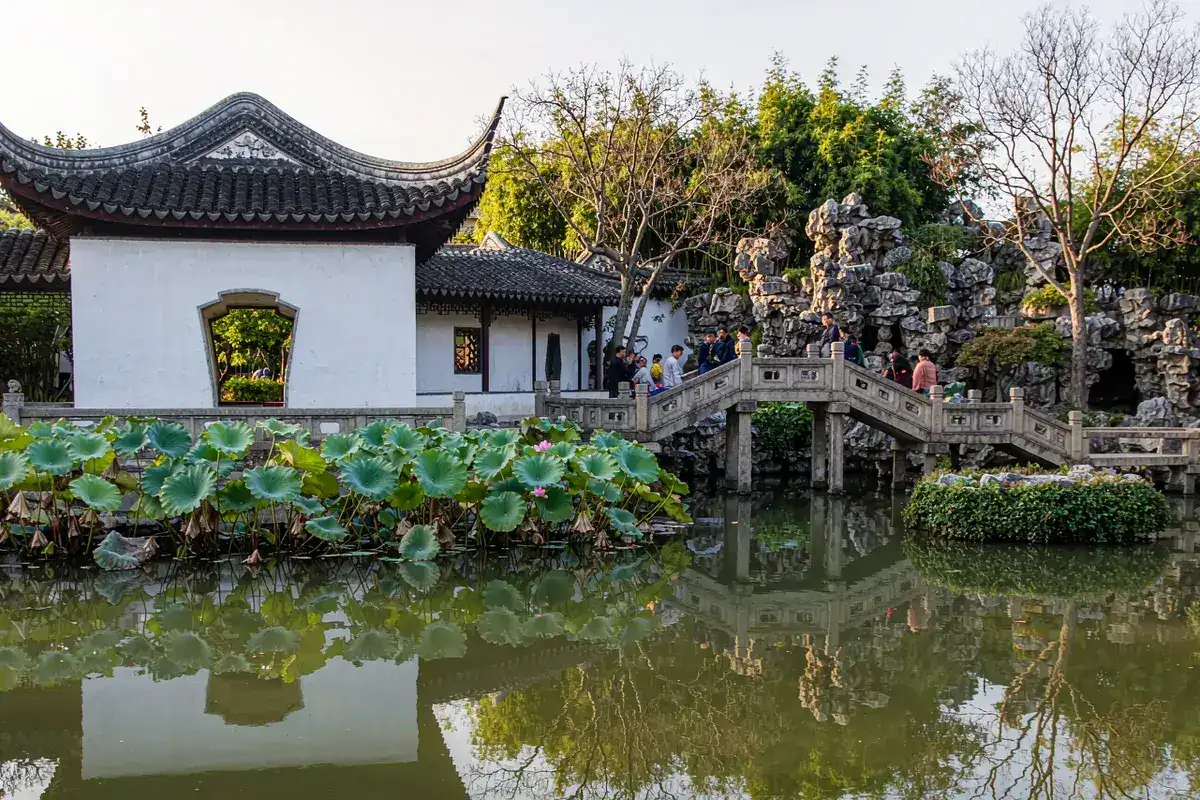
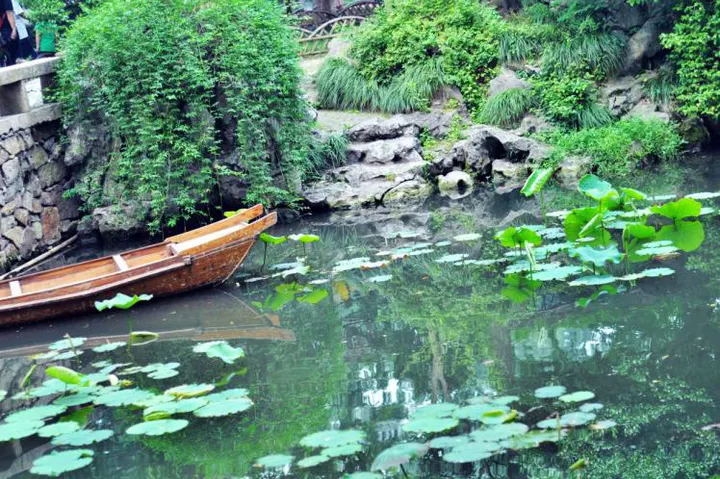
A summer lotus pond, leaves wide enough to cover half a boat
Tiger Hill
Legend says King Fuchai of Wu buried his father Helü here and three days later a white tiger crouched on the grave, hence the name. The hill is only 36 m high but dense with incident: a slab of tilted rock called the Thousand-People Stone, a narrow deep channel called the Sword Pool where Helü's blades are supposed to lie, and on the summit the Yunyan Pagoda, seven storeys of brick under wooden eaves built at the end of the Five Dynasties, leaning northwest — China's answer to Pisa. Su Shi wrote that to visit Suzhou without climbing Tiger Hill is a regret.
¥70 in peak months (April, May, July–October) and ¥60 off-peak. Open 07:30–18:00 from 1 April to 31 October with last entry at 17:30, and 07:30–17:30 from November to March. Metro L6 Tiger Hill station, exit 1, is a five-minute walk from the south gate; the south gate takes the tour groups, so use the north gate on holidays. Allow three hours — do not photograph the pagoda and leave.
The Suzhou Museum
I. M. Pei's last big project for his ancestral city, opened in October 2006 on the site of the Zhong Wang Mansion beside the Humble Administrator's Garden, when he was 89. He translated Suzhou's white walls, grey tiles, water court and piled-stone rockery into geometry: a steel and glass skylight over the lobby, wooden louvres cutting the light into moving strips, and a courtyard wall where stone is set against whitewash like brushwork — his own description was 'painting with stone'. The collection runs to about 40,000 pieces, strong on the Wu School painters Shen Zhou, Wen Zhengming and Tang Yin.
Free, but the main building runs real-name timed entry: slots appear at 08:00 seven days ahead, opening 09:00–17:00 with last entry at 16:00, closed Mondays except public holidays. The west branch and the folk museum need no booking. Passports work; bring the original. Weekend slots in season are hard to get, so lock the museum the moment your dates are fixed.
Pingjiang Road
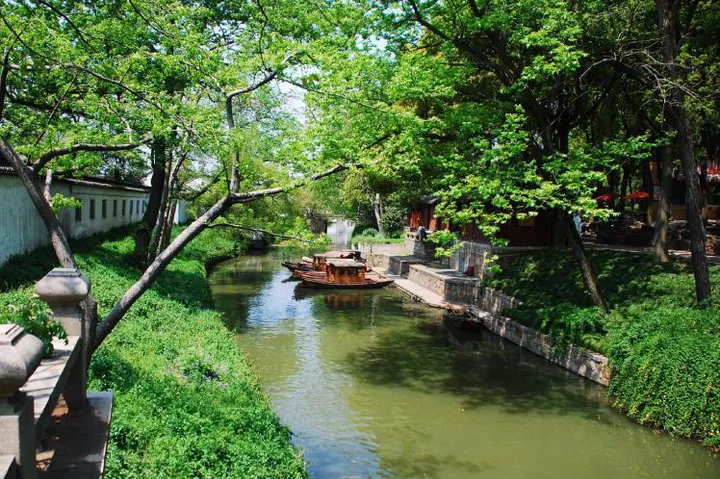
Street and canal side by side, a stone bridge every few dozen metres
The road is already on the Southern Song map of the city and has not changed direction in 800 years: one canal, one street, water to the west, a carriageway three or four metres wide, houses in white and black on both sides. The lanes off to the east — Xuanqiao, Daru, Zhongzhangjia — still hold intact stretches of water lane where you can see people washing vegetables at the step. Free and open all day. Weekends are crowded; before eight in the morning is best.
Shantang Street
Shantang after dark, lanterns strung all the way to the bridge arch
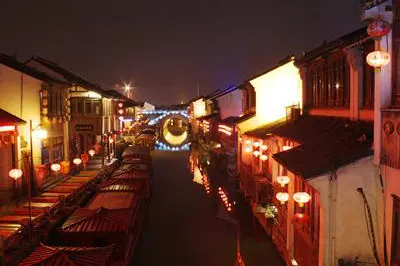
In 825, when Bai Juyi was prefect of Suzhou, he had the Shantang canal cut and the spoil piled into an embankment — that embankment is the street, seven li long, hence the name Seven-Li Shantang. It ran from Changmen gate to Tiger Hill and was the route pilgrims took to the hill's temples. Commerce dominates it now, but the night view is worth the trip: canal houses, lanterns, arch bridges, rowing boats — every ingredient of a Jiangnan night in one street. Free; go after the lamps come on.
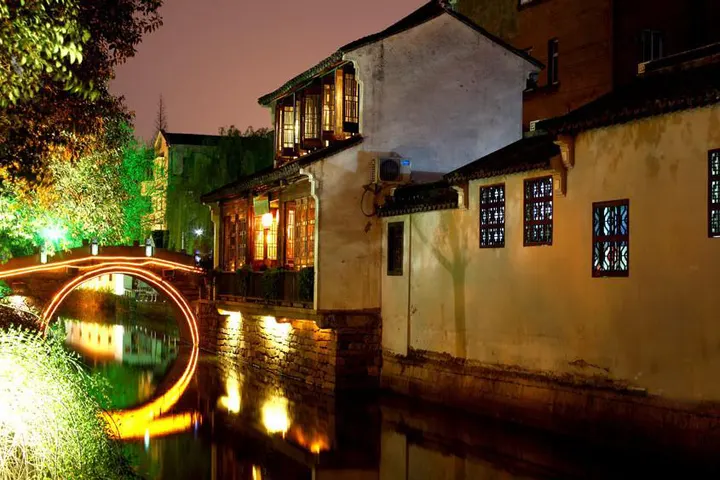
The water lane after nine, lit windows and your own footsteps
06A night of theatre, a season of flowers
Suzhou's events are not festivals and markets. They are theatre staged inside gardens, garden gates opened for a particular bloom, and lights on a lake. All of them are tied to dates, so check before you go.
The night garden at the Master of the Nets (mid-March to mid-November)
The only classical garden in Suzhou with a standing night programme, and the best-value ticket in the city: ¥100 for Kunqu, pingtan, guqin, flute, Jiangnan string music and dance spread across the pavilions, with the audience moving from one to the next on a printed running order. Forty-five to sixty minutes of material, played on a loop. Gates 18:25, performances from 19:30, and until 22:20 on Fridays, Saturdays and holidays. Rain moves some items under the corridors. Weekend tickets need grabbing seven days ahead on the official garden booking channel.
Kunqu opera
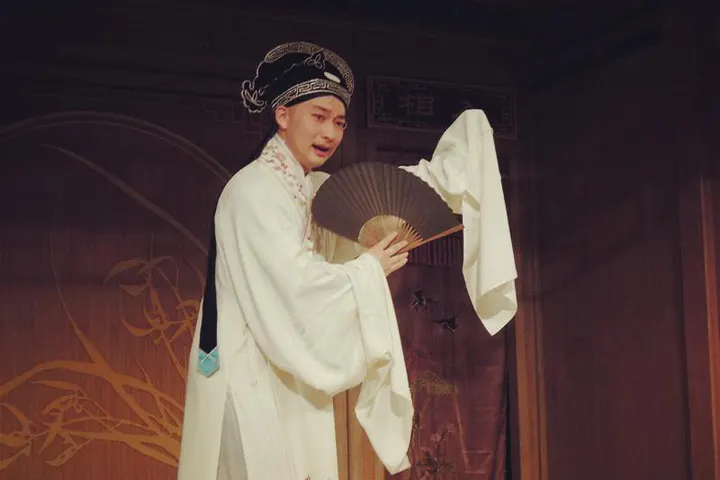
A sleeve and a folding fan — half a scene in one turn
Kunqu grew up around Kunshan and is called the ancestor of Chinese opera; UNESCO listed it among the first Masterpieces of Oral and Intangible Heritage in 2001. Its hallmark is the 'water-polished' aria, in which a single syllable stretches and turns for a long time over one bamboo flute, quiet enough that you can hear yourself breathe. You need no preparation. One scene from The Peony Pavilion will do: a young woman walks into her own back garden, sees spring, and is suddenly sad. The Kunqu theatre on Shantang Street plays excerpts daily, and the Kunqu museum in Zhongzhangjia Lane off Pingjiang Road has performances too.
Pingtan storytelling
Pipa and sanxian, narration sliding straight into song
Pingtan covers two forms: pinghua, spoken only, and tanci, spoken and sung, usually with a pipa and a sanxian and a story that can run for months in Suzhou dialect. The teahouse where it is performed is the most alive room in the city — ¥30–80 for a seat, a pot of tea, a dish of seeds, and elderly locals who will stay all afternoon. You will not follow the words and there are few subtitles, but the cadence is the content. Rooms cluster around Pingjiang Road and Shantang Street; the afternoon set is easiest to walk into.
The azalea show at the Humble Administrator's Garden (mid-March to early May)
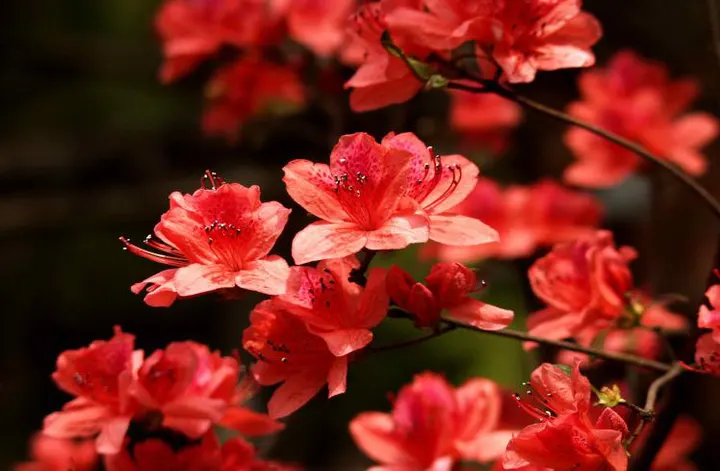
Azaleas in April, each clump redder than the last
Every spring the garden stages an azalea show, hundreds of varieties set out in courtyards and along the corridors against new leaves and fresh grass. Mid-to-late April is the peak, when the wisteria hangs too — including the vine attributed to the painter Wen Zhengming in the museum courtyard next door. It is also the busiest fortnight of the year, so book the earliest slot.
Lotus and osmanthus: the garden in summer, the city in autumn
The first lotus of June
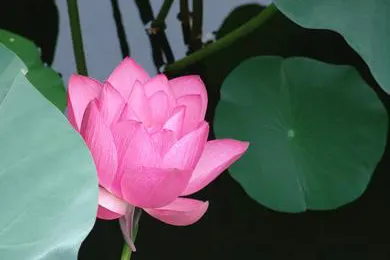
The garden runs a lotus season in July and August, when the central pond is solid with leaves; at opening time the flowers are just opening and the light is still soft. By October the lead has moved from the garden to the street: the osmanthus is the city tree, and the sweetness is everywhere, with old bushes in gardens, lanes and temple yards. November belongs to ginkgo — Daqian Street and Dinghui Temple Lane are the classic stretches — and to the maples on Tianping Hill.
Jinji Lake after dark
The Ferris wheel on the east shore, the last of the light
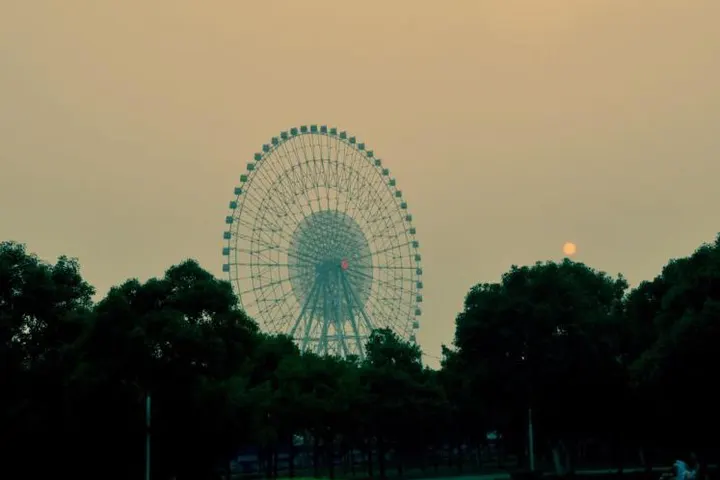
Ten kilometres east of the walls is another Suzhou: Jinji Lake ringed with glass, the Gate of the Orient joining two towers at the top into a single arch, and a free lakeside promenade. There is a light show on Friday and Saturday evenings, and the Ferris wheel on the east shore is the landmark you cannot miss. Coming here after a day of gardens explains how the city manages to be both a walled town and an industrial park. Metro L1, Gate of the Orient station, puts you at the water.
07Stay inside the walls
Rule one: stay inside the old town. The Guanqian Street, Pingjiang Road and Lindun Road area is best — the garden, the museum, Pingjiang Road and Guanqian all within a walk or one metro stop, and food still open at night. Rule two: do not book out at Mudu, by Tai Lake or on the east side of Jinji Lake unless your days are actually there, or you will spend forty minutes each way. Converted courtyard houses are the local speciality: small rooms, lovely yards, thin walls.
Hostels: several converted courtyard houses around Pingjiang Road and the mouth of Shantang Street, dorms ¥50–90 and doubles ¥160–260. You are paying for the location and the yard; the old walls carry sound.
Boutique guesthouses: old houses in Pingjiang Road, Daru Lane and Niujia Lane, doubles ¥350–700, most with a light well or small court and a breakfast of Suzhou noodles or congee. This is the sweet spot in town.
Chain hotels: dense around Guanqian Street, Lindun Road and the south square of the railway station, doubles ¥250–450, standardised rooms and proper soundproofing if the old houses worry you.
Top end: garden-style hotels inside the walls from ¥800, and international five-stars on Jinji Lake from ¥1,000 if you want a lake view or a business address.
A night in a water town: canal-side guesthouses in Zhouzhuang and Tongli run ¥200–400, and before seven the lane belongs to you. Ask whether the room is inside the ticketed area — inside, the room rate usually includes entry.
Booking notes: Qingming, the May Day holiday, National Day and the April flower season double prices inside the walls and sell out — book a month ahead. Friday and Saturday nights run about 30% above weekdays. Most courtyard guesthouses have no lift, so ask which floor before you haul a suitcase up.
08Sweet at the front, savoury at the end
Suzhou cooking is the most season-obsessed branch of Jiangsu cuisine: Indian aster and Biluochun shrimp in spring, pork steamed in lotus leaf and mung bean soup in summer, hairy crab and gorgon fruit in autumn, mutton soup and braised pork in winter. It is a sweet kitchen, but the sugar is there to lift savour rather than smother it — a properly made dish finishes clean. The first mouthful may confuse you; the third will explain it.
Squirrel-shaped mandarin fish, audible the moment the sauce goes on
Five dishes to order
Squirrel-shaped mandarin fish: boned, scored in a diamond pattern, fried until the outside crisps and the tail curls up, then doused in boiling sweet-sour sauce so that it hisses as it lands. The Qianlong emperor is said to have eaten it at Songhe Lou.
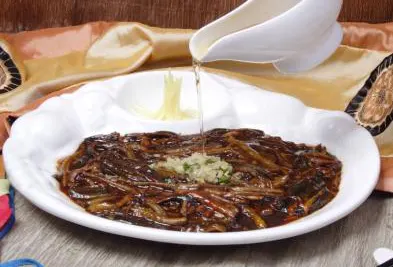
Sizzling eel: shredded eel stir-fried and brought to the table, where a ladle of smoking oil is poured over it — the 'sizzle' is the whole point. Dark, glossy and slippery, and the best test of a kitchen's heat control.
Biluochun shrimp: river shrimp stir-fried with tea from the Dongting hills, the perfume light and the texture springy. Properly made only in spring.
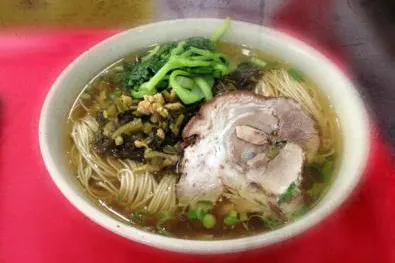
Fengzhen noodles: the broth is built from pork bone, eel bone, fermented rice and river snails, topped with pork belly that dissolves on contact. A summer bowl.
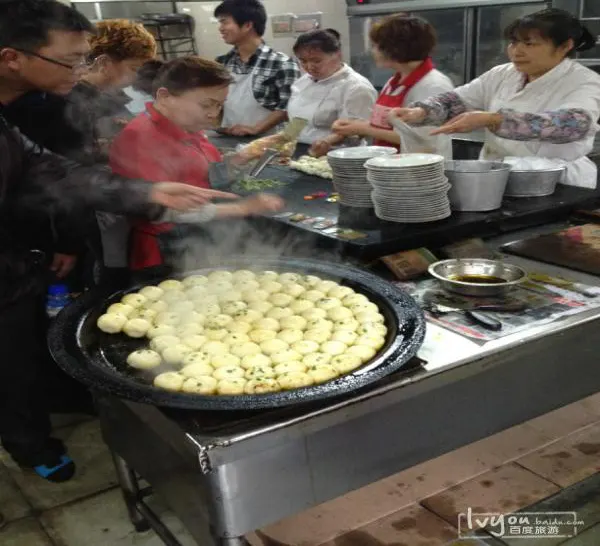
Shengjian and crab-shell cakes: small pork buns fried flat-side down until the base caramelises, and flaky sesame cakes in sweet and savoury versions. Breakfast of both plus a bowl of sweet red-bean congee costs about ¥15.
Sizzling eel, still audible
Noodles, breakfast and snacks
Suzhou eats noodles in the morning and prizes the first pot of water, when the broth is clearest. Toppings run past a hundred: braised pork, fried fish, shrimp, crab roe, mixed vegetables. You buy a ticket first at the counter, then hand it over at the pass, and you can ask for extra scallion, more soup, less soup or firmer noodles — the vocabulary is half the pleasure.
A pan of shengjian, bases down
Snacks cluster in Taijian Lane and Bifeng Lane off Guanqian Street, and along Shiquan Street, Phoenix Street and Shilu. The old confectioners Cai Zhi Zhai, Huang Tian Yuan and Dao Xiang Cun are all on Guanqian, so the sweets can be done in one pass. The sweet-congee stall is a matter of luck: an old man has sold bowls for years outside the north gate of the Pishi Street flower market for ¥4.
Where to eat
Songhe Lou (Taijian Lane, Guanqian Street): the Qianlong-era house, reliable on the fish and the eel, ¥120–180 pp. Touristy but consistent.
De Yue Lou (Taijian Lane): famous from the film Little De Yue Lou, strong on boat cuisine, about ¥120 pp.
Wumen Renjia (Panru Lane): Suzhou cooking in a proper old house, the eel and the plain-fried shrimp the ones to order, ¥80–100 pp, book ahead.
Tongdexing (Shiquan Street): one of the benchmarks for Suzhou noodles, good on the Fengzhen bowl and the braised pork, ¥40–60 pp.
Da A Er (Shantang Street): the shengjian shop locals queue for, crisp bases and plenty of juice, around ¥15 pp.
A bowl of Suzhou noodles, topping on the side
Hairy crab runs from late September into December: the Yangcheng Lake season opened on 28 September 2026, with the best eating from mid-October to mid-December. Locals hold to 'female in the ninth lunar month, male in the tenth' — roe first, then the male's paste. Ask about size and origin when you order: Yangcheng Lake crab is expensive, Tai Lake and Gucheng Lake crab much cheaper and not noticeably worse.
09Taking Suzhou home
What is worth buying in Suzhou is all slow work: an embroidered panel that took months, a length of Song brocade, a tin of spring Biluochun, a Taohuawu New Year print cut over half a year. Prices span from tens to tens of thousands, and the only real skill is knowing which tier you are being sold.
A Su embroidery cat, its eyes built from a dozen layers of silk
Su embroidery: one of China's four great schools, with double-sided work at the top. Small pieces — bookmarks, sachets, coasters — run ¥50–200, framed panels from ¥500, and genuine hand-worked double-sided pieces into the thousands. Check that the stitches lie flat and the reverse is clean; machine work shows a tangle of bobbin thread behind.
Song brocade and kesi: brocade in deep, quiet colours for bags, ties and notebook covers; kesi is woven with broken wefts and takes months for a small panel. Buy silk at the big shops on Guanqian Street or the silk museum shop rather than from a stall claiming 'pure silk'.
Biluochun: grown on the Dongting hills in Tai Lake, the leaves rolled tight like snails and the tin opening on a smell of fruit and flowers. Pre-Qingming tea runs into four figures per 500 g; a good pre-rain lot costs two or three hundred. To test it, pour 80°C water: the leaves should sink, the liquor stay clear, and the finish turn sweet without astringency.
Sweets from Cai Zhi Zhai and Huang Tian Yuan: pine-nut candy, date-paste sesame cakes, fermented-rice cakes, glutinous rice sweets. Both shops are on Guanqian Street, a box costs ¥20–60, and nothing travels better as a gift.
Taohuawu New Year prints: paired with Yangliuqing in the north as the two great folk print traditions, printed in layers and heavy on auspicious subjects. Originals run from several hundred to over a thousand; reprints cost tens. Buy in the Taohuawu area or at the art museum.
Where to shop
Guanqian Street is the old commercial centre and the densest concentration of heritage shops; Pingjiang Road is for design objects and small pieces at a small premium; Shiquan Street deals in jade, scrolls and Yixing teapots and rewards a good eye. The wedding-dress street near Tiger Hill is a different business altogether — the country's second-largest bridal production base, busiest in May and October, negotiable if you have patience. For serious silk, go to the silk museum or a department store; for serious embroidery, go out to Zhenhu, where it is actually made.
10Getting in, and getting around
By train: aim for Suzhou Railway Station
Suzhou has four main stations and a visitor needs to know two. Suzhou Railway Station sits in Gusu district on the north edge of the old town, with Metro L2 and L4 downstairs and the Humble Administrator's Garden 3.5 km away. Suzhou North, out in Xiangcheng, is the Beijing–Shanghai high-speed stop, 12–15 km from the walls, and takes the trains from Beijing, Jinan and Xuzhou. The other two — Suzhou Industrial Park for Jinji Lake and the Shanghai direction, Suzhou New District for the western hi-tech zone — rarely matter to travellers.
From Suzhou Railway Station into the old town: go downstairs to the metro, one stop on L2 to Pinghe Lu, change to L6, and exit 2 at Zhuozheng Yuan Su Bo puts you 300 m from the garden gate — 20 minutes for ¥3, and immune to traffic. A taxi is 10–15 minutes for ¥15–20, but the old town restricts cars at peak times and on holidays, so only worth it with luggage. From Suzhou North: nine stops on L2 to Suzhou Railway Station, one stop on L4 to Beisi Ta, then 800 m on foot — about 50 minutes; or 30–40 minutes and ¥40–60 by taxi.
From Shanghai: faster than many commutes
Shanghai Hongqiao to Suzhou takes as little as 20 minutes, usually 25–35, for ¥30–45 in second class (¥39–41 is typical), with more than a hundred departures a day — between six in the morning and eleven at night you can simply turn up. Shanghai and Shanghai South stations also serve the line. Trains on the Beijing–Shanghai route reach Suzhou North in 25–30 minutes for ¥37–40, but North costs you another half hour into town. Since the Shanghai–Suzhou–Huzhou line opened, Hongqiao or Shanghai South to Suzhou South takes about 26 minutes and is the better approach for Wujiang and Tongli. Buy on 12306 or at the machines; passports scan at the gates.
By air
Suzhou has no commercial airport. The nearest are Shanghai Hongqiao, about 100 km, and Wuxi Sunan Shuofang, about 30 km. Hongqiao's airport and railway station share one complex, so you can land, walk to a high-speed train and be in Suzhou in half an hour — the smoothest route in. From Pudong, a coach takes 2.5–3 hours, or take Metro L2 to Hongqiao and switch to rail. The city also runs an air terminal downtown where you can check in and drop bags early.
The metro: nine lines from ¥2
Nine lines, about 346 km and 275 stations, with fares from ¥2 for the first 6 km and a ¥7 ceiling across the network. Four matter to visitors: L1 runs east–west through Guanqian Street, the Gate of the Orient and Jinji Lake; L2 runs north–south between the two main stations; L4 goes south to Tongli; L6 reaches the garden-and-museum station and Pingjiang Road. Alipay and WeChat QR codes open the gates, and passport tickets work at the machines or the staffed window.
Buses, bikes and walking
Buses are a flat ¥2, and tourist routes 1 and 2 link Tiger Hill, the Lingering Garden, Shantang Street, the Humble Administrator's Garden and the museum in one line. Shared bikes are the most useful tool inside the walls: the lanes are narrow and two wheels beat four. Taxis start at ¥13. But remember that the old town is a walking district — fifteen minutes from the garden to Pingjiang Road, ten from Pingjiang to Guanqian — and half the taxi rides you are tempted to take are a short stroll.
Emergency: police 110, ambulance 120, fire 119. Tourism enquiries and complaints: 0512-12301, the Suzhou tourism hotline.
Booking channels: gardens and museums all use official mini-programs — Jundao Suzhou, Suzhou Garden Tourism, and the museum's own booking system — and all accept passport numbers. Third-party listings are mostly marked-up packages, not tickets.
Payment: malls, hotels, the metro and chain shops take QR payment, and Alipay's international version links to Visa and Mastercard. Old noodle shops, congee stalls and pingtan rooms may take only cash or a local QR, so carry ¥100–200.
Hospitals: the First Affiliated Hospital of Soochow University (899 Pinghai Road, 0512-6522 3637) and the Municipal Hospital main campus (26 Daoqian Street, 0512-6236 2000), both inside the old town with 24-hour emergency departments.
Language: English works at sights, on the metro and in hotels. Noodle shops, pingtan rooms and old stores in the lanes speak Suzhou dialect and Mandarin; point at the menu or use a translation app's camera mode.
12Booking order, kit and traps
Suzhou has one hard constraint: gardens and the museum all require bookings, and they release at different times. Fix your dates first, then chase the Suzhou Museum (seven days ahead at 08:00, the hardest ticket in town), then the Humble Administrator's Garden (seven days ahead at midnight), then the Master of the Nets night garden and Tiger Hill. Buy train tickets last — Shanghai to Suzhou never runs short.
Documents: carry your passport — gardens and museums scan the original. Keep a photo of the data page on your phone for booking forms.
Shoes: flagstones, pebbles, steps and rockery tunnels, 15,000 steps a day. Flat soles with grip are essential; heels are a disaster in the Lion Grove.
Seasonal kit: a light jacket and umbrella for March–May, when spring rain is constant; sun protection and repellent for June–August; a layer for the sharp September–November mornings; and in December–February, damp cold that a down jacket handles better than a coat.
Electronics: power bank, translation app, maps, Alipay or WeChat Pay, and 12306. Signal inside gardens is patchy — screenshot your booking codes.
Sense of time: gardens close at 17:00–17:30, Tiger Hill at 18:00, the museum at 17:00, Hanshan Temple at 17:30. Suzhou shuts early; do not schedule your last stop for late afternoon.
Four traps. First, the touts on Dongbei Street and outside the garden selling 'day tours', 'skip-the-line entry' or 'the real garden' — all fake, and there is no on-site priority channel of any kind. Second, 'free tea' on Pingjiang Road or Shantang Street usually ends in an expensive tin. Third, pedicabs and unlicensed cars at the station and sight gates quote low and change the price; use the metro or a ride-hailing app. Fourth, the 'six gardens in one day' coach tours mostly photograph gates from outside — buying your own tickets costs half as much.
13Water, retired officials and a city's taste
Geography and climate
Suzhou sits in the heart of the Yangtze delta: Shanghai to the east, Tai Lake to the west, the Yangtze to the north, flat ground and water everywhere. The climate is northern subtropical monsoon, four seasons with long summers and winters and short springs and autumns — January averages 2–3°C, July 28°C, and the plum rains run from mid-June into early July. Bring a jacket in early spring and late autumn; the cold here is a damp cold that gets into the bones.
2,500 years without moving
In 514 BC King Helü of Wu had Wu Zixu lay out a capital with eight water-and-land gates and canals threading the interior, and that plan is still legible. The name Suzhou dates from 589. By the twelfth century the city had reached its present size — six gates, fourteen east–west canals — by the fourteenth it was the country's leading silk producer, and by the sixteenth it held more than a hundred gardens and had picked up the labels 'garden city' and 'Venice of the East'.
Why the gardens are here
Most Suzhou gardens began as the private backyards of retired officials and scholars. In the Ming and Qing the city was rich and examination-obsessed; men came home from office, or out of it, and spent their money on rockeries, ponds, trees and rooms — a few mu in which to build a world to withdraw into. The point was never display but concealment: a high plain wall, a dark entrance that opens into light, the outside world shut out one layer at a time. Understand that and the narrow doors, the winding corridors and the deliberately hidden views all make sense.
Wu culture: silk, opera and craft
Suzhou was Gusu, the heart of Wu. Its crafts have always gone to the limit of fineness — embroidery, Song brocade, kesi tapestry, jade carving, fan making, Taohuawu prints — all slow work. It produced Kunqu, courtly to the point of refinement, and pingtan, familiar enough to belong in a lane. In the Ming and Qing the city was the country's cultural marketplace, thick with painters, playwrights and publishers, and the Wu School paintings in the museum are what is left of that heat.
14Half an hour out, a century back
Half a dozen water towns ring Suzhou, and the classic beginner's error is visiting all of them. They share white walls, dark tiles, arch bridges and rowing boats; by the second one you will feel you have been here before. Pick one, at most two, and stay the night.
A Zhouzhuang canal where the boats arrive before the people
Zhouzhuang (1–2 days)
The self-styled 'first water town of China': the earliest developed, the most complete, the most famous. Its emblem is the Twin Bridges, one arch crossing the other, made known by a painting by Chen Yifei. The Shen and Zhang halls are merchant mansions where you can see the old arrangement — sedan chairs in at the front, boats in under the house. The gate price is ¥100, but since July 2026 a flat 'one ticket, everything included' policy applies at 20% off: ¥80 at all times including holidays, valid for three consecutive days, and with an ID you can register for lifetime entry. Open 08:00–21:00. Direct buses from Suzhou North Bus Station take about an hour.
Canal houses at Tongli, water directly under the window
Tongli (1 day)
Quieter than Zhouzhuang and more lived-in, with forty-odd bridges and a protected core that is seven-tenths Ming and Qing building. Its centrepiece is the Retreat and Reflection Garden, built by the dismissed official Ren Lansheng in the late Qing, laid so close to the water that the pavilions seem to float — hence its nickname, the garden on the water — and listed by UNESCO in 2000. Gate price ¥100, about ¥80 online, valid two days; the garden's night opening is a further ¥50. Metro L4 terminates at Tongli, roughly 40 minutes from Suzhou Railway Station.
Mudu, Luzhi and beyond
Mudu, west of the city on Metro L1, is the one place that combines gardens with a water town: the Yan Family Garden, the Hongyin Villa that once lodged the Qianlong emperor, and two more courtyards on a ¥60–66 combined ticket, with the streets free. Luzhi, east, has the highest density of old bridges in the region and a Tang dynasty clay relief in the Baosheng Temple — ¥45 combined. Further out: Wuxi, 20 minutes by rail, for Yuantouzhu and the Lingshan Buddha; Changshu, 40 minutes, for Mount Yu and Shang Lake; or simply back to Shanghai.
15Watch and read before you go
Film
"The Three Smiles" (1964, dir. Li Pingqian): Tang Bohu meets Qiuxiang at the Yunyan Pagoda on Tiger Hill and follows her to the Hua mansion — the wittiest version of the folk tale. Watch it not for the plot but for the Technicolor Suzhou of the sixties: lake light, gardens, pingtan tunes, and Chen Sisi's three smiles.
Books
Jin Xuezhi, "Suzhou Gardens": takes borrowed scenery, opposed scenery, rockery and water design apart one by one with plans and diagrams; read it before you walk and your eyes change. Wang Jiaju, "Three Lives of Grass and Flowers, Dreaming of Suzhou": essays by a local writer, clean prose about lanes, bridges, old shops and old people — two pages at a time in a Pingjiang Road teahouse.
Music and opera
Kunqu's "The Peony Pavilion": Tang Xianzu's play of Du Liniang walking in the garden, dreaming, and returning from the dead — the most famous spring dream in Chinese theatre. You do not need the full cycle; the two scenes 'Wandering the Garden' and 'The Interrupted Dream' run forty minutes and are enough to get in. For pingtan, start with Jiang Yuequan's "Jade Dragonfly" — ten minutes of the best-sounding Suzhou dialect you will hear.