A river through the middle, a city of villas, breakfast worth planning around
Half an hour from BeijingVillas of nine concessionsCrosstalk in a teahouseThe river after darkA breakfast city
In short
Tianjin (天津, Tiānjīn) is the port city at the north-east corner of the North China Plain, where the Haihe River cuts diagonally through the centre and nine foreign concessions left behind streets of villas — and where the locals talk as if they are already on stage. Two days covers the Five Great Avenues, the Italian Style Town, the Porcelain House and the river at night; a third adds Ancient Culture Street, the Jingyuan Garden and an evening of crosstalk. April–May and September–October are the best months, and a mid-range trip runs about ¥1,400–2,400 for three days excluding long-distance transport.
Key facts
Known for
Haihe River · Five Great Avenues · Italian Style Town · Porcelain House · crosstalk
Budget
¥1,400–2,400 for three days, mid-range
Days needed
2–3 days
Comfort
Comfortable
Best time to go
April–May and September–October; July–August is hot and humid; November brings ginkgo; January is dry and cold, with ice on the river
01What kind of city Tianjin is
Tianjin is a city you meet before you understand. The first impression is shabbiness: grey blocks facing the station, wind in the streets, voices that rise and then drop away at the end of a sentence. Two days in, the shabbiness turns out to have layers. The bank facades along the Haihe are 1920s, the villas of the Five Great Avenues are 1930s, the red roofs of the Italian Style Town went up after 1902 to Italian drawings — and the breakfast stall on the corner is younger than all of them and busier than any.
It sits 120 km from Beijing, half an hour by high-speed train, which is why so many people treat it as a day trip. That is a mistake. Everything good here is slow: queueing for jianbing at seven in the morning, walking Munnan Road before the tour groups arrive, sitting under the arcade at the Jingyuan Garden in the afternoon, then two and a half hours of crosstalk in a teahouse and a walk home along the river. None of that fits into eight hours.
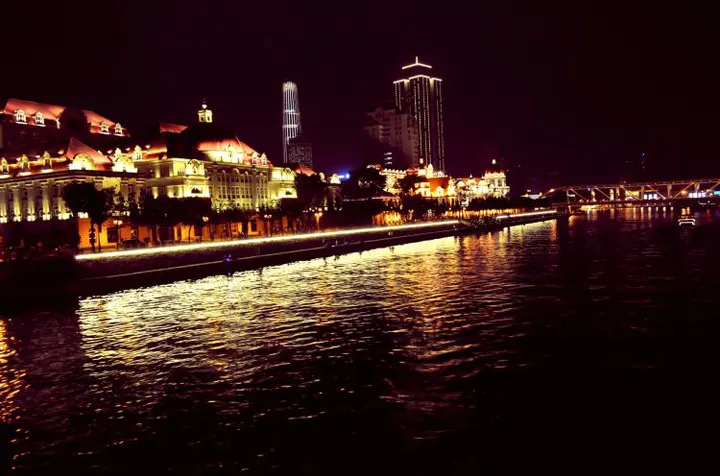
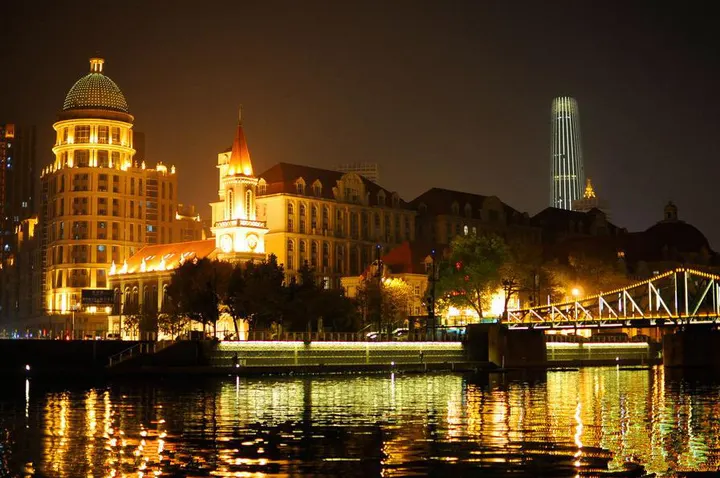
The Haihe after dark, the far bank lit all the way to the bridge
The geography is easy to hold in your head. The Haihe runs diagonally from north-west to south-east and splits the city in two; the tightest bend of it — from the three-river confluence down to Daguangming Bridge — holds the Tianjin Eye, Ancient Culture Street, the Italian Style Town, Century Clock Square, Jiefang Road and Jinwan Plaza, all walkable in a day. The Five Great Avenues sit south-west of the river as a separate district and deserve half a day of their own. Binhai New Area is 50 km south-east and effectively another city; do not fold it into a downtown itinerary.
Walk the Haihe and you pass bridge after bridge, each with its own shape. They stand alone, and yet they seem to have agreed among themselves to cut the river into chapters.
"Tianjin," the source guide
An honest word for first-timers: Tianjin has no single sight you must see. Its weight is in whole districts, in breakfast, in the way people talk. So do not over-schedule; leave the hours to walking and eating. Stay between the river and Binjiang Road and everything is close. Two days is thin, three is right, and a fourth lets you add Ji County or Binhai.
02Six things genuinely worth your time
Ride the Tianjin Eye at duskThe only wheel built on a bridge
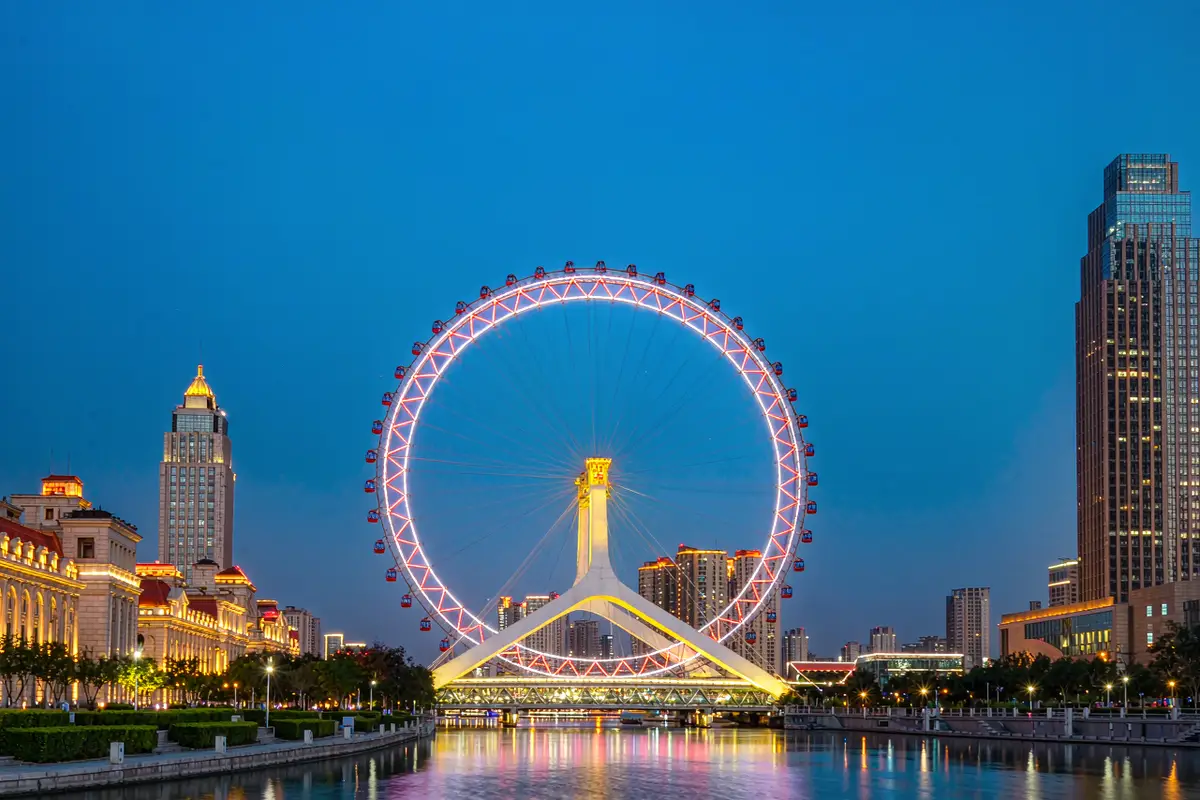
A 110 m wheel with 48 glass cabins, hung on the Yongle Bridge, one revolution every 28 minutes, about 120 m up at the top. Board half an hour before sunset and you get daylight on the way up, the lights coming on at the apex, and a river of light by the time you step out. You can also skip the ticket entirely: the west-bank promenade and Jinfang Bridge are the best places to photograph it, and both are free.
Tickets:¥90 daytime, ¥138 at night, since 20 April 2026
Hours:09:30–22:00; nights are busy, book a timed slot online
Walk the Five Great AvenuesTwo thousand villas, and a carriage is not the way
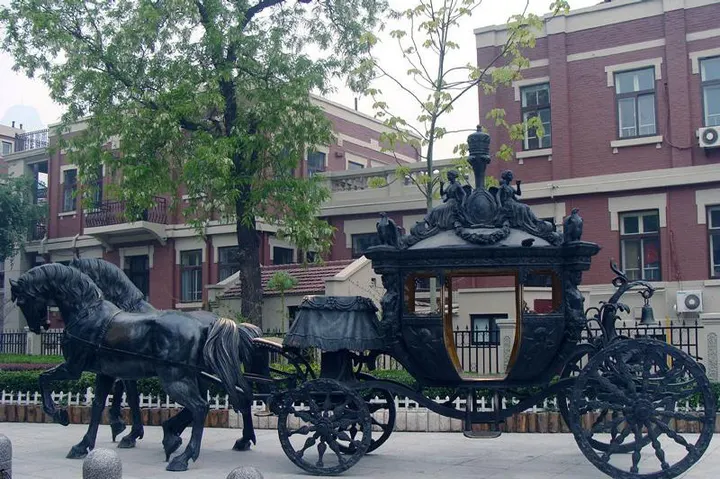
Five east–west streets — Machang, Munnan, Dali, Changde, Chongqing — plus a dozen cross lanes, built from the 1900s onward, with Renaissance, Greek, Gothic and eclectic facades on the same block. The carriage costs ¥80 a head for twenty-odd minutes and suits anyone travelling with children or grandparents, but the real pleasure is in the porches, the brickwork and the vines. Walk Munnan Road for the densest run of former residences, and Dali Road for crab-apple blossom in April and plane leaves in November.
Cost:Streets free; carriage ¥80; sightseeing bus 7 ¥50
Best time:07:00–09:00 or after 16:30; midday is hard light and crowds
The Italian Style Town, off the squareThe most complete Italian quarter in Asia
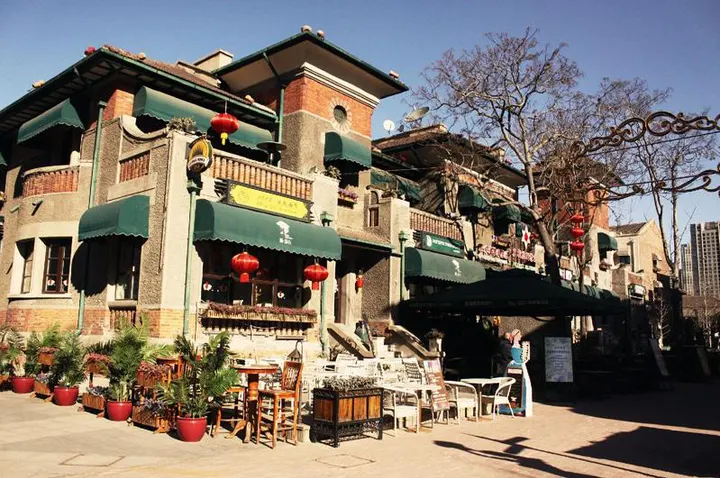
Laid out as the Italian concession in 1902: 28 hectares, 137 buildings, centred on Marco Polo Square. The square is ringed with restaurants and is at its worst at noon. Two streets back, along Guangfu and Minzhu roads, the red roofs, iron balconies and quiet plane trees return. Liang Qichao's Ice-Drinker's Studio is on Minzu Road for ¥10 — better value than any coffee on the square.
Admission:Streets free; Liang Qichao Memorial ¥10
Getting there:10 minutes on foot from Tianjin Railway Station
The Porcelain House: outside or inA French villa under seven hundred million shards
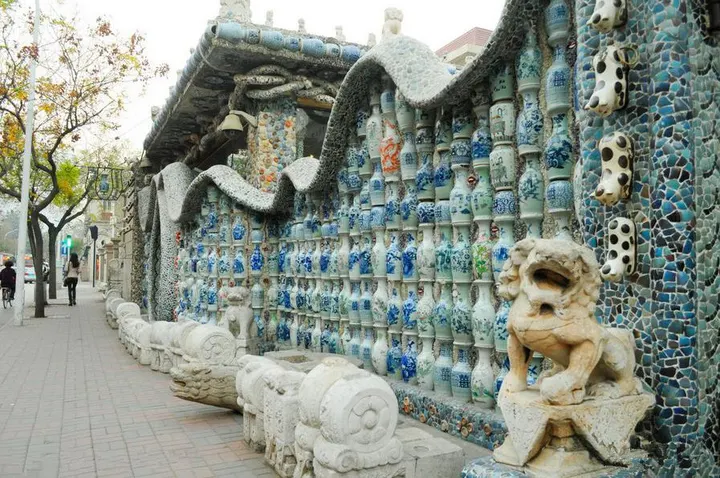
A 1920s French villa on Chifeng Road, covered from wall to roof in porcelain shards, vases, stone figures, crystal and agate, with a row of stone lions at the gate. Entry is ¥50; inside it is four cramped floors and on holidays you cannot turn around. To be fair: if you love porcelain or you are shooting, go in. Everyone else can photograph the whole facade from across the street for nothing.
Admission:¥50 adult, ¥30 concessions
Hours:09:00–19:00, last entry 18:30; allow 40 minutes
Ancient Culture Street and the Tianhou TempleThe street sells; the temple is the point
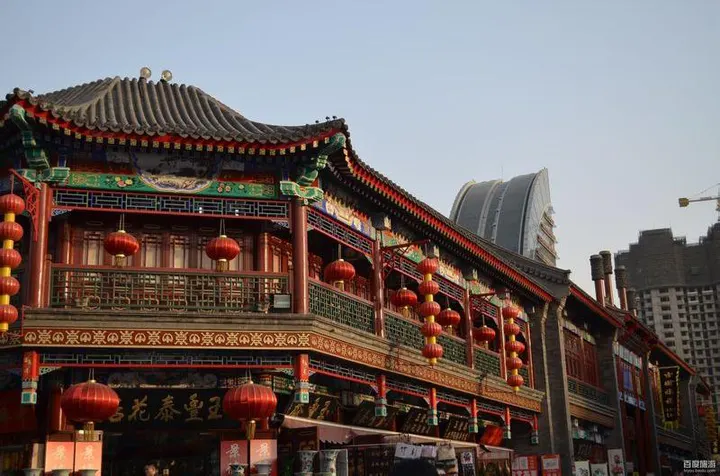
A Ming-Qing-style street with an archway at each end and a hundred shops selling New Year prints, clay figures, kites, brick carvings and the same souvenirs as every other scenic street in the country. The reason to come is the Tianhou Temple in the middle: founded in 1326, one of China's three great temples to the sea goddess, now the Tianjin Folk Museum, ¥10, its flagpoles and opera stage six centuries older than the shopfronts around them. Arrive before 09:00, when the shutters are still going up and the coaches have not landed.
Admission:Street free; temple ¥10
Note:Folk Museum free but needs an online slot; closed Mondays
Eat a full Tianjin breakfastThe most serious meal here is at dawn
Tianjin is stubborn about breakfast. Jianbing guozi must be mung-bean batter and must contain either a length of fried dough or a crisp sheet — lettuce and ham are fighting words. Guobacai is that same mung-bean pancake cut into willow leaves and drowned in gravy with sesame paste and fermented bean curd. Add a fried cake and a bowl of savoury tofu. Between 07:00 and 08:30 the queues are mostly locals, which is the only review that matters.
Price:Jianbing ¥8–12, guobacai ¥10–15
Where:Xibeijiao, Dafulai, Ersaozi and around
03Seven things to settle before you book
Tianjin Railway Station, Tianjin West or Tianjin South — which ticket do I buy?
Coming from Beijing, buy Tianjin Railway Station: nearly all the Beijing South shuttles terminate there, the river, Century Clock and Jiefang Bridge are at the exit, the Italian quarter is ten minutes on foot and Metro L2/L3/L9 are underneath. Tianjin West in Hongqiao is an origin station for the Beijing–Shanghai line — Shanghai, Nanjing, Jinan, Xiong'an — and reaches Daxing Airport in as little as 41 minutes, with Metro L1/L4/L6. Tianjin South out in Zhangwo is a through stop on the Beijing–Shanghai mainline, 22 km from Heping district, around ¥70 by taxi and fifty minutes by Metro L3. Unless you are staying in the south-west, do not buy it.
Can I do it as a day trip from Beijing, and should I book ahead?
Technically yes: Beijing South to Tianjin Railway Station is 30 minutes at best, ¥54.5 in second class, with a departure every ten minutes or so from 06:00 to 23:00 — often you can buy at the station. But a day buys you half the city. Stay a night and you get the river after dark, breakfast and crosstalk. Friday evenings and all of Sunday are the crush; book two or three days ahead on holidays. Your passport or ID opens the gate directly, no paper ticket.
How many days does Tianjin need?
One day gets you the riverfront plus the Five Great Avenues, at a trot. Two is the minimum: river and concessions first — Italian quarter, Century Clock, Jiefang Road, Porcelain House, Xikai Cathedral, the avenues — then Ancient Culture Street, the Drum Tower and Jingyuan on day two, with crosstalk in the evening. Three lets you walk the avenues properly and add a river cruise. A fourth can go to the Binhai Library or Mount Pan in Ji County, but they are in opposite directions; do not attempt both.
When should I come, and is winter miserable?
Late April to May and September to October are the sweet spots: less wind, high skies, bearable humidity. The crab-apple on Dali Road in April is a once-a-year event, and November turns Machang Road gold. July and August are muggy — mid-thirties with humidity, and walking drains you. Winter is dry and cold, around -3°C in January, with the compensations of empty streets, low prices, ice fishing on the river in cold years, and the drawback of bare avenues and darkness at 16:30.
Will I understand crosstalk if I do not speak Chinese?
Honestly: you will miss the words and still catch half the show. Crosstalk works on language and on bodies and timing; the passages where the performers imitate dialects, singing or street cries land with foreign audiences precisely because no vocabulary is required. Buy a front-row interactive seat so you can see the faces, choose a variety-leaning house such as Mingliu or Wuhuayuan rather than a purist one, and remember a set runs over two hours — you can leave at the interval. Watch two clips of Ma Sanli beforehand and learn who stands where, and the pleasure doubles.
Is Goubuli baozi actually worth it?
No — and locals will tell you so. The Shandong Road flagship runs about ¥85 a head, a steamer of buns ¥20–30, and the dumplings are fine rather than memorable; service and room are living off the name. The problem is not flavour but value: Laoyongsheng sells a pork bun with a thinner skin and more juice for around ¥15 and you leave full. If you want the ritual of the city's famous trio, order one steamer and move on — do not build a meal there.
What needs booking, and does the Binhai Library require a slot?
As of October 2026: the Binhai Library is free with no reservation, opens at 14:00 on Mondays, runs 09:30–20:00 Tuesday to Sunday, and after 18:00 only the lower three floors stay open; tripods and interchangeable-lens cameras are refused, phones are fine. The Tianjin Eye sells timed slots, the sunset slot fills first — book a day ahead. The Porcelain House, Jingyuan and Zhangyuan all sell on the door but queue on holidays. The Tianhou Temple is ¥10 at the gate, while its Folk Museum is free yet needs an online slot because numbers are capped. For the night cruise, book by mid-afternoon the same day.
04Two days as a base, three to slow down
Tianjin's sights are not scattered so much as grouped into three: the riverfront concessions (Italian quarter, Jiefang Road, Jinwan), the old walled town (Ancient Culture Street, Drum Tower, Nanshi), and the Five Great Avenues (Wudadao). Give each half a day to a day and plan by block rather than criss-crossing. Metro L2, L3 and L9 meet at Tianjin Railway Station, which makes it the natural starting point.
D1
Out of Tianjin Railway Station, look at Century Clock, follow the river to Jiefang Bridge and cut into the Italian quarter away from the square; at eleven, Liang Qichao's studio. Lunch nearby. In the afternoon walk Jiefang Road for the bank facades, take 40 minutes in the Porcelain House, then Xikai Cathedral. Be in the avenues by 16:00, walking Munnan into Dali, and sit on the grass at Minyuan Plaza as the light goes. Finish with the 19:30 cruise.
D2
Breakfast at 07:30 around Xibeijiao or Dafulai, then Ancient Culture Street by 08:50 for the temple and opera stage before the crowds. The Drum Tower and the Guangdong Guild Hall at 10:30, lunch at Nanshi food hall for convenience rather than quality. In the afternoon finish Changde and Chongqing roads, or take in Jingyuan (¥20, closed Mondays). At dusk, either the cruise or the free view of the Eye from Jinfang Bridge; crosstalk in the evening on Ancient Culture Street or at Lujiazui.
D3
Give day three to the outskirts. For architecture and photographs, head to Binhai: Metro L9 to Shimin Guangchang, ten minutes by taxi to the library, lunch at the cultural centre, and the aircraft-carrier park in the afternoon if you are a naval buff (¥220). For mountains and old timber, take the 40-minute train to Jizhou, a 20-minute taxi to Dule Temple (¥31.5, a Liao-dynasty gate and Guanyin Hall), then Mount Pan in the afternoon and back to town by evening.
05From the confluence to the avenues
The Haihe and its bridges
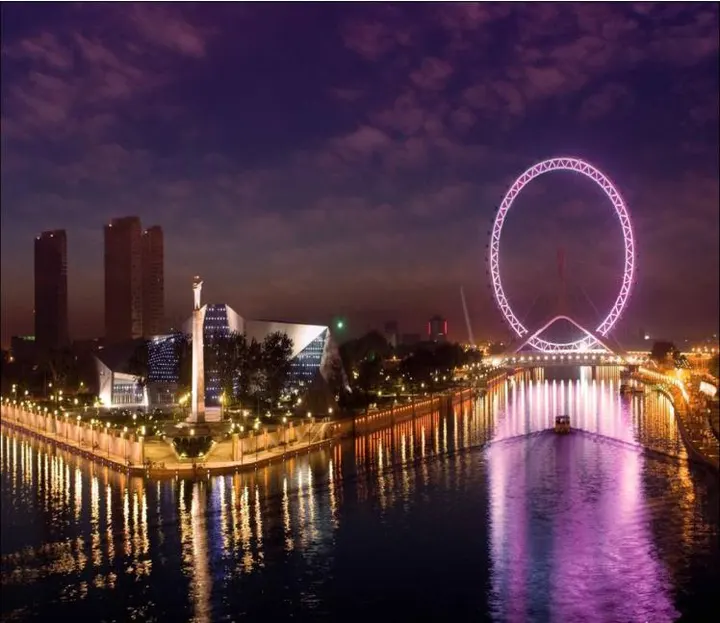
The Haihe enters the city at the three-river confluence, cuts diagonally through it and reaches the Bohai at Dagu. The urban stretch is under ten kilometres and carries more than twenty bridges — probably the densest run in the country. Jiefang Bridge is a 1927 steel truss that still opens; Wanghailou church stands beside Shizilin Bridge; Jinfang Bridge is the best free vantage on the Eye; Daguangming Bridge has the golden towers that photograph best after dark. Walk it rather than ride: Yongle Bridge to Daguangming Bridge takes about two hours, almost all of it on waterside terraces.
Jiefang Road: the Wall Street of the East
Jiefang Road at night: a domed bank block and the steel bridge
A kilometre south of Jiefang Bridge stand the bank blocks of the 1920s and 1930s — HSBC, Chartered, the Franco-Chinese, the Salt Bank — colonnades, stone steps and brass doors intact. This street once moved more money than Beijing. Most are now branch offices, so you are looking at facades, but it is free, empty and beautifully lit: the most underrated kilometre in the city. Come on a weekday morning and you will have it alone.
The Five Great Avenues: five streets, five characters
Machang Road is the widest with the grandest houses — the Dawenshi building of 1905 is the oldest here, and the main hall of Tianjin Foreign Studies University is the most photographed; the carriage is not allowed on it, so walk. Munnan Road has the densest run of former residences, the door plates of Sun Dianying, Yan Huiqing and Zhang Xueming one after another. Dali Road runs 1,700 m and turns into a pink tunnel of crab-apple in spring, plane leaves underfoot in autumn. Changde is the quietest, its Minyuan West Lane converted into small shops. Chongqing is the commercial one: Prince Qing's Mansion (¥24), Xiannong Yard and Minyuan Plaza all sit on it.
Xikai Cathedral
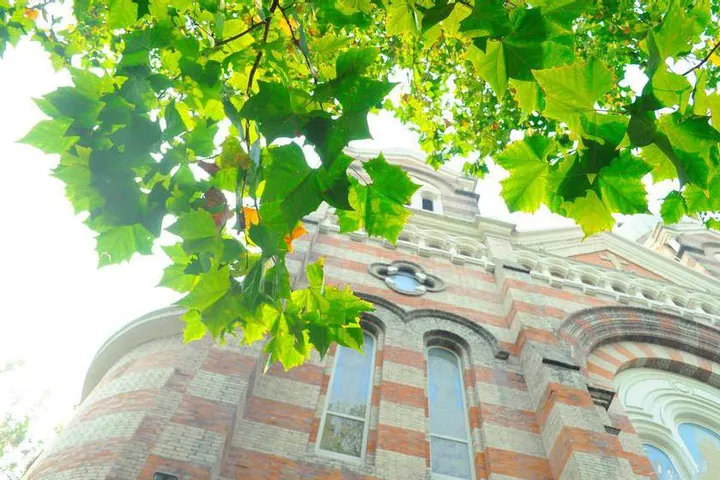
The banded brick of Xikai Cathedral, seen up through plane leaves
Completed in 1916 in a French Romanesque vein: three green domes side by side, walls of banded red and cream brick, a row of stained glass down the flank. The nave holds a thousand and is dark by day except where the windows drop light on the floor. Free, 08:00–18:00; during Mass watch quietly and do not circle with a phone. The steps outside are the best place to sit on this stretch of Binjiang Road.
Jinwan Plaza and Century Clock
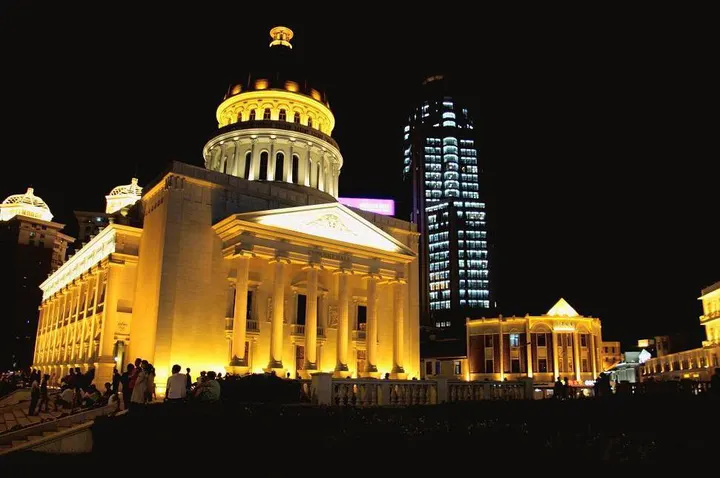
A domed facade lit for the evening, the plaza full of people
The neoclassical block directly across from Tianjin Railway Station, finished in 2009: scenery by day, convincing only after the lights come on. Century Clock stands in the middle, its bronze base all gears and chains, pointing at the city's industrial firsts — the Tianjin Arsenal, the Kaiping mines, the first telegraph line. The best seat for the show is the deck of Jiefang Bridge, where Jinwan, the clock and the station tower line up in a single westward look.
The Tianhou Temple and the Guangdong Guild Hall
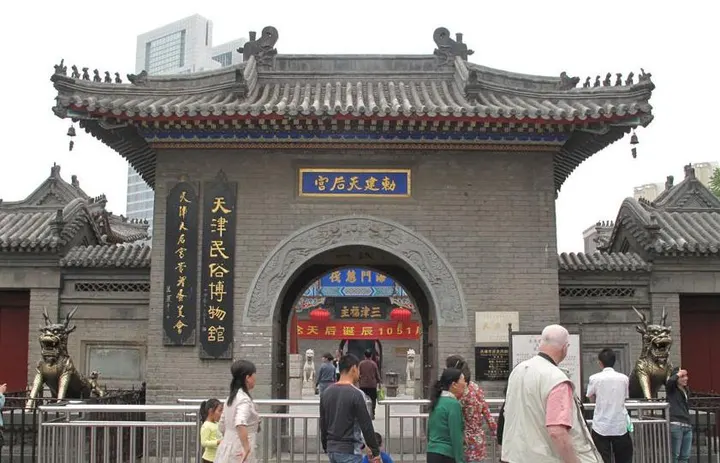
The gate of the Tianhou Temple, grey brick, stone lions and visitors
Founded in 1326, before Tianjin had walls, the temple to the sea goddess Mazu is where boatmen burned incense before heading down the canal. The front court still smokes; the rear is the Folk Museum (free, booked online) with displays on the imperial processions, paper cuts, brick carving and wedding custom. Two stops south, the Guangdong Guild Hall of 1907 has a carved wooden opera stage in extraordinary condition, now a theatre museum with occasional Peking opera and crosstalk for ¥20–30.
Jingyuan and Zhangyuan
Two 1920s villas facing each other across Anshan Road, both tied to Puyi around 1929. Jingyuan began as the Qianyuan Villa; when the deposed emperor moved in with his empress and consort he renamed it for watching the times quietly, and the Spanish-style main block, arcade, fountain and lawn have been restored to the original layout — ¥20, and worth it. Zhangyuan belonged to General Zhang Biao and was where Puyi lived before moving to Jingyuan; it now runs exhibitions plus a puzzle game for ¥30, better with children. Both close on Mondays.
The Binhai Library
Designed by the Dutch practice MVRDV and opened in 2017: a 21 m white sphere in the atrium — the 'Eye of Binhai' — with wave-form shelves stacked to the ceiling around it. Those shelves are sculpture; the borrowable books are upstairs. Free, no booking, from 14:00 on Mondays and 09:30–20:00 otherwise. It is 50-odd kilometres from the centre — Metro L9 to Shimin Guangchang, then ten minutes by taxi. An hour is enough if you are only photographing, and a weekday morning is the emptiest it gets.
06A night on the river, a laugh at a table
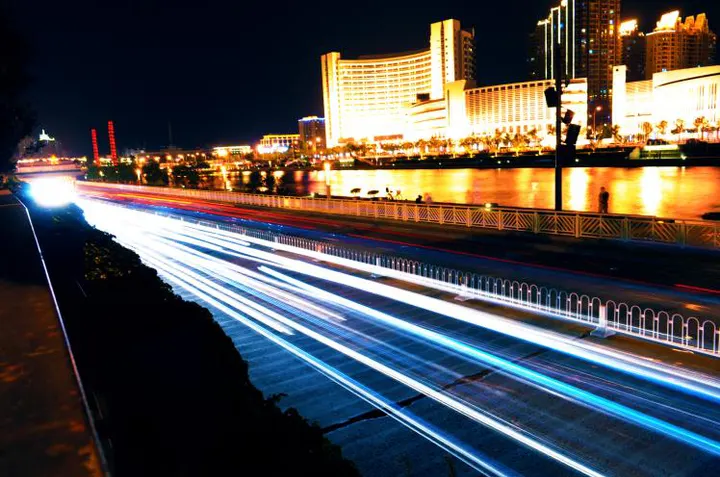
Light trails on the riverside road, a lit villa block beyond
The Haihe cruise
The laziest good night view in the city. Day sailings leave hourly 10:00–17:00 at ¥80; at night there are five, 19:30 to 21:30, at ¥138 (¥108 for students and over-65s, ¥40/¥68 for children). The route runs from the Eye to Jiefang Bridge and back in about 50 minutes, boarding at Yongle, Jinwan, Tianjin Railway Station, Ancient Culture Street or Jinfu. Take the 19:30: dark enough for the lights, early enough that the bridges are not yet a wall of phones. A right-hand window seat gets you the Italian quarter and Jinwan in one sweep.
Crosstalk in a teahouse
Tianjin is where crosstalk actually grew up: performers came down from Beijing's Tianqiao in the 1920s, moved into teahouses and radio, peaked in the 1940s and returned to small rooms in the 1990s. The houses sort into tiers — Mingliu is the oldest (¥58–88, branches on Ancient Culture Street, Xinhua Road and in Henglong), Qianxiangyi the most comfortable (¥80–180, fifth floor of Lujiazui, tea included), Deyun the hardest ticket (¥80–300 on Jianguo Road), Wuhuayuan the cheapest (¥40–58, inside the scenic streets, convenient rather than great). Evening sets start around 19:30 and run two to two and a half hours: four or five routines plus clapper talk.
Cycle the avenues
The avenues are one-way, lightly trafficked and heavily shaded — the best cycling district in the city. Shared bikes cost ¥1.50–2 per fifteen minutes; from Minyuan Plaza a loop of Munnan, Dali, Changde and Chongqing takes about forty minutes. Get off and push when something catches your eye: every listed building has a QR code at the door that opens its history, which beats any cut-price guide who approaches you in the street.
Museums and galleries
The Tianjin Museum at the cultural centre is free, with bronzes, jade, painting and a floor on the city's last hundred years that justifies two hours; the art museum and natural history museum are next door, so a day stacks up. The Zhou Enlai and Deng Yingchao Memorial beside Shuishang Park is free, quiet and rarely busy. For the late Qing and early republic, the Guangdong Guild Hall and the Liang Qichao Memorial together cost under ¥20.
07Riverside, Binjiang Road or the avenues
Tianjin is cheap to sleep in — the same money buys half a grade more than in Beijing. The only question is how you plan to move. If you are walking, stay between Tianjin Railway Station and the Italian quarter: you arrive at the door and the river at night needs no taxi. If you are eating and shopping, base at Yingkoudao and Binjiang Road, with the malls, cathedral, Porcelain House and Jingyuan inside a kilometre. If you want quiet and villas, take a guesthouse near the avenues, where the streets at seven in the morning are practically yours.
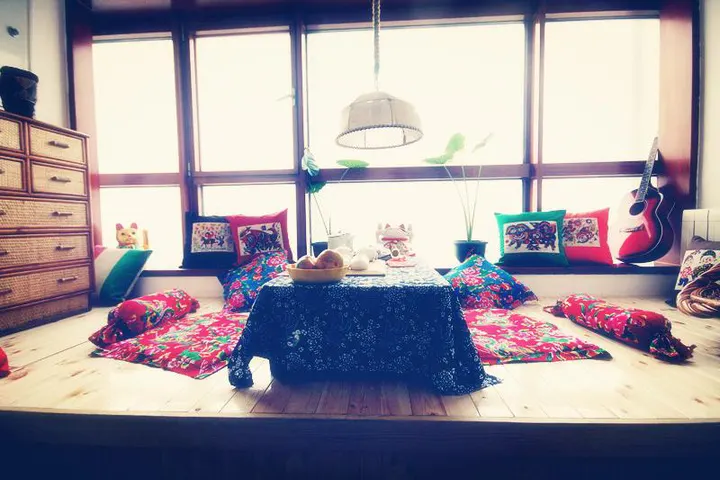
The raised sitting platform of a hostel, cushions by the window
Mid-range riverside hotels: around the station and the Italian quarter, doubles ¥350–600, upper floors with river views and the night skyline thrown in.
Binjiang Road and Yingkoudao: chains and old-school hotels, ¥250–450, shops at the door and noise at night.
Villa guesthouses in the avenues: converted old houses, small rooms with fine proportions, ¥400–800, courtyards to sit in — the choice for anyone photographing.
Hostels and dorms: around the Italian quarter and the Drum Tower, beds ¥60–120, private rooms ¥180–260, and the desk will usually buy your crosstalk tickets.
Two warnings. Old villas converted into guesthouses are charming and badly soundproofed — wooden floors, single-glazed windows — so light sleepers should pick a newer building. And while holidays and weekends push rates up, the rise is gentler than in Beijing; in return, January prices are absurdly low, with riverside four-stars often under ¥400.
08Breakfast, Tianjin cooking and a few things not worth it
Tianjin cooking is a branch of Shandong cuisine but homelier: river and sea fish, thick gravies, savoury with a sweet edge, at home both in the eight-bowl banquet repertoire and in a farmer's dish of cornmeal cakes steamed over small fish. The city's real character is at the breakfast stalls, where between 07:00 and 08:30 one street can hold four separate queues — jianbing, guobacai, savoury tofu, fried cakes — each minding its own business.
Six things to order
Jianbing guozi: mung-bean batter, an egg cracked on top, a length of fried dough or a crisp sheet inside, then bean sauce, fermented bean curd, chilli and scallion. ¥8–12. Lettuce, ham or pork floss is regarded as heresy.
Guobacai: mung-bean pancakes cut into willow strips, drowned in a gravy built from a dozen seasonings, finished with sesame paste, bean curd, chilli oil and coriander. ¥10–15, and eat it hot — cold it sets into a brick.
Ear-Hole fried cakes: glutinous rice around sweet bean paste, fried to a deep gold, crisp outside and yielding within. ¥5–6 each, eaten at the stall; in a bag it dies.
Shibajie fried dough twists: Guifaxiang's filled version, short, crisp and sweet, keeps for months in a dry cupboard and is the safest gift in town. ¥50–80 a box.
Laobaosan and bazhen tofu: the first a hard, fast wok of liver, kidney and pork; the second tofu braised with shrimp, sea cucumber and chicken in a glossy sauce. Together they explain why Tianjin food is built to be eaten with rice.
Carp fried scales-on and dressed with sweet-sour sauce, still crackling when it lands. Few kitchens do it well; old houses such as Guiyuan and Hongqi are the safe bets.
Which famous names are not worth it
Goubuli: ¥85 a head for buns that are fine and value that is not — locals stay away. Shibajie twists often cost a third more in scenic-street shops than in a supermarket; buy at a Guifaxiang counter. Nanshi food hall is an indoor canteen built for visitors: you can taste everything at once and nothing at its best. Loose 'authentic Tianjin twists' at scenic-street stalls are usually made elsewhere. And Ear-Hole cakes are worth eating only straight from the fryer — skip the boxed ones.
Places worth the queue
Guiyuan (101 Chengdu Road): Tianjin cooking inside a villa on the avenues, an entrance you will walk past, reliable black-garlic beef, Li-family ribs and eight-treasure tofu, ¥50–70 a head, and you must reserve.
Shaguo Li (several branches): claypot cooking that saves a January evening — meatballs, cabbage, tofu and vermicelli in one pot, around ¥40 a head.
Dafulai (several branches): the old name for guobacai and savoury tofu, busiest at breakfast, a little over ¥10 a head.
Ersaozi (Heping district): batter spread to order, nothing inside but fried dough or a crisp sheet, a queue around the corner by seven, about ¥10.
09What travels home
Tianjin's crafts are genuine: the clay figures of Clay Figure Zhang, Yangliuqing woodblock New Year prints, Wei-family kites and Liu-family brick carving — the four crafts the city is known for. The rule for buying them is simple: buy where there is a named workshop and a maker, not from a scenic-street stall selling 'crafts'. The price gap is threefold; the quality gap is wider.
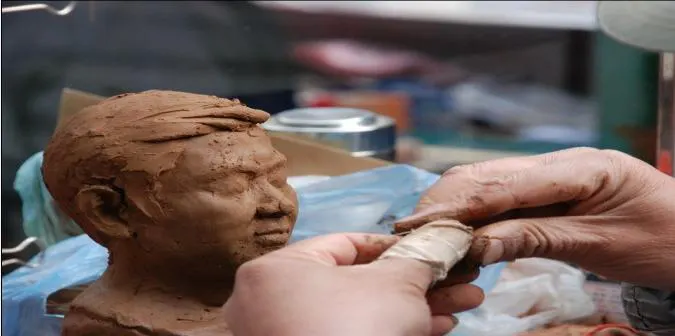
Hands painting a clay figure, a freshly modelled head on the table
Clay Figure Zhang: founded by Zhang Mingshan in 1826, it lifted street-corner clay modelling into sculpture, with expression and folded drapery. The Ancient Culture Street shop sells from ¥100–200 for small pieces; the ¥30 versions are copies.
Yangliuqing New Year prints: paired with Taohuawu in Suzhou as 'south peach, north willow', half printed and half painted — woodblock outlines first, colour brushed in by hand. The print workshop in Yangliuqing town (¥10) shows the process; buy from a workshop, not a rack.
Shibajie twists: buy at a Guifaxiang counter — assorted, salt-and-pepper, hawthorn — and take the tins, ¥50–80.
Xiaobao chestnuts and tangduir: autumn and winter street food, chestnuts by weight, sugar-coated skewers ¥5–15, the hawthorn the real thing.
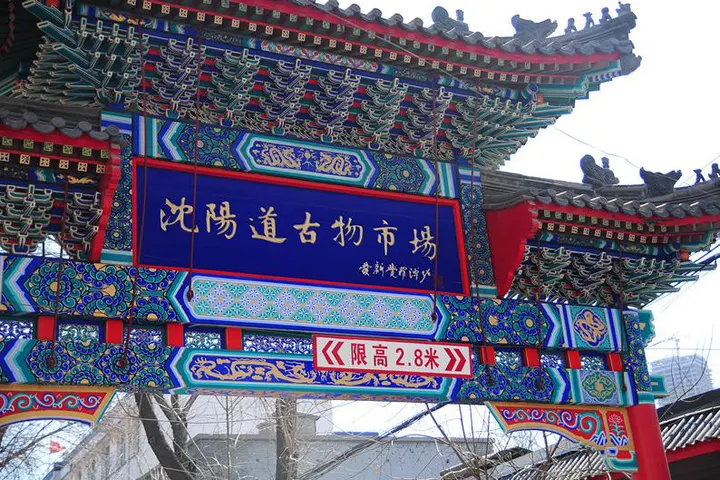
The painted archway of the Shenyang Road antiques market
The Shenyang Road antiques market grew out of a 1987 swap meet and now holds its big market on Thursday mornings, when several hundred stalls cram two streets with shards, old books, clocks and fakes. Go with your eyes open: nine parts reproduction, and half of the remainder repaired. It is a wonderful market and a terrible investment. Binjiang Road and Heping Road are the ordinary shopping streets, and the 1928 Quanyechang building is worth stepping into for its atrium alone.
10Half an hour in, then on foot
The Beijing–Tianjin shuttle: the densest line in the country
Beijing South to Tianjin Railway Station is 30 minutes at best for ¥54.5 second class, ¥88 first and ¥174 business. Trains run from 06:00 to 23:00, and at peak hours one leaves every five to ten minutes — the busiest high-speed corridor in the country. Beijing South to Tianjin West takes 32–39 minutes for the same fare; Daxing Airport to Tianjin West 41–53 minutes at ¥45.5–49.5; and the Beijing–Shanghai mainline reaches Tianjin South in 44 minutes for ¥61. Do not shop for a departure — shop for the right station.
How the three stations divide the work
Tianjin Railway Station is the city hub: 10 platforms, 18 tracks, Metro L2/L3/L9 underneath, five minutes to Century Clock and ten to the Italian quarter, and the departure point for most trains to the north-east — Tangshan, Qinhuangdao, Shenyang — and to Binhai. Tianjin West in Hongqiao is an origin station for the Beijing–Shanghai line with 13 platforms and 26 tracks: south to Shanghai, Nanjing and Hangzhou, west to Baoding and Xiong'an, and 41 minutes to Daxing Airport at best; its 1909 station building was moved 135 m sideways and lifted 3.6 m to survive, and you can see it from the exit. Tianjin South out in Zhangwo only handles through trains on the Beijing–Shanghai mainline, sits 22 km from the centre, and costs fifty minutes on Metro L3 or about ¥70 in a taxi. Read the station name before you pay.
The airport
Binhai International Airport sits 13 km east of the centre in Dongli. Metro L2 runs to Tianjin Railway Station in about 34 minutes for about ¥4; a taxi takes 30 minutes and ¥40–50. There are coaches to Beijing's Bawangfen and to Tianjin West. If you land at Daxing instead, the Jinxing intercity runs straight into Tianjin West in a little over forty minutes.
Getting around: metro, bus, bike
The metro runs 13 lines over 394 km, priced by station count: ¥2 for up to five stops, ¥3 for six to ten, ¥4 for eleven to sixteen, ¥5 beyond, from 06:00 to 23:00. Visitors mostly use L3 (Tianjin Railway Station, Yingkoudao, Xikai Cathedral, Tianjin South), L2 (airport, Tianjin Railway Station, Drum Tower) and L9 (Tianjin Railway Station to Binhai). Buses cost ¥1–2, and sightseeing routes 1 and 2 link the main sights. The centre is flat, so shared bikes work well, especially along the river and in the avenues; use the ride-hailing apps rather than hailing at a scenic-street kerb, where refusals are common.
Walking is the best transport in Tianjin: forty minutes along the river from the station to Ancient Culture Street, twenty between any two points in the avenues, ten from Binjiang Road to the Porcelain House. Only Binhai, Ji County and Yangliuqing require wheels.
Hospitals: Tianjin Medical University General Hospital (154 Anshan Road, Heping, 022-6036 2255), Tianjin First Central Hospital (24 Fukang Road, Nankai) and the First Teaching Hospital of Tianjin University of Traditional Chinese Medicine (314 Anshan West Road, Nankai).
Money: malls, hotels, the metro and chain shops all take Alipay and WeChat Pay, and foreign cards can be linked. Scenic-street stalls and breakfast counters sometimes take only cash or a local QR code, so carry ¥100 in notes.
Data: airports, stations and museums offer free Wi-Fi, usually verified by phone number; a local SIM with data is cheaper than roaming.
Power: 220V with the Chinese flat two- or three-pin plug; European round pins need an adapter.
Safety: the river terraces have no railing, so do not step backwards for a photograph after dark, and never walk on the ice in winter — people go through every year.
One small thing worth knowing: public toilets are plentiful, but the ones down old hutong alleys are basic — malls and metro stations are the reliable choice. And treat any 'free tea' or 'free guide' offered at a scenic entrance as advertising.
12What to pack, what to avoid
Clothing: spring is windy and dry, so bring a windproof shell; summer is muggy, so quick-dry clothes and shoes good for 20,000 steps; autumn swings ten degrees between morning and afternoon, so a thin sweater; winter needs a down jacket, hat and gloves, because the river wind cuts.
Shoes: the avenues and the riverfront are hard paving and 15,000–20,000 steps a day is normal. Do not break in new shoes here.
Bookings: the Eye's sunset slot, a night cruise and the free Folk Museum ticket — sort all three a day ahead; weekend crosstalk two or three days ahead.
ID and cash: carry your passport or ID for station gates, tickets and museums, plus ¥100 in notes for breakfast stalls.
Six things to avoid: the 'day tours' touted at station exits, since the metro does the job; the self-appointed guides who approach you in the avenues and charge by the hour without a licence, when every door plate has a free QR code; the 'antiques' and 'old jade' on Ancient Culture Street, nine parts new; treating Goubuli as compulsory when Guiyuan or Shaguo Li spends your money better; scalped cruise tickets at the pier, when the official mini-program sells them on the spot; and walking the avenues at two in the afternoon in July, or stepping onto river ice in January.
13Raised on grain barges, concessions and comedy
Geography and climate
Tianjin occupies the north-east of the North China Plain, the Bohai to its east and the Yan mountains behind it, 120 km from Beijing, at the point where the Haihe's tributaries gather before the sea — hence the old name, 'the tail of nine rivers'. The land is almost flat, mostly under five metres above sea level, and the highest point in the city is a man-made hill. The climate is temperate monsoon: windy and dry in spring, hot and humid in summer, high and clear in autumn, cold and dry with little snow in winter, the coldest month averaging around -3°C.
From garrison town to nine concessions
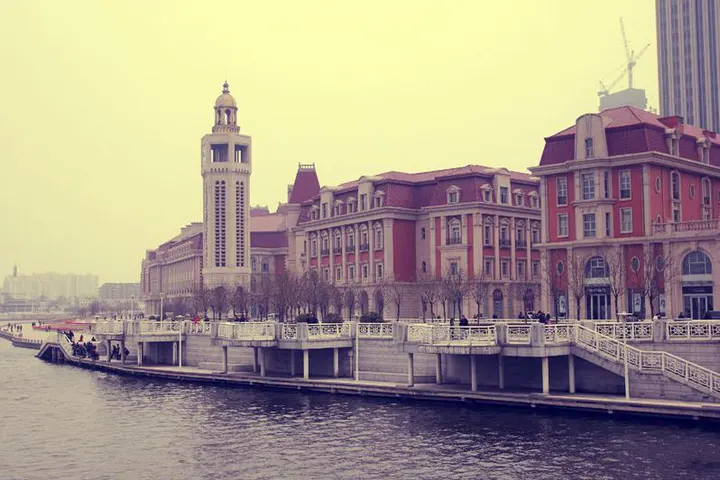
The Haihe in vintage tint: clock tower, stone embankment, terraced merchant houses
In 1404 the Ming set up a garrison and walls here, and the name Tianjin Wei comes from that military system. What actually changed the city's fate was 1860: after the Second Opium War Tianjin opened as a treaty port, and Britain, France, the United States, Germany, Japan, Russia, Italy, Austria-Hungary and Belgium each laid out a concession with its own roads, its own buildings and its own taxes. The result is that within a stretch of one river you can see English terraces, French mansions, an Italian piazza and German villas, with Chinese courtyard houses wedged between them. In 1900 foreign armies occupied the city and ran it through a provisional government.
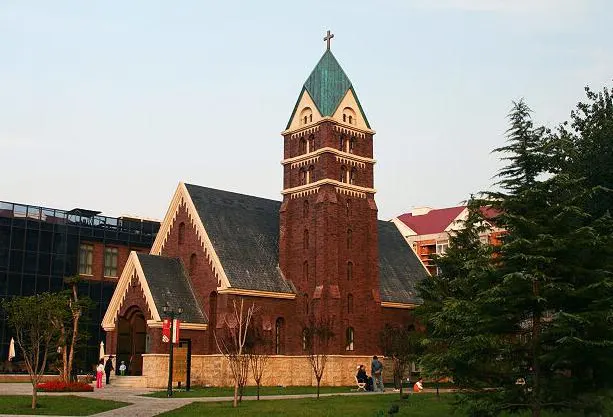
A red-brick church with a copper-green spire, glass towers behind
The concessions left more than buildings; they left a population. Deposed presidents, retired warlords, disappointed writers and newspapermen all drifted to Tianjin in the 1920s, because it had foreign courts, telephones, villas and was close enough to Beijing. Puyi spent two years at Jingyuan, Liang Qichao wrote in the Ice-Drinker's Studio, and Cao Yu grew up in a concession courtyard. That history leaves the city's character slightly unresolved: one part humiliation, one part the fact that these streets are genuinely beautiful now.
Wharves, industry and comedy
Tianjin is one of the birthplaces of Chinese modern industry: the Tianjin Arsenal in the 1870s, the Kaiping mines in 1878, the country's first self-built telegraph line and its first domestically made steam locomotive all belong to this ground. After 1949 it became the industrial base of the north — Flying Pigeon bicycles, Seagull watches, Beijing-brand televisions are a generation's furniture of memory. The port has since moved to Binhai, the old plants have become studios, and the city earns its living from services.
Crosstalk is the other thread. Tianjin speech falls at the end of a phrase, which is made for a punchline, and the docks threw together labourers, porters and pedlars who developed a manner of talking that is stubborn, argumentative and self-mocking. Ma Sanli, Hou Baolin and Chang Baokun all came out of this. Walk into any teahouse today and the same contract holds between stage and table: the performer is allowed to mock the audience, the audience is allowed to answer back, and nobody takes offence.
14Three ways out
Yangliuqing (half a day to a day)
A canal town 20 km west of the centre, famous for its New Year prints. The Shi Family Compound, begun in 1875, is the grandest late-Qing merchant house in the region — processional lane, reception hall and private opera stage all intact, with brick, wood and stone carving worth an unhurried hour, for ¥25. The print workshop next door (¥10) shows the half-print, half-paint process and often has a printer laying colours. The old street itself is lightly commercialised and quiet on a weekday afternoon. Forty minutes by taxi, or Metro L1 west then a bus.
Ji County: Mount Pan and Dule Temple (1–2 days)
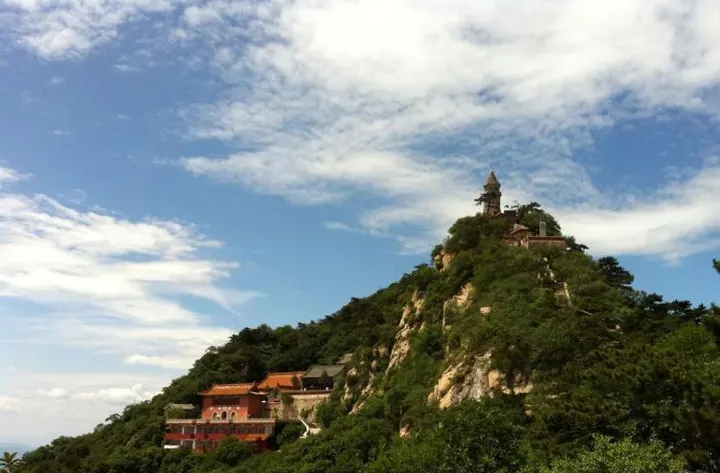
Guayue Peak on Mount Pan: a pavilion on top, a temple below, bare rock between
The only hill country in the municipality, 100 km north of the city. 'Had I known Mount Pan, I need not have gone south of the Yangtze' is attributed to the Qianlong emperor, who came 32 times. The main peak, Guayue, stands 864 m, with water in the lower reaches, rock in the middle and pines above, past Tiansheng, Wansong and Yunzhao temples. Peak-season entry is ¥78 (¥68–70 online), ¥58 off season, valid two days; cable cars are ¥60 one way, or ¥100 for the Guayue car plus shuttle. Walking the full route takes five to six hours; ride up and walk down.
Do not skip Dule Temple at the foot of the mountain: its gate is Liao-dynasty original timber, among the oldest hip-roofed wooden buildings in China, and the 16 m eleven-faced Guanyin inside the hall forces your neck back. Entry ¥31.5, or ¥50 for a four-site ticket. The train reaches Jizhou Station in forty minutes, then twenty by taxi; driving the Jinji expressway takes about ninety minutes.
Binhai New Area (1 day)
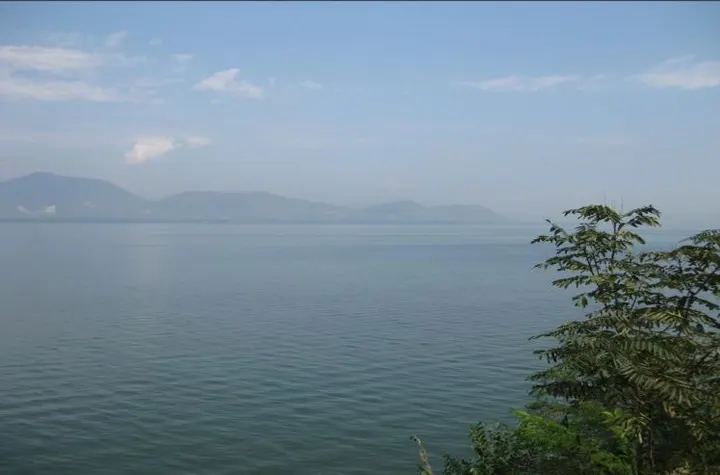
Cuiping Lake: broad water, hills lost in haze
Fifty kilometres south-east lies a different city: wide roads, glass towers, reclaimed land. Only two things justify the trip — the Binhai Library, free, and the aircraft-carrier park, ¥220, where the Soviet Kiev has been converted into a museum: half a day for a naval enthusiast, an hour for anyone else. Dongjiang Bay has an artificial beach for ¥50 that you can swim from in summer, while Dongjiang Seaside Park is free and good for clam-digging at low tide — check the tables first. Metro L9 runs all the way out to Donghai Road.
15Watch and read before you go
Books
Feng Jicai, 'Sushi Qiren' (Extraordinary People of the World): short, sharp portraits of late-Qing and republican Tianjin characters — the wall-whitewasher, the clay modeller, the tooth-puller — the fastest way into the city's sense of humour. Lin Xi, 'Old Tianjin': photographs and essays, good preparation for the streets. Brian Power, 'The Ford of Heaven': a childhood memoir by a foreign boy raised here, unusual in its angle — amahs, courtyards, superstition and war.
Film and television
'Useless Man' (Tianjin Xianren, 2012, dir. Zheng Dasheng): a 1930s con trick told in grey tones with an almost all-male cast, and the best screen account of how absurd the concession city could be. 'Lurk' (2009) is a television series, but it is set in Tianjin and shows the offices, alleys and wharves of the republican city. For sound, find Ma Sanli's 'Buying a Monkey' and 'The Dispute' before you sit down in a teahouse — you will catch half the room.
Craft
Tianjin talks about craft as 'huor' — the work itself. For Clay Figure Zhang it is in the face; for Yangliuqing prints, in the registration of colour; for Wei kites, in a frame that folds down; for Liu brick carving, in the edge of the chisel. Watching once beats reading ten descriptions: the Clay Figure Zhang shop on Ancient Culture Street, the print workshop in Yangliuqing and the kite shops near the Drum Tower will all let you stand and watch for a long time.