China's first wetland parkRowed boats into the lanesFree causewayMetro L3 and L19
In short
Xixi Wetland (西溪湿地, Xīxī Shīdì) lies five kilometers west of West Lake and was China's first national wetland park: 11.5 square kilometers, seventy per cent of it water, stitched together by three dikes. The east zone holds Shentankou and Hezhu Street; the west zone, Hongyuan, holds the Hong clan ancestral hall and Shou Causeway. Admission is ¥80 (¥70 if you book a day ahead), the electric boat ¥60, the ticket-and-boat combo ¥140, and a whole rowed boat about ¥100 an hour. Spring and autumn are best; persimmons hang into late October and the reeds turn silver from late November. One day covers it, though a night makes it quieter.
Key facts
Known for
Reeds · rowed boats · persimmons · dragon boats · a wetland inside the city
Budget
¥300–500 per person per day, ticket, boat and one proper meal included
Days needed
1–2 days
Comfort
Comfortable
Best time to go
February–March for plum, April–May for the flower festival, September–November for persimmons and reeds, June for the dragon boats
01A piece of breathing water west of the city
Xixi sits west of Hangzhou, less than five kilometers from West Lake, and feels like another province: no lakeside promenade crowds, just fish ponds, creeks, reeds and dozens of flat stone bridges without railings. Seventy per cent of its 11.5 square kilometers is water. It opened as China's first national wetland park in 2005 and joined the Ramsar list in 2009.
Locals group West Lake, Xiling and Xixi as the 'Three Xi'. West Lake is the drawing room; Xixi is the back garden — one is for looking at, the other for disappearing into. When the Southern Song emperor Gaozong passed through, he reportedly said, 'Xixi, stay a while,' and those five characters became the cheapest tourism campaign in history, still painted on a white wall at Hezhu Street.
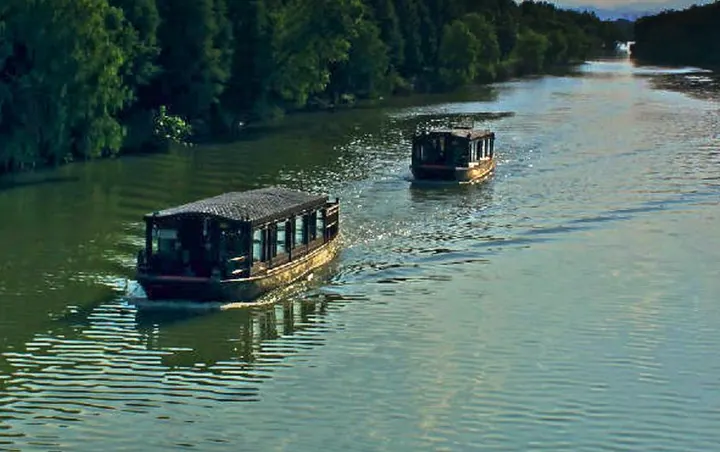
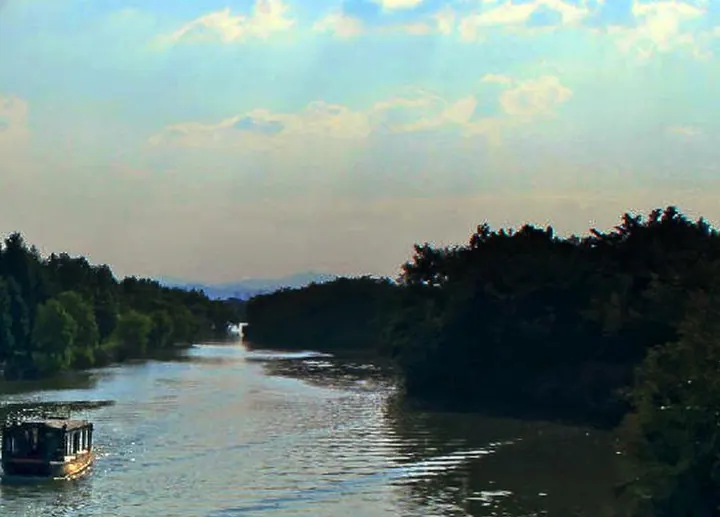
Two electric boats running down the wetland's main channel
'A thousand acres of reeds, ten miles of islets; a house on the creek is best in moonlight, better still in autumn.'
An old poem of Xixi
There are only two ways to see it: by boat or on foot. Boats take you down channels no path reaches; walking lets you stop on a bridge and stare. The comfortable shape of a day is a rowed boat in the morning, noodles at Hezhu Street at noon, and a slow afternoon on Fudi or Shoudi. Do not try to cover it all — this place is measured in hours, not kilometers.
West Lake, Lingyin Temple, the Longjing tea hills and the city's Southern Song streets belong to our separate Hangzhou guide. This one has a single job: to get Xixi right.
02Six things only Xixi does
Xixi's pleasure is not a checklist of sights but a way of moving through them. Do three of these six and the day has paid for itself.
Take a rowed boatThe right speed for a water lane
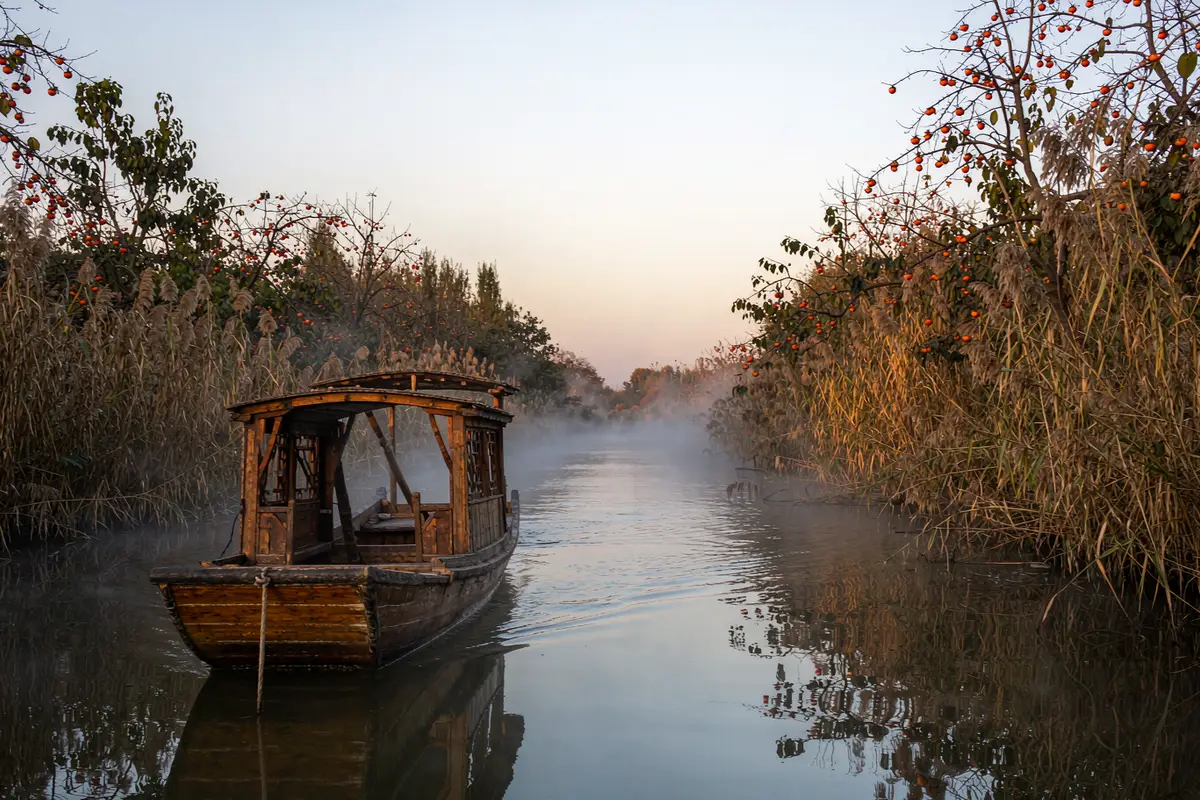
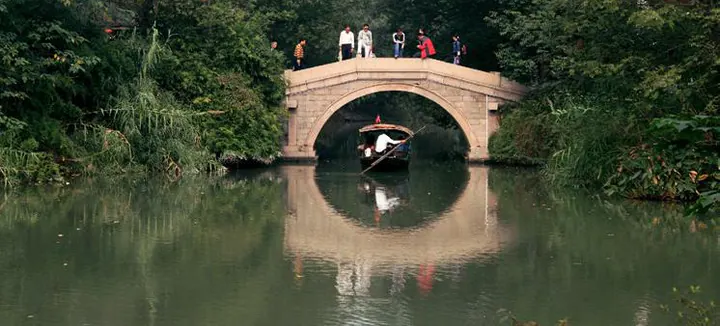
The boatman stands at the stern and sculls; the bow opens the water without a sound and the banks slide backwards. This is the one thing walking cannot replace: whole channels are boat-only, and in autumn the reeds stand taller than your head, so the boat moves through a crack in a wall.
Price:About ¥100 an hour per boat, 2–6 people
Piers:Zhoujiacun, Fudi, Hongyuan, Longshetou
The reed beds at Qiuxue NunneryBoat access only
Qiuxue Nunnery sits alone on an island. From late November to early January more than 300 mu of reeds turn white together and the wind makes them look like snow — hence the name, borrowed from a Tang line about autumn snow covering a fishing boat. As your boat approaches, moorhens and ducks burst out of the reeds and cross the channel.
Best time:Late November to early January, best with morning backlight
Shentankou and Hezhu StreetThe wetland's one busy corner
Shentankou is the deepest pool in the park — old gazetteers say it 'cannot be crossed without a boat' — and three big camphor trees shade the landing. The Duanwu dragon boat rally happens here; on ordinary days it is simply the spot where If You Are the One was filmed. Ten minutes north, Hezhu Street is a rebuilt white-walled shopping lane, free to enter, selling snacks and local produce.
Cost:Included in admission; Hezhu Street is free
A bowl of big-bowl teaXixi's own tea
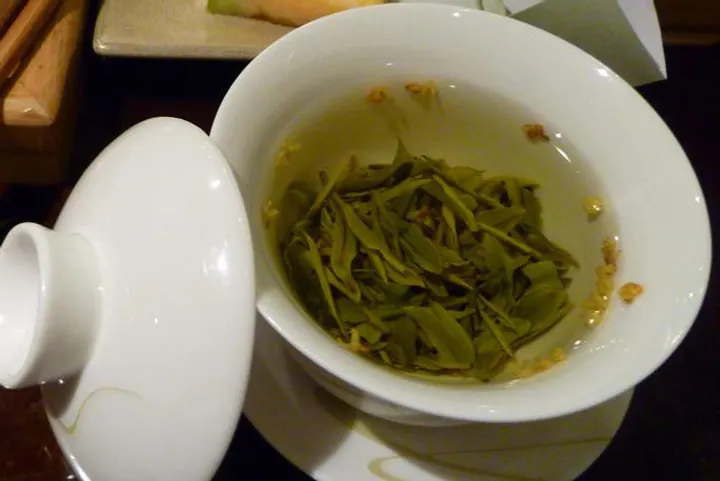
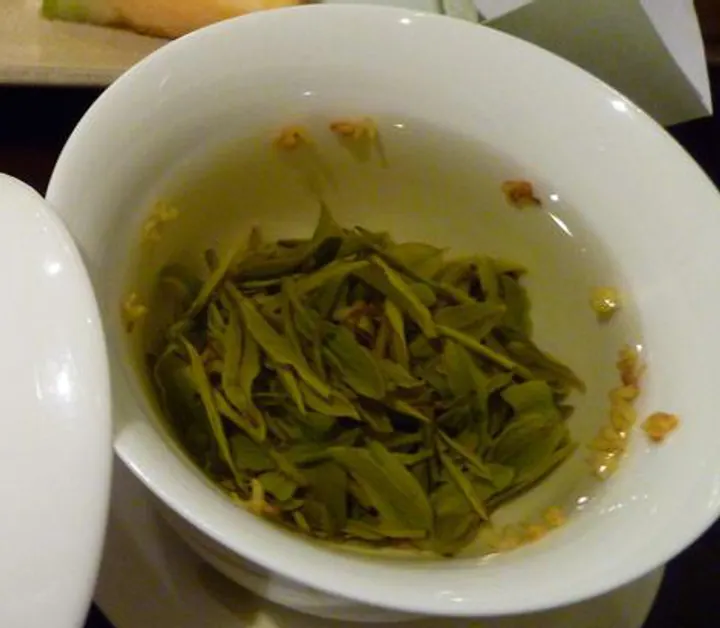
Xixi tea was once claimed to be 'ten times' Longjing: brewed in a white porcelain bowl, dark in the cup and sweet at the first sip. You can order it at Hezhu Street and Yanshui Fishing Village for around ¥10–20 a bowl; add a plate of dingsheng or qianshi cake and you have the local afternoon.
Price:About ¥10–20 a bowl
Hongyuan and Shou CausewayThe west zone, with half the people
Hongyuan is the western half: the Hong clan ancestral hall, Hong House, the Hong Sheng memorial and the Four Seasons Flower Sea, and most tour groups never come this far. Shou Causeway runs along the western water and is the quietest of the three dikes — half an hour's walk might pass ten people.
Admission:The same ¥80 ticket admits you once to each zone in a day
The Duanwu dragon boat rallyNot a race — a show
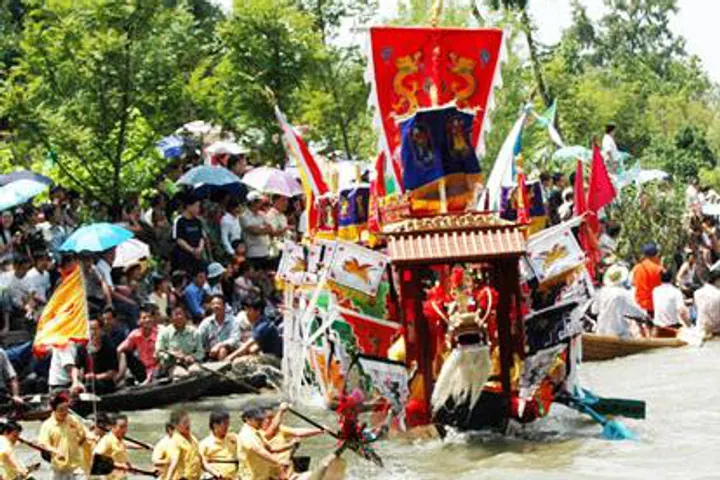
Jiangcun's dragon boats do not race for speed; they perform figures with names like 'winning the swell' and 'three nods', the steersman stamping on the stern while the dragon's mouth dips. Nearly 300 carved boats pack into Shentankou. In 2026 the festival falls on 19 June: the dragon-head rite starts at 09:10, village boats launch after 11:00 and the water stays loud until 14:00.
2026 date:19 June, 09:10–14:00, Shentankou
03Seven questions before you buy a ticket
Do the east zone and Hongyuan need separate tickets?
No. Since 2020 the two zones have been integrated: one ¥80 ticket admits you once to the east zone and once to Hongyuan on the same day. The catch is the gate. Only Zhoujiacun has checkpoints for both zones; Longshetou, Wujiawan, the North Gate and Gaozhuang each serve one zone only. If you want both in a day, start at Zhoujiacun.
How much is admission, and must I reserve?
¥80 at the gate, ¥70 if you book a day ahead on the official Xixi Wetland or West Lake Tourism WeChat account. Bookings open seven days out, up to nine people per order, one order per ID per day; you enter with your passport or a QR code. Entry is not strictly timed, but holiday capacity is released in blocks and same-day tickets often run out by noon. Do not gamble at the gate in high season.
Which entrance — Zhoujiacun, Shentankou or Longshetou?
Zhoujiacun is the main gate: Metro L3 Xixi Wetland South, exit A, 200 meters. Tickets, boats, lockers and the first-aid post are all here, so first-timers should start here. Longshetou is the way into Hongyuan: Metro L3 Hongyuan, exit A, 500 meters, quieter and handy for Shou Causeway. Shentankou is not a street entrance at all — it is the deepest landing and checkpoint inside the east zone. When locals say 'go in at Shentankou', they mean enter at Zhoujiacun and take the boat there.
Electric boat or rowed boat?
For efficiency, take the electric boat: ¥60, line A links Zhoujiacun, Yanshui Fishing Village, Shentankou and Jiaolu Village, one hop on and off at each pier, about an hour for the loop. For atmosphere, take a rowed boat: roughly ¥100 an hour for the whole boat, two to six people, and the boatman will scull into channels the electric boats cannot enter. On a budget, join the shared 'Impression' rowed boat at Longshetou, ¥69 a head for about 45 minutes.
How long does it take, and can I walk the whole thing?
An electric-boat loop with two pier stops takes about three hours; a rowed boat plus walking, four to five; both zones, a full day. You can walk it, but the park is more than five kilometers across, summer makes that brutal, and the loveliest channels have no path beside them anyway. The sane formula is one boat ride plus one dike, not a forced march.
When should I come, and when are the persimmon and dragon boat festivals?
March to May for the flower festival, peaking in April; June for the dragon boats (19 June in 2026); late September to early October for the persimmon festival, when 7,000-odd trees ripen; late November to early January for the reeds, when Qiuxue turns white. Late October lands in the gap between persimmons and reeds: fruit still on the branches, crowds already gone.
Xixi or West Lake — if I can only do one?
On a first visit with one day, choose West Lake — it is the city's front door. Choose Xixi if you have been to Hangzhou before, or dislike crowds, or have children, or like birds and plants, or simply want to be on the water. They do not compete: half a day at the lake and a full day here are about forty minutes apart by Metro L3 and L19.
04One day, two days, or a wet day
Do not over-schedule Xixi. Put the boat in the morning, when the light is low, the water is empty and the boatmen are unhurried; put the walking in the afternoon; separate the two with a proper meal. These three routes run from gentle to strenuous.
D1
The classic day, east zone: enter at Zhoujiacun at 07:30, take the first electric boat to Yanshui Fishing Village, then on to Shentankou. Walk up to the three camphor trees and the 'Xixi, stay a while' wall, then lunch at Hezhu Street. In the afternoon walk to Gaozhuang, the Qing garden where Kangxi left his calligraphy, and leave from Huawu metro station. About six hours.
D2
Two slow days: follow D1 through the east zone, then sleep at Xixi Tiandi or Jiangcun. On day two enter Hongyuan at Longshetou at 07:30, see the Hong ancestral hall and the Hong Sheng memorial, then walk Shou Causeway to the Four Seasons Flower Sea — this dike is almost empty. At noon take the B-line electric boat from Hongyuan pier, or join a shared rowed boat; leave via Wujiawan and look in on the free Jingyuan ancient-building cluster on the way out.
D3
Rain or children: cut the boat to an hour and spend the rest indoors. The China Wetland Museum, inside Xixi Tiandi, is free and closed on Mondays, with a wraparound screen and good ecology exhibits; from there walk to the Lotus Shoal bird hides. If the rain eases, drink tea at Hezhu Street and catch a boat-boxing demonstration. Wet weather suits the place: white walls, black roofs and a covered boat all belong to the same picture.
To have the place to yourself, be at Zhoujiacun for 07:30: the first boat leaves around 08:00, and until 09:30 you will share Shentankou with herons and boatmen — tour groups land at 10:00. What to skip: the return leg from Jiaolu Village to Zhoujiacun on the levee road is a plain park road with no water beside it, twenty-five minutes just to arrive where you started; take the boat back instead. Second, Hezhu Street is a rebuilt commercial lane — if you have seen Wuzhen or Xitang, walk through rather than shop it. Third, Hongyuan's Four Seasons Flower Sea is a bare field outside its flowering weeks.
05Nine places worth getting off the boat for
Xixi's sights come in two kinds: those you can only reach by boat, like Qiuxue Nunnery, and those that sit on the walking routes, like Hezhu Street and Gaozhuang. The order below runs east to west. You do not need all nine; four is plenty.
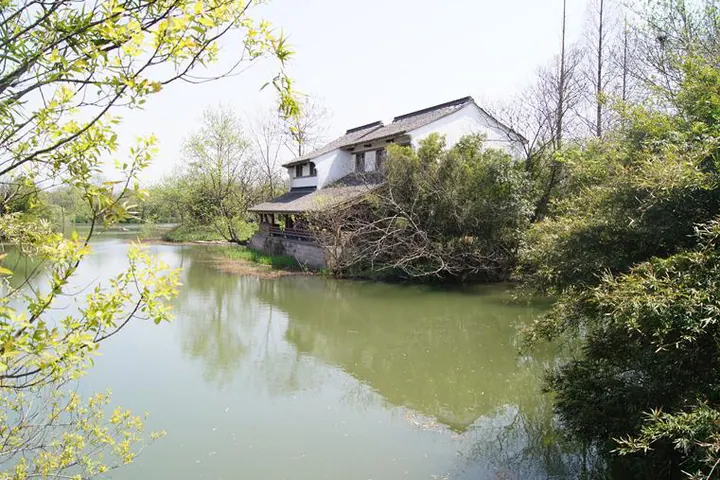
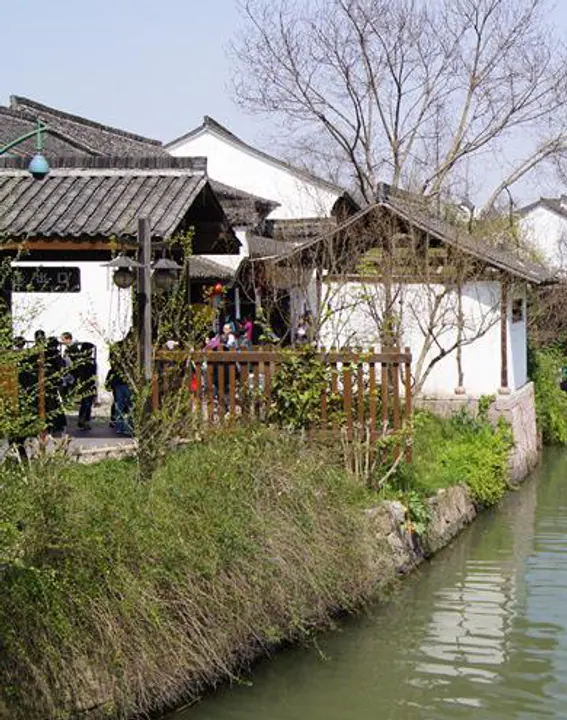
Willows over the water, a whitewashed house behind the trees
Shentankou
The deepest water in the park — old gazetteers call it bottomless — which is why the dragon boats gather here at Duanwu. Three old camphor trees by the landing need three or four people to span them, and the shade beneath is the best seat in the house. The blind-date scenes in If You Are the One were shot around this bend, and boatmen will point out the very boat Ge You sat in.
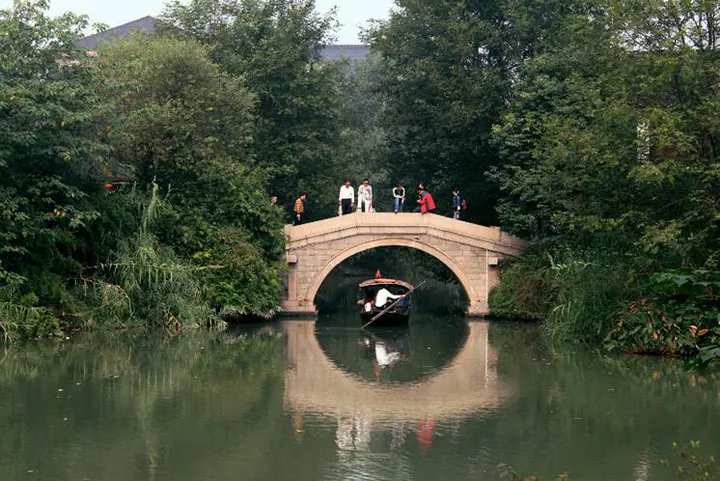
A stone arch bridge over still water
Hezhu Street
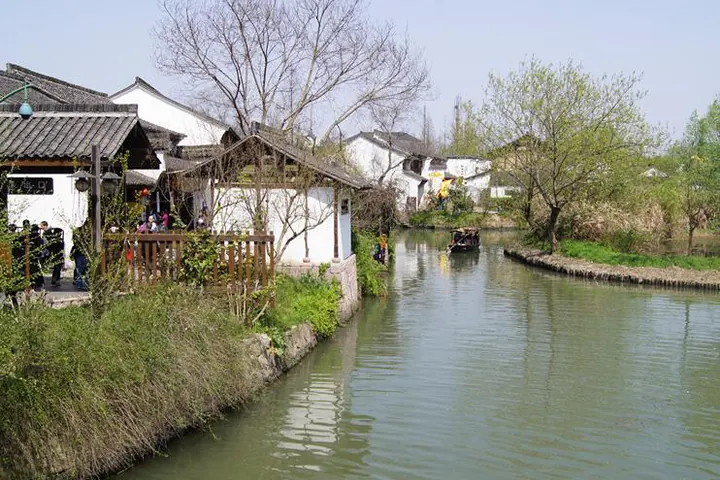
A rebuilt Ming-Qing lane, free to enter and reachable from the North Gate or Shentankou. It sells dingsheng cake, qianshi cake, scallion pancakes, malt sugar and Xixi rice wine. Halfway along, a white wall carries the words 'Xixi, stay a while' and the longest photo queue in the park. At the far end you can climb Hezhu Pagoda for a view over the whole roofscape.
Old houses and a railed terrace above the canal
Yanshui Fishing Village
The name means 'smoke on the water' — willow haze, cloud haze and kitchen smoke — once the bank where fishermen dried nets and cooked. Three small museums now stand here: the silkworm and silk hall walks through all twenty-two steps from mulberry leaf to finished robe; the wedding hall explains Xixi's boat weddings; and the Xixi Household recreates a farmhouse of the late Qing. With children, this stop beats any view.
A village of white walls and dark roofs along the canal
Qiuxue Nunnery
A stone arch and its reflection
Founded in the 1170s under the Southern Song and originally called Dasheng, the nunnery was renamed by the late-Ming scholar Chen Jiru after a Tang line about autumn snow covering a fishing boat. It stands on an island, water on all four sides, reachable only by small boat. From the Tanzhi Pavilion the reeds run 300-odd mu to the horizon; by late November they are fully open and the wind turns the whole wetland into falling snow. It is also the quietest place in the park, because tour boats cannot get in.
Gaozhuang
The villa of Gao Shiqi, a Qing scholar, built between 1657 and 1664. Gao failed the exams repeatedly and sold calligraphy in a temple market until the Kangxi Emperor noticed him and carried him up to the Hanlin Academy. In 1689, on a southern tour, Kangxi visited and wrote the words 'Bamboo Window', plus a poem. The garden is a classic Hangzhou private one — curved pond, covered walk, lotus, bamboo — twenty minutes end to end, but worth sitting in.
Xixi Plum Villa and Meizhu Villa
Plum viewing at Xixi dates to the Southern Song; the red, pink and green-calyx varieties around the Plum Villa open from late January to early March. Meizhu Villa was built by the Qing scholar Zhang Cibai, its name pairing plum for integrity with bamboo for principle, and Jiangnan literati once left poems and paintings here. Outside plum season both are just quiet courtyards — no need to make a special trip.
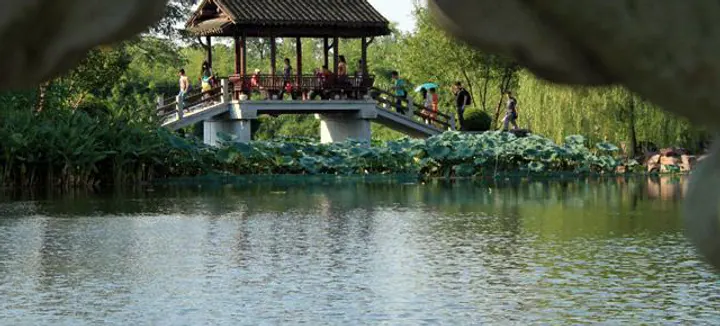
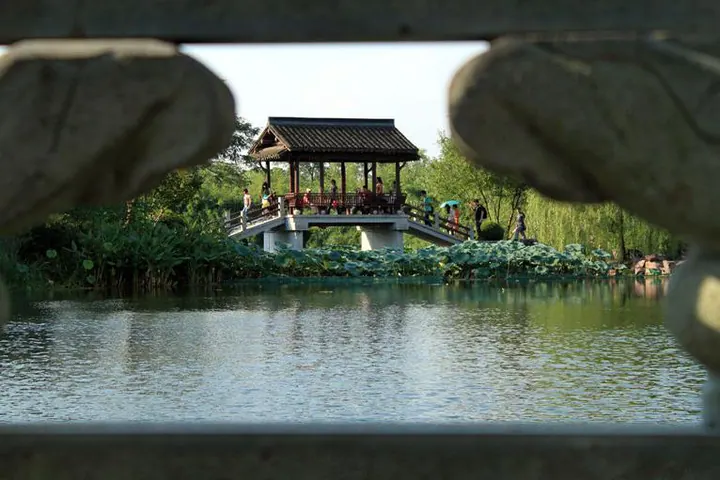
Lotus leaves and open water below a covered bridgeA covered bridge over a lotus pond, framed by a stone balustrade
Hongyuan, the west zone
Hongyuan is the estate of the Hong clan, eight hundred years of it: three chief councillors and five ministers under the Song and Ming, and Hong Sheng, author of The Palace of Eternal Life. The ancestral hall, Hong House, Hong Sheng memorial, Qingping Hall and Buyun Pagoda line up in sequence; the buildings are new, the genealogy and layout are not. At the Wujiawan entrance, Jingyuan is a free cluster of nearly fifty relocated Jiangnan houses — it feels more like a living village than the ticketed side does.
Lotus Shoal and Xialong Shoal
Lotus Shoal sits in the southeast corner, with a boardwalk over open water and hides on both sides; Xialong Shoal is the largest closed reserve in the park, viewable only from its edge. Birds are busiest in the hour after opening: egrets, night herons, moorhens and kingfishers are routine, and winter brings cormorants and migrant ducks. Bring binoculars and leave the neon jacket at home.
Fudi, Ludi and Shoudi
Fudi runs 2.3 kilometers north to south, free, open to prams and bikes, and is where locals walk after dinner — also the busiest of the three. Ludi runs 1.1 kilometers east to west and hosts the spring flower festival, with rose, hydrangea and aquatic gardens; it is free, but both ends open into ticketed zones. Shoudi lies in the west zone along the water, with no shops and no tourist carts, and is the quietest dike in the park. If you want to be alone, go there.
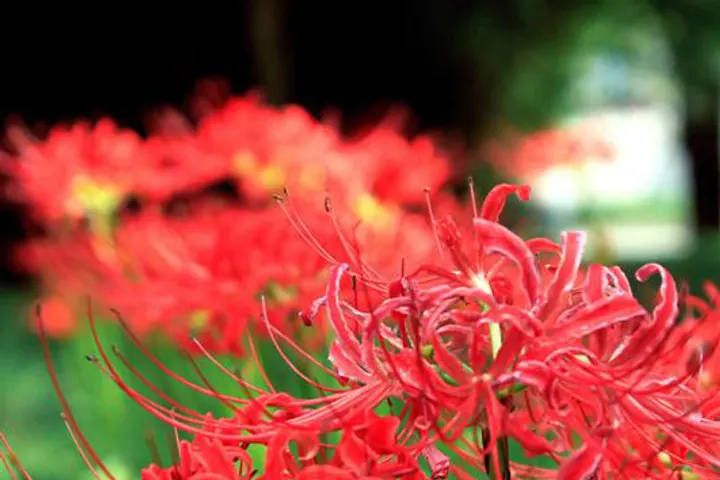
A drift of red spider lilies on the bank
06Come in the right month
At Xixi the calendar matters more than the map: the same water is plum in February, flowers in April, dragon boats in June, persimmons in October and reeds in December. These six activities run through the year — check the month before you book.
The rowed boat: the best hundred yuan you will spend
Willow branches hanging over the water
Piers at Zhoujiacun, Fudi, Hongyuan and Longshetou all run rowed boats by the boat, not the head: about ¥100 an hour for two to six people, so filling the boat halves the cost. Tell the boatman you want the narrow channels and the reeds and he will steer off the electric-boat main line. Autumn light is best after 15:00; in summer the 07:30 boat is the only cool one.
The persimmon festival: late September to early October
Xixi has more than 7,000 persimmon trees in three varieties — huoshi, bianshi and fangshi — and the huoshi was once tribute fruit for the Southern Song court. The 2025 festival ran from 20 September to 8 October, with picking at Hongyuan's Ouxiang Bridge: ¥59 a person or ¥99 a family, five jin (2.5 kg) of fruit included. By late October the stalls are gone but much of the fruit still hangs, which is the moment for photographs without queues. Locals steep barely ripe fangshi in limewater to make a crisp, sweet 'quick persimmon'; if you see it on a stall, buy one.
The dragon boat rally: Duanwu
On 19 June 2026 the action at Shentankou starts with the dragon-head rite at 09:10 and winds up at 14:00. Both the Jiangcun and Wuchang rallies are national intangible heritage; boats come in three grades — 'full dress', 'half dress' and 'bare-back' — and the contest is in figures like 'winning the swell' and 'three nods', not speed. On the day, A-line boats skip Shentankou and the North Gate and Fudi rowed boats are suspended, so enter early at Zhoujiacun and claim a spot under the camphors.
Birding: the first hour
The boardwalk and hides at Lotus Shoal are free; Xialong Shoal can only be watched from its edge. The good hours are the first hour after opening and the last two before closing — at midday everything hides in the reeds. Winter brings the most migrants; 8x binoculars or better help, but the interpretative panels along the boardwalk are good enough for beginners.
Flowers, plum, reeds and the dry-pond harvest
The flower festival runs early April to late May, centred on Ludi, with more than 200,000 pots in 2025; plum season is February to March, best at the Plum Villa and Meizhu; the reed festival runs late November to early January, and Qiuxue is the only correct answer; the dry-pond festival from late November to mid-January drains the fish ponds and nets the catch, a local ritual before New Year. Dates shift each year — check the park's WeChat account.
07Stay outside the gates
There is no lodging inside the ticketed park. 'Staying at Xixi' means the Xixi Tiandi complex, Jiangcun or Wen'er West Road — a walk or one metro stop from a gate. The wetland is only six kilometers from the city center, so staying downtown works perfectly well; do not pay double just to be nominally near the gate.
Xixi Tiandi (upper range): the Sheraton, Mushou Xixi, Huajiantang and Shili Fangfei all cluster here, five to fifteen minutes on foot from the Xixi Tiandi entrance, roughly ¥700–1,800 a night.
Jiangcun and Wen'er West Road (mid-range): between Metro L5 Jiangcun and L19 Xixi Wetland North, plenty of chain hotels and guesthouses at ¥300–500, with restaurants on the doorstep.
Huanglong or Wulin (downtown): convenient for both the lake and the wetland, 20–25 minutes by taxi to Zhoujiacun, about ¥400–800 a night.
Hostel beds: around Nanshan Road and Wushan in the city, ¥60–120 a bed, about forty minutes to Xixi Wetland South via metro transfers.
If Xixi is the whole point of the trip, Jiangcun is the best value: leave at 07:20 and you are at the Zhoujiacun gate at 07:30. With children or elderly parents, or if you want a hotel worth staying in, choose Xixi Tiandi — at night the only sound is frogs.
08Farmhouse cooking on the water
Xixi cooks the country version of Hangzhou food: river shrimp, white fish, snails, dried bamboo shoots, free-range chicken — plain methods, one ambition, freshness. Restaurants inside the park run ¥50–150 a head, about thirty per cent above the city, and you are paying for the window. To save money, the snacks at Hezhu Street and the Jiangcun blocks do the job.
Tea leaves opening in a white porcelain bowl
Five dishes to order
Xixi river shrimp: small, thin-shelled, briefly boiled and served with ginger vinegar — a cleaner sweetness than farmed prawns.
Free-range chicken stewed with reed roots: the root is said to cool the body, the broth stays clear, and nothing could be more local.
Braised pork with dried bamboo shoots: the shoots drink the fat and the meat stops being heavy; in spring, fresh shoots are better still.
Steamed white fish with nothing but scallion, ginger and a little soy; the flesh falls apart at a touch. Eat it the moment it lands — it turns fishy as it cools.
Gordon euryale seed soup with osmanthus: an autumn fixture, chewy seeds and floral perfume — the right full stop after a table of salt and umami.
Four places to eat
Shentankou Old Stove (inside Shentankou): square tables, benches and an L-shaped counter, serving wetland greens and farm dishes, ¥50–100 a head, 08:30–16:30.
Linliu Thatched Hall at Gaozhuang: the prettiest room in the park, right on the water, ¥100–150 a head, with a wait at peak times.
Yanshui Fishing Village restaurant: lakeside, reliable steamed fish and braised duck, about ¥80 a head — the natural lunch stop mid-boat.
Hezhu Street snacks: dingsheng cake, qianshi cake, scallion pancakes, lotus-root starch and malt sugar, about ¥30 a head, eaten while walking.
Two warnings: in-park kitchens close around 16:30, so do not plan dinner there; and the malt sugar at Hezhu Street is less about eating than about two people pulling one strand apart — an old local courtship ritual, and still the best fun for ¥10.
09What travels home
Xixi's souvenirs are more honest than West Lake's: mostly village handwork, starting in the low tens of yuan. Hezhu Street is the main strip; Jiangcun market and the festival market at Zhoujiacun pier fill the gaps. Do not buy at the first stall inside the gate — walk twenty meters and the price drops.
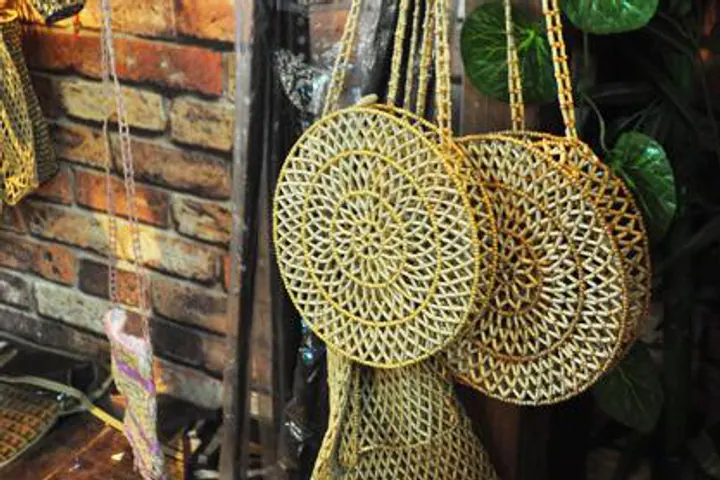
Small woven bamboo baskets hanging on a brick wall
Xixi small baskets: a Hangzhou municipal intangible heritage craft with twelve shapes — star, handbag, hexagon — all hand-woven, about ¥20–80, the smallest the hardest to make.
Xixi boat models: scaled wooden versions of the real sculling boats, around ¥50–60, finely made and good on a shelf.
Three Dikes, Ten Scenes silk scarves: Fudi, Ludi and Shoudi with ten views printed on silk, about ¥100–300, a safe gift.
Xixi rice wine and fermented glutinous rice: sweet, low in alcohol, drunk cold in summer and boiled with an egg in winter; glass bottles need wrapping in checked luggage.
Quick persimmons and dried persimmons: autumn only. The quick kind is peeled and eaten crisp like an apple; the dried kind travels better, about ¥20–40 a bag.
What to skip
Most 'Longjing' sold inside the park is not from the core villages but is priced as if it were; buy tea in the city or at Longjing Village. Silk scarves under ¥50 are usually polyester — look for a 100% mulberry silk label before you pay.
10Take the metro, leave the car
Arriving by train
Hangzhou East is the easiest: Metro L19 runs downstairs and reaches Xixi Wetland North in 20–25 minutes, with exit E2 at the North Gate. From Hangzhou West, L3 takes eight stops and about 26 minutes to Xixi Wetland South, where exit A is 200 meters from Zhoujiacun. From Hangzhou Station (Chengzhan), take L1 to West Lake Cultural Square and change to L19, about forty minutes.
Five gates, five metro stops
Zhoujiacun (east zone main gate): Metro L3 Xixi Wetland South, exit A, 200 meters.
Gaozhuang (east zone walk-in gate): Metro L3 Huawu, exit A, 180 meters.
North Gate (free zone): Metro L19 Xixi Wetland North, exit E2, 14 meters.
Longshetou (west zone, Hongyuan): Metro L3 Hongyuan, exit A, 500 meters.
Xixi Tiandi (south side of east zone): Metro L3 Dongyue, exit A, 240 meters.
L5 Jiangcun: possible, but not the one
Metro L5 Jiangcun is 1.8 kilometers in a straight line from the North Gate, with no direct footpath — you need bus 1303M or a ten-minute bike ride. Use it only if you are coming from the north and staying in Jiangcun; everyone else wants L19 to Xixi Wetland North or L3 to Xixi Wetland South.
Plane, taxi and driving
From Xiaoshan Airport, L19 takes about fifty minutes to Xixi Wetland North and beats a taxi for reliability. A taxi from Hangzhou East to Zhoujiacun runs 30–50 minutes and ¥50–70, worse at rush hour. Drivers should navigate to the Zhoujiacun car park: ¥5 an hour, ¥40 a day. On holidays both Zhoujiacun and the North Gate close to cars once full — do not gamble.
Getting around inside
The electric boat costs ¥60 and runs two lines — A for the east zone, B for the west — with one line per ticket and one hop on and off at each pier; the ticket-and-boat combo is ¥140. Rowed boats are priced by the boat at about ¥100 an hour. Tourist carts charge ¥10 a leg or ¥30 for the loop. Shared bikes are allowed on Fudi only.
Hours: 07:30–18:30 from 1 April to 7 October; 08:00–17:30 from 8 October to 31 March. Ticket sales and last entry stop about an hour earlier.
Tickets and ID: ¥80 at the gate, ¥70 online a day ahead; half price ¥40 for ages 6–18 and 60–69; free under 1.2 m, over 70, serving military and disabled visitors. Entry is by ID card — foreign visitors use their passport.
Lockers: free luggage storage at the Zhoujiacun visitor center, Gaozhuang station, Xixi Tiandi station, Longshetou station and Wujiawan station. Valuables and perishables are refused.
Medical: a Red Cross first-aid post inside the Zhoujiacun visitor center, 09:00–16:30, for cuts, heatstroke and insect bites; for anything serious call 120.
Numbers: police 110, ambulance 120, fire 119; park office 0571-8810 6688 or 0571-8810 6696; tourism complaints 0571-96123.
Rules: smoking is restricted, and pets, hoverboards and scooters are banned. There are no railings along the reed beds and lotus ponds — keep hold of small children.
Payment and signal: WeChat Pay and Alipay work everywhere, though signal fades deep in the reeds; carry a little cash in case a stall's connection drops.
The nearest hospitals are Hangzhou TCM Hospital (453 Tiyuchang Road, 0571-8582 7888) and the First Affiliated Hospital of Zhejiang University (79 Qingchun Road, 0571-8723 6114), both within a 25-minute taxi ride. There are no banks inside the park; use Jiangcun or Xixi Tiandi.
12Five things to settle in advance
Book: buy the ¥70 ticket on the official WeChat account a day ahead; bookings open seven days out. Holiday capacity is released in blocks, and latecomers face full price or nothing.
Pick a gate: Zhoujiacun for a first visit, Longshetou for quiet, the North Gate for the free zone only, Xixi Tiandi with children and the museum. The wrong gate adds two kilometers.
Kit: grippy trainers for damp stone, mosquito repellent from May to September, a folding umbrella, water. Add sun protection in summer and a windproof layer in winter — the boat is colder than the bank.
Timing: be at the gate for opening at 07:30 and finish your priority sights before 10:00. Weekend crowds peak between 10:00 and 15:00, worst at Hezhu Street and Shentankou.
Budget: ¥300–500 a person for the day — ¥140–200 on ticket and boat, ¥50–100 on lunch, ¥30 on snacks and tea, ¥10–20 on the metro; add about ¥100 for a rowed boat.
One last thing: someone at the gate will offer to 'show you around' or 'take you on my boat'. Ignore them. Buy boat tickets at the piers and book guides at the visitor center; there is no such thing as a shortcut ticket here.
13From lake to wetland, and halfway back
Geography: a secondary wetland inside the city
Xixi lies between the last ridges of the Tianmu Mountains and the Qiantang River, a low basin threaded with water. Seventy per cent of its 11.5 square kilometers is surface water, and hundreds of fish ponds are linked by creeks, some only a few meters wide. This pond-creek-lake structure is not untouched nature but the residue of centuries of fish farming, mulberry growing and bamboo digging — hence 'secondary wetland'.
History: six phases
Four or five thousand years ago this was a shallow lake spread by Tianmu floodwater, land in drought and water in flood. Over the thousand years from the Eastern Han to the late Tang it took shape; in 988 the Northern Song court established Xixi town here, which is why locals call it a thousand-year-old town. Through the Ming and Qing the area grew rich on fish, silkworms, bamboo shoots, tea and fruit — the market garden of Hangzhou. After the Republic it shrank, and the commune-era land reclamation took another bite.
The main channel bends between two walls of trees
Rescue: the twenty years after 2003
In 2003 Hangzhou began the Xixi conservation project: more than 4,000 households were relocated, silt dredged, sewage cut off and vegetation replanted. The park opened on 1 May 2005 as China's first national wetland park, joined the Ramsar list in 2009, and integrated its east and west tickets in 2020. Today more than seventy per cent of the boatmen, cart drivers and guides — around 300 people — are still local residents.
The name: Xixi, stay a while
Xixi began as the name of a stream, then a town, then a district. When the Southern Song emperor Gaozong fled south in the 1120s, he is said to have been so taken with the waterways that he said, 'Xixi, stay a while,' and dropped plans for a county seat here. The story may be invention, but the five characters describe the place exactly: nothing here hurries you on.
14One step beyond the wetland
Xixi is well placed for half a day of wetland plus half a day beyond it: Liangzhu's five thousand years to the north, the canal town of Tangqi to the northeast, and Nanxun two hours northwest. Wuzhen, Xitang and Qiandao Lake are covered in our Hangzhou guide and are not repeated here.
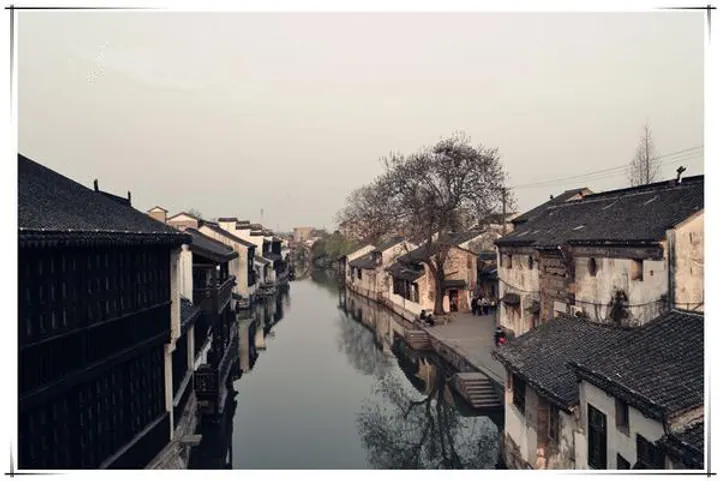
A canal and riverside houses in Nanxun
Liangzhu Ancient City (half day)
The walled city that pushed Chinese civilization back to 5,000 years, World Heritage listed in 2019. Admission is ¥60 plus ¥20 for the shuttle, 09:00–17:00, closed Mondays. It is about thirty minutes by taxi from Xixi; by metro, L2 to Liangzhu then bus 430 or 313 to the south gate. Inside are paddy fields, earthen walls and reconstructed thatched houses, plus a deer enclosure. On the way back, stop at the free Liangzhu Museum (booking required, closed Mondays).
Tangqi Ancient Town (half day)
An old canal town on the Grand Canal, free to walk and open around the clock; the heart of it is the seven-arch Guangji Bridge and the riverside Shuibei Street. The Taishidi halls charge ¥30 and can be skipped. Loquats in May and steamed pork balls in autumn are why locals drive out. About forty minutes by taxi from Xixi, or Metro L9 to Linping plus a bus.
Nanxun Ancient Town (1 day)
The least noisy of the water towns: the streets are free, and an ¥85 combi ticket covers five old houses — the Little Lotus Garden, Jiaye Library, Zhang Shiming Residence, Liu Family Ladder House and Zhang Jingjiang Residence — with the Hundred Rooms terrace best at dusk. Direct coaches from Hangzhou North Bus Station take about two hours; alternatively rail to Huzhou and change. Stay a night and the Hundred Rooms at dawn is empty.
15A little homework
Film
If You Are the One (2009, dir. Feng Xiaogang): Ge You's Qin Fen advertises for a wife, ends up on a blind date in Xixi, and says from a rowed boat, 'Xixi, stay a while.' The line has since been painted on walls, boats and tickets — the most successful product placement this wetland ever got. Boatmen can still point out the two boats Shu Qi and Fang Zhongxin sat in.
Books and opera
The Hundred Poems of Xixi, by a Ming monk, is exactly what it says: a hundred short poems on reeds, persimmons, fishing lights and nunneries — easy enough to read a page or two on the boat. Hong Sheng's The Palace of Eternal Life retells the Tang emperor and Lady Yang; he was a descendant of the Hong clan, and his memorial hall holds a facsimile of the printed edition. For the texture of Jiangnan daily life, add Zhang Dai's Search for the West Lake in Dreams — even if it describes the neighbors.
Customs
Xixi people once went everywhere by boat, weddings included: the groom loaded a bridal sedan onto a boat, sculled to the bride's house, and carried her home the same way while a storyteller entertained the banquet with local legends. This 'boat wedding' is now staged on holidays and at the Hongyuan water-wedding hall. The other custom is the dragon boat: the men of Jiangcun gather for this one day a year, in three grades of boat, competing not for speed but for the steadiest figure and the cleanest dip of the dragon's mouth.