Seats, sleepers and standing tickets: what you actually get
Chinese trains use a naming system that predates high-speed rail, so "hard seat" is not about comfort and
"no seat" still costs money. Here is what each class looks like, what it costs relative to the others, and
which one to pick for your journey.
商务座 Business二等座 Second硬卧 Hard sleeper软卧 Soft sleeper无座 Standing
High-speed seats
G, C and D trains sell four classes. Seat reservations are compulsory — the railway does not
sell platform tickets, so everyone on board has an assigned seat or is standing with a standing ticket.
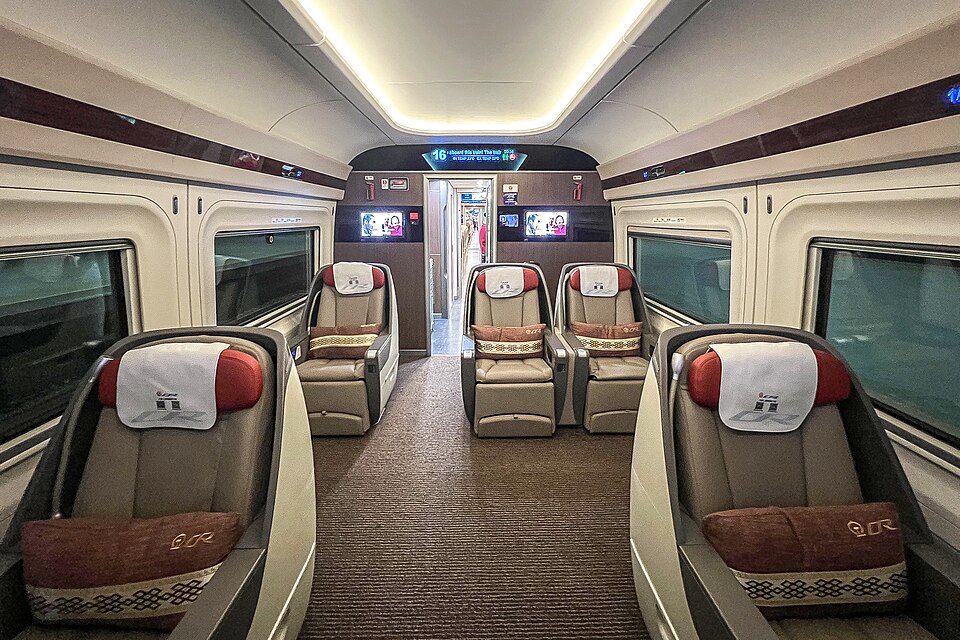
Business class 商务座
Three seats across (2+1), deep recline, personal screen and meal service on many services. Sold in tiny numbers — usually the first class to sell out on popular departures.
Price relative to second class
2+1 layoutMeals includedQuiet
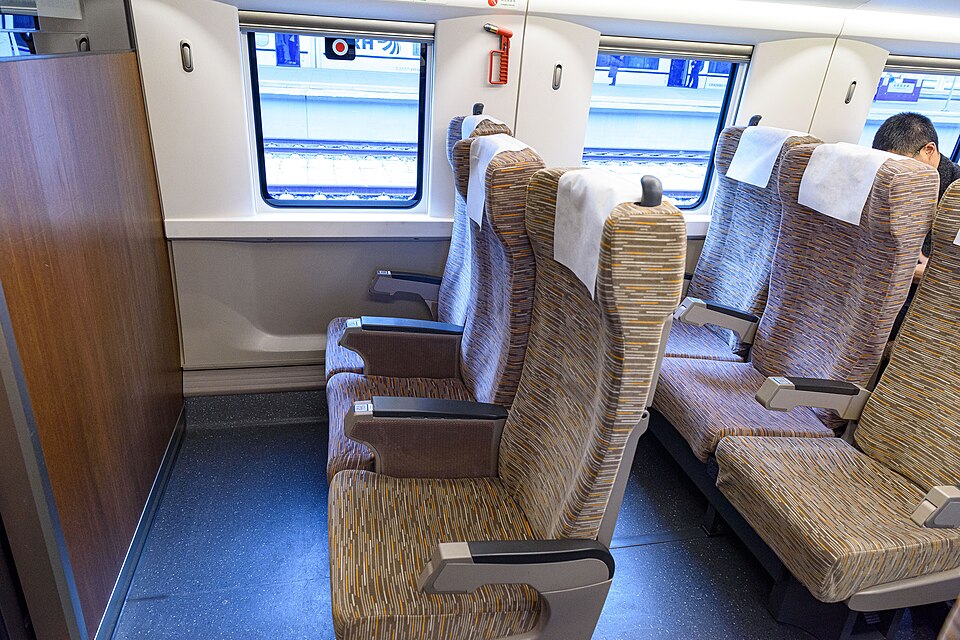
First class 一等座
Four seats across (2+2) with wider armrests and more legroom than second class. Roughly 1.6× the second-class fare — worth it on a 5-hour daytime run, less so on a 40-minute hop.
Price relative to second class
2+2 layoutExtra legroom≈ 1.6× second class
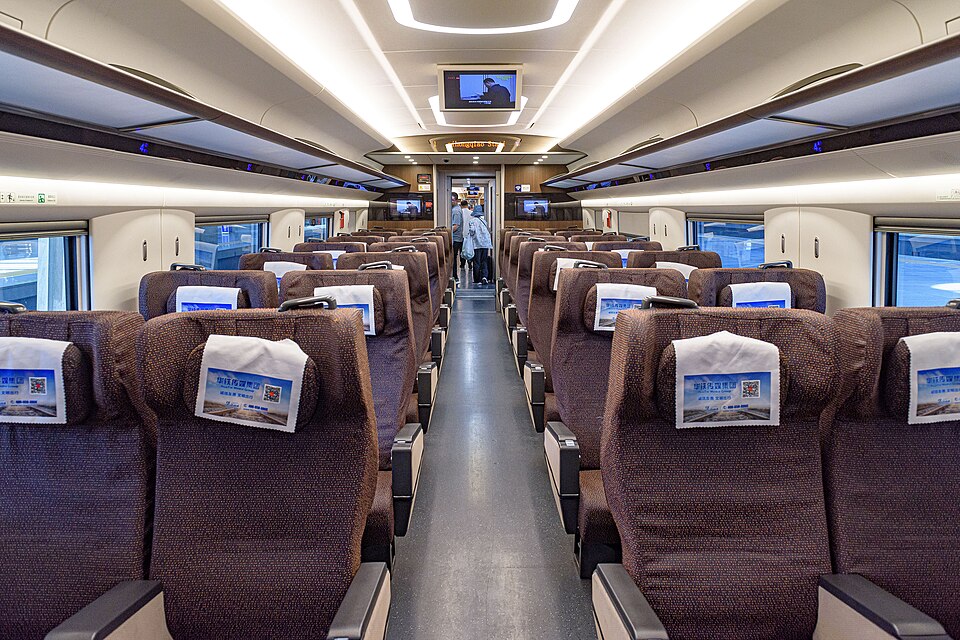
Second class 二等座
The default. Five seats across (3+2), comfortable for a few hours, power sockets under the seat on most newer trains. This is what the vast majority of travellers book.
Price relative to second class
3+2 layoutStandard pickBase fare
Standing ticket 无座
Sold at the second-class fare when seats run out, mostly on conventional trains. You stand in the aisle or the carriage vestibule — fine for 30 minutes, grim for 6 hours.
Price relative to second class
Same price as seatedConventional trainsShort hops only
What they actually look like
Real carriages, photographed by rail travellers. From left: business class and its
1+2 egg-shell pods, the 2+2 first class, and the 3+2 second class most people book.
Overnight trains are where Chinese rail travel gets genuinely good value: you leave after
dinner and arrive for breakfast, saving a hotel night. The four types differ mainly in how many people share
your compartment and whether it has a door.
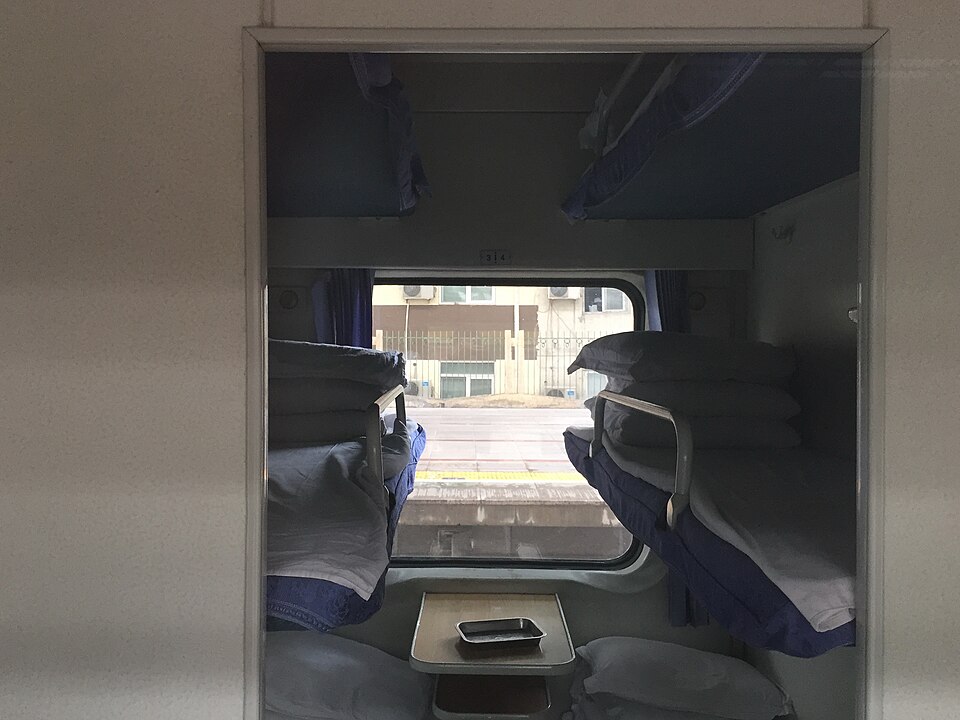
Hard sleeper 硬卧
Six berths per open bay, three high on each side, no door. The word "hard" is misleading — it is a padded bunk with a pillow and duvet, just in a shared bay. Upper berths are cheapest; lower berths cost about 10% more and are the most comfortable (you can sit up).
Four berths in a closed compartment with a door, wider bunks and a small table. Roughly 1.5× the hard-sleeper fare. The standard choice for families and anyone who values a door.
4 berths, door≈ 1.5× hard sleeperFamily friendly
Deluxe soft sleeper 高级软卧
Two berths with a sofa and often a private washroom, available only on a handful of overnight services. Sold per compartment, so it prices like two premium tickets.
2 berthsPrivate washroom (some)Rare
EMU sleeper 动卧
Sleepers inside a high-speed unit on overnight D trains: four-berth compartments at 250 km/h. The fastest way to sleep between distant cities — Shanghai to Beijing or Xi’an overnight.
4 berths250 km/h overnightD trains only
What a hard-sleeper bay looks like
Six berths, three high on each side of an open bay, with a ladder at the end and no door.
Bags go on the shelf above the window or under the lower berth.
Hard sleeper on YW25G stock — photo · Photo: N509FZ, CC BY-SA 4.0, via Wikimedia CommonsSame bay in section. Berths run lower–middle–upper on each side and are numbered 1–6:
1, 2, 3 on the near side and 4, 5, 6 opposite — the number on your ticket tells you which one you have.
Conventional-train seats
On Z, T and K trains you will also see these two classes. They are the cheapest way to
travel and the most social — expect shared tables, tea sellers and conversation.
Hard seat 硬座
A bench of five across, non-reclining, around a small table. Cheap and sociable; tolerable for two hours, punishing for twelve.
Cheapest5 acrossDaytime short hops
Soft seat 软座
Four across with padding and recline, found on some conventional and tourist services. A small premium over hard seat for a noticeably calmer carriage.
4 acrossReclinesSome T/K trains
The one mistake to avoid. "Hard" and "soft" describe the upholstery, not the
experience. A hard sleeper on an overnight train is a comfortable bed; a hard seat on the same train
for twelve hours is not. If the journey is overnight, book a berth, not a seat.
Frequently asked questions
The questions we answer most often by email, in full.
Which seat should I book?
Under two hours: second class on a G or C train is perfectly comfortable. Two to five hours: first class if you want to work or sleep. Overnight: book a sleeper — hard sleeper if you are budget-conscious, soft sleeper if you want a door. Standing tickets only make sense for short conventional-train hops.
Upper, middle or lower berth?
Lower is the most comfortable: you can sit upright, keep your bags beside you and get out without climbing. It costs roughly 10% more. Middle is the compromise. Upper is cheapest and the quietest, but you climb a ladder to get in and out, and headroom is limited. On soft sleepers there are only upper and lower.
Is a standing ticket worth it?
Only for journeys under about an hour. Standing tickets are sold at the seated second-class fare on conventional trains when seats sell out, and you spend the trip in the aisle or vestibule. On high-speed trains standing tickets are rarely sold at all.
Can I choose a specific seat or berth?
China Railway assigns seats and berths automatically. When you book with us we pass your preference (window, lower berth, same compartment for a group) to the railway, but it cannot be guaranteed. Berth numbers are only known once the ticket is issued — we tell you as soon as we have them.
Do I need to print my ticket?
No. Since the e-ticket rollout, your passport is your ticket. Scan it at the gate, or use the booking reference at a ticket machine. There is nothing to collect for high-speed travel — arrive 20–30 minutes before departure for security and platform changes.
Are there power sockets and Wi-Fi?
Every G, C and D train has power sockets at or under the seats, and free onboard Wi-Fi (patchy in tunnels). Conventional Z, T and K trains have sockets in the corridor and in soft-sleeper compartments, but not at every hard seat.
Is food available on board?
High-speed trains have a dining car and a trolley service; on longer G services you can also order food delivery to your seat at major stations through the official app. Conventional trains have a dining car serving simple hot meals. Bringing your own food and a flask of hot water is entirely normal.
How much luggage can I bring?
There is no checked baggage on Chinese trains — everything travels with you. The published allowance is around 20 kg per adult, with each piece not exceeding 130 cm on its longest side. In practice nobody weighs bags; the constraint is overhead rack space and the corridor.
Do children need their own ticket?
Children are ticketed by height and age: under 1.2 m travel free with an adult (no seat), 1.2–1.5 m buy a child fare, and over 1.5 m pay the adult fare. Every passenger needs a document number on the ticket, so include children in the passenger list when you book.
What is a quiet carriage?
Some G trains carry a 静音车厢 (quiet carriage) where phone calls and loud audio are not allowed. It is free and opt-in at booking. Tell us when you request the ticket and we will ask for it, subject to availability.
Search results show every class available on each train, with the local-currency fare next to our price —
so you can compare a hard sleeper against a second-class seat before you commit.